
What Is The Average Dumbbell Weight: Choose The Right Load
The average dumbbell weight is about 10 to 25 pounds per hand, but the right load depends on your exercise and experience.
The question “what is the average dumbbell weight?” sounds simple, but there is no single number that fits every lifter. A beginner doing lateral raises may need 5 pounds, while an experienced lifter may use 50-pound dumbbells for rows. This guide explains typical dumbbell weights, how to choose your starting load, and how to progress safely.
What Is the Average Dumbbell Weight?
The average dumbbell weight for general home workouts is often between 10 and 25 pounds per hand. Many adjustable dumbbell sets cover this range because it works well for common movements such as presses, rows, curls, lunges, and squats.
Still, the average dumbbell weight changes based on several factors:
• Exercise type
• Training experience
• Body size and strength
• Number of repetitions
• Fitness goal
• Whether the weight is used in one or both hands
For example, a person may use 15-pound dumbbells for shoulder presses but 30-pound dumbbells for goblet squats. The muscles in the legs and back are usually stronger than the smaller muscles in the shoulders and arms.
A practical way to view the average dumbbell weight is as a starting range, not a fixed rule. The correct weight lets you complete your target repetitions with good form while making the final few repetitions feel challenging.

Average Dumbbell Weight by Experience Level
Your training age is one of the best ways to estimate the right dumbbell weight. A beginner should not compare their numbers with someone who has trained for years. Strength develops over time through practice, muscle growth, and better coordination.
Beginner dumbbell weight
For many beginners, the average dumbbell weight is between 5 and 15 pounds per hand for upper-body exercises. Lower-body movements may allow 15 to 30 pounds or more, depending on the exercise.
A useful starting range is:
• Biceps curls: 5 to 15 pounds
• Shoulder raises: 2.5 to 10 pounds
• Chest presses: 10 to 20 pounds
• One-arm rows: 15 to 30 pounds
• Goblet squats: 15 to 35 pounds
These numbers are estimates. Someone who is new to strength training may find 10 pounds difficult for curls but easy for squats.
Intermediate dumbbell weight
An intermediate lifter may use 15 to 35 pounds for many upper-body exercises. Lower-body lifts and pulling exercises may use 30 to 60 pounds per hand.
Typical ranges include:
• Biceps curls: 15 to 30 pounds
• Shoulder presses: 15 to 35 pounds
• Chest presses: 25 to 50 pounds
• One-arm rows: 30 to 60 pounds
• Walking lunges: 20 to 50 pounds
The average dumbbell weight at this level is less useful than your performance. If you can complete every set with ease, the load may be too light. If your form breaks down early, it may be too heavy.
Advanced dumbbell weight
Advanced lifters may use 30 to 70 pounds or more for many exercises. Heavy dumbbell rows, presses, squats, and deadlifts can require much larger weights.
Advanced examples may include:
• Curls: 25 to 45 pounds
• Shoulder presses: 35 to 60 pounds
• Chest presses: 50 to 100 pounds
• Rows: 50 to 120 pounds
• Split squats: 40 to 80 pounds
These numbers are not performance standards. They are broad examples from common gym training. A person can be advanced in one movement and still be a beginner in another.

Average Dumbbell Weight by Exercise
The exercise matters more than the number printed on the dumbbell. A small muscle movement needs less weight, while a full-body movement can handle much more.
Dumbbell curls
The average dumbbell weight for curls often falls between 10 and 25 pounds per hand. Curls isolate the biceps, so using too much weight can cause you to swing your body.
Choose a weight that allows controlled movement. Keep your elbows close to your ribs, lower the dumbbell slowly, and stop when you can no longer lift without changing your posture.
Lateral raises
Lateral raises usually require lighter dumbbells. Many people use 2.5 to 15 pounds per hand.
The shoulder muscles work through a long lever, which makes even a light dumbbell feel hard. Raise the weights only to shoulder height and avoid using momentum.
Shoulder presses
The average dumbbell weight for shoulder presses is often between 10 and 35 pounds per hand. Strong and experienced lifters may use more.
Keep your ribs down and avoid leaning backward. If you must arch your back to finish the repetition, reduce the weight.
Chest presses
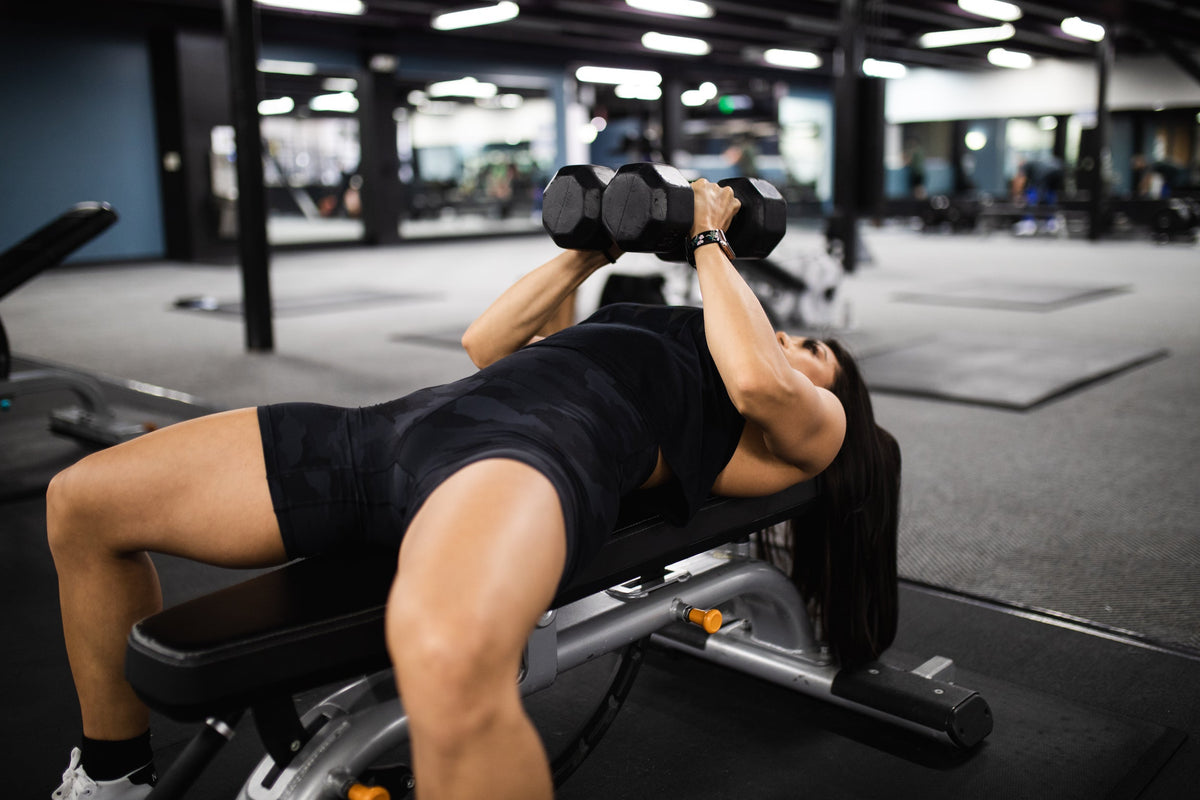
Dumbbell chest presses usually allow more weight than shoulder presses. Beginners may start with 10 to 25 pounds per hand, while intermediate lifters may use 25 to 50 pounds.
Lower the dumbbells with control. Your elbows do not need to flare straight out to the sides. A slight angle can feel more natural for many people.
One-arm rows
Rows often use some of the heaviest dumbbells because the back contains large, strong muscles. The average dumbbell weight for one-arm rows may range from 20 to 60 pounds per hand.
Support your body with a bench or stable surface. Pull your elbow toward your hip instead of simply lifting the dumbbell toward your chest.
Goblet squats
Goblet squats are often performed with one dumbbell held at the chest. Many beginners use 15 to 30 pounds, while experienced lifters may use 40 to 80 pounds.
Since the weight is held in front of the body, a goblet squat also challenges your core. Keep your chest lifted and descend only as far as you can while maintaining control.

How to Choose the Right Dumbbell Weight
The best dumbbell weight is the one that matches your goal and allows safe, steady progress. You do not need to find the perfect number on your first attempt.
Use this simple process:
- Pick a light weight that feels easy to control.
- Perform your planned number of repetitions.
- Check whether your form stays stable.
- Rate how difficult the set feels.
- Increase or decrease the weight as needed.
For general muscle building, many people train in the range of 6 to 12 repetitions. A suitable weight should make the final two or three repetitions difficult, but still possible with good form.
For muscular endurance, you may use a lighter weight for 12 to 20 repetitions. For strength, you may use a heavier weight for fewer repetitions. The average dumbbell weight for each goal will therefore be different.
A simple effort guide can help:
• Easy: You could perform five or more extra repetitions
• Moderate: You could perform two or three extra repetitions
• Hard: You could perform one or two extra repetitions
• Too hard: Your form fails before the target repetitions
Aim for moderate to hard effort most of the time. You do not need to train to complete failure in every set.

How to Increase Your Dumbbell Weight
Progressive overload means gradually asking your muscles to do more work. You can increase the dumbbell weight, add repetitions, perform more sets, or improve your technique.
A simple progression plan looks like this:
• Week one: 3 sets of 8 repetitions with 15 pounds
• Week two: 3 sets of 10 repetitions with 15 pounds
• Week three: 3 sets of 12 repetitions with 15 pounds
• Week four: 3 sets of 8 repetitions with 20 pounds
This approach is often called double progression. First, increase repetitions within your chosen range. Then, raise the weight and return to the lower end of the range.
Increase the load only when you can complete all sets with clean form. A jump of 5 pounds per hand may be reasonable for rows or squats, but it may be too large for lateral raises. Smaller increases are better for isolation exercises.
One common mistake is chasing the average dumbbell weight instead of tracking personal progress. Your own training log is more valuable than a comparison with someone else in the gym.

Fixed Versus Adjustable Dumbbells
Fixed dumbbells have one permanent weight. They are quick to use and feel balanced, which makes them popular in commercial gyms.
Adjustable dumbbells use plates or a selector system to change the load. They save space and can be useful for home workouts. However, some adjustable models are longer or less comfortable during movements such as curls and presses.
Consider these points:
• Fixed dumbbells are simple and durable
• Adjustable dumbbells take up less space
• Fixed sets make weight changes faster
• Adjustable sets often cost less than a full rack
• Some adjustable handles may feel awkward
• A secure locking system is important for safety
If you are building a home gym, a set that ranges from 5 to 50 pounds can cover many exercises. You may need heavier weights later for rows, lunges, deadlifts, and squats.
The average dumbbell weight for home use is not always the best buying guide. Think about the lightest and heaviest weights you will realistically use, then choose equipment that covers both ends.

Common Mistakes When Choosing Dumbbell Weight
Choosing a dumbbell is simple, but several mistakes can slow progress or increase injury risk.
Using weight that is too heavy
Heavy weights can feel impressive, but they often lead to poor technique. Swinging through curls, twisting during rows, or arching during presses shifts stress away from the target muscles.
Using the same weight for every exercise
Your legs, back, chest, shoulders, and arms do not have equal strength. It is normal to use different dumbbell weights for each movement.
Ignoring the full range of motion
A heavy dumbbell may reduce how far you can lower or lift. A lighter weight with a full, controlled range often gives your muscles better training.
Increasing weight too quickly
Muscles can adapt faster than tendons and joints. Small increases allow your body to adjust and reduce unnecessary strain.
Comparing yourself with others
Body size, limb length, technique, training history, and exercise choice all affect performance. The average dumbbell weight is a broad reference, not a personal requirement.

Dumbbell Weight and Your Fitness Goal
Your goal should guide your weight, repetitions, and rest time.
For general fitness
Use a light to moderate weight for 8 to 15 repetitions. Focus on full-body exercises such as squats, rows, presses, lunges, and carries.
For muscle growth
Use a moderate to heavy weight that makes the final repetitions challenging. Research on resistance training shows that muscle growth can occur across a wide repetition range when sets are performed with enough effort.
For maximum strength
Use heavier dumbbells for fewer repetitions and longer rest periods. Strength work demands excellent technique and should progress slowly.
For weight loss
Dumbbell training can help maintain muscle while you reduce body fat. However, fat loss depends mainly on overall energy balance, food intake, daily activity, and consistent training.
There is no special fat-burning dumbbell weight. The best weight is one that lets you train hard and safely over time.
A Simple Dumbbell Workout for Beginners
This full-body routine can help you test the average dumbbell weight for your own body. Start with a light load and complete two or three sets of each movement.
- Goblet squat: 8 to 12 repetitions
- Dumbbell chest press: 8 to 12 repetitions
- One-arm row: 8 to 12 repetitions per side
- Dumbbell Romanian deadlift: 8 to 12 repetitions
- Shoulder press: 8 to 10 repetitions
- Farmer carry: 20 to 40 seconds
Rest for about 60 to 120 seconds between sets. Stop if you feel sharp pain, numbness, dizziness, or unusual shortness of breath.
A practical lesson from many beginner programs is that people often start too heavy because the first few repetitions feel easy. The real test comes near the end of the set. Leave your ego outside the workout and let steady form guide your choice.

How Much Should a Dumbbell Weigh for Men and Women?
There is no universal dumbbell weight for men or women. Average strength can differ between groups, but individual variation is much greater than many people expect.
A woman with years of training may lift more than a man who is new to exercise. A smaller person may also be stronger than a larger person in a specific movement due to technique and experience.
Instead of choosing weight based on sex, use these measures:
• Can you keep good form?
• Can you complete the target repetitions?
• Do the final repetitions feel challenging?
• Can you recover before your next workout?
• Can you slowly increase the load over time?
The same rule applies to older adults, teenagers, and people returning after an injury. Start with a manageable weight and consider guidance from a qualified fitness professional or health care provider when needed.
Frequently Asked Questions About What Is the Average Dumbbell Weight
What is the average dumbbell weight for beginners?
The average dumbbell weight for beginners is often 5 to 15 pounds per hand for upper-body exercises. Lower-body exercises may use 15 to 30 pounds or more, depending on strength and technique.
Is a 20-pound dumbbell heavy?
A 20-pound dumbbell may feel light for a goblet squat but heavy for a lateral raise. Its difficulty depends on the exercise, your experience, and how many repetitions you perform.
Are 10-pound dumbbells enough for a workout?
Yes, 10-pound dumbbells can support an effective workout, especially for beginners, shoulder exercises, circuits, and high-repetition training. You may need heavier weights later for rows, squats, and deadlifts.
What dumbbell weight should a woman start with?
Many women can begin with 5 to 15 pounds per hand for upper-body exercises and 10 to 25 pounds for lower-body movements. These are only starting ranges, so choose the weight that allows controlled repetitions.
What dumbbell weight should a man start with?
Many men can begin with 10 to 20 pounds per hand for upper-body exercises and 20 to 40 pounds for lower-body movements. Fitness history matters more than gender, so adjust the load based on form and effort.
How often should I increase my dumbbell weight?
Increase your dumbbell weight when you can complete every planned set and repetition with strong form. A small increase every few weeks is often enough, but progress may be faster at first and slower later.
Can dumbbells build muscle?
Yes, dumbbells can build muscle when you use enough resistance, train consistently, eat enough protein, and gradually increase the challenge. They can work nearly every major muscle group.
Conclusion
The average dumbbell weight is usually around 10 to 25 pounds per hand for general workouts, but the right choice depends on the exercise, your experience, and your goal. Use lighter weights for small movements such as lateral raises and heavier weights for rows, squats, lunges, and deadlifts.
Start with a load you can control, keep your form steady, and increase it in small steps. Track your workouts instead of chasing someone else’s numbers. Try the guidance in this article during your next session, and share your experience or explore more strength-training resources to keep progressing.

Brandon Knoxley is a sport & fitness writer and training guide contributor at MySportFitHub. He focuses on practical workouts, performance-based training, and honest fitness gear insights designed for real people and real results. Brandon is passionate about helping beginners and active individuals train smarter, avoid common mistakes, and build sustainable fitness habits.


