
What Muscles Does Incline Treadmill Work: Muscles Targeted
Incline treadmill walking mainly works your glutes, calves, hamstrings, quadriceps, and core.
Knowing what muscles does incline treadmill work can help you choose the right speed, incline, and workout plan. As a fitness writer who studies practical training methods, I can tell you that incline walking is more than a cardio workout. It changes your body position, increases the demand on your lower body, and can build strength endurance without the impact of running.

What Muscles Does Incline Treadmill Work?
Incline treadmill walking works several major muscles at once. The steeper the incline, the harder these muscles must work to move your body upward and forward.
The main muscles trained include:
• Gluteus maximus, which helps extend your hips and push your body upward
• Hamstrings, which assist hip movement and bend the knee
• Quadriceps, which straighten your knee and support each step
• Calves, including the gastrocnemius and soleus, which help you push off
• Hip flexors, which lift your leg for the next step
• Core muscles, which keep your trunk stable
• Lower back muscles, which help maintain posture
Incline walking does not train every muscle equally. Your glutes and calves usually feel the greatest change because they work against gravity. Your heart and lungs also work harder, so the treadmill becomes both a strength endurance tool and a cardiovascular workout.
Research on uphill walking shows that increasing the grade raises the work done by the lower-body muscles. It also raises energy use, even when your walking speed stays the same. That makes incline treadmill training useful for people who want a challenging workout without jogging.
How Incline Walking Changes Muscle Activation
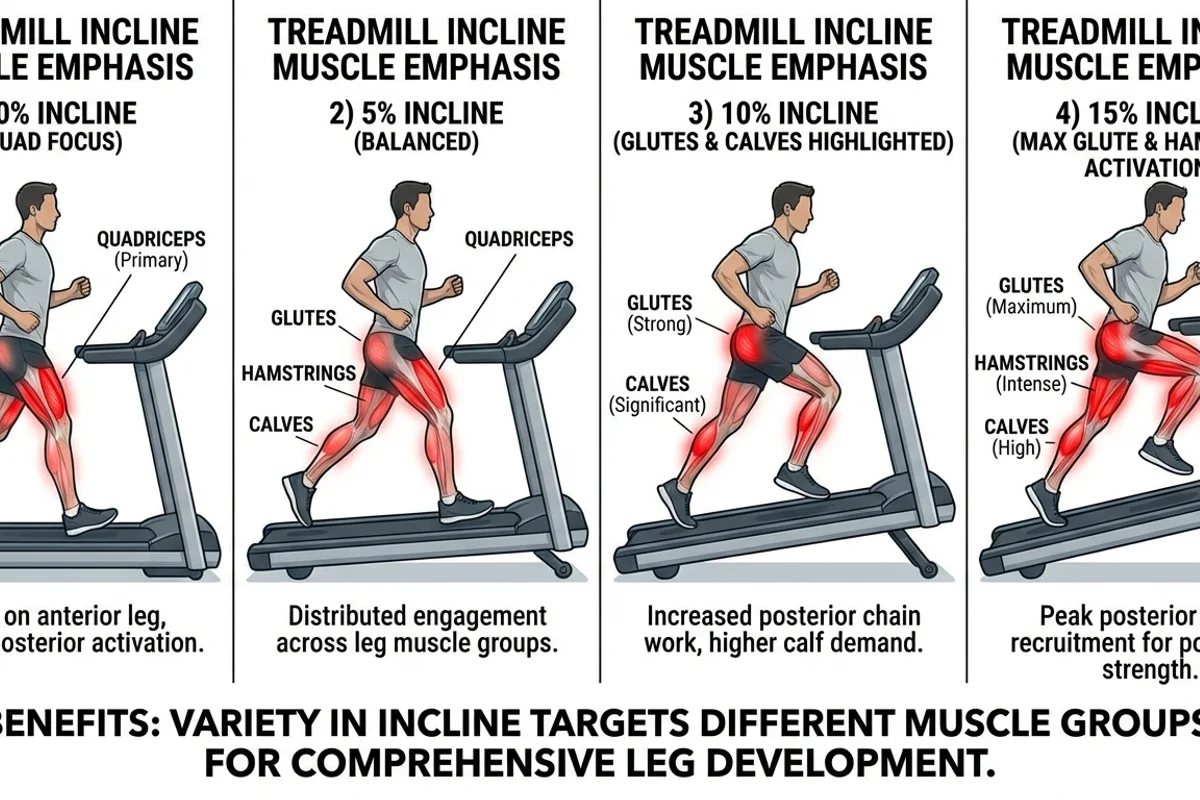
Flat walking mainly moves your body forward. Incline walking adds an upward force. Your muscles must act as if they are helping you climb a hill, even though the treadmill belt moves beneath you.
This change affects muscle activation in several ways:
• Your glutes extend the hip with more force.
• Your calves push harder against the belt.
• Your hamstrings help control the leg as it moves behind you.
• Your quadriceps stabilize and extend the knee.
• Your core resists unwanted movement in your pelvis and spine.
A mild incline of 3% to 5% can make walking feel more demanding without changing your form too much. A moderate incline of 6% to 10% creates a stronger hill effect. Very steep settings can produce a high heart rate and strong muscle fatigue, but they may also cause people to lean forward or hold the rails.
One mistake I often notice in treadmill workouts is using a steep incline while hanging on to the front bar. This reduces the load on your legs and changes the exercise. If you need to hold the rails, lower the incline or speed until you can walk with a tall posture.
Glutes: The Main Muscle Group
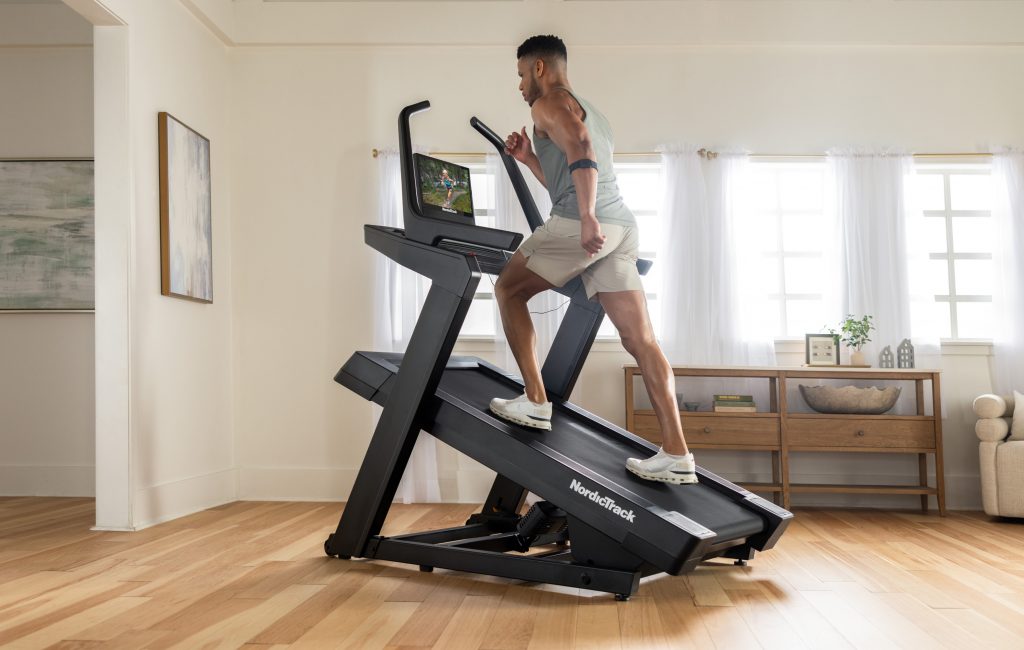
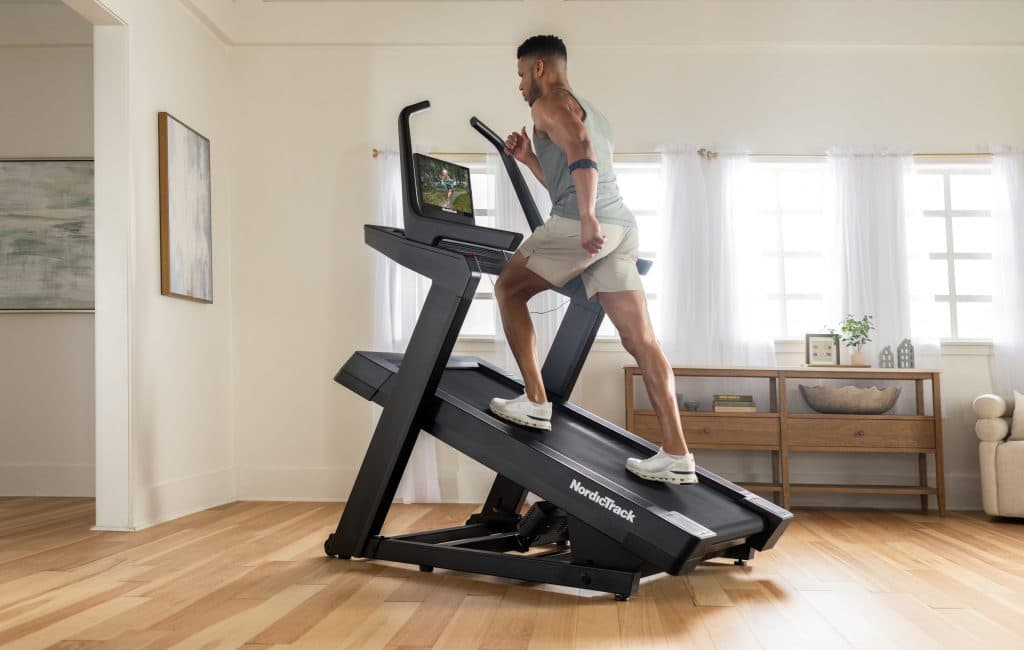
The gluteus maximus is one of the most important muscles involved in incline treadmill walking. It extends your hip and helps drive your body upward with every step.
On a flat treadmill, your glutes still work, but the demand is often lower. On an incline, your hip must move through a stronger extension. This gives your glutes more work, especially when you walk with a steady pace and avoid leaning on the rails.
Your gluteus medius also plays a role. It sits on the outer side of your hip and helps keep your pelvis level while you stand on one leg during each step. This matters because walking is a repeated balance task.
To involve your glutes well:
• Keep your chest lifted.
• Push through the middle of your foot.
• Let your hips move naturally.
• Avoid taking very short, rushed steps.
• Use a pace that lets you control each stride.
Incline walking can improve glute endurance, but it is not a complete replacement for strength exercises. Squats, step-ups, lunges, and hip thrusts allow you to use heavier resistance and build more maximal strength.
Calves and Lower Legs
The calf muscles work hard during incline treadmill walking. The gastrocnemius crosses both the knee and ankle, while the soleus sits deeper in the lower leg and works strongly when your knee is bent.
As the treadmill rises, your ankle begins in a more pointed position. Your calves must help lift and propel your body up the slope. This is why many people feel a strong burn in the lower legs during a steep walking session.
Incline treadmill work can improve calf endurance and ankle control. It may also help prepare your legs for hiking, stairs, and sports that involve repeated pushing from the ground.
However, calf tightness can become a problem. To reduce strain:
• Increase the incline slowly.
• Keep your heel moving naturally.
• Do not bounce on your toes.
• Wear supportive shoes with enough room for your toes.
• Stop if you feel sharp pain near the Achilles tendon.
A burning feeling from fatigue is not the same as sudden pain. Pain that changes your walking pattern deserves rest and, if it continues, advice from a qualified health professional.

Hamstrings and Hip Flexors
The hamstrings sit on the back of your thigh. They help bend your knee and extend your hip. During incline walking, they work with the glutes to move your leg behind your body and help control each step.
The hip flexors sit at the front of your hip. They lift your thigh so you can bring your leg forward. On a steep incline, the leg travels through a different angle, which can increase the demand on these muscles.
This muscle teamwork is one reason incline walking can feel different from flat walking. Your legs are not just moving faster. They are working through a more demanding pattern.
Some people feel tightness at the front of the hip after a long incline workout. This may occur because the hip flexors are working repeatedly or because the person leans too far forward. A short warm-up, a lower starting grade, and regular mobility work can help.
Quadriceps and Knee Support
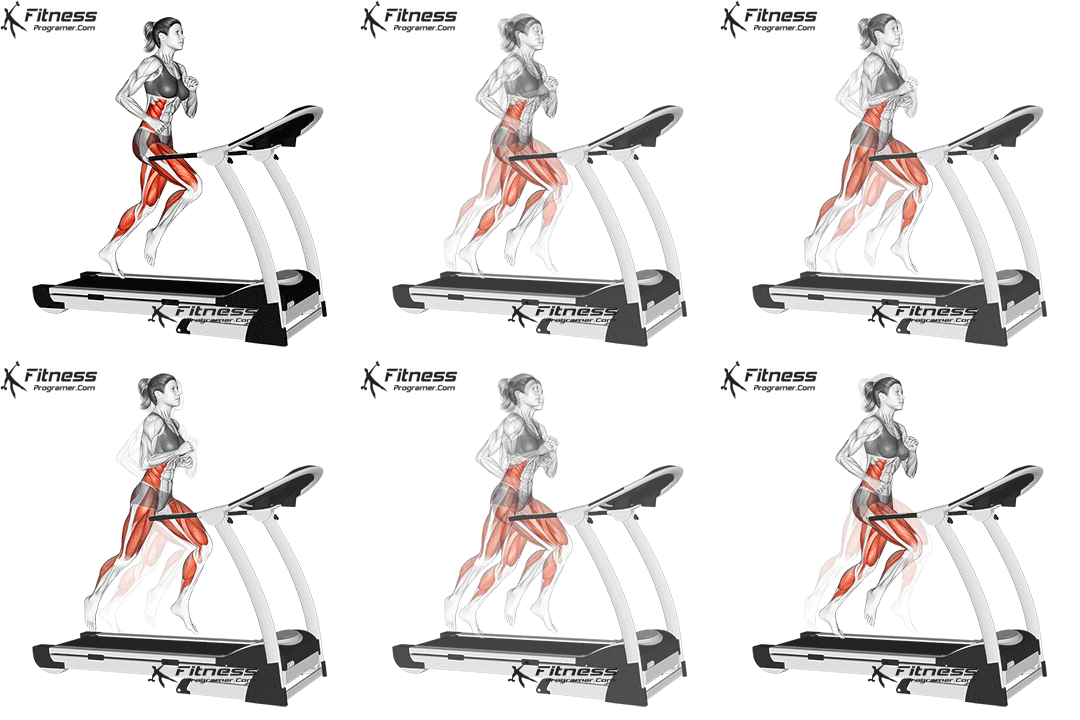
The quadriceps are the four muscles on the front of your thigh. They straighten the knee and help control your body as your foot meets the belt.
Incline walking can challenge the quadriceps, especially when the incline is high or the speed is fast. The quads help stabilize your knee and manage the repeated bend-and-straighten action of walking.
This does not mean incline treadmill training is harmful to the knees. For many people, walking creates less impact than running. Still, knee comfort depends on the person, the incline, the speed, footwear, and existing joint problems.
If your knees feel uncomfortable, try these changes:
• Reduce the incline.
• Slow the treadmill speed.
• Take shorter but controlled steps.
• Keep your knees tracking in line with your toes.
• Avoid gripping the rails and leaning backward.
If knee pain continues, do not push through it simply because the workout feels productive. A physical therapist can assess movement, strength, and joint tolerance.

Core and Postural Muscles
The core is not one single muscle. It includes the abdominal muscles, obliques, deep trunk muscles, and muscles around the spine and pelvis.
When you walk uphill, your body must stay balanced while your legs produce more force. Your core helps keep your pelvis and torso steady. It also prevents excessive twisting or arching in your lower back.
Incline walking does not build the abdominal muscles in the same way as loaded carries or strength exercises. However, it can improve core endurance and postural control when you walk without holding the rails.
Think of your torso as a tall tower. Your legs are the base, and your core keeps the tower from swaying as the ground moves beneath you. A tall posture is usually more effective than bending sharply at the waist.

Does Incline Treadmill Walking Build Muscle?
Incline walking can build some muscle endurance, especially in the glutes, calves, hamstrings, and quadriceps. It may also improve how long these muscles can work before they fatigue.
It is less effective for maximum muscle growth because the resistance is limited by your body weight and the treadmill angle. For noticeable muscle size, progressive resistance training is usually more reliable.
You can use incline walking as part of a balanced plan:
-
Perform strength training two or more days per week.
-
Add incline walking for cardiovascular fitness and muscle endurance.
-
Increase only one factor at a time, such as incline, speed, or duration.
-
Allow enough recovery between hard lower-body sessions.
For example, you might perform a lower-body strength workout on Monday, easy flat walking on Tuesday, and a moderate incline session on Thursday. This approach gives your muscles time to recover while keeping your weekly activity consistent.
Incline Treadmill Benefits Beyond Muscle Work
Understanding what muscles does incline treadmill work is useful, but the benefits extend beyond muscle activation. Incline walking can raise your heart rate without requiring a fast running pace.
Potential benefits include:
• Better cardiovascular endurance
• Higher calorie use than flat walking at the same speed
• Improved walking and hiking stamina
• Greater lower-body muscle endurance
• A lower-impact option than running for many people
• Better control of pace and incline in a controlled setting
Calorie use varies by body weight, speed, incline, workout length, and fitness level. Treadmill displays provide estimates, not exact measurements. It is better to use them as general feedback instead of treating the number as a precise result.
Incline walking can also feel mentally easier than running for some people. You get a clear challenge, but you can still control the pace and hold a conversation at a lower intensity. That makes it practical for beginners, busy adults, and people returning to exercise.
Best Incline Treadmill Settings for Different Goals
The best setting depends on your training goal and current fitness level. There is no single incline that works for everyone.
For beginners
Start with a 1% to 3% incline at a comfortable walking speed. Walk for 15 to 25 minutes and focus on posture, breathing, and smooth steps.
For fat loss and general fitness
Try a 3% to 7% incline for 20 to 40 minutes. Keep the effort moderate enough that you can speak in short sentences.
For glute and leg endurance
Use intervals. Walk for two minutes at a 6% to 10% incline, then recover for two minutes at a lower incline. Repeat several times.
For hiking preparation
Use varied grades, such as 4%, 8%, and 12%. Change the incline every few minutes to copy the changing demands of an outdoor trail.
For advanced training
Try short uphill intervals at a challenging grade. Keep the intervals controlled, and do not sacrifice posture for a higher number on the console.
The answer to what muscles does incline treadmill work changes slightly with each setting. A steeper grade usually increases glute and calf demand, while a faster pace may raise the overall cardiovascular challenge.
A Simple Incline Treadmill Workout
This workout suits many healthy beginners and intermediate walkers. Adjust it if you have a health condition, joint issue, or long break from exercise.
-
Warm up for five minutes at a flat or 1% incline.
-
Walk for three minutes at a 3% incline.
-
Increase to a 6% incline for three minutes.
-
Increase to an 8% incline for two minutes.
-
Return to a 3% incline for three minutes.
-
Repeat the work and recovery cycle two to four times.
-
Cool down for five minutes at a low incline.
Keep your hands off the rails when possible. If your form breaks down, reduce the incline first. A lower grade with good posture is more useful than a steep grade performed while hanging forward.
A practical lesson is to finish with energy left for one more interval. If you feel completely exhausted after the first few minutes, the workout is too hard for that day.
Common Mistakes to Avoid
Incline treadmill walking is simple, but small errors can reduce its value or increase discomfort.
• Holding the rails: This unloads your legs and can place your body in an awkward position.
• Leaning too far forward: A slight forward angle from the ankles is fine, but bending at the waist can stress your back.
• Using too much incline too soon: Your calves and Achilles tendon may need time to adapt.
• Taking tiny steps: Very short steps can make the movement stiff and less natural.
• Ignoring recovery: Muscle soreness and fatigue can build when every session is intense.
• Chasing calorie numbers: The display is an estimate and should not control your entire workout.
• Skipping warm-ups: Cold muscles may not tolerate a sudden steep grade well.
Use the talk test, your breathing, and your movement quality as guides. Training should feel challenging, but it should not create sharp pain or major changes in your walking pattern.
How Often Should You Use an Incline Treadmill?
Many people can use an incline treadmill two to four times per week. The right frequency depends on your fitness level, workout intensity, sleep, and other lower-body training.
Beginners may start with two sessions per week. Leave at least one recovery day between demanding incline workouts. As your body adapts, you can add time or a third session.
Avoid increasing duration, speed, and incline at the same time. A simple progression might look like this:
• Week one: 15 minutes at a 3% incline
• Week two: 20 minutes at a 3% incline
• Week three: 20 minutes at a 5% incline
• Week four: 25 minutes at a 5% incline
This gradual approach gives your calves, knees, hips, and feet time to adjust. It also makes it easier to identify which change caused soreness or discomfort.
Is Incline Treadmill Walking Enough for a Full Workout?
Incline walking can be a complete cardio workout. It can also train lower-body endurance and challenge your core. Still, it may not cover every part of a well-rounded fitness plan.
A complete weekly routine should include:
• Aerobic exercise
• Strength training for the whole body
• Mobility work
• Balance or coordination practice
• Rest and recovery
If your goal is general health, incline walking combined with two weekly strength sessions can be a strong plan. If your goal is muscle growth, athletic performance, or major strength gains, add exercises such as deadlifts, squats, rows, presses, and step-ups.
The best program is the one you can repeat. A moderate treadmill workout done consistently often produces better results than a very hard workout that causes soreness and gets abandoned.
Frequently Asked Questions About What Muscles Does Incline Treadmill Work
Does an incline treadmill work your glutes?
Yes, incline treadmill walking places more demand on the gluteus maximus than level walking because you must extend your hips against gravity. Keep your torso tall and avoid holding the rails to involve your glutes more effectively.
Does incline walking work your calves?
Yes, your calf muscles help push your body upward with each step. Steeper inclines can increase calf fatigue, so increase the grade slowly if you are new to uphill walking.
Does incline treadmill walking work your abs?
It can train your core muscles for stability and posture, but it is not a direct abdominal strength exercise. Walking without holding the rails requires your core to control your trunk and pelvis.
Is incline walking better than running?
Neither is always better. Incline walking can provide a strong cardiovascular and lower-body workout with less impact than running for many people, while running may build greater speed and high-intensity fitness.
How steep should the treadmill be for glutes?
A moderate incline of about 5% to 10% can challenge the glutes for many people. Start lower, maintain good posture, and increase the grade only when you can walk smoothly without holding the rails.
Can incline treadmill walking make your legs bigger?
It can improve leg muscle endurance and may support modest muscle development, especially in newer exercisers. Significant muscle growth usually requires progressive resistance training with exercises that provide more direct load.
Conclusion
Incline treadmill walking works your glutes, calves, hamstrings, quadriceps, hip flexors, and core while also raising your heart rate. The incline increases the need to push upward, which makes the lower body work harder than it does during level walking.
Start with a manageable grade, keep your posture tall, and avoid using the rails to make the workout easier. Combine incline walking with strength training for better muscle growth, balanced fitness, and long-term progress.
Choose a treadmill setting you can repeat with control, track how your body responds, and build gradually. If this guide helped, explore more training resources and share your favorite incline treadmill workout.

Brandon Knoxley is a sport & fitness writer and training guide contributor at MySportFitHub. He focuses on practical workouts, performance-based training, and honest fitness gear insights designed for real people and real results. Brandon is passionate about helping beginners and active individuals train smarter, avoid common mistakes, and build sustainable fitness habits.