How Long To Walk 5 Miles On Treadmill: Time & Pace Guide
Most people walk 5 miles on a treadmill in about 75 to 120 minutes, depending on speed and incline.
Knowing how long to walk 5 miles on treadmill helps you plan workouts, set realistic goals, and track progress without guessing. The exact time depends on your walking speed, fitness level, breaks, incline, and whether you include a warm-up or cool-down. This guide explains the math, gives practical time estimates, and shares safe ways to finish your distance with less fatigue.
How Long Does It Take to Walk 5 Miles on a Treadmill?
For most adults, walking 5 miles on a treadmill takes between 1 hour and 40 minutes and 2 hours. This range assumes a steady speed of about 3 to 4 miles per hour.
The simple formula is:
Time in hours = Distance ÷ Speed
For a 5-mile walk:
5 miles ÷ 3 miles per hour = 1.67 hours
That equals about 1 hour and 40 minutes.
Your actual answer to how long to walk 5 miles on treadmill may differ because treadmill speed is only one part of the workout. Incline, short pauses, fitness level, stride length, and the accuracy of the machine can all affect your total time.
Here is a useful time guide:
| Treadmill speed | Approximate time for 5 miles |
|---|---|
| 2.0 mph | 2 hours 30 minutes |
| 2.5 mph | 2 hours |
| 3.0 mph | 1 hour 40 minutes |
| 3.5 mph | 1 hour 26 minutes |
| 4.0 mph | 1 hour 15 minutes |
| 4.5 mph | 1 hour 7 minutes |
| 5.0 mph | 1 hour |
These figures show moving time only. If you stop to drink water, adjust your shoes, or take a short rest, add those minutes to the final workout time.

5-Mile Treadmill Walking Time by Fitness Level
Your walking pace should match your current fitness, not someone else’s. A new walker may need more than two hours, while an experienced walker may complete 5 miles in close to 75 minutes.
Beginner walking pace
A beginner often walks at 2 to 3 miles per hour. At this pace, how long to walk 5 miles on treadmill is usually between 1 hour and 40 minutes and 2 hours 30 minutes.
You may also need short breaks. That is normal. The goal is to build steady movement, not to force a fast pace before your joints, feet, and heart are ready.
Moderate walking pace
A moderate pace usually falls between 3 and 4 miles per hour. Most people can maintain this speed while breathing faster but still speaking in short sentences.
At 3.5 miles per hour, 5 miles takes about 86 minutes. This is a practical target for general fitness and regular cardio training.
Fast walking pace
A brisk treadmill walk may reach 4 to 4.5 miles per hour. At 4 miles per hour, you can finish 5 miles in about 75 minutes.
This speed may feel challenging, especially with an incline. If you must hold the handrails, reduce the speed slightly. Holding the rails can reduce the effort and may change your natural walking pattern.
Highly conditioned walkers
Some experienced walkers use speeds of 4.5 to 5 miles per hour. A 5-mile workout may then take about 60 to 67 minutes.
At speeds near 5 miles per hour, many people move into a very fast walk or light jog. Focus on smooth form rather than reaching a certain number. A controlled 4-mile-per-hour walk is more useful than a rushed pace that causes pain.

How Treadmill Incline Changes Your Walking Time
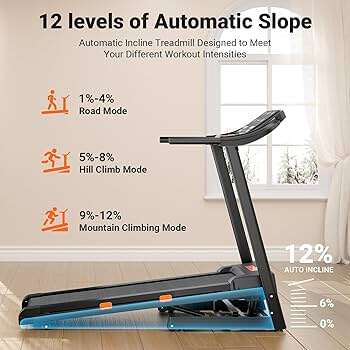
Incline does not change the treadmill distance, but it changes the effort. Walking 5 miles at 0% incline is much easier than walking 5 miles at 5% or 10%.
A hill setting makes your legs and heart work harder. It also increases stress on the calves, Achilles tendons, glutes, and lower back. Because of this, you may need to slow down or take breaks.
For example:
• At 3.5 mph and 0% incline, 5 miles takes about 86 minutes.
• At 3.0 mph and 5% incline, 5 miles takes about 100 minutes.
• At 2.5 mph and 8% incline, 5 miles takes about 2 hours.
These workouts can have a similar training effect even though the speeds differ. Incline walking is useful when you want more effort without jogging, but it should be introduced slowly.
A practical approach is to use a 0% to 2% incline for most of the walk. Add short hill intervals only after you feel comfortable with your normal pace. Avoid using a steep incline while gripping the front bar, since this can reduce the training benefit and strain your posture.
How to Calculate Your Exact 5-Mile Treadmill Time
You can estimate how long to walk 5 miles on treadmill with a simple calculation.
Use this three-step method:
- Find your treadmill speed in miles per hour.
- Divide 5 by that speed.
- Convert the decimal part into minutes.
For example, at 3.8 miles per hour:
5 ÷ 3.8 = 1.315 hours
The decimal portion is about 19 minutes, so the moving time is roughly 1 hour and 19 minutes.
You can also use this quick reference:
• At 2.8 mph, expect about 1 hour and 47 minutes.
• At 3.2 mph, expect about 1 hour and 34 minutes.
• At 3.8 mph, expect about 1 hour and 19 minutes.
• At 4.2 mph, expect about 1 hour and 11 minutes.
• At 4.8 mph, expect about 1 hour and 3 minutes.
Remember that this calculation does not include warm-up time, cool-down time, or pauses. If you walk for 5 minutes at a slower speed before reaching your target pace, your full treadmill session will take longer than the distance estimate.

Should You Include Warm-Up and Cool-Down Time?
Yes. A warm-up and cool-down can make a 5-mile treadmill walk more comfortable and safer.
Start with 5 to 10 minutes at an easy pace. This gradually raises your body temperature and gives your ankles, knees, hips, and muscles time to prepare.
After the main walk, slow down for another 5 to 10 minutes. A gradual cool-down allows your breathing and heart rate to return toward normal. It may also help you notice soreness before it becomes a larger problem.
For example, a workout at 3.5 mph may look like this:
- Five minutes at 2.5 mph.
- Seventy-five minutes at 3.5 mph.
- Five minutes at 2.5 mph.
The treadmill distance may be close to 5 miles, but the full session lasts about 86 minutes. This is why two people can both complete 5 miles yet report different total workout times.
In my treadmill training sessions, one common mistake is starting at the target speed immediately. The first mile then feels harder than expected, and the final miles become a grind. A slower first 5 to 10 minutes often leads to a smoother finish.

What Is a Good Speed for Walking 5 Miles?
A good speed is one that lets you maintain proper form and finish without sharp pain. For many people, 3 to 4 miles per hour is a useful range.
Use the talk test to judge effort:
• Easy effort: You can speak in full sentences.
• Moderate effort: You can speak in short sentences but feel your breathing increase.
• Hard effort: You can say only a few words before needing another breath.
Moderate walking is often suitable for improving general aerobic fitness. Public health guidance commonly encourages adults to complete at least 150 minutes of moderate-intensity activity each week. A 5-mile walk at 3 miles per hour can provide around 100 minutes of movement, making it a large part of that weekly target.
However, one long walk is not the only way to exercise. You can split the distance into shorter sessions if your schedule or fitness level makes that easier. For example, two 2.5-mile walks may feel more manageable than one continuous 5-mile workout.

Benefits of Walking 5 Miles on a Treadmill
Walking 5 miles provides a substantial amount of low-impact aerobic activity. The treadmill also gives you control over speed, incline, temperature, and surface.
Potential benefits include:
• Improved cardiovascular fitness.
• Greater daily calorie use.
• Better walking endurance.
• Support for weight-management goals.
• Stronger leg and hip muscles.
• Improved mood and stress relief.
• A consistent workout option during heat, rain, snow, or poor air quality.
Treadmill walking can also help you build a routine. The belt gives you a clear pace, while the display shows time, distance, speed, and sometimes heart rate. This feedback can make progress easier to measure.
Calorie burn varies widely. Body weight, speed, incline, age, fitness, and handrail use all matter. Treadmill calorie displays are estimates, so treat them as rough figures rather than exact measurements.
A 5-mile walk is not a magic threshold. You can gain health benefits from shorter walks as well. The most important factor is regular activity that you can maintain over time.
.jpg)
How to Walk 5 Miles Without Getting Too Tired
Pacing is the key to making how long to walk 5 miles on treadmill feel manageable. Do not treat the first mile like a race.
Try this steady plan:
- Walk for 5 minutes at an easy pace.
- Increase the speed slightly for the next 10 minutes.
- Settle into a pace you can maintain.
- Drink small amounts of water as needed.
- Reduce the speed during the final 5 to 10 minutes.
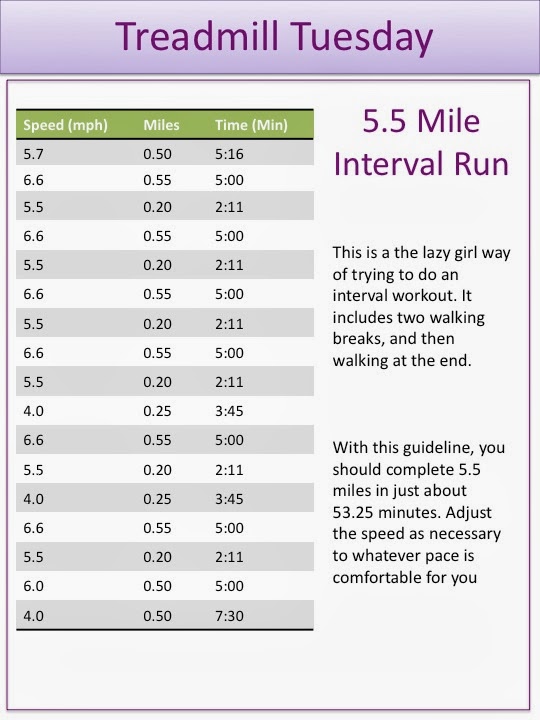
You can also use intervals. For example, walk at 3.2 mph for four minutes, then increase to 3.8 mph for one minute. Repeat the pattern for the main part of the workout.
Intervals break a long walk into small pieces. Instead of thinking about 5 miles, you focus on the next five-minute block. This can make the workout feel less overwhelming.
Wear supportive shoes that fit well. Avoid loose clothing that may catch on the belt. Keep the emergency safety clip attached, and place the treadmill on a stable surface with enough space behind it.
My most useful practical lesson is to avoid changing speed and incline too often. Constant adjustments can make the workout feel harder and can hide your true pace. Choose a simple plan, follow it, and adjust only when your body gives you a clear reason.
Common Mistakes to Avoid During a 5-Mile Treadmill Walk
Several small mistakes can make a long treadmill walk less comfortable.
• Holding the handrails: This changes your posture and can reduce the workload.
• Starting too fast: Early fatigue often leads to poor form later.
• Using too much incline: A steep grade may overload your calves and Achilles tendons.
• Ignoring pain: Mild effort is normal, but sharp or worsening pain is a warning.
• Wearing poor shoes: Blisters and foot pain can end a workout quickly.
• Forgetting water: Even indoor exercise can cause fluid loss.
• Looking down for too long: This may round your shoulders and strain your neck.
• Skipping recovery: Muscles and connective tissue need time to adapt.
Do not rely only on the treadmill’s heart-rate reading. Wrist sensors can be less accurate during walking, especially when your hands move or grip the rails. If you track heart rate, use it as a general guide and pay attention to breathing and perceived effort.
Stop exercising and seek medical help for chest pressure, faintness, severe shortness of breath, or unusual pain. People with heart disease, uncontrolled blood pressure, diabetes, major joint problems, or other medical conditions should ask a health professional how to exercise safely.
A Sample 5-Mile Treadmill Workout Plan
Here is a simple plan for a walker who usually moves at about 3.5 miles per hour.
Steady 5-mile plan
• Warm up for 5 minutes at 2.5 mph.
• Walk 1 mile at 3.2 mph.
• Walk 3 miles at 3.5 mph.
• Walk 1 mile at 3.2 mph.
• Cool down for 5 minutes at 2.5 mph.
The distance portion takes about 90 minutes, with extra time for the warm-up and cool-down. You can shorten or lengthen each stage based on your fitness.
Beginner interval plan
• Warm up for 5 minutes at 2.2 mph.
• Walk 4 minutes at 2.8 mph.
• Walk 1 minute at 2.2 mph.
• Repeat until you reach 5 miles.
• Cool down for 5 minutes.
This plan may take more than two hours, especially with breaks. That is completely acceptable. Completing the distance comfortably is more valuable than forcing a pace that leaves you exhausted.
Brisk walking plan
• Warm up for 5 minutes at 2.8 mph.
• Walk 5 minutes at 3.8 mph.
• Walk 2 minutes at 4.2 mph.
• Repeat the pattern.
• Cool down for 5 to 10 minutes.
This format raises the effort in short bursts while keeping the workout as a walk. If the fast intervals cause pain or make your form unstable, lower the speed.
How Often Should You Walk 5 Miles?
How often you walk 5 miles depends on your current activity level, recovery, and goals. A new walker may begin with shorter sessions two or three times per week.
As your body adapts, you might complete a 5-mile treadmill walk once or twice weekly. Other days can include shorter walks, strength training, mobility work, or rest.
Give extra attention to your feet, knees, hips, and lower back. Delayed soreness can appear the next day, especially after adding distance or incline. Increase your total distance gradually instead of making a large jump from week to week.
A simple weekly schedule could include:
• Monday: 30-minute easy walk.
• Tuesday: Strength training.
• Wednesday: 5-mile treadmill walk.
• Thursday: Rest or gentle mobility work.
• Friday: 30-minute moderate walk.
• Saturday: Optional 5-mile walk.
• Sunday: Rest.
This plan is only an example. Your schedule should fit your health, time, and recovery needs.
Frequently Asked Questions About How Long to Walk 5 Miles on Treadmill
Is walking 5 miles on a treadmill enough exercise for one day?
Yes, a 5-mile walk can provide a strong amount of moderate aerobic activity. The value depends on your pace, incline, health, and overall weekly routine.
How long does it take to walk 5 miles at 3 mph?
At 3 miles per hour, 5 miles takes about 1 hour and 40 minutes. Add extra time if you stop, warm up, cool down, or take water breaks.
Can I walk 5 miles on a treadmill every day?
Some experienced walkers can do this, but daily 5-mile walks may be too much for beginners. Increase distance slowly and include rest or easy days if your joints and muscles feel sore.
Does incline make a 5-mile treadmill walk better?
Incline can increase the workout’s intensity and strengthen the lower body. It is not always better, though, and a steep grade may increase strain on your calves, feet, knees, or Achilles tendons.
How many calories does a 5-mile treadmill walk burn?
There is no single calorie number because body weight, speed, incline, age, and fitness all affect energy use. Treadmill calorie displays provide estimates, so do not use them as exact measurements.
Is walking 5 miles better than walking 10,000 steps?
Neither goal is automatically better. Five miles may equal roughly 10,000 steps for some people, but step count changes with height and stride length; consistent movement matters most.
Can I split 5 miles into two treadmill sessions?
Yes. Two 2.5-mile sessions can provide a similar total distance and may be easier to fit into your day. Splitting the workout is a useful choice when a long continuous walk feels tiring.
Conclusion
For most people, how long to walk 5 miles on treadmill is about 75 to 150 minutes, depending on speed, incline, fitness, and breaks. A pace of 3 to 4 miles per hour is a practical starting range, while beginners may need more time and short rest periods.
Use a gradual warm-up, keep your posture tall, avoid leaning on the handrails, and increase speed or incline slowly. The best 5-mile workout is one you can complete safely and repeat consistently.
Choose a realistic pace for your next session, track how you feel, and adjust your plan as your endurance improves. If you found this guide helpful, explore more walking and treadmill resources or share your usual 5-mile time in the comments.

Brandon Knoxley is a sport & fitness writer and training guide contributor at MySportFitHub. He focuses on practical workouts, performance-based training, and honest fitness gear insights designed for real people and real results. Brandon is passionate about helping beginners and active individuals train smarter, avoid common mistakes, and build sustainable fitness habits.