Does Incline Treadmill Build Calves: Muscle-Building Benefits
Yes, an incline treadmill can build your calves by increasing uphill muscle demand and repeated ankle movement.
The answer to “does incline treadmill build calves” is yes, but the result depends on incline, speed, training time, body weight, and recovery. Uphill walking makes your calves work harder than level walking, yet it may not provide enough resistance for major muscle growth on its own. This guide explains the science, best settings, common mistakes, and a simple plan you can use safely.
Does incline treadmill build calves?
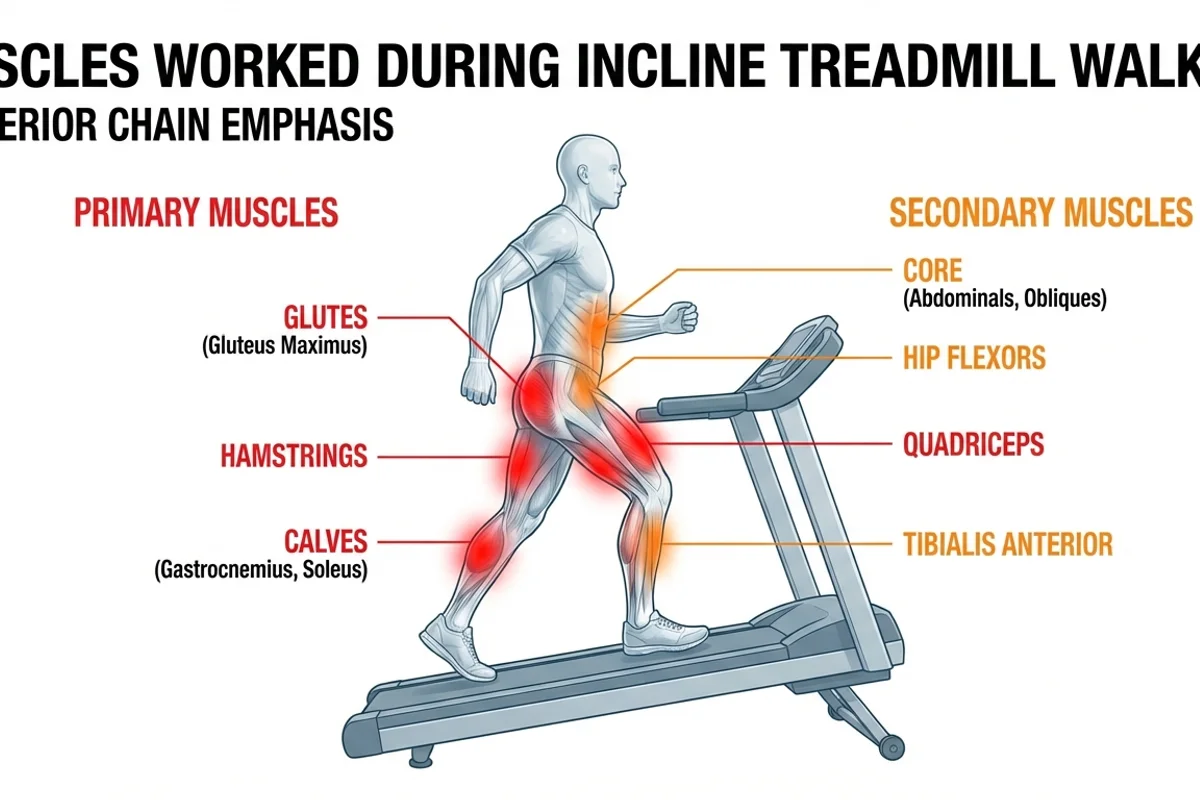
Yes, an incline treadmill can strengthen and develop the calf muscles. Walking uphill increases the work done by the plantar flexors, which are the muscles that point your toes downward. These include the gastrocnemius and soleus.
When the treadmill rises, your body must push upward and forward. Your calves help create this force at the ankle. They also help keep your foot stable as it meets the moving belt.
Does incline treadmill build calves as well as direct calf raises? Usually, no. Treadmill training gives your calves repeated, moderate resistance. Standing and seated calf raises let you use much heavier loads and target the calf muscles more directly.
The incline treadmill can still help by:
• Building muscular endurance
• Improving lower-leg strength
• Increasing calf work during cardio
• Supporting gradual muscle growth in new exercisers
• Improving ankle control and walking power
A useful way to think about it is this: incline walking is like asking your calves to climb a long hill, while calf raises are like asking them to lift a heavy weight many times.

How incline walking works the calf muscles
Incline walking changes the angle of your body and your foot. On a flat treadmill, your legs move mostly forward. On an incline, your body must move upward with every step.
The calves help extend the ankle during the push-off phase. They also work while the ankle bends upward as your foot moves under your body. This repeated movement creates many low-load contractions.
The two main calf muscles respond in slightly different ways:
Gastrocnemius
The gastrocnemius is the large, visible muscle at the back of the lower leg. It crosses both the knee and ankle joints. It works strongly when you push off with a straighter knee.
Soleus
The soleus sits beneath the gastrocnemius. It works hard during walking and is especially active when the knee stays bent. It has a high proportion of slow-twitch fibers, so it is built for long periods of work.
Incline walking can challenge both muscles, but the exact workload changes with your speed, stride, incline, and posture. Research on uphill walking and muscle activity shows that the lower leg contributes more as the slope increases. However, muscle activity is not the same as guaranteed muscle growth.
Does incline treadmill build calves through muscle damage? Not necessarily. Muscle growth can happen through mechanical tension, training volume, and progressive overload. Incline walking provides volume, but its resistance may be too light for advanced hypertrophy.
What incline is best for calf growth?
There is no single perfect incline for everyone. A moderate incline of 5% to 10% is a practical starting range for most people. It raises calf demand without forcing you to hold the rails or lose good form.
A higher incline can increase the challenge, but more is not always better. At very steep settings, many people shorten their steps, lean heavily on the handles, or slow down so much that the workout becomes uncomfortable rather than productive.
Try these general ranges:
• 1% to 3%: Light hill work and beginner conditioning
• 4% to 7%: Moderate calf and glute demand
• 8% to 12%: Challenging incline walking for trained users
• Above 12%: Advanced hill work that requires strong form and good fitness
Start with a speed that lets you walk without holding the rails. For many people, this may be between 2.5 and 3.5 miles per hour. Your ideal speed depends on your fitness, leg length, and treadmill model.
Does incline treadmill build calves faster at a steeper incline? Not always. A moderate incline that you can maintain with controlled steps may produce better training than a steep setting that causes poor posture and early fatigue.
Can incline treadmill build calf muscle size?
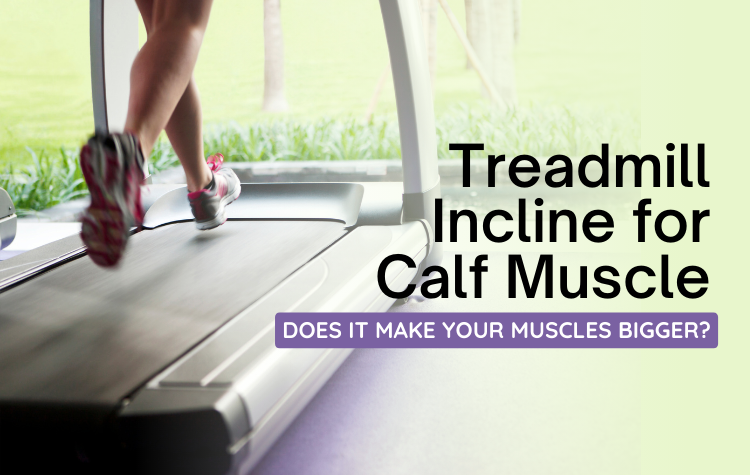
It can, especially if you are new to exercise or have not trained your calves often. Beginners may see changes in calf strength, firmness, and muscle size from regular incline walking.
However, muscle growth requires a reason for the body to adapt. If you perform the same incline and speed for months, your calves may become more efficient without continuing to grow. This is why progressive overload matters.
You can gradually increase the training demand by changing one factor at a time:
• Add 1% to the incline
• Increase walking time by five minutes
• Walk slightly faster
• Add a short uphill interval
• Reduce your rest between intervals
• Carry a light load only when your form is stable
Do not increase every variable at once. Your calves, Achilles tendons, feet, and knees all need time to adjust.
For significant calf hypertrophy, combine incline treadmill work with direct resistance training. Standing calf raises emphasize the gastrocnemius. Seated calf raises place more focus on the soleus. A complete lower-leg routine may also include tibialis raises and controlled ankle mobility work.
In practical terms, does incline treadmill build calves? Yes, but it works best as part of a wider plan rather than as your only calf exercise.
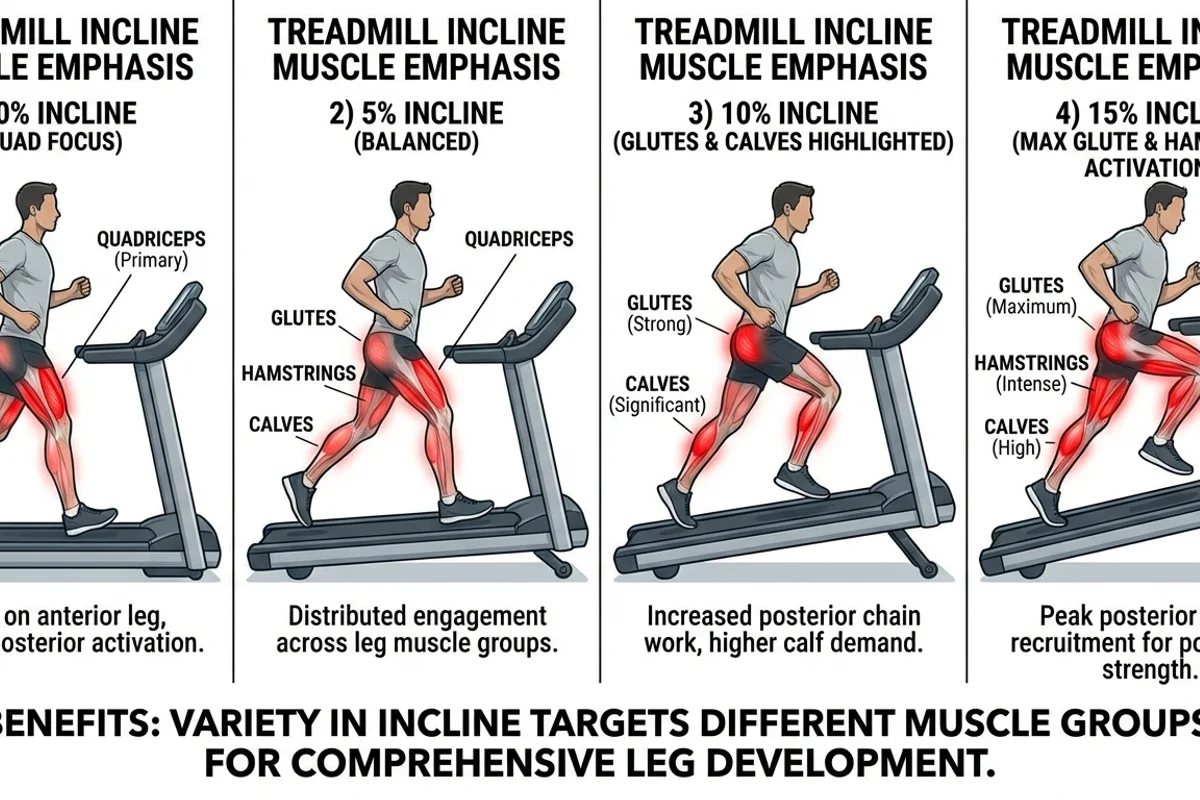
Incline treadmill versus flat walking
Flat walking is excellent for general health, but it places less demand on the calves than uphill walking. A flat treadmill can still support calf endurance and circulation. It simply offers less resistance during the push-off phase.
Incline walking usually increases:
• Calorie use
• Heart rate
• Glute involvement
• Hamstring involvement
• Calf muscle demand
• Overall lower-body fatigue
A study of treadmill walking at different slopes found that uphill walking changes joint movement and increases the effort required from the lower-body muscles. This supports the basic reason incline treadmill training feels harder.
Still, flat walking may be better when:
• You are recovering from lower-leg soreness
• You have Achilles tendon pain
• You are building a daily walking habit
• You want a longer, easier cardio session
• You need to reduce joint and calf stress
A balanced program can use both. For example, walk flat for warm-up and cool-down, then use an incline for the main work.
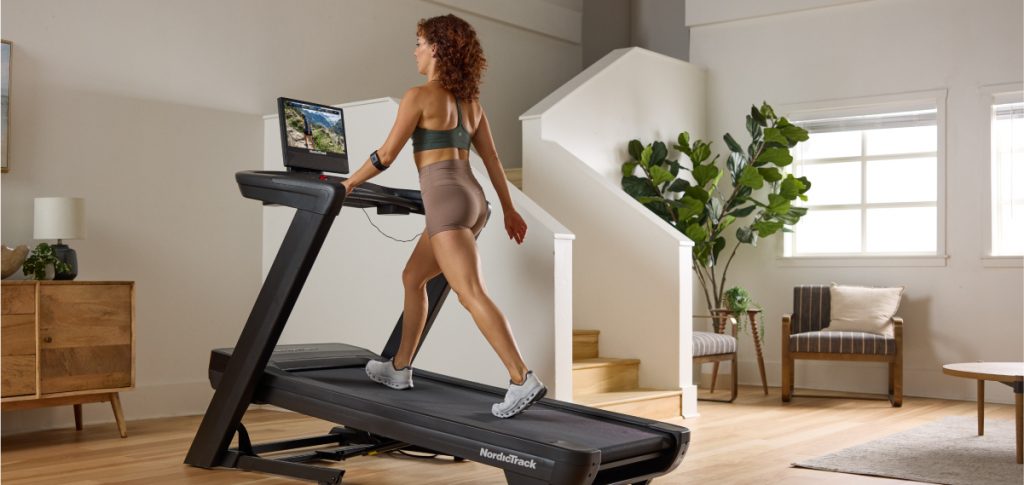
How to use an incline treadmill for stronger calves
Good technique matters more than simply choosing a high incline. Keep your steps controlled and let your ankles move naturally.
Follow this simple workout:
- Warm up at 0% to 2% incline for five minutes.
- Walk for five minutes at a 4% incline.
- Increase to 6% to 8% incline for three minutes.
- Return to 3% to 4% incline for two minutes.
- Repeat the incline block three to five times.
- Cool down at a low incline for five minutes.
Use this session two or three times each week. Leave at least one day between harder uphill workouts at first.
For a beginner, try 20 to 30 total minutes. A trained person may use 30 to 45 minutes, depending on recovery and other leg training.
During the session:
• Keep your chest lifted
• Look ahead instead of down
• Take short, natural steps
• Push through the whole foot
• Let the heel lower when comfortable
• Keep your hands off the rails
• Stop if you feel sharp pain
One common mistake I have seen in treadmill training is treating the handrails like a safety net. Holding the rails supports part of your body weight and reduces the work your legs must do. It can also place your body in a poor position.
If balance is a concern, lower the speed and incline. Safety comes first.

Common mistakes that limit calf results
Some habits make incline treadmill training less effective. They may also increase stress on the ankles and Achilles tendons.
Holding the handrails
Leaning on the handles removes part of the load from your legs. You may think you are walking at a steep incline, but your calves may be doing much less work than expected.
Using an extreme incline too soon
A steep incline can overload tissues that are not ready. The calf muscle may feel fine during the workout, while the Achilles tendon becomes sore later.
Walking only on your toes
Staying on your toes can create extra calf tension, but it is not a natural walking pattern. It may increase strain on the Achilles tendon and forefoot.
Taking very long steps
Long steps can reduce control and place more stress on the lower leg. Shorter steps often work better on an incline.
Ignoring recovery
Calves work during daily walking, standing, stairs, running, and sports. They may need more recovery than you expect, especially when you add incline training.
Expecting fast visual changes
Calf size is affected by genetics, muscle length, body weight, training history, and nutrition. Some people respond quickly, while others gain strength before they see much change.
How to combine incline walking with calf raises
If your goal is stronger or larger calves, combine cardio with resistance training. The treadmill builds work capacity, while calf raises provide focused overload.
A simple weekly plan could look like this:
Day 1: Incline treadmill
Walk for 25 to 35 minutes. Use a 5% to 8% incline with a pace you can control.
Day 2: Direct calf training
Perform:
• Standing calf raises: 3 sets of 8 to 15 reps
• Seated calf raises: 3 sets of 12 to 20 reps
• Tibialis raises: 2 sets of 15 to 20 reps
Day 3: Easy movement
Take a flat walk or rest. Gentle movement can help reduce stiffness.
Day 4: Incline intervals
Alternate two minutes at a moderate incline with two minutes at a low incline for 20 to 30 minutes.
Day 5: Direct calf training
Repeat calf raises, but use a different rep range or a slightly different exercise.
Increase the load only when you can complete each rep with full control. Pause briefly at the top, lower slowly, and use a comfortable range of motion.
Does incline treadmill build calves better when used before calf raises? It depends on your priority. If calf growth is the main goal, do calf raises first while your muscles are fresh. If cardio fitness is the priority, perform the treadmill workout first.
Nutrition and recovery for calf development
Training gives your body a reason to adapt. Recovery gives it the chance to do so.
Eat enough protein to support muscle repair. Many active adults can benefit from roughly 1.2 to 2.0 grams of protein per kilogram of body weight per day, depending on their goals, total diet, and training level. People with kidney disease or other medical concerns should ask a health professional before making major protein changes.
Sleep also matters. Aim for seven to nine hours when possible. Poor sleep can affect exercise performance, pain sensitivity, and recovery.
Other useful habits include:
• Drink enough fluid throughout the day
• Eat enough total calories for your goal
• Warm up before hard incline work
• Increase training slowly
• Wear supportive shoes with a good fit
• Track soreness and performance
Mild muscle fatigue is normal. Sharp pain, swelling, bruising, or pain that changes your walking pattern is not. Stop training and seek medical advice if those symptoms occur.
People with a history of Achilles tendinopathy, plantar fasciitis, calf strains, circulation problems, or significant joint pain should get personalized guidance before starting steep incline workouts.
What results can you expect?
Results vary, but most people notice changes in stages. You may first feel better endurance during hills and stairs. Strength and work capacity often improve before visible muscle growth.
With consistent training, you may notice:
• Less fatigue during uphill walking
• Better control during push-off
• Improved lower-leg endurance
• Stronger performance in calf raises
• More muscle firmness
• Gradual increases in calf size
Take measurements or photos every four to six weeks if you want to track visual changes. Daily mirror checks are not reliable because hydration, lighting, and muscle pumps can change how your legs look.
Does incline treadmill build calves in two weeks? It may improve how your calves feel, but noticeable muscle growth usually takes longer. Give a training plan several weeks or months, and judge progress by strength, endurance, and measurements rather than appearance alone.
Genetics also play a role. Some people naturally have larger calves due to muscle structure and tendon length. That does not mean training is useless. It means your best comparison is with your own past performance.
Frequently Asked Questions About Does Incline Treadmill Build Calves
Does incline treadmill build calves more than running?
Incline treadmill walking can place strong, steady demand on the calves, while running adds more impact and faster force production. The better option depends on your goal, fitness, joints, and injury history.
How long should I walk on an incline to work my calves?
Start with 20 to 30 minutes, two or three times per week. Use a moderate incline and increase time or incline slowly as your calves and Achilles tendons adapt.
Is a 12-3-30 workout good for calf growth?
The 12-3-30 workout uses a 12% incline, 3 miles per hour, and 30 minutes of walking. It can challenge the calves, but it is not automatically better for muscle growth than a lower incline with better form and progressive training.
Can incline treadmill replace calf raises?
It can support calf strength and endurance, but it usually cannot replace calf raises for maximum muscle growth. Calf raises allow more direct resistance and easier progression.
Should I incline walk every day to build calves?
Daily incline walking may be too much for beginners and can irritate the calves or Achilles tendons. Start with two or three sessions per week and add more only when you recover well.
Why do my calves hurt after incline treadmill walking?
New or harder incline training can cause normal muscle soreness. Sharp pain, swelling, bruising, or pain near the Achilles tendon may signal an injury and should not be ignored.
Should I hold the treadmill handles on an incline?
Avoid holding the handles unless you need them for balance or safety. Holding them can reduce the workload on your calves and change your walking posture.
Conclusion
So, does incline treadmill build calves? Yes, it can strengthen and modestly develop them by increasing uphill demand and repeated ankle work. It is especially useful for beginners, calf endurance, and adding lower-leg work to a cardio session.
For greater calf growth, use a moderate incline, maintain good posture, progress slowly, and add standing and seated calf raises. Listen to your body, protect your Achilles tendons, and track progress over several weeks rather than expecting instant changes. Try the plan above during your next workout, and share your results or questions in the comments.

Brandon Knoxley is a sport & fitness writer and training guide contributor at MySportFitHub. He focuses on practical workouts, performance-based training, and honest fitness gear insights designed for real people and real results. Brandon is passionate about helping beginners and active individuals train smarter, avoid common mistakes, and build sustainable fitness habits.