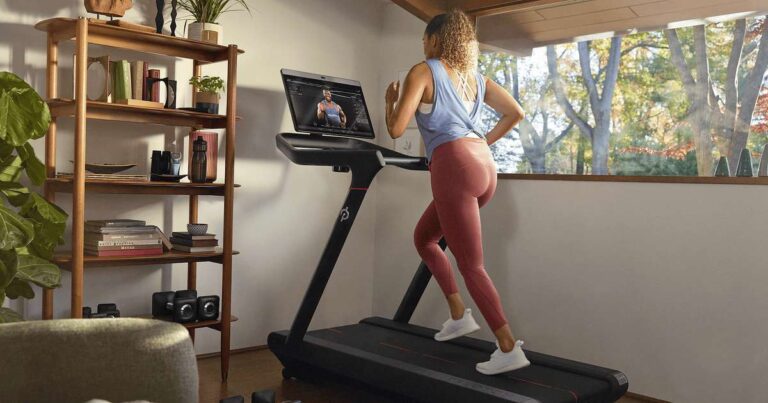
How Many Watts Does A Treadmill Use: Power Guide
Most home treadmills use 300 to 1,500 watts during exercise, with speed, incline, and user weight driving demand.
Knowing how many watts a treadmill uses helps you estimate electricity costs, choose the right outlet, and avoid overloading a circuit. The number on the motor label tells only part of the story, so this guide explains real-world power use, energy costs, testing methods, and ways to reduce waste.
How many watts does a treadmill use?
Most home treadmills use about 300 to 1,500 watts while running. A light walk may use 300 to 600 watts, while jogging or running often uses 700 to 1,500 watts.
Some large commercial treadmills can draw more than 2,000 watts during hard use. A treadmill may also use a small amount of power when switched on but not running.
Typical power use looks like this:
• Standby mode: 3 to 10 watts
• Slow walking: 300 to 500 watts
• Fast walking: 500 to 800 watts
• Light jogging: 700 to 1,100 watts
• Fast running: 1,000 to 1,800 watts
• Steep incline or heavy load: 1,500 to 2,500 watts for short periods
These figures are estimates, not fixed rules. The actual answer to how many watts a treadmill uses depends on the motor, belt design, incline, speed, user weight, lubrication, and machine age.

What determines treadmill wattage?
Treadmill power use changes during every workout. The motor works harder when it must move the belt faster or lift more weight.
Motor size
Treadmill motors are often described in horsepower. You may see labels such as 2.0 HP, 2.5 CHP, or 4.0 CHP. CHP means continuous-duty horsepower, which describes the motor’s ability to work steadily over time.
Horsepower does not equal the treadmill’s exact electricity use. One mechanical horsepower equals about 746 watts of output, but a motor also loses energy as heat and friction. A 2.5 CHP treadmill may therefore draw more than 1,800 watts during demanding use.
Walking speed
Speed has a direct effect on power demand. A slow walk creates less resistance than a fast run, so the motor needs less energy.
A person walking at 2.5 miles per hour may use far less power than the same person running at 8 miles per hour. This is one reason how many watts a treadmill uses can change from minute to minute.
Incline setting
Incline is one of the biggest factors in energy use. Raising the deck forces the motor to move the belt and user upward, much like driving a car up a hill.
A treadmill at a 10% incline can use much more power than the same treadmill at 0%. Short incline intervals may create brief spikes in wattage.
User weight
A heavier user places more load on the belt and motor. This does not mean the treadmill is unsafe for heavier users, but it may use more electricity during the same workout.
User weight also matters more when combined with high speed or incline. The three factors work together.
Belt condition
A dry or poorly adjusted belt increases friction. The motor must then work harder, which raises wattage and may shorten its life.
Regular cleaning and lubrication can help the belt move smoothly. Always follow the maintenance instructions in the owner’s manual because some belts do not require standard silicone lubricant.
Treadmill watts versus treadmill energy use
Watts measure the rate of electricity use at a specific moment. Kilowatt-hours measure the total energy used over time.
To convert watts into kilowatts, divide the watt value by 1,000. Then multiply by the number of hours used.
The basic formula is:
Energy used in kilowatt-hours = watts ÷ 1,000 × hours
For example, imagine a treadmill uses 900 watts during a 45-minute workout:
- Convert 900 watts to 0.9 kilowatts.
- Convert 45 minutes to 0.75 hours.
- Multiply 0.9 by 0.75.
- The workout uses about 0.675 kilowatt-hours.
If your electricity rate is 16 cents per kilowatt-hour, that workout costs about 11 cents.
This explains why how many watts a treadmill uses is useful, but wattage alone does not show the full cost. Workout length matters just as much.

How much does it cost to run a treadmill?
The cost depends on power use, workout time, and your local electricity rate. Electricity prices vary across the United States, so use the rate shown on your utility bill for the best estimate.
Here are sample monthly costs for a treadmill that averages 1,000 watts:
| Workout schedule | Monthly energy use | Cost at $0.16 per kWh |
|---|---|---|
| 30 minutes, 3 days each week | 6.5 kWh | About $1.04 |
| 30 minutes, 5 days each week | 10.8 kWh | About $1.73 |
| 60 minutes, 5 days each week | 21.7 kWh | About $3.47 |
| 60 minutes daily | 30 kWh | About $4.80 |
These numbers exclude small standby use. In most homes, the treadmill itself is not a major source of electricity expense.
For example, a television, space heater, clothes dryer, or air conditioner can use more energy in a shorter period. Still, checking how many watts a treadmill uses can help you plan a home gym and understand your total energy use.

How to measure treadmill wattage accurately
The most reliable way to learn how many watts a treadmill uses is to measure it while operating. A plug-in electricity meter can show watts, amps, volts, and kilowatt-hours.
Follow these steps:
- Plug the electricity meter into a properly grounded wall outlet.
- Plug the treadmill into the meter.
- Turn on the treadmill without starting the belt.
- Record standby or idle power.
- Walk for several minutes at a slow speed.
- Record the average wattage.
- Repeat at a faster speed and higher incline.
- Compare the readings with the treadmill’s label and manual.
Take readings for at least five minutes at each setting. A short reading may capture only a temporary spike.
Some meters show instant watts, while others show average watts. Average watts are more useful for estimating an entire workout.
Avoid using a cheap extension cord or an undersized power strip during testing. Many treadmill makers advise plugging the machine directly into a grounded wall outlet. Follow the manufacturer’s electrical instructions before using any measuring device.

Why the motor label does not give exact wattage
A treadmill motor rating is not the same as its real-time electrical draw. The label may show peak horsepower, continuous horsepower, voltage, and current, but these numbers describe capability rather than constant use.
For example, a treadmill marked 120 volts and 15 amps has a theoretical maximum of about 1,800 watts:
120 volts × 15 amps = 1,800 watts
The machine may use much less than that during a slow walk. The rating often reflects the circuit and maximum expected load, not the average power used during every workout.
Power can also vary because of motor efficiency. Two treadmills with similar horsepower ratings may use different amounts of electricity because of belt design, electronics, control systems, and mechanical resistance.
This is why a direct meter reading is the best answer to how many watts a treadmill uses in your home.

Can a treadmill overload a household circuit?
A treadmill can overload a circuit if it shares power with high-draw appliances or if the circuit is not suitable for the machine. Many residential treadmills are designed for a grounded 120-volt circuit, but exact requirements vary.
Before plugging in a treadmill, check:
• The voltage listed in the manual
• The recommended circuit amperage
• Whether the outlet is grounded
• Whether other large appliances share the circuit
• Whether the circuit breaker trips during use
Do not remove the ground pin, use an unapproved adapter, or connect the treadmill through a long, thin extension cord. These shortcuts can create heat and electrical risk.
If the breaker trips often, stop using the machine and ask a qualified electrician to inspect the circuit. A higher-rated breaker should never be installed simply to stop nuisance trips. The wiring must support the circuit rating.

How to lower treadmill electricity use
You can reduce power use without making workouts less effective. The biggest gains usually come from smooth maintenance and sensible workout settings.
• Lubricate the belt only as directed by the manufacturer.
• Keep the walking surface clean and free from dust.
• Place the treadmill on a firm, level surface.
• Use a moderate speed when a brisk walk meets your fitness goal.
• Avoid leaving the treadmill powered on when it is not in use.
• Turn off the main switch after each workout if the manual permits it.
• Replace a worn belt when it slips, drags, or creates unusual noise.
• Keep the motor cover and air vents clear.
• Use the correct user weight and maintenance settings in the manual.
In my experience with treadmill power checks, poor belt maintenance is an easy issue to miss. A belt can feel only slightly tight or sluggish, yet the motor may draw noticeably more power. A few minutes of regular care can improve feel, noise, and energy use at the same time.
Do not reduce belt tension too much in an attempt to save electricity. A slipping belt can be unsafe and may damage the motor or rollers.

Treadmill standby power and phantom load
A treadmill can use electricity even when the belt is not moving. The display, control board, wireless connection, and safety systems may remain active in standby mode.
Standby use is usually small, often only a few watts. However, a treadmill that stays powered for a full year can consume more energy than one that is switched off after each workout.
Suppose a treadmill uses 8 watts in standby for 24 hours each day:
0.008 kilowatts × 24 hours × 365 days = 70.1 kilowatt-hours
At 16 cents per kilowatt-hour, that equals about $11.20 per year. This is not a large cost, but turning the machine off also reduces heat and protects against some power disturbances.
Use the physical power switch if the manufacturer recommends it. Unplugging the treadmill after every workout may be inconvenient and may not be necessary in every home.
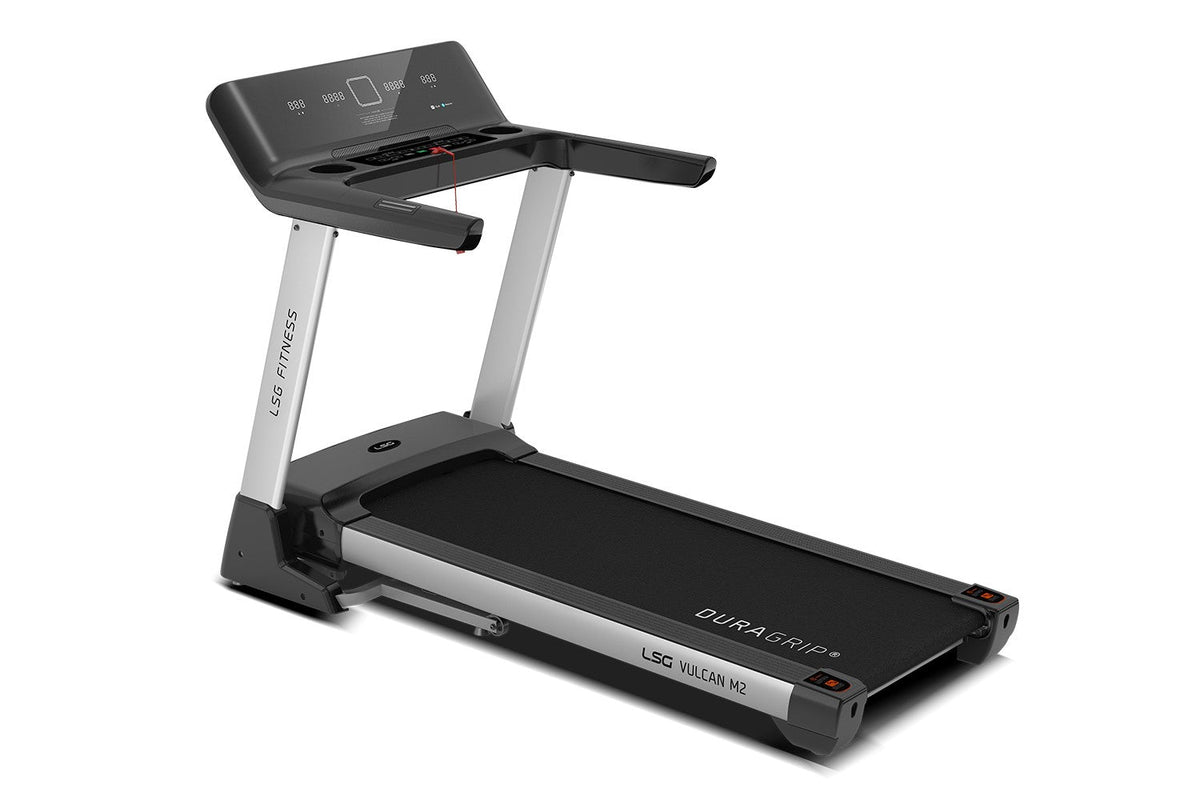
Treadmill wattage compared with other exercise equipment
How many watts a treadmill uses becomes clearer when you compare it with other home fitness machines.
• Exercise bikes often use little electricity unless they include a powered display or resistance system.
• Ellipticals may use similar standby power but usually do not need a large drive motor.
• Rowing machines often use almost no electricity unless they have a powered screen.
• Stair climbers may use several hundred watts, depending on their motor and resistance system.
• A compact walking pad may use about 150 to 600 watts during normal use.
• A space heater commonly uses about 1,500 watts, often more than a treadmill during light walking.
Treadmills tend to use more electricity because they continuously move a belt under the user. Still, regular treadmill use usually adds only a modest amount to a household power bill.
Common mistakes when estimating treadmill power
Many wattage estimates are wrong because they rely on the motor’s advertised horsepower alone. That number does not account for speed, incline, belt friction, or workout time.
Other common mistakes include:
• Treating maximum wattage as average wattage
• Ignoring standby power
• Forgetting to convert minutes into hours
• Using the wrong local electricity rate
• Assuming walking and running use equal power
• Measuring only the first few seconds of a workout
• Confusing volts, amps, watts, and watt-hours
A practical estimate should use average watts over a full workout. If you do not have a meter, use a range rather than one precise number.
For example, estimating 500 to 1,200 watts for a mixed walking and jogging session is usually more honest than claiming the treadmill always uses exactly 800 watts.
Safety tips for treadmill electrical use
Electrical safety matters more than small energy savings. Treadmills combine a powerful motor, a moving belt, and household electricity.
Use these precautions:
• Plug the treadmill into a grounded outlet.
• Follow the circuit instructions in the owner’s manual.
• Keep the cord away from the belt and walking path.
• Do not use a damaged cord or loose outlet.
• Keep the treadmill away from wet areas.
• Stop using the machine if you smell burning or see sparks.
• Unplug it before cleaning or servicing.
• Have electrical repairs completed by a qualified professional.
If the treadmill makes a grinding sound, slows under normal use, or trips the breaker, the problem may involve the belt, motor, roller, or circuit. Do not assume that adding a stronger fuse or breaker solves the issue.
Frequently Asked Questions About How Many Watts a Treadmill Uses
How many watts does a treadmill use while walking?
A home treadmill commonly uses about 300 to 800 watts while walking. Speed, incline, user weight, motor efficiency, and belt condition can move the actual number higher or lower.
How many watts does a treadmill use while running?
Running often requires about 700 to 1,500 watts, although fast running on a steep incline may use more. The best way to find the exact figure is to use a plug-in power meter.
Does a treadmill use a lot of electricity?
Most treadmills do not use a large amount of electricity compared with major household appliances. A treadmill averaging 1,000 watts for one hour uses about 1 kilowatt-hour of energy.
How much does it cost to run a treadmill for one hour?
If the treadmill averages 1,000 watts and electricity costs 16 cents per kilowatt-hour, one hour costs about 16 cents. Your actual cost depends on average wattage and your local utility rate.
Does treadmill incline increase wattage?
Yes, incline usually increases wattage because the motor must move the belt and user upward. A steep incline can raise power use much more than a small increase in walking speed.
Can I run a treadmill on a normal household outlet?
Many home treadmills use a standard grounded 120-volt outlet, but this is not true for every model. Check the manual and electrical label before connecting the machine.
Does treadmill horsepower equal watts?
No. Horsepower describes mechanical output or motor capacity, while watts describe electrical power use. Motor losses mean a treadmill’s electrical wattage can be higher than its horsepower conversion.
Conclusion
How many watts a treadmill uses depends on speed, incline, user weight, motor size, belt condition, and workout length. Most home models use roughly 300 to 1,500 watts during exercise, with higher readings possible during fast running or steep incline work.
For the most accurate result, measure the treadmill with a plug-in electricity meter and calculate kilowatt-hours from the average reading. Keep the belt clean, follow electrical safety rules, and use the machine’s manual as the final guide.
Check your treadmill’s real power use during your next workout, then share your results or explore more home fitness energy tips.

Brandon Knoxley is a sport & fitness writer and training guide contributor at MySportFitHub. He focuses on practical workouts, performance-based training, and honest fitness gear insights designed for real people and real results. Brandon is passionate about helping beginners and active individuals train smarter, avoid common mistakes, and build sustainable fitness habits.