Are Dumbbells The Same As Weights: Key Differences
Dumbbells are a type of weight, but not every weight is a dumbbell.
Understanding the difference between dumbbells and other weights helps you choose better equipment, plan safer workouts, and train each muscle with purpose. After years of seeing people use gym equipment in many ways, I have found that the simple answer often hides useful details about resistance, movement, and exercise goals.
Are dumbbells the same as weights?
Yes, dumbbells are weights, but “weights” is a broad term. It can describe many tools that add resistance to exercise, including dumbbells, barbells, kettlebells, weight plates, medicine balls, ankle weights, and resistance machines.
Think of the word “weights” as a large family. Dumbbells are one member of that family. So, when someone asks, “Are dumbbells the same as weights?” the most accurate answer is that dumbbells are a specific type of weight used for strength training.
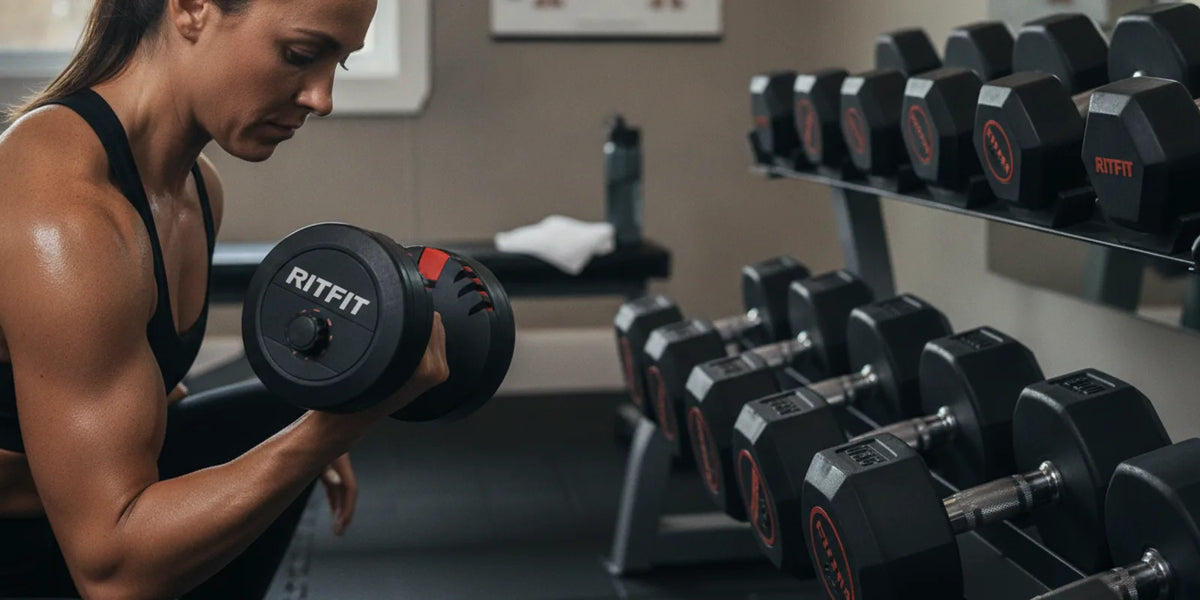
A dumbbell usually has a short handle with weight on both sides. You hold one dumbbell in each hand, although some exercises use only one. This design lets you train each side of your body separately.
The word “weights” may also refer to:
• Free weights, such as dumbbells, barbells, kettlebells, and weight plates
• Fixed weights, such as a single 20-pound dumbbell
• Adjustable weights, which let you change the load
• Machine weights, which guide the movement along a set path
• Wearable weights, such as weighted vests and ankle weights
This difference matters because each type changes how your body moves, balances, and controls resistance.
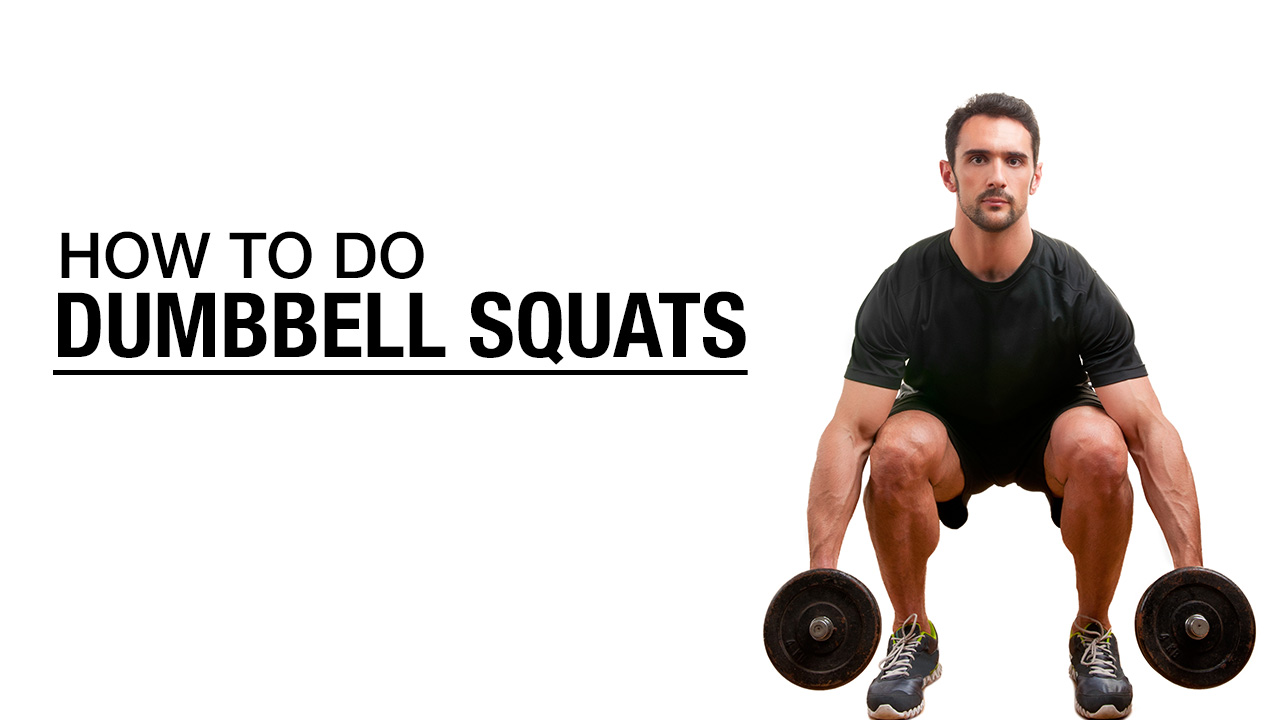
What makes dumbbells different from other weights?
Dumbbells are different because they offer two separate loads and allow a wide range of movement. Unlike a barbell, which connects both hands to one bar, dumbbells let your arms move more freely.
For example, during a dumbbell bench press, your left and right arms work on their own. If one arm is weaker, it cannot rely as much on the stronger side. This can help reveal and address strength imbalances.
Dumbbells also require more control than many weight machines. Each hand must guide its own weight. Your smaller stabilizing muscles may work harder to keep your joints and body in a safe position.
Here are some key traits of dumbbells:
• They usually come in pairs, but single dumbbells are also useful
• They allow separate movement for each arm or leg
• They support exercises for nearly every major muscle group
• They take up less space than many home gym systems
• They come in fixed and adjustable designs
• They can suit beginners, athletes, and experienced lifters
A barbell may let you lift more total weight. A machine may offer more support. Dumbbells sit between those options by giving you freedom while still providing a clear load to lift.
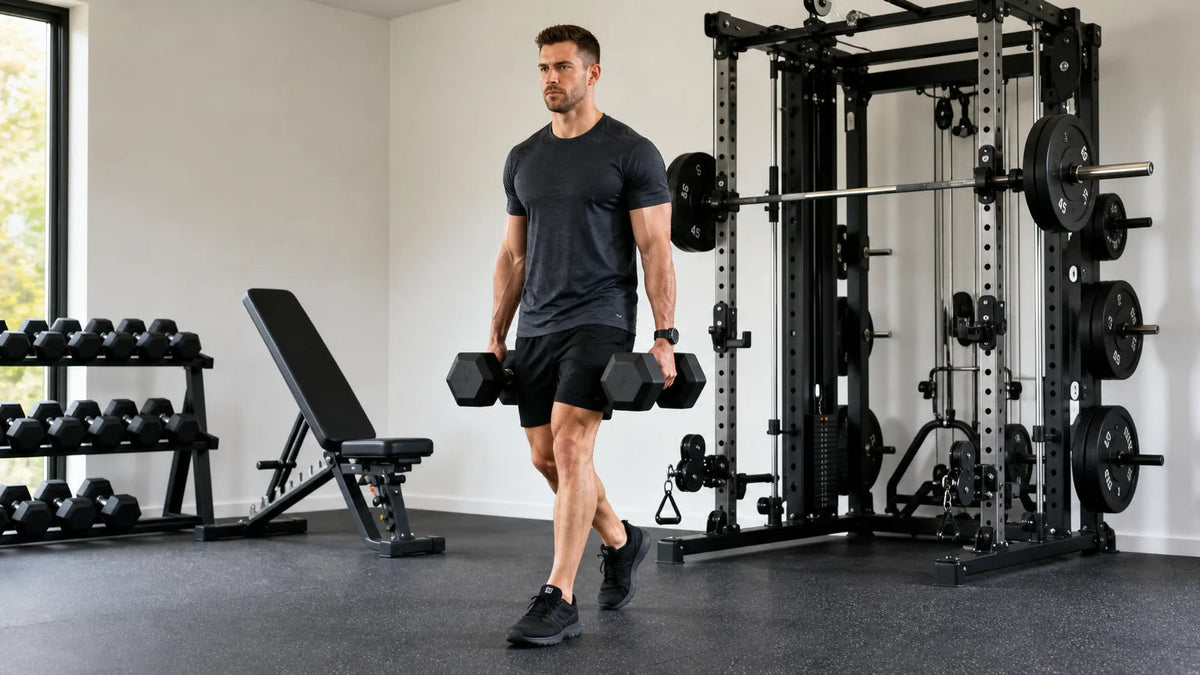
Types of dumbbells
Not all dumbbells work in the same way. The best type depends on your space, budget, training style, and comfort.
Fixed dumbbells
Fixed dumbbells have a set weight that cannot be changed. Common examples include 5-pound, 10-pound, 25-pound, and 50-pound dumbbells.
They are simple to use. You can pick them up and begin your exercise without setting up plates or pins. They are also common in commercial gyms because they are quick to organize.
Their main drawback is space. If you want many weight options at home, you may need a full rack.
Adjustable dumbbells
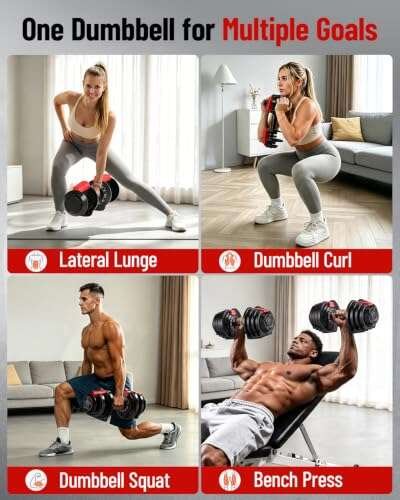
Adjustable dumbbells allow you to change the load by adding plates, turning a dial, or moving a selector pin. One pair may replace several fixed dumbbells.
They are useful for home workouts and small spaces. However, some models feel less balanced than fixed dumbbells. The adjustment system may also need careful handling.
Hex dumbbells
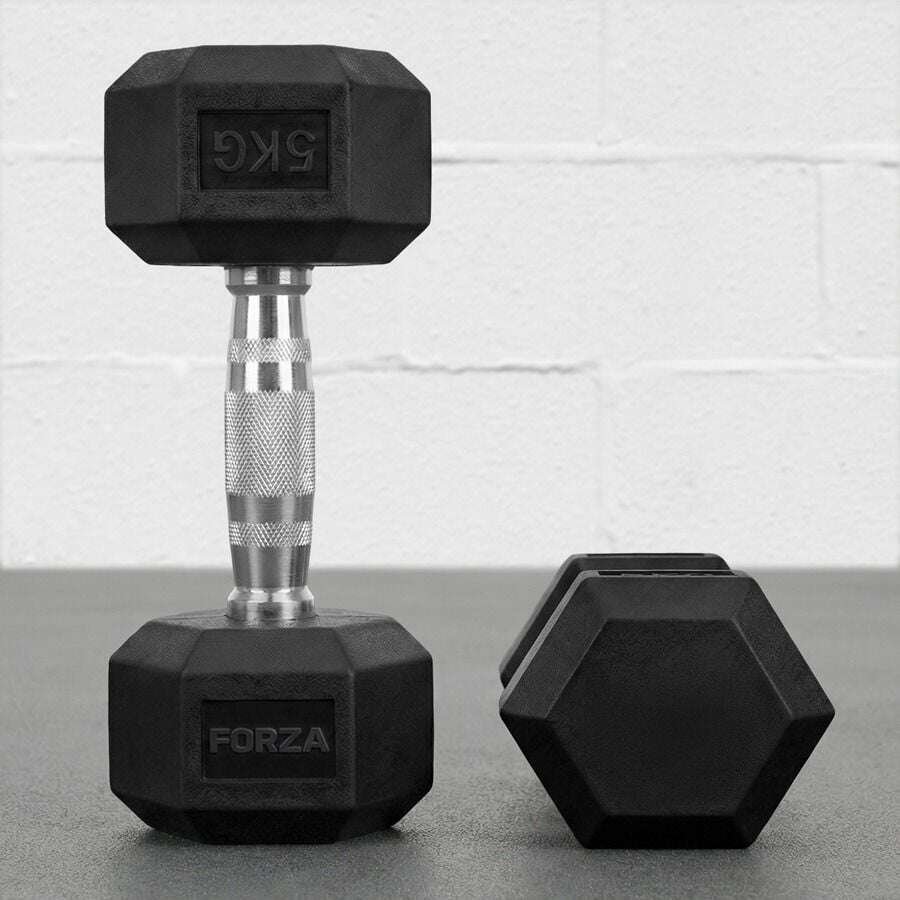
Hex dumbbells have flat sides. They are less likely to roll across the floor, which makes them useful for home gyms.
You can also place them on the floor for exercises such as renegade rows and pushups. Their shape may feel less smooth during certain movements, but many people like their stability.
Rubber and neoprene dumbbells
Rubber dumbbells often protect floors and reduce noise. Neoprene dumbbells have a soft coating and are common for light exercise, walking workouts, and group fitness classes.
These coatings can improve grip and comfort. They may not be ideal for very heavy lifting because the outer material can wear over time.
Loadable dumbbells
Loadable dumbbells use plates that you add to a short bar. They work much like a small barbell and may allow heavier training.
They require more setup than fixed dumbbells. The plates must also be secured with collars before you exercise.

Dumbbells versus barbells
Dumbbells and barbells are both free weights, but they create different training demands.
A barbell connects your hands. This can make it easier to control a heavy load and lift more total weight. It can also reduce some of the balance demands because both arms share the same bar.
Dumbbells separate your hands. This usually gives you more freedom of movement, but it also requires more control.
| Feature | Dumbbells | Barbells |
|---|---|---|
| Hand position | Each hand moves separately | Both hands hold one bar |
| Balance demand | Often higher | Often lower for some lifts |
| Load potential | Moderate to high | Usually very high |
| Muscle imbalance | Easier to notice | Easier for one side to assist the other |
| Space needed | Low to moderate | Moderate |
| Best use | Unilateral work and flexible movement | Heavy compound lifts |
Neither tool is automatically better. A dumbbell bench press may feel more natural for your shoulders, while a barbell bench press may help you lift more weight. Your goals, experience, and joint comfort should guide the choice.
Dumbbells versus kettlebells
Kettlebells are also weights, but their shape and handle position change how they feel. The handle sits above the main mass, while a dumbbell usually places the load on both sides of your hand.
This design makes kettlebells useful for swinging, carrying, and explosive movements. Dumbbells often feel more predictable for presses, curls, rows, and controlled strength exercises.
Dumbbells may be the better choice when you want:
• A balanced load for pressing exercises
• Simple arm and shoulder movements
• Separate work for the left and right sides
• Easy weight changes in small steps
Kettlebells may be useful when you want:
• Swings and other power exercises
• Loaded carries
• A compact tool for conditioning workouts
• Movements that challenge grip and hip power
Both tools can build strength. The difference is not the quality of the weight. It is the shape, grip, balance, and movement pattern.

What are the benefits of using dumbbells?
Dumbbells can support strength, muscle growth, coordination, and daily movement. They are useful because they offer resistance without forcing your body into one exact path.
They help correct strength imbalances
Many people have one arm or leg that is stronger than the other. A barbell can hide this difference because the stronger side may do more work.
Dumbbell exercises make each side carry its own load. This can help you notice weak points and train them more evenly. Start with the weaker side, then match the same number of repetitions on the stronger side.
They train stabilizing muscles
When you lift two separate dumbbells, your body must control each weight. Your shoulder, wrist, trunk, and hip muscles may work to keep you steady.
This does not mean every dumbbell exercise is harder than every barbell exercise. It means the challenge is often different. Stability can become a limiting factor before your main muscle reaches its full strength.
They support natural movement
Dumbbells allow you to adjust your hand and wrist position. A neutral grip, with your palms facing each other, may feel more comfortable than a fixed bar position.
This freedom can help people who have stiff shoulders or a history of discomfort. Still, pain is a reason to stop and seek advice from a qualified health professional.
They work well in small spaces
A pair of adjustable dumbbells can support exercises for your chest, back, shoulders, arms, legs, and core. This makes them practical for apartments, bedrooms, and small home gyms.
You do not need a large machine setup to perform a full body workout. A bench or stable chair can add even more options.
They are easy to scale
You can change the number of repetitions, sets, lifting speed, and weight. This makes dumbbells useful for beginners and advanced lifters.
A new user may start with 5-pound dumbbells for shoulder raises. A stronger lifter may use much heavier dumbbells for squats, rows, or presses.

Limitations of dumbbells
Dumbbells are useful, but they are not perfect for every goal. Knowing their limits can help you train with better judgment.
One challenge is that heavy dumbbells can be hard to move into position. Getting two 80-pound dumbbells onto your shoulders for a press takes strength before the main exercise even begins.
Dumbbells can also place more demand on grip. Your hands may tire before your legs or back during lunges, rows, or loaded carries.
Other limitations include:
• Heavy pairs can be expensive
• Fixed dumbbells can take up a lot of storage space
• Adjustable models may take time to change
• Some exercises are easier with a barbell or machine
• Dropping heavy dumbbells can damage floors or equipment
• Poor form can increase stress on the wrists, shoulders, or lower back
I have seen people choose a weight that is too heavy because the first few repetitions felt easy. The problem often appears later in the set, when the body begins to twist or the joints lose control. A lighter dumbbell with smooth form usually provides a better training effect than a heavier dumbbell lifted poorly.
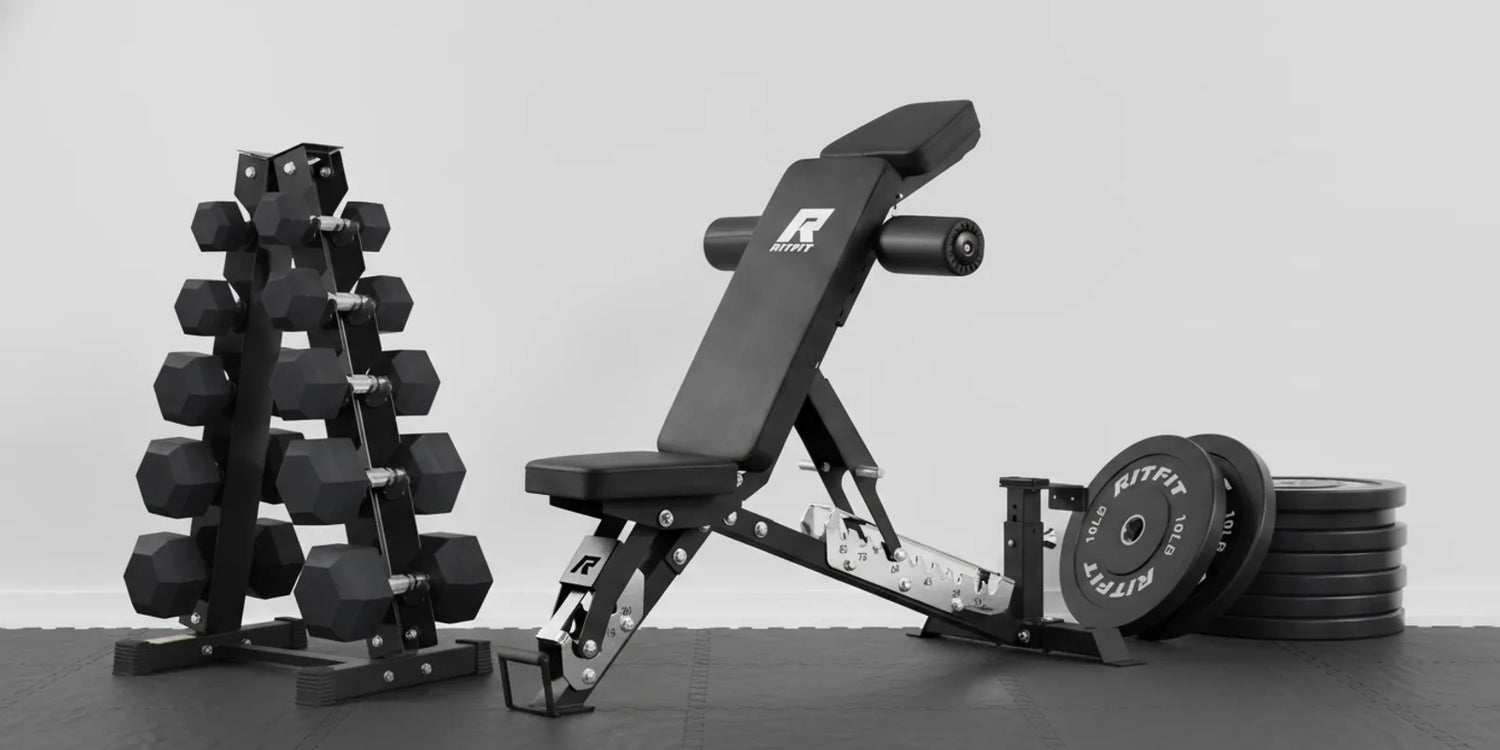
How heavy should your dumbbells be?
The right dumbbell weight depends on the exercise, your training history, and your goal. A weight that is suitable for a biceps curl may be far too light for a squat.
For general strength training, choose a weight that allows you to complete your target repetitions with good form. The final few repetitions should feel challenging, but you should not need to swing, twist, or hold your breath for too long.
A practical starting guide is:
• Large lower body exercises often use heavier dumbbells
• Smaller upper body exercises often use lighter dumbbells
• Beginners should start lighter while learning technique
• Power exercises require a weight you can move quickly and safely
• Rehabilitation exercises may require very light resistance
Try this simple process:
-
Choose a light starting weight.
-
Perform the exercise for 8 to 12 controlled repetitions.
-
Check your posture, range of motion, and breathing.
-
Increase the weight slightly if the set feels too easy.
-
Reduce the weight if your form breaks down.
The American College of Sports Medicine supports progressive resistance training, which means gradually increasing the challenge as your body adapts. You do not need to increase the weight every workout. More repetitions, better control, or an extra set can also create progress.
Can dumbbells build muscle and strength?
Yes, dumbbells can build muscle and strength when you use enough resistance, train consistently, and recover well.
Muscle growth depends on several factors:
• Regular resistance training
• Enough challenging sets
• Adequate protein and total food intake
• Quality sleep and recovery
• Gradual increases in training demand
You can build muscle with dumbbell presses, rows, squats, lunges, deadlifts, curls, and overhead extensions. The exercise must challenge the target muscles through a useful range of motion.
Strength gains can also come from better coordination. During the first weeks of training, your nervous system learns how to control the movement. This is why a beginner may become stronger before seeing a large change in muscle size.
Dumbbells may eventually become too light for certain advanced goals. If you can perform many repetitions without a meaningful challenge, you may need heavier dumbbells, slower repetitions, more difficult variations, or another tool.
Are dumbbells good for beginners?
Dumbbells are often an excellent choice for beginners because they are simple, flexible, and easy to scale. However, beginners should first learn how to move safely.
Start with basic exercises such as:
• Goblet squats
• Dumbbell deadlifts
• Supported dumbbell rows
• Floor presses
• Seated shoulder presses
• Biceps curls
• Farmer carries
Use a mirror or record a short video to check your form. Keep your movements slow enough to stay in control. It is also wise to learn from a certified fitness professional if you are unsure about technique.
A common beginner mistake is copying the weight used by someone else. Your correct weight depends on your body, exercise skill, and current strength. Focus on clean repetitions rather than impressive numbers.
How to use dumbbells safely
Safe training starts before you lift the first dumbbell. Check the handles, plates, collars, and floor space. Make sure the weight is secure and that you have a clear path for movement.
Use these safety tips:
• Warm up with light movement before hard sets
• Keep your spine in a comfortable, controlled position
• Move through a range of motion you can manage
• Do not hold your breath for long periods
• Keep weights away from children and pets
• Place dumbbells down with control
• Stop if you feel sharp pain, numbness, or sudden weakness
• Ask a professional for guidance if you have an injury or medical condition
For heavy dumbbell exercises, use a spotter or train near equipment that can support you. Do not throw dumbbells onto the floor unless they are designed for that use and the surface can handle the impact.
A simple full body dumbbell workout
This sample workout uses basic movements and can suit many healthy adults. Adjust the load and repetitions to your ability.
Complete 2 to 3 rounds:
-
Goblet squat: 8 to 12 repetitions
-
Dumbbell floor press: 8 to 12 repetitions
-
One arm row: 8 to 12 repetitions per side
-
Dumbbell Romanian deadlift: 8 to 12 repetitions
-
Seated shoulder press: 8 to 10 repetitions
-
Farmer carry: 20 to 40 seconds
Rest for about 60 to 120 seconds between rounds. Use a lighter weight if you cannot keep control through each repetition.
This routine trains the legs, chest, back, shoulders, arms, grip, and core. As it becomes easier, add a small amount of weight, one or two repetitions, or another set.
How to choose dumbbells for home use
Your best dumbbells depend on how often you train and how much room you have.
Fixed dumbbells are a good choice when you want quick workouts and do not mind using storage space. Adjustable dumbbells are often better when you want many weight options in a small area.
Look for:
• A handle that feels secure but not sharp
• Weight markings that are easy to read
• Strong adjustment parts on adjustable models
• A shape that does not roll easily
• A coating that protects your floor
• A weight range that supports your long term goals
Avoid buying only one very heavy pair if you are still learning. A lighter pair may be more useful for shoulder work, upper body exercises, and warmups.
Frequently Asked Questions About Are Dumbbells the Same as Weights
Are dumbbells considered free weights?
Yes. Dumbbells are free weights because they are not attached to a machine or fixed movement path. Barbells, kettlebells, and weight plates are also common free weights.
Is a dumbbell the same as a weight plate?
No. Both provide resistance, but they have different designs. A dumbbell has a handle for direct use, while a weight plate is usually placed on a bar or held during a specific exercise.
Are dumbbells better than machines?
Neither option is always better. Dumbbells offer more freedom and require more balance, while machines can provide support and a guided movement path.
Can you build muscle with only dumbbells?
Yes, you can build significant muscle with dumbbells if your workouts are challenging and consistent. You may eventually need heavier equipment or different exercises as your strength increases.
Should beginners use dumbbells or barbells?
Many beginners find dumbbells easier to learn because they allow a natural hand position and lighter starting loads. A qualified trainer can help you choose based on your goals, mobility, and experience.
Are heavier dumbbells always better?
No. The best weight is one you can lift with safe, controlled form for your target repetitions. A weight that is too heavy may reduce the value of the exercise and increase injury risk.
Conclusion
Dumbbells are weights, but they are only one type of weight. They offer separate resistance for each hand, support natural movement, and work well for strength training at home or in a gym.
The answer to “are dumbbells the same as weights?” is simple: dumbbells are a specific form of weight, while the word “weights” includes many different tools. Choose the equipment that matches your goals, start with a manageable load, and increase the challenge over time.
Pick up a pair, practice the basics, and focus on steady progress. Explore more strength training guides, and share your favorite dumbbell exercise in the comments.

Brandon Knoxley is a sport & fitness writer and training guide contributor at MySportFitHub. He focuses on practical workouts, performance-based training, and honest fitness gear insights designed for real people and real results. Brandon is passionate about helping beginners and active individuals train smarter, avoid common mistakes, and build sustainable fitness habits.