

How To Add Weight To Fixed Dumbbells: Safe Methods
The safest way to add weight to fixed dumbbells is to use external resistance or replace them with adjustable dumbbells.
Learning how to add weight to fixed dumbbells takes more than attaching extra plates. Most fixed dumbbells have sealed heads, so forcing plates, clamps, or homemade parts onto them can make the handle unstable and unsafe. This guide explains safer options, common mistakes, and practical ways to increase resistance without damaging your equipment or risking injury.
Can You Add Weight to Fixed Dumbbells?
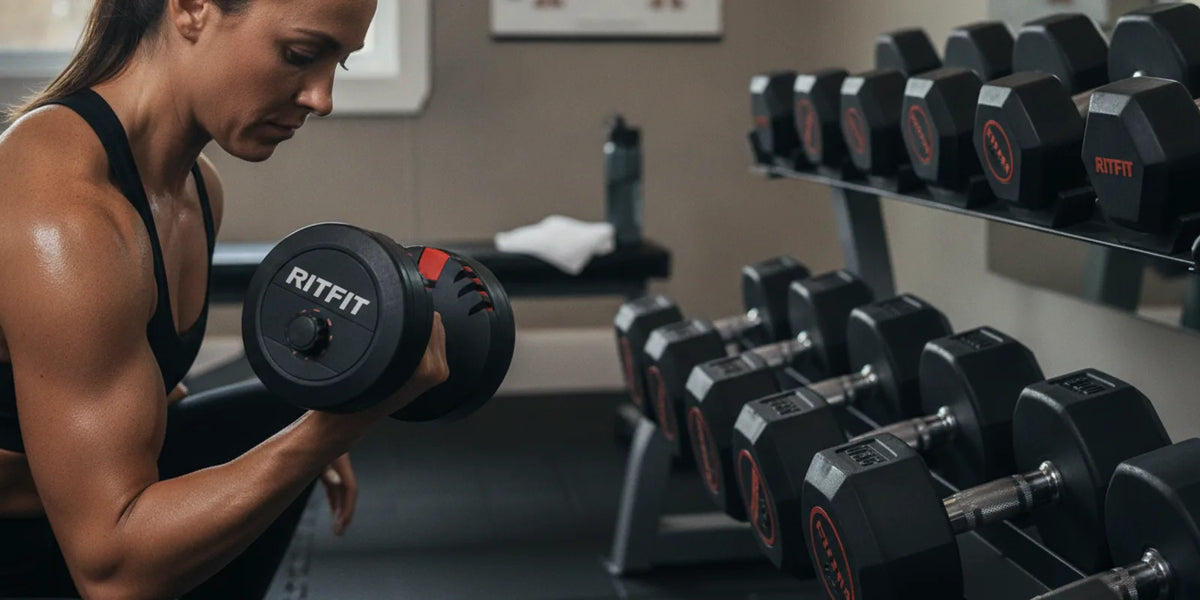
Fixed dumbbells are made with a set weight. Their heads are usually welded, molded, or permanently sealed to the handle. Unlike adjustable dumbbells, they are not designed for extra plates.
This means you should not drill, cut, weld, or clamp loose plates onto a standard fixed dumbbell. The added load can shift during a curl, press, row, or swing. That shift changes the balance and may cause the dumbbell to slip from your hand.
The best answer to how to add weight to fixed dumbbells depends on the type of exercise:
- Use a weighted vest for presses, lunges, squats, and step-ups.
- Use resistance bands with dumbbells for rows, presses, and curls.
- Hold two dumbbells in one hand only for selected exercises and light loads.
- Use heavier dumbbells when available.
- Switch to adjustable dumbbells or loadable handles for long-term progress.
A dumbbell is like a small bridge. The handle, heads, and your grip must all support the load together. If one part is not built for extra weight, the whole system becomes less reliable.

Safe Ways to Increase Resistance
When people ask how to add weight to fixed dumbbells, they often want a quick home-gym solution. The safest approach is to increase total resistance without physically modifying the dumbbell.
Wear a weighted vest
A weighted vest adds resistance to your whole body. It works well with:
- Dumbbell squats
- Split squats
- Walking lunges
- Step-ups
- Push-ups
- Body-weight rows
- Dumbbell carries
Start with a light vest. A vest that adds 5% to 10% of your body weight is often enough for a new challenge. Keep the vest snug so it does not bounce or pull your posture forward.
Add resistance bands
A resistance band can increase tension during a dumbbell exercise. For example, you can stand on a band and hold both the band and dumbbell handles during a curl or shoulder press.
Use care with this method. The band must not rub against sharp edges, and it should never be placed in a way that can snap toward your face. Inspect the band before every workout for cracks, cuts, or weak spots.
Use a heavier body position
You can make the same dumbbell feel harder by changing your stance or range of motion. Try a half-kneeling press, a split-stance row, or a single-leg Romanian deadlift.
These changes do not increase the dumbbell’s actual weight. They increase balance demands, control, or the amount of work done by smaller stabilizing muscles.
Increase time under tension
Slow repetitions can make a fixed dumbbell much harder. Lower the dumbbell for three to five seconds, pause briefly, then lift with control.
This is useful when you cannot buy heavier equipment. It also helps you improve technique instead of rushing through each repetition.

Using Weight Plates With Fixed Dumbbells
Most fixed dumbbells cannot safely accept weight plates. A plate needs a secure sleeve, a threaded end, or a locking collar. A normal fixed dumbbell has none of these features.
Some products look like fixed dumbbells but include special attachment points. Read the product manual before adding anything. The manufacturer’s load limit matters more than the appearance of the handle.
Do not use these improvised methods:
- Taping plates to the dumbbell head
- Holding a loose plate against the dumbbell
- Using hose clamps on a smooth handle
- Tying plates with rope or straps
- Gluing extra weights to the dumbbell
- Sliding plates onto a handle that was not made for them
These methods can fail without warning. A loose plate may hit your wrist, damage your floor, or pull the dumbbell out of line.
If your fixed dumbbell has a smooth handle, a collar may not grip well. Even if the collar seems tight at first, sweat and repeated movement can reduce its hold. This is one of the most important safety limits when learning how to add weight to fixed dumbbells.

Better Equipment Options
If you need more load often, changing equipment is usually better than modifying fixed dumbbells.
Adjustable dumbbells
Adjustable dumbbells use plates that fit onto a handle. Many models use spin-lock collars, selector pins, or a dial system. They let you increase weight in small steps and take up less space than a full rack.
Check these features before buying:
- Maximum weight per dumbbell
- Smallest weight increase
- Locking system
- Handle diameter
- Plate material
- Warranty and replacement parts
- Whether the plates stay secure during movement
Adjustable dumbbells are useful for home gyms because one pair can replace several fixed pairs. However, some models are less comfortable during fast exercises because the plates may be wide or bulky.
Loadable dumbbell handles
Loadable handles are shorter versions of barbell sleeves. You slide plates onto each side and secure them with collars. They are a strong choice for lifters who want a simple and durable setup.
Always load both sides evenly. Tighten the collars before each set. Keep the total load within the handle’s stated limit.
A heavier fixed dumbbell set
For simple workouts, buying the next weight in a fixed dumbbell set may be the easiest choice. Fixed dumbbells feel balanced, are quick to use, and do not require plate changes.
This option costs more and needs extra storage. Still, it is often the best choice for commercial gyms, busy training spaces, and anyone who values speed.

How to Progress Without Adding Weight
Adding weight is only one form of progressive overload. You can make a fixed dumbbell harder in several safe ways.
Use one change at a time so you can measure progress clearly.
- Add one or two repetitions per set.
- Add one set to the exercise.
- Slow the lowering phase.
- Pause at the hardest point.
- Increase your range of motion.
- Reduce rest by 10 to 20 seconds.
- Use a harder variation.
- Improve your lifting technique.
For example, suppose you can perform three sets of 10 goblet squats with a 40-pound dumbbell. You might progress to three sets of 12, then four sets of 10, before buying a heavier dumbbell.
Keep one or two good repetitions in reserve on most sets. The American College of Sports Medicine supports gradual resistance increases rather than sudden jumps. Good form should guide your progress, not ego or impatience.

A Practical Method for Adding Resistance
Here is a safe plan for anyone searching for how to add weight to fixed dumbbells at home.
Step 1: Check the dumbbell
Look for cracks, loose heads, worn handles, or damaged coating. Do not use a dumbbell that rocks or makes a clicking sound.
Step 2: Choose the exercise
A weighted vest may work well for squats but not for a lying dumbbell press. Bands may help with curls but can make some overhead exercises awkward.
Step 3: Pick one resistance method
Do not combine a heavy vest, strong bands, and a difficult exercise on your first attempt. Start with one change.
Step 4: Test the setup
Perform a few slow repetitions. Stop if the dumbbell shifts, the band rubs, or your posture changes.
Step 5: Track your workout
Record the weight, repetitions, sets, tempo, and rest time. This shows progress even when the dumbbell weight stays the same.
Step 6: Replace the equipment when needed
If the exercise has become too easy and you need more load, buy a heavier dumbbell or adjustable set. Equipment replacement is safer than a homemade attachment.
This method answers how to add weight to fixed dumbbells without treating a permanent dumbbell like a loadable handle.

Common Mistakes to Avoid
The most common mistake is assuming that any object can become a safe weight attachment. A dumbbell must stay balanced and secure throughout the full range of motion.
Avoid these errors:
- Adding weight to only one side
- Using damaged collars or clips
- Wrapping plates in towels or tape
- Choosing a load that limits your grip
- Doing fast movements with loose attachments
- Ignoring pain in the wrist, elbow, or shoulder
- Increasing weight before mastering the movement
- Using homemade attachments above your head
I have seen many lifters focus on the number on the dumbbell and forget the quality of the movement. A lighter dumbbell with a steady range of motion often builds more useful strength than a heavier, unstable setup.
Stop the set if you feel sharp pain, numbness, sudden weakness, or joint pressure. Muscle fatigue is normal. Joint pain is a warning.

How to Add Weight to Fixed Dumbbells for Specific Exercises
The safest method can change from one exercise to another.
Dumbbell curls
Use a resistance band under your feet while holding the dumbbells. Keep your elbows close to your sides and avoid letting the band pull your wrists forward.
You can also use slower repetitions or a pause at the top. Do not attach plates to the dumbbell heads.
Dumbbell bench press
A weighted vest can add body resistance, but it may not greatly increase the load on your chest. A heavier dumbbell or adjustable dumbbell is usually the better choice.
Keep both dumbbells balanced. Avoid holding extra plates in your hands while pressing, especially when training alone.
Goblet squats
Wear a weighted vest while holding the fixed dumbbell at your chest. You can also use a heel-elevated squat or a slower descent.
Keep the dumbbell close to your body. This reduces strain on your lower back.
Rows
A weighted vest can raise total body demand, but a heavier dumbbell is more direct. You can also pause the dumbbell near your ribs for one or two seconds.
Support your free hand on a bench or sturdy surface. Keep your back neutral.
Farmer’s carries
A weighted vest adds useful challenge, but heavier dumbbells are the simplest solution. Walk slowly and keep your shoulders level.
Do not use loose weight attachments during carries. A slipping plate can create a serious trip hazard.
Safety Checks Before Every Workout
Before using any method for how to add weight to fixed dumbbells, complete a short safety check.
- Make sure the dumbbell heads do not move.
- Check the handle for cracks or sharp edges.
- Confirm that bands have no tears.
- Tighten adjustable collars by hand.
- Keep your training area dry and clear.
- Use a spotter for heavy presses.
- Start with a light test set.
- Keep children and pets away from loose plates.
The Centers for Disease Control and Prevention recommends strength training as part of regular physical activity, but safe technique remains essential. Strength work should challenge your muscles without creating unnecessary equipment risk.
If you have a past injury, heart condition, or long break from exercise, speak with a qualified health professional before starting a harder program.

Frequently Asked Questions About How to Add Weight to Fixed Dumbbells
Can I put weight plates on fixed dumbbells?
Usually, no. Fixed dumbbells do not have sleeves or locking systems for plates, so adding them with tape, clamps, or straps can be unsafe.
What is the safest way to make fixed dumbbells harder?
Use a weighted vest, resistance bands, slower repetitions, pauses, or a harder exercise variation. For a true weight increase, use heavier or adjustable dumbbells.
Can I use ankle weights on fixed dumbbells?
You should not attach ankle weights to a fixed dumbbell unless the product maker specifically approves that use. The attachment may shift and change the dumbbell’s balance.
Is it safe to hold two fixed dumbbells in one hand?
It can be risky, especially with heavy dumbbells or overhead exercises. The dumbbells may separate, slip, or strain your wrist, so a heavier single dumbbell is usually safer.
How much weight should I add at a time?
For adjustable equipment, small increases of about 2.5% to 10% are common, depending on the exercise and your training level. Add weight only when you can complete all planned repetitions with steady form.
Are adjustable dumbbells better than fixed dumbbells?
Neither is always better. Fixed dumbbells are fast and stable, while adjustable dumbbells save space and make gradual progression easier.
Conclusion
Fixed dumbbells are not designed for homemade plate attachments. The safest way to increase resistance is to use a weighted vest, resistance bands, slower repetitions, harder variations, or properly designed adjustable equipment.
When deciding how to add weight to fixed dumbbells, protect balance and control first. If your current dumbbell is too light, choose a heavier pair, loadable handles, or adjustable dumbbells instead of forcing an unsafe modification.
Start with one small change, track your results, and keep every repetition controlled. Explore more strength-training resources, share your experience, or leave a comment with the method that works best for your home gym.

Brandon Knoxley is a sport & fitness writer and training guide contributor at MySportFitHub. He focuses on practical workouts, performance-based training, and honest fitness gear insights designed for real people and real results. Brandon is passionate about helping beginners and active individuals train smarter, avoid common mistakes, and build sustainable fitness habits.

