What Does Incline On Treadmill Work: Muscles & Benefits
Incline on a treadmill makes your legs, glutes, calves, and heart work harder than level walking.
If you have ever wondered what does incline on treadmill work, the answer goes beyond burning more calories. A treadmill incline changes your body angle, increases resistance, and closely copies walking uphill outdoors. This guide explains the muscles involved, the health benefits, the best settings, common mistakes, and safe ways to use incline training.

What does incline on treadmill work?
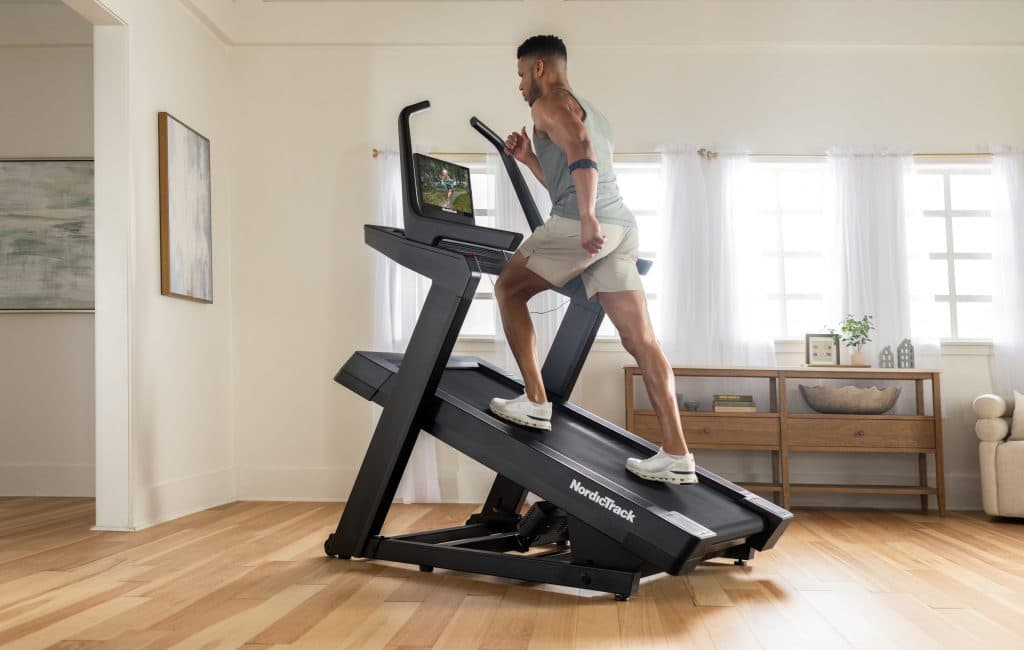
Incline treadmill walking mainly works the lower body and cardiovascular system. As the belt rises, your body must push upward with every step. This creates more demand for your glutes, hamstrings, calves, and core.
On a flat treadmill, your legs move you forward. On an incline, your legs must move you forward and upward. Think of it as walking up a gentle hill instead of walking across a flat road.
The main muscles used include:
• Gluteus maximus, which helps extend your hips and drive you upward
• Hamstrings, which assist with hip extension and knee control
• Quadriceps, which straighten your knees and support each step
• Calves, which help push your body upward
• Hip flexors, which lift your legs for the next step
• Core muscles, which help keep your trunk steady
Your heart and lungs also work harder. The American College of Sports Medicine recognizes incline walking as a useful way to raise exercise intensity without needing to run faster.
Which muscles does incline treadmill walking target?
Glutes
Incline walking places more work on the glute muscles than level walking. Your hips must extend with greater force to move your body up the belt.
A higher incline can make each step feel like a small step-up. This does not mean incline walking replaces strength training, but it can add useful resistance to your routine.
Hamstrings
Your hamstrings work with your glutes to move your hips forward and upward. They also help control your leg as it moves back behind your body.
You may feel your hamstrings more when you take steady steps and avoid leaning too far forward. Short, controlled steps often work better than long strides.
Quadriceps
Your quadriceps help control your knee as your foot lands. They also help straighten your leg as you move up the incline.
The steeper the incline, the more effort your thighs may feel. If your knees hurt, lower the incline and check your posture before pushing harder.
Calves
Your calves help lift your heel and push your body upward. This is why steep treadmill walking can cause a strong calf burn.
People with tight calves or Achilles tendon problems should increase the incline slowly. A sudden jump from zero percent to a steep grade can overload these tissues.
Core muscles
Your abdominal and back muscles help keep your body stable as the treadmill angle changes. They do not work like they would during a plank, but they still help control your posture.
Avoid hanging on the front rails. Holding the rails reduces the work placed on your legs and may change your natural walking pattern.
What does incline on treadmill do for your cardio fitness?
Incline walking raises your heart rate without requiring a fast running pace. This makes it useful for people who want a challenging workout but prefer low-impact exercise.
Walking uphill also increases your oxygen demand. Over time, regular aerobic exercise can support better endurance, heart health, blood pressure control, and blood sugar management.
The Centers for Disease Control and Prevention recommends that adults complete at least 150 minutes of moderate aerobic activity each week, along with muscle-strengthening activity on two days. Incline walking can count toward the aerobic portion when the effort reaches moderate intensity.
A simple way to check intensity is the talk test:
• Moderate effort means you can talk but cannot comfortably sing.
• Vigorous effort means you can say only a few words before taking a breath.
Your exact effort depends on speed, incline, fitness level, body weight, and health status. The same treadmill setting may feel easy for one person and very hard for another.

Does incline treadmill walking burn more calories?
Yes, incline walking usually burns more calories than walking at the same speed on a level treadmill. The reason is simple: your muscles must lift your body against gravity.
For example, walking at 3 miles per hour with a 5 percent incline is more demanding than walking at 3 miles per hour at zero percent. The exact calorie difference depends on your weight, walking speed, incline, workout time, and fitness level.
Treadmill calorie displays can overestimate or underestimate energy use. Treat the number as a rough estimate, not a precise measurement.
Incline walking may help with weight management when combined with a suitable diet and regular activity. Still, no incline setting can overcome a long-term calorie surplus. Fat loss depends on your overall energy balance over time.

What does incline on treadmill work for fat loss?
Incline training can support fat loss by increasing workout intensity and energy use. It may also help you exercise longer than running if running causes joint discomfort or feels too tiring.
A good fat-loss plan includes more than treadmill sessions. It should also include:
• A balanced eating pattern with enough protein and fiber
• Regular strength training
• Daily movement outside the gym
• Adequate sleep
• A realistic calorie intake
One mistake I often see is choosing a very steep incline, holding the rails, and leaning far forward. This can make the display show a hard workout, but it reduces the true demand on your body. A moderate incline with good form is often more useful than an extreme incline with poor form.

Does incline walking build muscle?
Incline walking can strengthen and condition your glutes, thighs, and calves. However, it usually does not build muscle as effectively as progressive resistance training.
Muscle growth requires enough tension, recovery, and nutrition. Bodyweight exercises, weights, resistance bands, and machines can provide more direct loading than walking.
Incline walking works well as a support exercise. You can use it to warm up, improve endurance, add lower-body work, or finish a strength session.
For stronger glutes, combine incline walking with exercises such as:
• Squats
• Step-ups
• Lunges
• Hip thrusts
• Romanian deadlifts
• Split squats
Start with a weight and number of repetitions that allow good control. Increase the challenge slowly instead of trying to make every session exhausting.

What incline and speed should you use?
The best treadmill incline depends on your goal, fitness level, and joint comfort. There is no single setting that works for everyone.
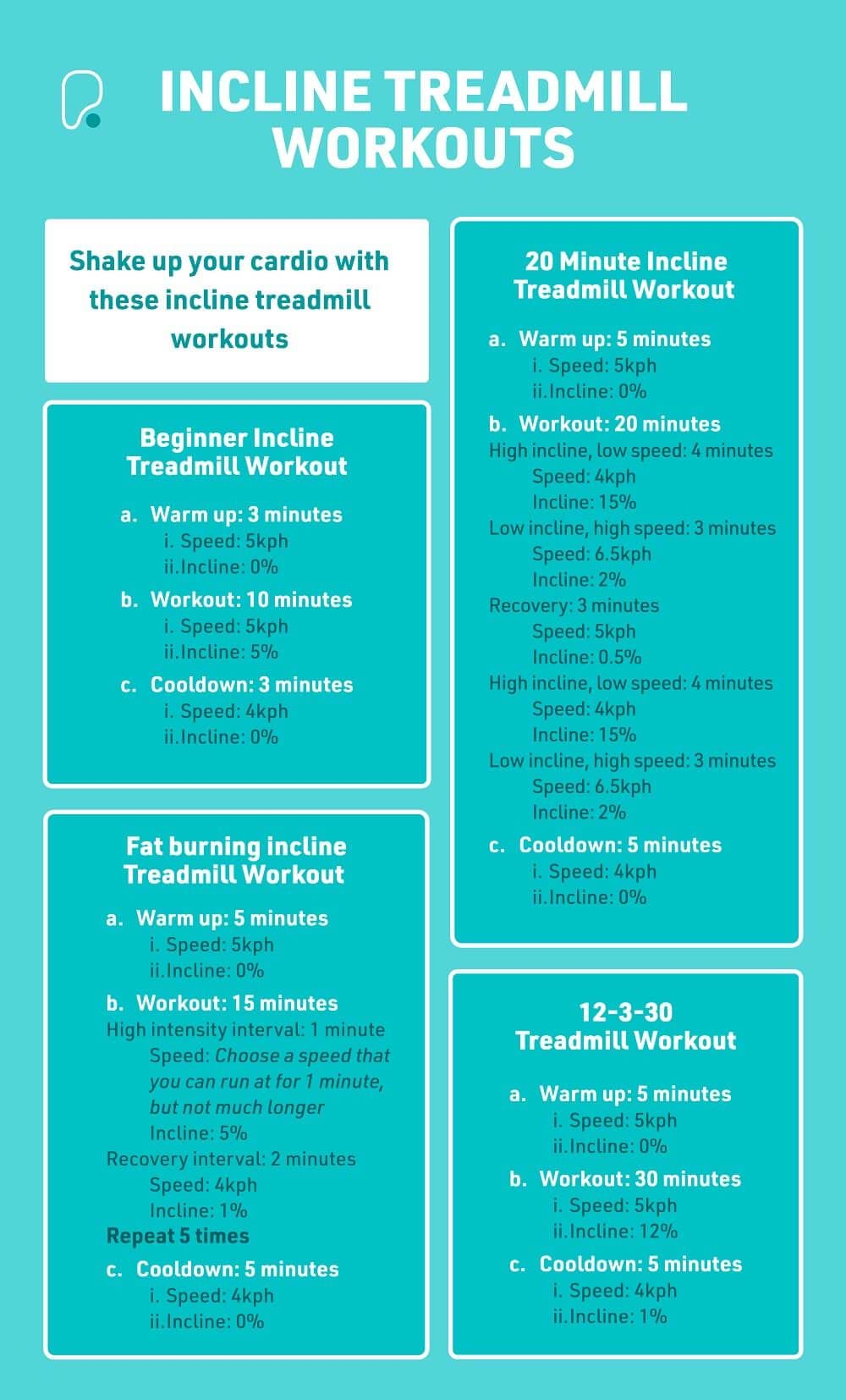
Use these general starting points:
• Beginner workout: 0 to 3 percent incline at an easy walking pace
• Moderate workout: 3 to 6 percent incline at a steady pace
• Challenging walk: 6 to 10 percent incline for short periods
• Hill intervals: Alternate between a low incline and a higher incline
• Advanced session: Use steeper inclines only when you can maintain good posture
Start with speed before increasing incline. If your form breaks down, lower one or both settings.
A practical beginner workout may look like this:
-
Walk for five minutes at zero to 2 percent incline.
-
Raise the incline to 3 percent for five minutes.
-
Use 4 to 5 percent incline for five minutes.
-
Return to zero percent for a five-minute cool-down.
You can adjust the speed based on your breathing. The goal is to finish feeling challenged but controlled.
Incline treadmill workout examples
Easy hill walk
This workout suits beginners or people returning after a break.
• Warm up for five minutes at zero percent incline.
• Walk for 15 minutes at 2 to 4 percent incline.
• Cool down for five minutes at zero percent incline.
Keep the pace comfortable. You should be able to speak in full sentences.
Moderate incline intervals
This workout adds short periods of higher effort.
• Warm up for five minutes at 1 percent incline.
• Walk for two minutes at 3 percent incline.
• Walk for two minutes at 6 percent incline.
• Repeat the pattern five times.
• Cool down for five minutes at zero to 1 percent incline.
Lower the speed if the incline causes you to lose control.
Short hill workout
This session is useful for people with some treadmill experience.
• Warm up for five minutes.
• Walk for one minute at 8 percent incline.
• Recover for two minutes at 2 percent incline.
• Repeat six times.
• Cool down for five minutes.
You do not need to sprint. The incline should create the challenge.
How to use proper incline treadmill form
Good form helps you train the intended muscles and lowers unnecessary stress on your joints.
Follow these tips:
• Keep your chest lifted and your eyes forward.
• Let your arms swing naturally.
• Keep your hands off the rails when safe.
• Take shorter steps as the incline rises.
• Keep your foot landing under your body.
• Maintain a steady rhythm.
• Avoid bending sharply at your waist.
• Keep your shoulders relaxed.
A slight forward lean from the ankles is normal. A deep bend from the hips is not. Imagine your body as one straight line from your head to your heel, with a small lean into the hill.
If you need to hold the rails, reduce the incline or speed. Rail support can be helpful for balance, but it should not become the main way you complete the workout.
Incline treadmill benefits and limitations
Incline walking offers several benefits:
• It raises heart rate with less speed.
• It trains the glutes, hamstrings, thighs, and calves.
• It can increase calorie use.
• It provides a low-impact option compared with running.
• It allows precise control of speed and incline.
• It can prepare you for hills, trails, and outdoor walking.
Still, incline walking has limits. It does not fully replace strength training, sprinting, balance work, or outdoor movement. Treadmill walking also uses a moving belt, so it may feel easier than walking on uneven ground.
Steep inclines may irritate the knees, calves, Achilles tendon, hips, or lower back. People with heart disease, uncontrolled high blood pressure, major joint pain, or recent surgery should ask a health professional before starting hard incline workouts.
Pain is not a sign that the workout is working. Stop if you feel chest pain, faintness, severe shortness of breath, sudden weakness, or sharp joint pain.
Common incline treadmill mistakes
Choosing too much incline too soon
A steep incline can feel exciting, but it may place too much load on your calves and knees. Increase the grade by small steps over several sessions.
Holding the rails
Rail use changes your body angle and can reduce the work done by your legs. Use the rails for balance, then lower the incline until you can walk without leaning on them.
Leaning too far forward
A deep forward lean may shift stress to your lower back. Keep your torso tall and let your ankles create the slight forward angle.
Taking long steps
Long strides can cause your foot to land too far ahead of your body. Shorter steps usually give you better control on a hill.
Chasing calorie numbers
The treadmill display is not a laboratory test. Focus on time, effort, form, and consistency instead of treating the calorie number as exact.
Skipping the warm-up
Cold muscles and tendons may not handle a sudden steep incline well. Begin with five minutes of easy walking before adding hill work.
How often should you use an incline treadmill?
Many people can use incline walking two to five times per week, depending on the workout intensity and their recovery. Easy sessions can be more frequent than hard hill intervals.
A simple weekly plan may include:
• Two easy incline walks
• One interval session
• One longer flat or gentle incline walk
• Two or more strength-training sessions
Allow your body time to recover after demanding workouts. Sore calves or glutes can be normal, but pain that changes your walking pattern deserves attention.
Progress by changing one factor at a time. Add a few minutes, a small incline increase, or a slight speed increase. Avoid increasing everything in the same workout.
How does incline compare with flat treadmill walking?
Flat walking is often easier and may be better for warm-ups, recovery, long walks, and beginners. It places less demand on the calves and glutes.
Incline walking creates more resistance and can raise your heart rate faster. It is useful when you want a harder workout without jogging.
Neither option is always better. The right choice depends on your goal:
• Choose flat walking for recovery and longer sessions.
• Choose incline walking for hill strength and higher intensity.
• Choose intervals for a time-efficient challenge.
• Choose outdoor walking for varied ground and natural scenery.
The best workout is the one you can perform safely and repeat consistently.
Frequently Asked Questions About What Does Incline on Treadmill Work
What does incline on treadmill work the most?
Incline treadmill walking works the glutes, hamstrings, quadriceps, calves, and cardiovascular system. The glutes and calves often feel the biggest increase in effort as the incline rises.
Does incline walking reduce belly fat?
Incline walking can support overall fat loss by increasing activity and calorie use. It cannot target belly fat alone, because the body loses fat according to genetics and total energy balance.
Is walking on an incline better than running?
Incline walking can provide a hard cardio workout with less impact than running. Running may improve speed and power more, so the better option depends on your joints, fitness level, and goals.
What is a good incline for beginners?
Beginners can start at zero to 3 percent incline and increase slowly. A comfortable pace with good posture is more important than using a steep grade.
Can incline walking build glutes?
Incline walking can strengthen and condition the glutes, especially when you avoid holding the rails. For greater muscle growth, combine it with resistance exercises such as hip thrusts, squats, and step-ups.
Should you hold the treadmill handles on an incline?
Try not to hold the handles unless you need them for balance or safety. Holding them can reduce the workload and encourage poor posture, so lower the incline if you cannot walk without support.
Conclusion
Incline treadmill walking works your glutes, hamstrings, thighs, calves, core, heart, and lungs more than level walking at the same speed. It can increase workout intensity, support calorie use, and improve endurance without requiring you to run.
Start with a gentle incline, keep your posture tall, avoid leaning on the rails, and increase the challenge step by step. Pair incline walking with strength training and balanced eating for a complete fitness plan. Try one of the workouts above this week, then share your favorite incline setting or explore more practical treadmill training guides.

Brandon Knoxley is a sport & fitness writer and training guide contributor at MySportFitHub. He focuses on practical workouts, performance-based training, and honest fitness gear insights designed for real people and real results. Brandon is passionate about helping beginners and active individuals train smarter, avoid common mistakes, and build sustainable fitness habits.