What Dumbbells Do I Need For P90X: Best Guide
Most P90X users need adjustable dumbbells ranging from 5 to 30 pounds per hand.
Choosing weights for P90X is not about lifting the heaviest pair you can find. The best setup lets you train your chest, back, legs, shoulders, and arms with good form while still reaching muscle fatigue. This guide explains what dumbbells do I need for P90X, how to choose your starting weights, and when to move up.
What dumbbells do I need for P90X?
For most people, an adjustable dumbbell set from 5 to 30 pounds per hand is enough to start P90X. Many users will also benefit from heavier options, such as 35, 40, or 50 pounds, for large-muscle exercises like rows, squats, and lunges.
The right weight depends on four main factors:
• Your current strength level
• Your body size and training history
• The specific P90X workout
• Whether you can keep safe form through every rep
P90X uses many exercises in the same session. You may perform curls, presses, rows, flyes, squats, and lunges with little rest between moves. A weight that feels easy during the first exercise may feel very hard later.
That is why a full dumbbell range matters more than one heavy pair. Think of your weights as tools in a toolbox. A small tool works for detailed jobs, while a larger one handles heavier work.
A practical starting range looks like this:
• Beginner: 5 to 20 pounds per hand
• Intermediate: 10 to 30 pounds per hand
• Advanced: 15 to 50 pounds per hand
These are broad ranges, not strict rules. A beginner may use 25-pound dumbbells for rows but only 5-pound dumbbells for lateral raises. That is normal.

Recommended dumbbell weights by P90X workout
P90X includes different workouts that place different demands on your body. The answer to what dumbbells do I need for P90X changes from one workout to another.
Chest, Shoulders, and Triceps
This workout includes presses, flyes, shoulder raises, and triceps exercises. These movements often use smaller weights because the shoulder and arm muscles are working directly.
A useful range is:
• Chest presses: 15 to 40 pounds per hand
• Chest flyes: 10 to 25 pounds per hand
• Shoulder presses: 10 to 30 pounds per hand
• Lateral raises: 5 to 15 pounds per hand
• Triceps kickbacks: 5 to 15 pounds per hand
Do not use your chest press weight for lateral raises. Shoulder raises need control, not momentum. If your neck tightens or your body rocks, the dumbbells are too heavy.
Back and Biceps
Back exercises usually allow more weight than biceps exercises. Rows use large back muscles, while curls place more stress on the smaller elbow flexors.
A useful range is:
• One-arm rows: 20 to 50 pounds per hand
• Reverse flyes: 5 to 15 pounds per hand
• Biceps curls: 10 to 25 pounds per hand
• Hammer curls: 10 to 30 pounds per hand
• Concentration curls: 5 to 20 pounds per hand
For rows, keep your spine steady and pull your elbow toward your hip. Do not twist your torso to move a heavier dumbbell.
Legs and Back
This workout often requires the heaviest dumbbells in P90X. Your legs and glutes can produce much more force than your shoulders or arms.
A useful range is:
• Goblet squats: 20 to 50 pounds
• Dumbbell squats: 15 to 40 pounds per hand
• Lunges: 10 to 30 pounds per hand
• Step-ups: 10 to 30 pounds per hand
• Calf raises: 20 to 50 pounds per hand
Balance can limit you before leg strength does. Start with lighter weights during lunges and step-ups. Increase the load only when your knee stays aligned with your toes and your foot remains stable.
Plyometrics
P90X Plyometrics is mostly a jumping and bodyweight workout. You usually do not need dumbbells. Extra weight can increase stress on your knees, ankles, hips, and lower back.
If you use dumbbells, choose very light weights, such as 2 to 10 pounds per hand. In many cases, bodyweight alone is the safer and better choice.
Core Synergistics
Core Synergistics combines strength, balance, and trunk control. Light dumbbells work best.
A useful range is:
• Beginners: 2 to 8 pounds per hand
• Intermediate users: 5 to 15 pounds per hand
• Advanced users: 10 to 20 pounds per hand
The goal is to resist movement and control your body. Heavy weights can make you lose balance and place unwanted stress on your back.

The best dumbbell set for P90X
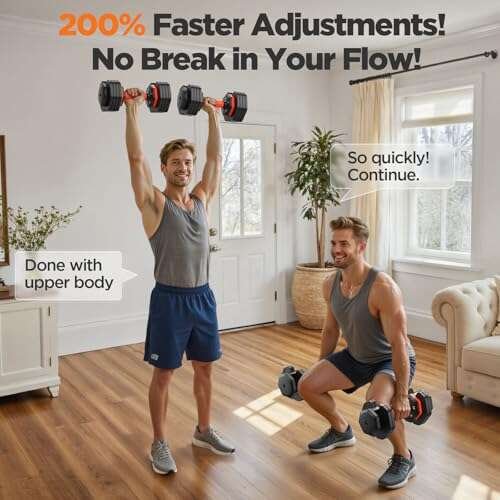
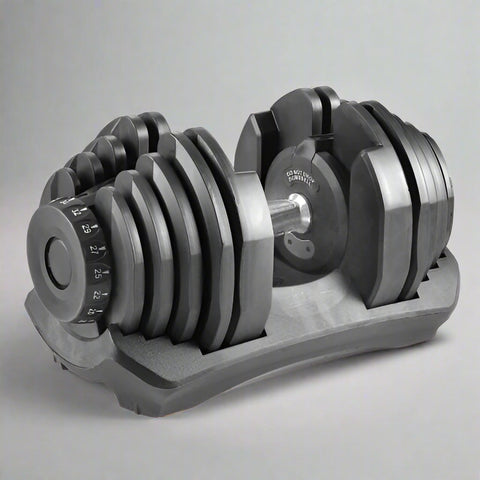
Adjustable dumbbells are usually the best choice for P90X. They save space and let you change the weight quickly between exercises.
Look for a set that offers:
• At least 5 to 30 pounds per hand
• Small weight increases of 2.5 or 5 pounds
• Secure locking plates or a reliable adjustment system
• Comfortable handles
• A stable shape that does not roll easily
If your budget allows, a set that reaches 50 pounds per hand gives you more room to progress. This is especially useful for rows, squats, deadlifts, and heavy lunges.
Fixed dumbbells also work well. They are faster to pick up and change, which can make P90X workouts smoother. However, a full fixed-weight rack costs more and takes up much more room.
You can choose based on your home setup:
• Small apartment: Adjustable dumbbells
• Garage gym: Fixed dumbbells or heavy adjustable models
• Shared workout space: Quiet, rubber-coated dumbbells
• Limited budget: A few fixed pairs plus resistance bands
P90X also allows resistance bands in many exercises. Bands are useful when you cannot afford a large dumbbell set. Still, they feel different from dumbbells because the resistance often increases as the band stretches.

How to choose your starting dumbbell weight
A simple repetition test can help you choose the right weight. Select a load that lets you complete the target reps with steady form. The final two or three reps should feel difficult, but they should not look messy.
Use this process:
-
Start with a lighter weight than you expect to need.
-
Perform 8 to 12 controlled reps.
-
Check your posture, breathing, and range of motion.
-
Add weight if you could easily perform five or more extra reps.
-
Reduce weight if you cannot complete the reps safely.
For example, suppose you are doing shoulder presses. A 20-pound dumbbell may feel fine for the first set, but your elbows may flare and your back may arch by the last reps. In that case, 15 pounds is the better training weight.
P90X often uses a timed format rather than a simple fixed number of reps. Use the first round to learn the movement. Then choose a weight that lets you work through the time without rushing.
A useful rule is to stop with one to three good reps left in reserve. This approach is known as moderate effort or reps in reserve. It helps you train hard without turning every set into a test of survival.

Should beginners use heavy dumbbells for P90X?
Beginners should not begin with heavy dumbbells for P90X. The program is demanding even before you add resistance, especially if you are new to exercise.
Start with weights that let you learn the movement. You can use:
• 5 to 10 pounds for raises, curls, and triceps work
• 10 to 20 pounds for presses and rows
• 15 to 25 pounds for squats and lunges
Your first goal is consistency. Your second goal is technique. Strength and heavier weights come later.
Many new users make the mistake of copying the people on the workout video. Those participants may have years of training experience. Their dumbbell sizes are not a scorecard for your fitness.
During my experience helping people set up home workouts, the most common mistake has been choosing weights based on pride. People grab a heavy pair, rush through the reps, and lose control. A lighter weight with clean form almost always creates a better long-term result.
How many dumbbell pairs do you need?
You can complete P90X with one pair of dumbbells, but two or three pairs make the workouts easier to manage. Different muscles need different loads.
A basic setup may include:
• One light pair: 5 to 10 pounds
• One medium pair: 10 to 20 pounds
• One heavy pair: 20 to 30 pounds
An intermediate setup may include:
• Light pair: 5 to 15 pounds
• Medium pair: 15 to 25 pounds
• Heavy pair: 25 to 40 pounds
If you use adjustable dumbbells, you can replace several fixed pairs with one system. Keep the adjustment process simple. If changing plates takes several minutes, you may skip weight changes and use poor resistance for the next exercise.
You can also use a mix of dumbbells and bands. For example, use dumbbells for rows and presses, then use bands for curls and triceps work. This gives you more options without buying a large set.

How to know when to increase the weight
Increase your dumbbell weight when your current load no longer challenges you. Do not increase simply because the calendar says it is time.
You may be ready to move up when:
• You complete every rep with strong form
• Your breathing stays controlled
• You finish with more than three good reps left
• The last part of the set feels easy
• You can pause briefly without losing position
Raise the weight by the smallest useful amount. A 2.5-pound increase per hand adds 5 pounds to the total load. That can feel like a large jump for shoulder and arm exercises.
Try a gradual progression:
-
Keep the same weight and improve your form.
-
Add one or two controlled reps.
-
Increase the weight slightly.
-
Return to the lower end of the rep range.
-
Build up again over the next few workouts.
This method is called progressive overload. It does not always mean lifting heavier. You can also improve by doing more reps, using better control, resting less, or moving through a fuller range of motion.

Common mistakes when choosing P90X dumbbells
The wrong dumbbell choice can make the program less effective or raise your injury risk. Avoid these common errors.
Buying only one heavy pair
One heavy pair may work for squats, but it will be too much for lateral raises and many triceps exercises. A range of weights gives you better control.
Using the same weight for every exercise
Your muscles do not have equal strength. Your back may handle 35 pounds for rows, while your shoulders may need 10 pounds for raises.
Ignoring the warm-up
Cold muscles and joints are less prepared for fast or loaded movement. Spend several minutes warming up before the first hard set.
Training through sharp pain
Muscle fatigue can feel uncomfortable. Sharp pain, joint pain, numbness, or sudden weakness is different. Stop the exercise and seek advice from a qualified health professional if symptoms continue.
Rushing through repetitions
Fast reps can hide weak control. Use a smooth lift and a controlled lowering phase. Your muscles should move the dumbbells, not momentum.
Choosing weights for appearance
The heaviest dumbbells do not automatically produce the best workout. The right load is the one that matches the movement and your current ability.
Dumbbell safety tips for P90X
P90X combines resistance training with high-volume exercise. Good safety habits matter.
Keep these points in mind:
• Clear enough floor space before starting.
• Use a stable surface that is not slippery.
• Keep dumbbells close to your body when moving them.
• Bend your knees when picking weights off the floor.
• Keep wrists straight during presses and curls.
• Brace your midsection during rows and squats.
• Drink water before and during the workout.
• Take an extra rest day if your body has not recovered.
The American College of Sports Medicine supports resistance training with gradual progression and proper technique. The Centers for Disease Control and Prevention also recommends muscle-strengthening activity as part of regular adult exercise.
People with heart disease, major joint problems, uncontrolled blood pressure, or other medical concerns should ask a health professional before beginning a demanding program. P90X is not a medical treatment, and no single dumbbell range is right for everyone.
A simple P90X dumbbell buying guide
If you want a direct recommendation, use your experience level as a starting point.
For a complete beginner
Choose adjustable dumbbells that cover 5 to 25 pounds per hand. If possible, add access to 30 pounds later.
For an active beginner
Choose adjustable dumbbells that cover 5 to 30 pounds per hand. This range works for most upper-body movements and many lower-body exercises.
For an intermediate lifter
Choose adjustable dumbbells that cover 5 to 50 pounds per hand. You may not need the top weight right away, but it gives you space to progress.
For an advanced lifter
Choose a system that reaches at least 50 pounds per hand, or combine adjustable dumbbells with heavier fixed pairs. Your needs will depend on your current strength and the type of P90X training you perform.
Before buying, check the product’s true weight range. Some listings show the total weight of the pair rather than the weight of each dumbbell. A set advertised as “50 pounds” may mean 25 pounds per hand.
Frequently asked questions about what dumbbells do I need for P90X
Can I do P90X with only 10-pound dumbbells?
Yes, you can complete many upper-body and core exercises with 10-pound dumbbells. However, you may need heavier weights for rows, squats, lunges, and other lower-body movements.
Are adjustable dumbbells good for P90X?
Adjustable dumbbells are often the most practical choice because P90X uses many different exercises. They let you move from light shoulder raises to heavier rows without buying a full rack.
What dumbbell weight should a woman use for P90X?
There is no single weight for every woman, but many beginners start with 5 to 15 pounds per hand. Stronger users may need 20 to 40 pounds for rows, squats, and lunges.
What dumbbell weight should a man use for P90X?
Many men start with 10 to 25 pounds per hand for general exercises. Heavier weights may be useful for rows and leg exercises, while 5 to 15 pounds may be better for raises and smaller arm movements.
Do I need dumbbells for P90X Plyometrics?
Usually, no. P90X Plyometrics is built around jumping and bodyweight movements, so adding dumbbells can increase impact on your joints without improving the workout.
Can I use resistance bands instead of dumbbells for P90X?
Yes, resistance bands can replace dumbbells in many P90X exercises. They are portable and affordable, but their resistance pattern differs from free weights.
How heavy should P90X dumbbells be for a beginner?
A beginner can often start with 5 to 10 pounds for arm and shoulder work, 10 to 20 pounds for presses and rows, and 15 to 25 pounds for lower-body exercises. Use the lightest weight that allows clean, controlled reps.
Conclusion
For most people, the best answer to what dumbbells do I need for P90X is an adjustable set covering 5 to 30 pounds per hand. Beginners can start lower, while experienced lifters may need weights up to 40 or 50 pounds for rows, squats, and lunges.
Choose weights based on form, not ego. Start light, learn each movement, and increase the load slowly as your strength improves. Set up your dumbbells before the workout, test your range, and begin your first P90X session with control.
Use this guide to build a smart home setup, then share your experience or explore more strength-training resources to keep progressing.

Brandon Knoxley is a sport & fitness writer and training guide contributor at MySportFitHub. He focuses on practical workouts, performance-based training, and honest fitness gear insights designed for real people and real results. Brandon is passionate about helping beginners and active individuals train smarter, avoid common mistakes, and build sustainable fitness habits.