
What Weights Do Dumbbells Come In: Complete Weight Guide
What weights do dumbbells come in? Most range from 1 to 100 pounds or more, depending on the type and brand.
Knowing what weights do dumbbells come in helps you choose the right pair for your goals, strength level, and available space. Dumbbells may be fixed, adjustable, rubber-coated, cast iron, or selectorized, and each type offers a different weight range. This guide explains common dumbbell sizes, how much weight beginners need, and how to build a useful home set without wasting money.
What weights do dumbbells come in?
Dumbbells come in many sizes. The most common weights for home and gym use range from 1 to 50 pounds per dumbbell. Some heavy-duty models reach 100 pounds, 150 pounds, or more.
The exact options depend on the dumbbell style. Fixed dumbbells usually come in set jumps, while adjustable dumbbells let you change the load on one handle.
Common dumbbell weights include:
• 1, 2, 3, and 5 pounds for light training and rehabilitation
• 8, 10, 12, and 15 pounds for beginners and general fitness
• 20, 25, 30, and 35 pounds for regular strength training
• 40, 45, 50, and 60 pounds for advanced home workouts
• 70, 80, 90, and 100 pounds for heavy strength work
Many gyms stock dumbbells in 2.5- or 5-pound jumps. Some commercial gyms use pairs that increase by 2.5 pounds up to 25 pounds, then increase by 5 or 10 pounds.

Standard dumbbell weight ranges
The answer to what weights do dumbbells come in changes slightly by market and product type. A small neoprene dumbbell set may begin at 1 pound, while a commercial iron dumbbell rack may start at 5 pounds.
Light dumbbells: 1 to 10 pounds
Light dumbbells work well for:
• Shoulder raises
• Arm exercises
• Physical therapy
• Pilates and barre workouts
• Warmups
• High-repetition exercises
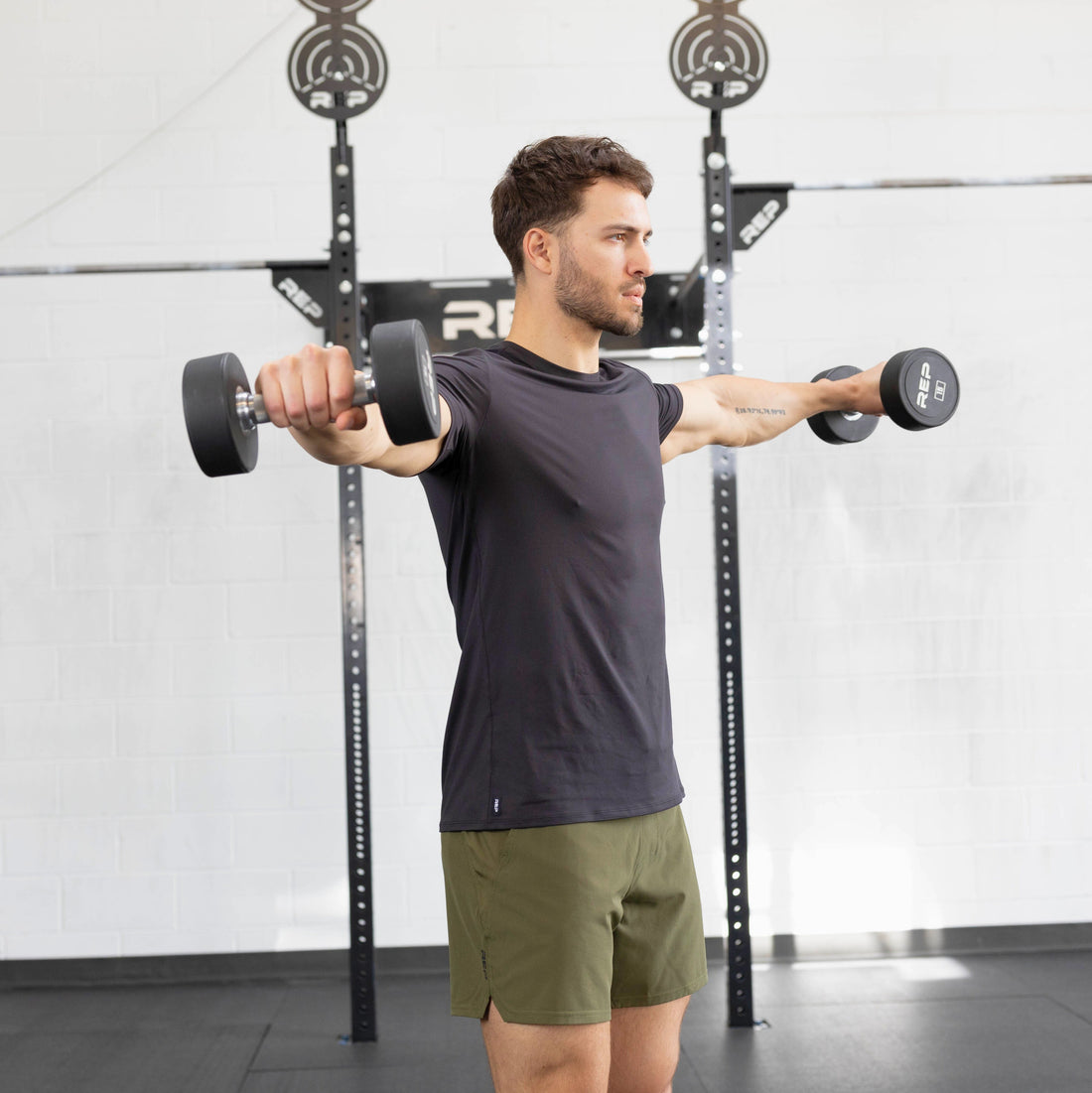
A 3-pound dumbbell can feel easy during a single curl but very challenging during a long set of lateral raises. Small weights are useful because many shoulder muscles fatigue quickly.
Medium dumbbells: 12 to 30 pounds
Medium dumbbells suit many home users. They work for exercises such as:
• Biceps curls
• Triceps extensions
• Chest presses
• Goblet squats
• Lunges
• One-arm rows
For many beginners, a pair between 10 and 20 pounds provides a practical starting point. Your ideal weight depends on the exercise, your training history, and your form.
Heavy dumbbells: 35 pounds and above
Heavy dumbbells are useful for large muscle movements. These include squats, deadlifts, rows, presses, and loaded carries.
A 50-pound dumbbell may be heavy for a shoulder press but moderate for a goblet squat. This shows why dumbbell weight must always match the exercise, not just the person using it.

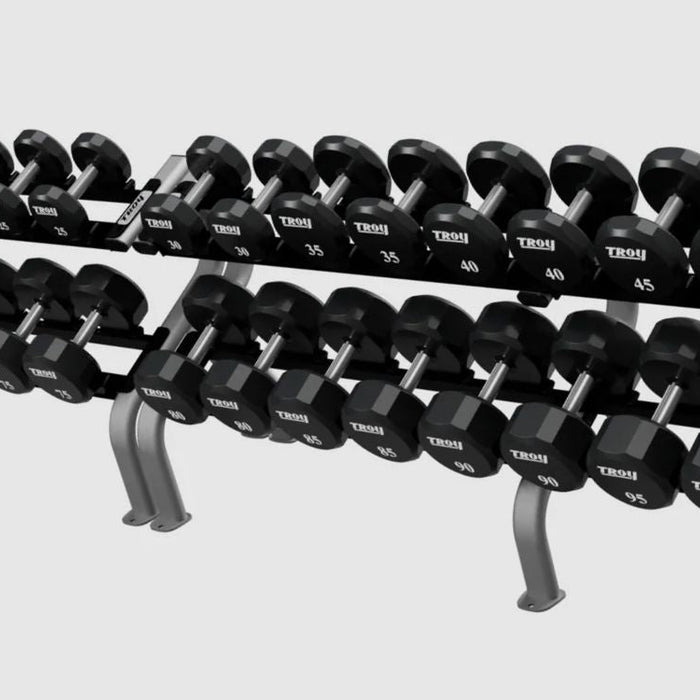
Fixed dumbbell weights
Fixed dumbbells have a permanent weight. You pick them up and start training without changing plates or settings.
They usually use materials such as cast iron, steel, rubber, urethane, or neoprene. Commercial gyms often place fixed dumbbells on a rack in ascending order.
The main benefits are simple:
• They are quick to use.
• They feel balanced.
• They have fewer parts that can loosen.
• They work well for fast-paced workouts.
• They make it easy to switch between exercises.
Fixed dumbbells also have limits. A full set takes up space and can cost more than adjustable equipment. If you want weights from 5 to 50 pounds, you may need many pairs.
A common mistake is buying only one pair because it feels right for one exercise. That pair may be too light for rows and too heavy for shoulder raises. A small range often works better than one “perfect” weight.
Adjustable dumbbell weights
Adjustable dumbbells use plates, pins, dials, or digital controls to change the load. Many models offer weights from 5 to 50 pounds per handle. Some advanced systems reach 80 or 90 pounds per dumbbell.
Common adjustable ranges include:
• 5 to 25 pounds
• 5 to 50 pounds
• 10 to 55 pounds
• 10 to 90 pounds
Adjustable dumbbells are a strong choice for small spaces. One pair can replace a full rack, much like a small tool kit can replace a crowded garage.
They may feel different from fixed dumbbells. Some adjustable models are longer, which can affect exercises such as curls and presses. The plates may also rattle if the locking system is not secure.
Always check the locking mechanism before each set. Loose plates can cause injury or damage to your floor.
What dumbbell weight should beginners use?
Beginners should choose a weight that allows controlled movement for about 8 to 15 repetitions. The final few repetitions should feel difficult, but your form should remain steady.
For many new lifters, these starting points work well:
• 5 to 10 pounds for lateral raises and light shoulder work
• 8 to 15 pounds for curls and triceps exercises
• 10 to 20 pounds for presses and rows
• 15 to 30 pounds for goblet squats and lunges
These are only broad examples. A strong beginner may need more weight, while someone returning from an injury may need less.
A useful test is the repetition rule:
-
Choose a light weight and perform 10 controlled repetitions.
-
Stop if your back swings, shoulders shrug, or joints hurt.
-
If you could easily perform 10 more repetitions, increase the weight.
-
If you cannot complete 8 clean repetitions, reduce the weight.
One lesson seen again and again in strength training is that people often start too heavy. They want quick progress, but heavy weight can hide poor control. A lighter dumbbell with clean form usually builds a better foundation.
How to choose the right dumbbell weight
The best dumbbell weight depends on more than your body size. Consider the exercise, target muscle, repetition range, and training goal.
Match the weight to the exercise
Small muscles need less load. Large muscles can usually handle more.
For example:
• Lateral raises often need light dumbbells.
• Biceps curls usually use moderate dumbbells.
• Rows often use heavier dumbbells.
• Goblet squats can use much heavier dumbbells.
• Overhead presses require careful weight selection.
Do not expect one pair to work equally well for every movement. Your legs may need 40 pounds, while your shoulders may need only 10 pounds.
Match the weight to your goal
Different goals use different loads and repetition ranges.
• Muscular endurance often uses lighter weights and 12 to 20 repetitions.
• Muscle growth commonly uses moderate weights and roughly 6 to 15 repetitions.
• Maximum strength uses heavier weights and fewer repetitions.
These ranges overlap. Research from sports medicine organizations shows that muscle growth can occur across a broad range of loads when sets are challenging and training is consistent. Good technique and steady progress matter more than chasing one exact number.
Use the talk and form tests
You should be able to control the dumbbell through the full movement. If you need to jerk, swing, or shorten the range, the weight is likely too heavy.
For general training, finish a set feeling that you could complete one to three more good repetitions. This approach creates effort without turning every set into a risky test.
How many dumbbells do you need at home?
You do not need a full commercial rack to train effectively at home. A small set can cover most basic exercises.
A practical beginner setup may include:
• One light pair of 5 to 10 pounds
• One medium pair of 15 to 25 pounds
• One heavier pair of 30 to 40 pounds
An adjustable pair can reduce the need for multiple sets. It is often the most space-efficient choice for apartments, bedrooms, and small home gyms.
If your budget is limited, buy weights based on your main exercises. Someone focused on upper-body workouts may start with 10- to 25-pound dumbbells. Someone focused on leg training may need 25- to 50-pound dumbbells.
You can also buy one pair at a time. Start with a manageable weight, track your workouts, and add heavier options when you can complete your target repetitions with ease.

Dumbbell weight conversion: pounds and kilograms
Dumbbells in the United States are usually labeled in pounds. Many international brands use kilograms.
Common conversions include:
• 5 pounds equals about 2.3 kilograms
• 10 pounds equals about 4.5 kilograms
• 15 pounds equals about 6.8 kilograms
• 20 pounds equals about 9.1 kilograms
• 25 pounds equals about 11.3 kilograms
• 30 pounds equals about 13.6 kilograms
• 40 pounds equals about 18.1 kilograms
• 50 pounds equals about 22.7 kilograms
Manufacturers may round these numbers. A dumbbell marked 10 kilograms weighs about 22 pounds, not exactly 20 pounds.
Check whether the listed weight applies to one dumbbell or the full pair. Most listings describe the weight of one dumbbell, but some packages advertise the combined weight.
Dumbbell materials and how they affect use
Weight is not the only feature that matters. The material changes comfort, noise, durability, and floor safety.
Cast iron dumbbells
Cast iron dumbbells are strong and compact. They are often affordable, but they can scratch floors and may feel rough in the hand.
Rubber dumbbells
Rubber dumbbells are quieter and gentler on floors. They are common in gyms and work well for home use. Some rubber products may have a noticeable odor when new.
Neoprene dumbbells
Neoprene dumbbells have a soft, colorful coating. They are popular for light workouts, walking programs, and fitness classes. They are not usually made for very heavy lifting.
Urethane dumbbells
Urethane is durable and resists odor, chips, and wear. These dumbbells often cost more, but they can last for years in busy training spaces.
Adjustable dumbbells
Adjustable models save space and money for many users. However, they need careful handling, and some designs are less comfortable for movements that require a free, compact shape.
Common mistakes when buying dumbbells
Buying the wrong set can waste money and make training frustrating. Watch for these common errors:
• Buying one weight for every exercise
• Choosing weight based on ego instead of form
• Ignoring the handle diameter
• Forgetting to check the total length
• Failing to measure storage space
• Assuming “set weight” means the weight of each dumbbell
• Skipping safety checks on adjustable models
A dumbbell that is too large can bump your arms during presses. A thick handle can tire your grip before your target muscle works. These details may seem small, but they matter during repeated training.
I have also seen people increase weight too fast because the first few workouts felt easy. Strength can improve quickly at first, but tendons and joints often adapt more slowly than muscles. Add weight in small steps and give your body time to adjust.
How to progress with dumbbells
Progressive overload means gradually making training more demanding. You can do this by adding weight, repetitions, sets, or control.
A simple progression plan looks like this:
-
Pick a weight you can lift with clean form.
-
Work within a repetition range, such as 8 to 12.
-
Add repetitions until you reach the top of the range.
-
Increase the dumbbell by the smallest useful amount.
-
Return to the lower end of the range.
For example, you may begin with 15-pound dumbbells and perform three sets of 8 repetitions. Over several workouts, you may reach three sets of 12. Then you can move to 17.5- or 20-pound dumbbells and build up again.
This method prevents sudden jumps. It also gives you a clear record of progress.
Keep a simple training log with the exercise, weight, repetitions, and sets. Numbers can feel more honest than memory, especially when motivation changes from day to day.
Safety tips for dumbbell training
Dumbbells are simple tools, but they can still cause injury when used carelessly.
Follow these basic rules:
• Warm up before heavy sets.
• Keep your spine in a stable position.
• Move through a controlled range.
• Avoid holding your breath for long periods.
• Put dumbbells down safely after a set.
• Inspect adjustable locks and plates.
• Keep children and pets away from stored weights.
• Stop if you feel sharp pain, numbness, or dizziness.
Normal muscle effort feels different from joint pain. If pain continues, seek advice from a qualified health professional. People with heart, bone, joint, or medical concerns should ask a clinician before beginning a new training plan.
Frequently Asked Questions About What Weights Do Dumbbells Come In
What is the lightest dumbbell weight?
The lightest dumbbells commonly weigh 1 pound per dumbbell. Some specialty products may weigh less, while many basic home sets begin at 2 or 3 pounds.
What is the heaviest dumbbell weight available?
Commercial dumbbells can weigh 100 pounds or more per dumbbell. Some specialty strength equipment reaches 150 pounds or beyond, but these sizes are usually found in serious gyms.
What dumbbell weights are best for beginners?
Many beginners can start with 5- to 15-pound dumbbells for upper-body exercises and 15- to 30-pound dumbbells for lower-body movements. The correct choice is the heaviest weight you can control without losing good form.
Should I buy fixed or adjustable dumbbells?
Fixed dumbbells are quick, sturdy, and easy to use, but they need more storage space. Adjustable dumbbells save space and offer more weight choices, though they may feel longer and require regular safety checks.
Are 10-pound dumbbells enough for a workout?
Ten-pound dumbbells can provide a useful workout for beginners, shoulder exercises, arms, and high-repetition routines. They may become too light for stronger users or large movements such as heavy squats and rows.
How often should I increase my dumbbell weight?
Increase weight when you can complete all planned repetitions with steady form and still have one to three repetitions left. Small increases are usually safer and more effective than large jumps.
Do dumbbell weights include one dumbbell or a pair?
Product listings often show the weight of one dumbbell, but not always. Read the package details carefully to confirm whether the listed number refers to each dumbbell or the combined pair.
Conclusion
Dumbbells commonly come in weights from 1 to 100 pounds or more. Light dumbbells suit shoulders, arms, rehabilitation, and endurance work, while heavier options support rows, squats, presses, and other strength exercises. Fixed dumbbells offer speed and stability, while adjustable dumbbells provide flexibility and save space.
Choose a weight that lets you move with control, complete your target repetitions, and progress slowly. Start with the equipment you can use safely, track your workouts, and add weight when your form stays strong. Explore more strength-training guides, build your home setup with care, and share your favorite dumbbell exercises in the comments.

Brandon Knoxley is a sport & fitness writer and training guide contributor at MySportFitHub. He focuses on practical workouts, performance-based training, and honest fitness gear insights designed for real people and real results. Brandon is passionate about helping beginners and active individuals train smarter, avoid common mistakes, and build sustainable fitness habits.


