Best Treadmill For Tall Runners: Top Picks
For most tall runners, the 3G Cardio Elite Runner X offers the strongest mix of deck space, power, comfort, and stability.
If you are tall, a short treadmill can make every run feel cramped. Your toes may reach the front rail, or your stride may force you to shorten your pace. I know how tiring that feels, especially during long runs. The best treadmill for tall runners should offer a long running surface, steady speed control, solid support, and enough cushioning to protect your joints. The models below cover heavy-duty, folding, curved, and budget-friendly needs.
3G Cardio Pro Runner X

The 3G Cardio Pro Runner X is a strong pick for runners who want a serious home treadmill without taking up a full commercial gym footprint. Its heavy-duty build feels more stable than many light folding models. The low 6.5-inch step-up height also helps people who want easier access to the belt. For a tall runner, that stable feel matters because a longer stride can create more movement across the deck.
I also like the orthopedic belt, which can make daily walking and running feel less harsh on the knees and ankles. FreeSync FTMS Bluetooth adds useful workout connection options for compatible devices and apps. The 350-pound capacity gives this machine a strong user range, though every runner should still check the current deck dimensions before buying. It is a practical choice for home users who want comfort, strength, and compact storage in one package.
Pros:
- Heavy-duty frame feels stable during fast running
- Low step-up height makes access easier
- Orthopedic belt supports a softer-feeling stride
- Foldable design helps save floor space
- 350-pound user capacity suits many body types
- FTMS Bluetooth supports compatible fitness apps
Cons:
- Deck length should be checked carefully by very tall sprinters
- Its sturdy frame may feel heavy to move alone
- It costs more than basic walking treadmills
3G Cardio Elite Runner X

The 3G Cardio Elite Runner X is the most complete option in this group for tall runners who train often. It uses a commercial-grade design and a 4.0 HP motor, which gives it the power needed for longer sessions. The large Ortho Flex shock suspension deck is especially appealing when you run several days each week. That extra support can make the treadmill feel less like a hard road and more like a forgiving track.
Its 400-pound capacity adds confidence for larger users and for households with more than one runner. The deck is built with marathon training in mind, so it is a better match for runners who need steady performance instead of a small walking belt. FreeSync FTMS Bluetooth can also make connected training easier on supported devices. This is not the lightest or cheapest treadmill, but it has the build quality I look for when choosing the best treadmill for tall runners.
Pros:
- Commercial-grade construction supports frequent use
- 4.0 HP motor is suited to demanding workouts
- Large shock suspension deck improves running comfort
- 400-pound capacity supports a broad range of users
- Designed with marathon training in mind
- Stable platform helps tall runners hold a natural stride
Cons:
- Large frame needs more room than compact treadmills
- Higher price may not suit casual walkers
- Moving and setting it up may require two people
Heavy-Duty 20-Inch Incline Treadmill

This heavy-duty home treadmill focuses on two features that many tall runners want: a wide belt and adjustable incline. Its 20-inch deck gives you more side-to-side room than a narrow walking pad. That space can help you relax your arms and stay centered during a long workout. The 20 incline levels also let you build hill sessions without needing to leave home.
I see this model as a useful middle ground for households that want variety. It can support brisk walking, steady jogging, and incline work, but buyers should confirm the belt length before treating it as a true long-stride running machine. Tall users need more than width; they also need enough front-to-back room. If the current size fits your stride, this treadmill can deliver a good mix of training options and home-gym value.
Pros:
- 20-inch belt gives tall users useful lateral space
- 20 incline levels add hill-training variety
- Heavy-duty design feels suitable for home gym use
- Works well for walking, jogging, and incline workouts
- Wide deck can help reduce the cramped feeling of small treadmills
- Good option for users who enjoy changing workout intensity
Cons:
- Belt length needs careful checking for long running strides
- Incline use may increase noise and power needs
- It may be too large for a small apartment room
Renestar Folding Incline Treadmill

The Renestar folding treadmill is aimed at home users who need a simpler machine that can move out of the way. Its folding design is useful in a bedroom, office, or shared living space. The auto incline adds more training range than a flat walking treadmill. For a tall user, the main question is not just whether it folds, but whether its belt length gives your stride enough room.
This model makes the most sense for walking, light jogging, and moderate home workouts. A tall runner may enjoy it for warmups or easy sessions, but I would not choose it first for regular sprint training without measuring the deck. Folding machines often trade some frame mass for convenience. That is not a flaw, but it means you should match the treadmill to your pace and stride rather than buy by appearance alone.
Pros:
- Folding frame helps clear floor space after workouts
- Auto incline adds challenge without manual adjustment
- Good fit for home walking and light jogging
- More convenient for rooms with limited space
- Simple format may suit new treadmill users
- Useful for warmups, recovery work, and daily activity
Cons:
- Shorter deck may limit a tall runner’s full stride
- Less suited to hard, high-speed training
- Compact designs can feel less planted than commercial machines
RUNOW Curved Treadmill
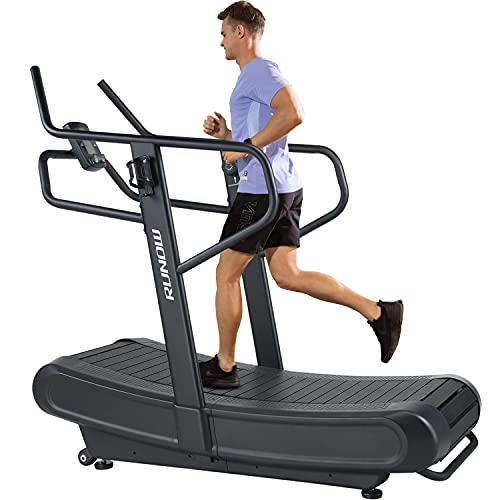
The RUNOW curved treadmill offers a different running feel from a motorized flat belt. Your foot strike helps move the belt, so you control the pace with your body position and effort. Many runners like this design because it feels direct and responsive. Tall athletes may also appreciate the open running motion, though the curved shape still requires a proper stride check before purchase.
This treadmill can be a good tool for intervals, form practice, and short power sessions. It does not require the same motor maintenance as a powered unit, which may help simplify ownership. The tradeoff is that curved running can feel harder at first, especially for people used to a motor pulling the belt beneath them. I recommend it to experienced users who want a demanding, self-paced workout rather than a relaxed jog.
Pros:
- Self-powered design gives the runner direct pace control
- Curved belt supports interval and sprint-style training
- No standard drive motor is needed to move the belt
- Responsive feel can help runners focus on form
- Works well for short, intense workouts
- Useful for athletes who prefer a non-electric running feel
Cons:
- Curved running may feel tiring for beginners
- It may not suit long, easy-distance sessions
- Users should confirm deck length and handrail position
Curved Manual Treadmill With Six Resistance Levels

This curved manual treadmill adds six resistance levels to a self-powered running setup. That feature gives you more control over workout difficulty than a basic motorless belt. The five-layer shock-absorbing belt may also make repeated use feel more comfortable. A digital monitor helps you keep track of basic workout data while you focus on your pace.
I would consider this model for home gyms and light commercial spaces where users want a simple, low-power training tool. It can challenge the legs and lungs without the steady motor speed found on a traditional treadmill. However, tall runners should remember that manual machines can demand more effort per step. It is best for users who want short conditioning workouts, resistance work, and a natural self-paced feel.
Pros:
- Six resistance levels let users adjust workout difficulty
- Self-powered belt avoids standard motor operation
- Five-layer belt design aims to soften impact
- Digital monitor displays useful workout information
- Good choice for conditioning and interval sessions
- Can suit home gyms and light commercial use
Cons:
- Manual running can feel harder than powered treadmill running
- Not the best choice for relaxed long-distance jogging
- Deck size must be checked by tall users before ordering
MERACH Incline Treadmill With App

The MERACH treadmill stands out for its mix of incline settings, app support, and folding home-gym design. Depending on the configuration, the listed belt sizes include 55 by 18 inches or 47 by 19 inches, so buyers must choose carefully. The longer 55-inch option is more appealing for a tall runner. It also offers a brushless motor and a 350-pound capacity for regular home use.
The incline range can help you add hills to walking, jogging, or steady runs. A screen, app connection, and heart-rate features may make it easier to follow guided sessions and watch progress. Still, tall runners should not assume that a wide belt is also long enough for a full stride. I would choose the longer-belt version when available and use this treadmill for structured home workouts rather than all-out sprinting.
Pros:
- Incline settings add useful hill-training options
- Longer belt version can better suit tall runners
- Brushless motor design supports home workouts
- App and screen features add training guidance
- Heart-rate feature helps track workout effort
- 350-pound capacity covers many home users
Cons:
- Different belt sizes make model selection important
- The shorter belt may not suit tall runners
- Connected features may require compatible devices or apps
450-Pound Curved Manual Treadmill

This curved manual treadmill is built for users who need a very high weight capacity. Its 450-pound rating is the first detail that sets it apart. The non-electric design gives the runner control over belt speed, while four resistance levels allow basic workout adjustment. An LCD display provides simple feedback without adding a complex console.
For tall runners, this machine can be appealing when stability and user capacity matter most. A sturdy frame can reduce unwanted movement, which helps larger athletes feel safer during walking or short runs. The manual curve may take practice, so I would begin with slow sessions and learn the belt before using high effort. It is a practical pick for strength-focused cardio, but it may not replace a powered treadmill for long, steady mileage.
Pros:
- Very high 450-pound capacity supports larger users
- Non-electric belt gives direct pace control
- Four resistance levels add workout variety
- Sturdy design can improve confidence during use
- LCD monitor keeps basic workout data visible
- Useful for home gyms and strength-focused cardio
Cons:
- Manual curve may require a learning period
- Less suitable for long, easy-distance runs
- Large capacity does not guarantee a long running deck
NordicTrack T Series 6.5 S

The NordicTrack T Series 6.5 S is a familiar home treadmill format for walkers and casual runners. It offers a folding design that suits rooms where floor space matters. The console layout is aimed at simple home workouts, so new users may find it less intimidating than a commercial machine. It can work well for walking and moderate jogging, but tall runners should measure the usable belt area before ordering.
I would place this treadmill on the practical side of the list. It may suit a tall person who mainly walks, uses short jog intervals, or wants a basic machine for general fitness. It is not my first choice for a long-stride runner who trains for races. Still, when the price and folding frame matter most, it can offer a familiar entry point into indoor training.
Pros:
- Folding format helps conserve home floor space
- Simple layout suits new treadmill users
- Good for walking and moderate jogging
- Recognizable home-fitness design is easy to use
- Useful for basic cardio and fitness routines
- Often appeals to shoppers seeking a mainstream model
Cons:
- Running area may feel short for tall users
- Less suited to serious marathon or sprint training
- Buyers should review current features and service terms
RUNOW Four-Level Curved Treadmill

The RUNOW curved treadmill with four resistance levels is another option for runners who prefer self-powered training. Its motorless design lets you change pace with your own movement. That can make the workout feel more natural and demanding than a standard powered belt. The resistance settings add a useful way to shift from easy movement to harder conditioning.
This machine may be a good fit for a tall athlete who enjoys intervals and does not need a long, constant-speed run. It can also work well in a home gym where electricity use and motor upkeep matter. I would give yourself time to learn the curved surface, because posture and foot placement affect the belt. As with every curved treadmill, verify the running surface and frame dimensions before deciding that it is the best treadmill for tall runners.
Pros:
- Motorless design reduces reliance on electric power
- Four resistance levels support varied training
- Self-paced belt can improve workout engagement
- Useful for intervals and short conditioning sessions
- Suitable for users who enjoy a natural running feel
- Simple design may reduce motor-related maintenance needs
Cons:
- Curved belt can feel difficult for new users
- Not ideal for relaxed, long-distance treadmill runs
- Deck length may limit a tall runner’s stride
How to Choose the Best Treadmill for Tall Runners
Height alone does not decide whether a treadmill fits. Your stride length, pace, body weight, workout type, and available room matter just as much. A tall walker may feel fine on a shorter belt, while a tall runner at faster speeds may need much more room. I always tell shoppers to measure before they buy, because a treadmill can look large in a photo and still feel short underfoot.
Start With Belt Length
For many tall runners, a running surface of about 60 inches is the safest starting point. Some users may manage well with 55 inches, especially at a slow pace, but longer strides need extra room. If you plan to sprint, train for races, or run with a long natural gait, avoid choosing only by motor power. A long deck is often more important than a large display.
Walk and run on the treadmill, if possible, before making a final choice. Your foot should not land near the front edge, and you should not feel forced to shorten your stride. Leave room for small changes in pace and posture. That extra space acts like a safety cushion.
Check the Belt Width
A belt width of 20 inches can feel more comfortable for tall or larger runners. It gives your arms and feet more room when your balance shifts. An 18-inch belt may still work well, especially for a centered runner, but it leaves less side space. Width does not replace length, though. The best treadmill for tall runners needs a useful balance of both.
Look at Motor Strength
Motor ratings can be confusing because brands do not always measure them in the same way. A strong continuous-duty motor usually handles frequent running better than a small motor built mainly for walking. If several people will use the machine, choose a model with enough power for the heaviest user and hardest workout. A treadmill that struggles under load may slow, heat up, or feel uneven.
For steady jogging, a modest motor may be enough. For daily running, incline work, and intervals, a stronger motor offers a better margin. I also look at frame stability, belt feel, warranty terms, and service access. Horsepower is only one part of the story.
Consider Cushioning
Treadmill cushioning can reduce the harsh feel of repeated foot strikes. This matters when a tall runner has a long stride and trains often. A good deck should feel firm enough for control but not hard like concrete. Too much softness can also feel unstable, so balance matters.
Shock systems vary by model. Some use flexible deck sections, while others use elastomers or layered belts. I do not judge cushioning from the product name alone. Look for clear deck details, read the return policy, and pay attention to how the machine feels during a real run.
Do Not Ignore Weight Capacity
Choose a treadmill with a weight limit above your current body weight. A little extra capacity gives the frame and motor more breathing room. It can also help the machine stay quieter and more stable. The 3G Cardio Elite Runner X, for example, lists a 400-pound capacity, while other models in this guide list 350 or 450 pounds.
Never treat capacity as a rough suggestion. It is a key safety and performance specification. Also remember that a high weight rating does not automatically mean the belt is long enough for a tall runner.
Measure the Room and Ceiling
A treadmill needs more room than its footprint suggests. You need space behind it, space beside it, and a clear path for stepping off. Incline raises the front of the machine, so check ceiling height if you plan to place it upstairs or in a low room. Add your height to the raised deck when measuring.
Folding models help with storage, but they still need a safe operating area. Keep cords away from walk paths and place the machine on a firm, level floor. A rubber mat can protect the floor and reduce some vibration.
Powered or Curved Manual?
A powered treadmill keeps the belt moving at a chosen speed. This makes it easier to hold a steady pace for long runs. It is usually the better format for marathon training, easy mileage, and guided workouts.
A curved manual treadmill responds to your foot pressure and body position. It can feel more athletic and may work well for intervals. However, it often demands more effort, especially from the calves and hamstrings. I recommend powered models for most beginners and curved models for users who want a harder, self-paced challenge.
Think About Controls and Safety
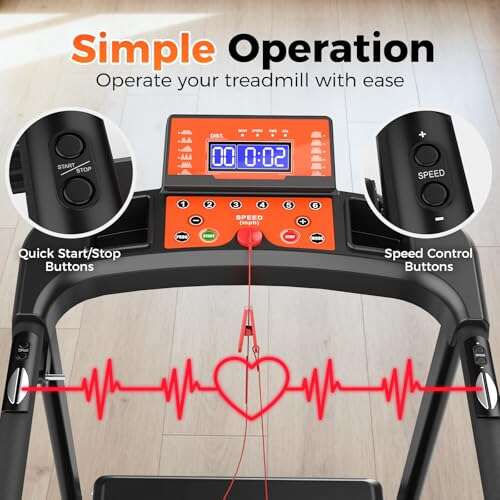
Large speed buttons are useful when you run fast. A quick-stop safety key is essential. Handrails should feel firm without blocking your arm swing. The screen should show speed, time, distance, and incline in a way you can read while moving.
Bluetooth can add training value, but it should not distract from basic controls. A treadmill with many smart features is still a poor choice if the belt is too short. Put fit and safety first, then add technology.
Best Treadmill for Tall Runners: Quick Comparison
| Best for | Why |
|---|---|
| Serious tall runners | The 3G Cardio Elite Runner X combines strong construction, a large shock deck, and a 400-pound capacity. |
| Small-space home users | The 3G Cardio Pro Runner X and Renestar offer folding convenience, but buyers should confirm belt length. |
| Interval and conditioning work | Curved manual models provide self-paced running and resistance without relying on a standard motor. |
My Recommendation
For most tall runners, I recommend the 3G Cardio Elite Runner X first. Its commercial-grade build, 4.0 HP motor, large shock suspension deck, and 400-pound capacity give it the best overall profile for regular running. It is especially well suited to tall athletes who train for longer distances and want a stable deck that does not feel fragile under repeated use.
The 3G Cardio Pro Runner X is my next choice for a home user who wants strong construction and a folding frame. The MERACH is worth considering when incline and app features matter, while the curved RUNOW models suit athletes who prefer short, intense, self-powered workouts. Check the current belt dimensions, warranty, shipping details, and seller information before ordering. Availability and pricing can change.
FAQs Of best treadmill for tall runners
What belt length is best for tall runners?
A belt near 60 inches is a strong starting point for many tall runners. Users with long strides or fast paces may need that extra length. Measure your stride and compare it with the treadmill’s usable running area before buying.
Is a 55-inch treadmill long enough for a tall person?
It can be enough for walking or light jogging. It may feel short for fast running, long strides, or sprint work. Tall runners should test the belt or choose a longer deck when possible.
Does a tall runner need a wider treadmill belt?
Not always, but a wider belt can improve comfort and balance. An 18-inch belt may work for a centered runner, while a 20-inch belt gives more side room. Width cannot replace the need for enough front-to-back length.
Are curved treadmills good for tall runners?
Curved treadmills can suit tall runners who want self-paced intervals and hard conditioning work. They may feel more demanding than powered treadmills. Check the curve, handrail position, and usable deck length before buying.
What is the best treadmill for tall runners who train for marathons?
A stable powered treadmill with a long deck, strong motor, good cushioning, and a high weight rating is the best match. The 3G Cardio Elite Runner X is the strongest option in this guide for that purpose.
Final Verdict: Which Should You Buy?
The 3G Cardio Elite Runner X is my top pick and the best treadmill for tall runners who want stable, long-term running support. Its commercial build and large cushioned deck suit serious training.
For smaller spaces, consider the Pro Runner X. Measure the belt first, then choose the best treadmill for tall runners based on stride, pace, comfort, and room size.

Brandon Knoxley is a sport & fitness writer and training guide contributor at MySportFitHub. He focuses on practical workouts, performance-based training, and honest fitness gear insights designed for real people and real results. Brandon is passionate about helping beginners and active individuals train smarter, avoid common mistakes, and build sustainable fitness habits.