Is Walking On A Treadmill Bad For Your Knees: The Truth
For most people, walking on a treadmill is knee-friendly when pace, form, and load are managed.
The question “is walking on a treadmill bad for your knees” has no one-size-fits-all answer. Treadmill walking is usually a low-impact exercise that can support joint health, weight control, and stronger leg muscles. However, poor form, a steep incline, worn shoes, or a sudden jump in workout time may cause knee pain. This guide explains the benefits, risks, safety tips, and warning signs so you can walk with confidence.
Is walking on a treadmill bad for your knees?
For most healthy adults, walking on a treadmill is not bad for the knees. Walking places much less stress on the joints than running or jumping. A treadmill belt also gives a steady, even surface, which may feel more comfortable than cracked sidewalks or hard pavement.
The key is how you use the treadmill. A slow walk with good posture is very different from a fast walk at a steep incline. Your knees may also react differently if you have arthritis, an old injury, weak hip muscles, or poor ankle movement.
Walking can help the knees by building strength in the muscles around them. Stronger quadriceps, hamstrings, calves, and glutes help share the work that would otherwise fall mainly on the knee joint.
Still, even a low-impact exercise can cause problems if you do too much too soon. Think of your knee like a hinge. It works well when the load rises slowly, but it may become sore when the load changes without warning.

Why treadmill walking may help your knees
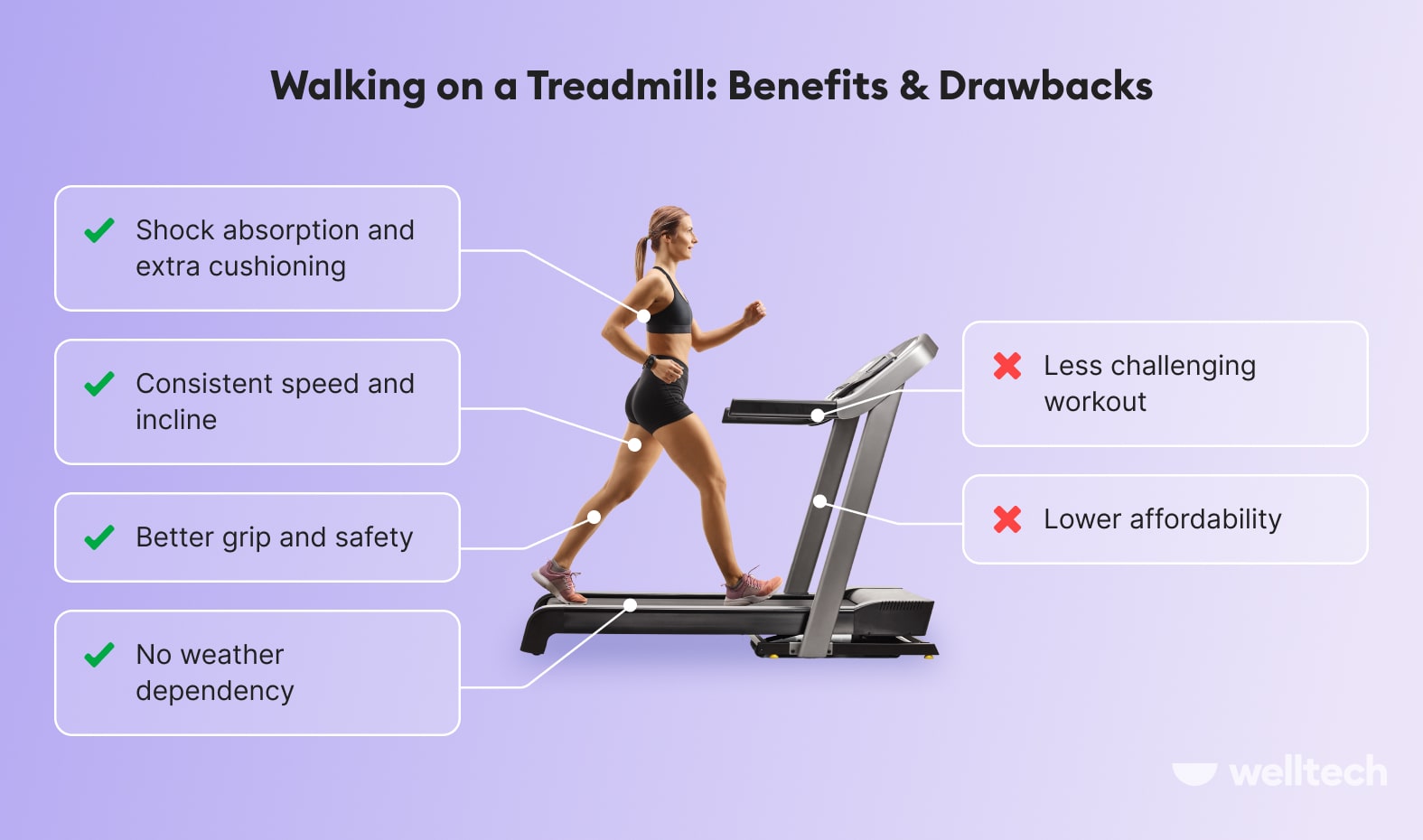
Walking on a treadmill can be a useful part of a knee-friendly fitness plan. It offers a controlled setting, a predictable pace, and easy control over speed and incline.
Potential benefits include:
• Low-impact movement: Walking creates less joint shock than running, jumping, or sports with quick changes in direction.
• Stronger support muscles: Regular walking can help condition the quadriceps, hamstrings, calves, and glutes.
• Better weight control: Weight loss may reduce the force placed on the knees during daily tasks. Even modest weight loss can make movement feel easier for some people.
• Improved joint movement: Gentle, regular activity can reduce stiffness and help maintain range of motion.
• Easier exercise control: You can stop, slow down, or change the incline at any time.
Research and clinical guidance from groups such as the American College of Sports Medicine and the American Academy of Orthopaedic Surgeons generally support regular, moderate activity for joint health. Exercise does not “wear out” healthy knees in the simple way many people fear. In many cases, staying inactive causes more weakness and stiffness.
When is walking on a treadmill bad for your knees?
Walking on a treadmill may be bad for your knees when the workout creates more stress than your body can handle. This does not always mean the treadmill itself is the problem.
Common causes of knee pain include:
• Walking too long before your body adapts
• Increasing speed and incline at the same time
• Using a steep incline for most of the workout
• Taking long steps that make your heel land far ahead of your body
• Allowing the knees to fall inward while walking
• Wearing old or poorly fitted shoes
• Holding the front or side rails for a long time
• Exercising through sharp or increasing pain
• Returning to exercise too quickly after an injury
A high incline can increase the work required from the muscles around the knee. Incline walking is not automatically unsafe, but it should be introduced slowly. Start with a small incline and watch how your knees feel during the workout and the next day.
The rails can also change your walking pattern. Holding them may reduce the natural movement of your arms and trunk. It can also make you lean backward, which may place stress in unusual areas.
Treadmill walking versus outdoor walking
Both treadmill and outdoor walking can support fitness. The better choice depends on your comfort, balance, goals, and surroundings.
A treadmill gives you:
• A flat and predictable surface
• Protection from rain, heat, ice, and traffic
• Precise control over speed and incline
• A convenient option for home or gym workouts
Outdoor walking gives you:
• More natural changes in pace and surface
• Fresh air and changing scenery
• Practice with real-world slopes and sidewalks
• More variety for balance and coordination
For people with sensitive knees, a treadmill may feel easier at first because the surface is smooth and consistent. Yet outdoor walking can also be helpful once strength and balance improve. If you have trouble walking outdoors, begin on a treadmill at a comfortable pace, then slowly add outdoor walks when you feel ready.
The most important factor is not the setting. It is whether the activity is well matched to your current ability.
How to walk on a treadmill without hurting your knees
Safe treadmill walking starts with small choices. You do not need a complex program, but you do need a steady progression.
1. Warm up first
Walk slowly for five to ten minutes before increasing your pace. This gives your muscles time to warm up and helps you notice stiffness before the workout becomes demanding.
A simple warm-up can include:
• Slow treadmill walking
• Gentle ankle circles
• Easy leg swings while holding a stable surface
• A few controlled sit-to-stand movements
Avoid deep stretches that cause pain. A warm-up should prepare your body, not tire it.
2. Use a comfortable pace
Choose a speed that lets you walk with control. You should be able to speak in short sentences without gasping for air.
If you are new to exercise, begin with 10 to 15 minutes. Add a few minutes every several sessions if your knees feel normal during the workout and the next day.
3. Keep the incline modest
A zero to small incline is often a good starting point for people with knee pain. If you want more challenge, change only one factor at a time.
For example:
-
Keep the same speed and add a small incline.
-
Use that setting for a few sessions.
-
Check for pain or swelling later that day and the next morning.
-
Increase the challenge only if your body responds well.
4. Take shorter, natural steps
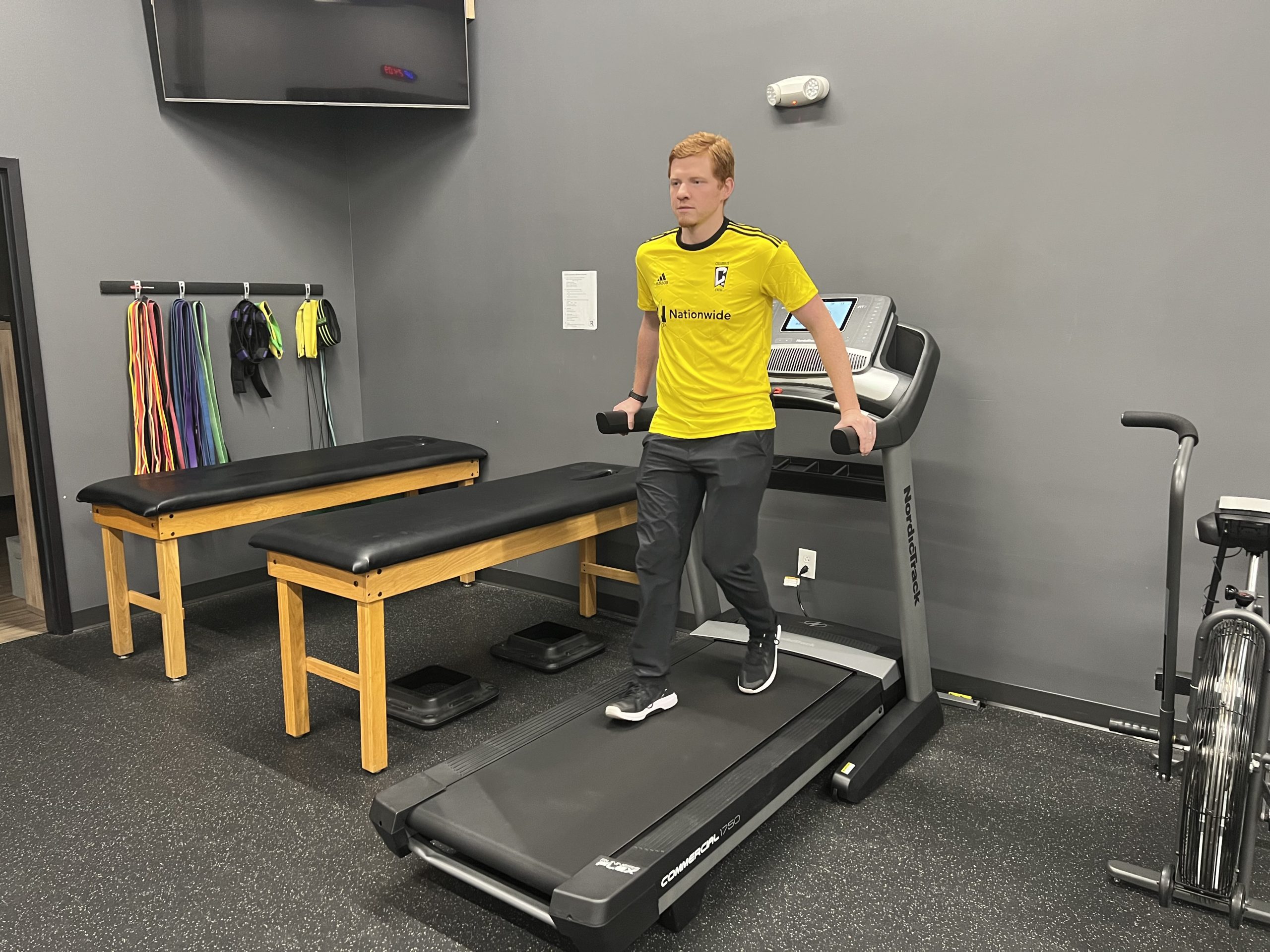
Do not reach far forward with each step. Let your foot land under or slightly in front of your body. Keep your steps smooth and quiet.
Your knees should generally point in the same direction as your toes. They should not repeatedly collapse inward as you walk.
5. Stand tall
Keep your chest lifted, shoulders relaxed, and eyes forward. Lightly engage your stomach muscles. Let your arms swing naturally instead of gripping the rails.
Good posture helps spread work across your hips, legs, and trunk. It also reduces the chance of using awkward movements to keep your balance.
A simple treadmill walking plan for beginners
A gradual plan can reduce the risk of overuse pain. The right starting point depends on your health, age, fitness level, and past injuries.
Try this basic approach:
• Week 1: Walk for 10 to 15 minutes at an easy pace, three days per week.
• Week 2: Walk for 15 to 20 minutes, three or four days per week.
• Week 3: Walk for 20 to 25 minutes, four days per week.
• Week 4: Walk for 25 to 30 minutes, four or five days per week.
Keep the incline at zero or a mild setting at first. Do not increase both time and incline in the same week if your knees are sensitive.
A useful rule is the pain and recovery check. Mild muscle tiredness may be normal. Sharp pain, swelling, limping, or pain that lasts into the next day means you should reduce the workout and review your form.
Walking every day is not required. Rest days help your muscles and connective tissues adapt. Strength exercises on separate days may also improve support around the knee.
Does treadmill incline hurt your knees?
Incline walking can increase muscle demand, but it does not automatically damage the knees. The risk rises when the incline is too steep, the pace is too fast, or the walker already has poor control.
Some people with kneecap pain notice more discomfort during uphill walking. Others find a gentle incline comfortable. This difference is normal because knee problems have many causes.
If you use an incline, follow these tips:
• Start with a low setting.
• Reduce your speed before raising the incline.
• Keep your steps short and controlled.
• Avoid leaning far back or pulling on the rails.
• Stop if pain becomes sharp or changes your walking pattern.
You can build fitness without using a steep incline. Flat walking is still valuable, especially when your main goal is daily movement or pain-free activity.
Knee pain after treadmill walking: What should you do?
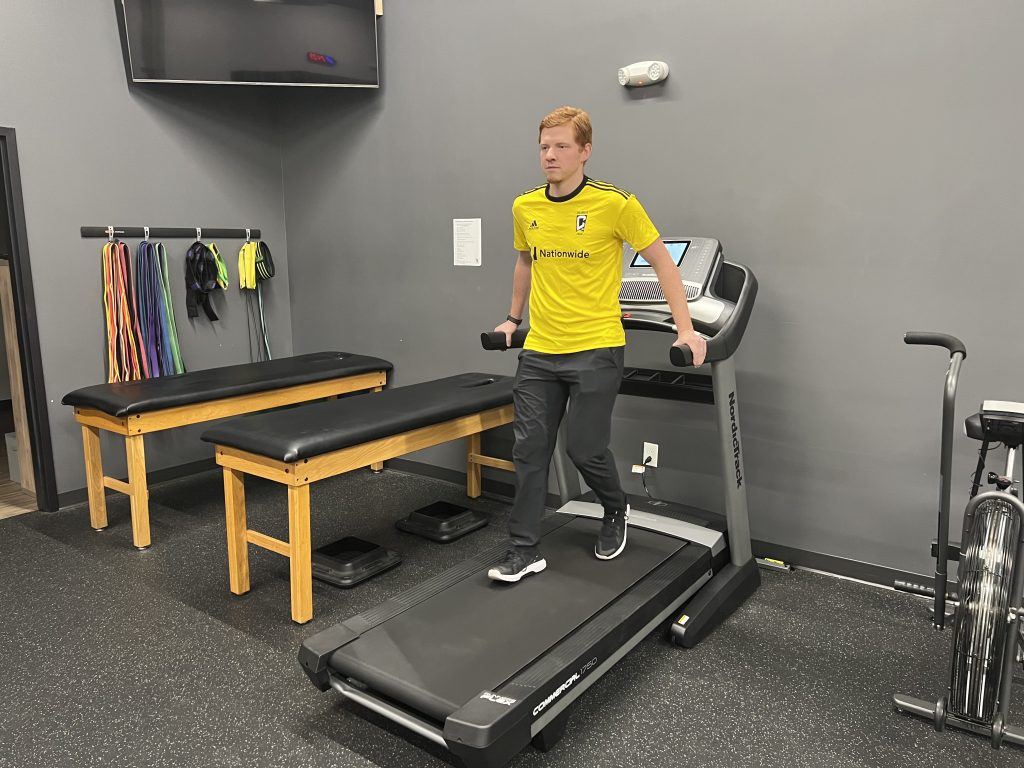
Mild soreness may occur when you begin a new exercise routine. It should improve with rest and should not steadily worsen. Knee pain that returns every time you walk deserves more attention.
Use these steps:
-
Stop or reduce the activity if pain becomes sharp.
-
Check your shoes and treadmill form.
-
Remove the incline for several sessions.
-
Shorten the workout.
-
Use a cold pack for a short period if swelling occurs, unless a clinician has told you not to.
-
Return gradually when normal movement feels comfortable.
Seek medical advice if you have major swelling, locking, repeated giving way, a deformity, inability to bear weight, or pain after a fall. You should also speak with a health professional if pain continues for more than several days or interferes with sleep and daily tasks.
A physical therapist can assess your gait, hip strength, ankle movement, and exercise technique. This is often more useful than simply guessing which treadmill setting caused the problem.
Can people with arthritis walk on a treadmill?
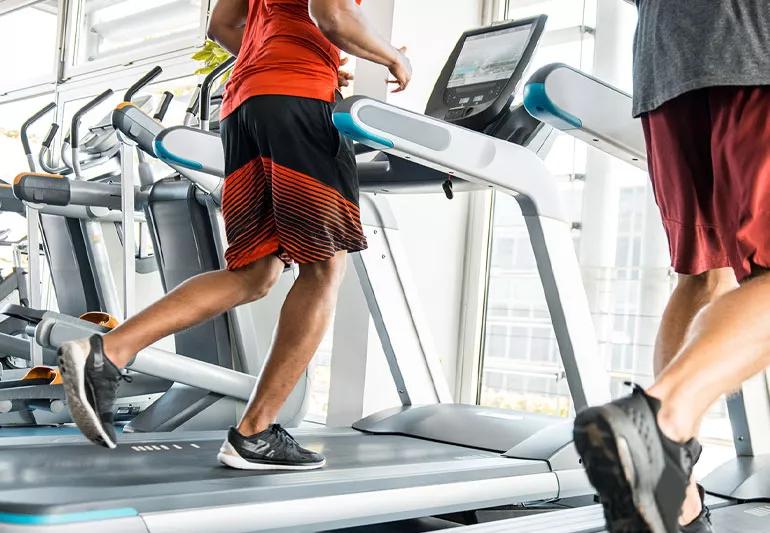
Many people with knee osteoarthritis can walk on a treadmill. Moderate exercise is often included in arthritis care because it supports strength, mobility, and general health.
However, arthritis symptoms vary. Some people feel better after gentle movement, while others need a shorter session or a slower pace. The best program may include treadmill walking, cycling, water exercise, and strength training.
Try these adjustments:
• Walk for shorter periods more often.
• Use a slow pace during stiff periods.
• Avoid steep inclines at first.
• Warm up before increasing speed.
• Track how your knee feels later that day and the next morning.
If you have arthritis, ask a doctor or physical therapist for advice that fits your symptoms. Treadmill walking can be useful, but it should be part of a broader plan rather than the only treatment.
Shoes, surface, and treadmill setup
Good equipment cannot fix poor form, but it can make walking more comfortable. Choose walking or running shoes that fit well and feel stable. Replace them when the tread is worn, the midsole feels flat, or the shoes no longer provide comfortable support.
Do not rely on a shoe label alone. A shoe that works well for one person may feel wrong for another. Look for enough room in the toe box, a secure heel, and a fit that does not cause rubbing.
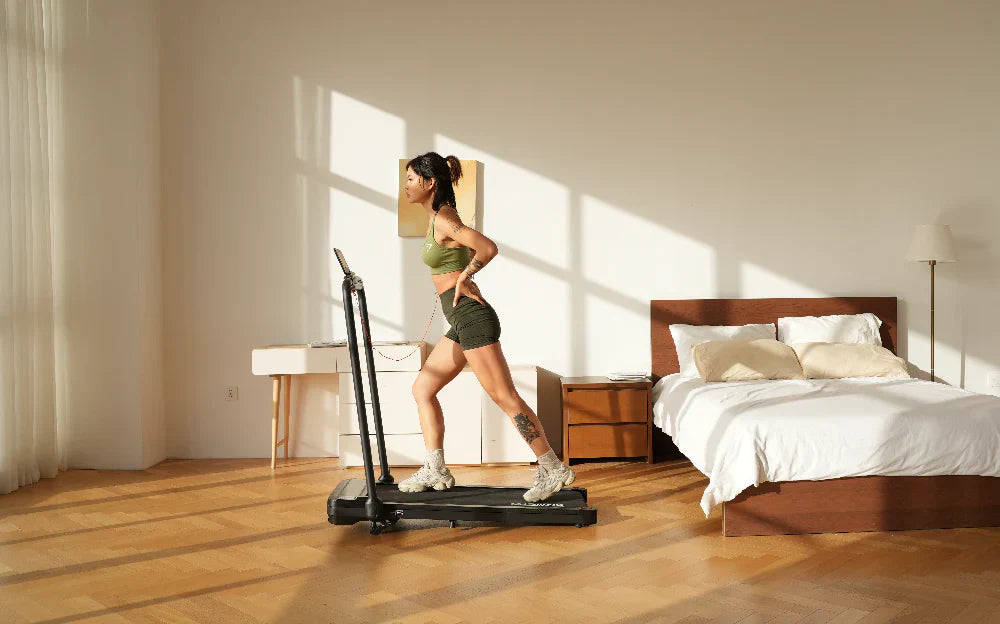
Set the treadmill in a safe location with enough space around it. Keep the emergency stop clip attached when available. Start the belt at a slow speed before stepping on, unless the machine instructions say otherwise.
A mirror or short video can help you check posture. Look for a tall trunk, relaxed shoulders, natural arm swing, and knees that track with the toes.
Mistakes to avoid when walking on a treadmill
Many knee problems come from small habits that build up over time. Avoid these common mistakes:
• Doing too much because the workout feels easy at first
• Copying another person’s speed or incline
• Walking while holding the rails
• Taking long, forceful steps
• Ignoring swelling or a limp
• Wearing shoes with uneven wear
• Skipping rest days
• Changing the program every workout
• Assuming pain always means the exercise is damaging the joint
A consistent, moderate routine is usually better than occasional hard sessions. Your knees respond well to steady practice, much like a plant responds to regular water rather than a bucket once a month.
Frequently Asked Questions
Is walking on a treadmill bad for your knees if you do it every day?
Walking every day is not automatically harmful to the knees. Keep the pace moderate, vary the duration as needed, and allow rest if you develop pain, swelling, or unusual fatigue.
Is walking on a treadmill bad for your knees with arthritis?
It may be safe for many people with arthritis, especially at a gentle pace and low incline. Start with short sessions and ask a health professional for guidance if symptoms are severe or unpredictable.
Is walking on a treadmill better for your knees than running?
Walking usually places less impact on the knees than running. It may be a better starting option for people who are new to exercise, have joint pain, or are returning after an injury.
Can walking on a treadmill cause knee pain?
Yes, treadmill walking can cause knee pain if you increase the workload too quickly, use poor form, wear unsuitable shoes, or walk with an excessive incline. Pain may also come from an underlying condition that is unrelated to the treadmill.
What treadmill incline is safest for knee pain?
There is no single safe incline for everyone. A flat setting or mild incline is a reasonable starting point, but reduce the incline if it causes pain or changes your walking pattern.
Should I stop walking on a treadmill if my knees hurt?
Stop or reduce the workout if pain is sharp, causes limping, or continues after exercise. Persistent pain, swelling, locking, or instability should be assessed by a doctor or physical therapist.
Conclusion
Walking on a treadmill is usually a knee-friendly form of exercise when you use a suitable pace, gradual progression, good posture, and comfortable shoes. It may help strengthen the muscles around your knees, support weight control, and reduce stiffness.
The answer to “is walking on a treadmill bad for your knees” depends on your body and your approach. Start small, be cautious with incline, avoid holding the rails, and pay attention to how your knees feel during and after each session. Choose a steady plan that you can maintain, and speak with a health professional if pain does not improve.

Brandon Knoxley is a sport & fitness writer and training guide contributor at MySportFitHub. He focuses on practical workouts, performance-based training, and honest fitness gear insights designed for real people and real results. Brandon is passionate about helping beginners and active individuals train smarter, avoid common mistakes, and build sustainable fitness habits.