How To Check Treadmill Belt Tension: Easy Guide
Check treadmill belt tension by unplugging the machine, testing the belt’s lift and movement, then making small, equal adjustments.
Learning how to check treadmill belt tension helps prevent slipping, uneven wear, motor strain, and noisy workouts. The right tension is firm but not tight, and this guide explains how to test it safely, adjust it correctly, and know when a repair needs professional help.
Why Treadmill Belt Tension Matters
A treadmill belt needs the right amount of tension to move smoothly over the walking platform. If it is too loose, the belt may slip when you step down or speed up. If it is too tight, it can strain the motor, rollers, bearings, and belt itself.
Correct tension also supports a steady workout. A belt that shifts from side to side can make you feel unsure underfoot. In severe cases, poor tension may damage the walking belt or drive system.
When learning how to check treadmill belt tension, think of the belt like a guitar string. It should not hang loose, but it should not be pulled so tight that it cannot move freely.
Signs Your Treadmill Belt Needs a Tension Check
You may not need tools to notice a tension problem. Pay attention to how the treadmill sounds and feels during use.
Common signs include:
• The belt slips when you walk, jog, or increase speed.
• The motor runs, but the belt pauses under your feet.
• The belt makes a rubbing, squealing, or thumping sound.
• The belt moves toward the left or right side.
• The belt feels unusually tight when you try to move it by hand.
• The walking surface feels jerky or uneven.
• The motor seems to work harder than normal.
A slipping belt does not always mean poor tension. Dirt, worn rollers, a dry deck, a damaged belt, or a weak motor can cause similar symptoms. That is why checking treadmill belt tension should be part of a wider inspection.

Tools and Safety Steps You Need
Most treadmill belt tension checks need only a few basic items. Your owner’s manual is the most important one because adjustment points and belt specifications vary by model.
Prepare:
• Your treadmill owner’s manual
• A hex key or Allen wrench that fits the rear roller bolts
• A clean cloth or shop towel
• A flashlight
• Silicone treadmill lubricant, only if the manual allows it
• A ruler or tape measure for basic belt lift checks
Before you begin, follow these safety steps:
-
Turn off the treadmill.
-
Unplug it from the wall.
-
Wait several minutes for stored electrical energy to discharge.
-
Keep loose clothing, hair, and fingers away from the rollers.
-
Place the treadmill on a level, stable surface.
Never adjust the rear roller while the treadmill is running unless the manufacturer specifically gives that instruction. A moving belt can catch fingers or clothing.

How to Check Treadmill Belt Tension
The following method works for many home treadmills. Still, use your manual as the final guide because some models use different belt systems.
1. Inspect the belt and walking deck
Look across the full belt surface. Check for cracks, shiny patches, frayed edges, or melted areas. Then inspect the exposed walking deck for deep scratches, dry spots, or dark wear marks.
A damaged belt may slip even when the tension is correct. If the belt looks badly worn, adjusting the rear bolts may only hide the real problem.
2. Find the rear roller adjustment bolts
Most treadmills have one adjustment bolt on each side of the rear roller. These bolts sit near the back end of the walking belt.
Do not confuse the rear roller bolts with frame or cover screws. If you are unsure, use the parts diagram in your owner’s manual.
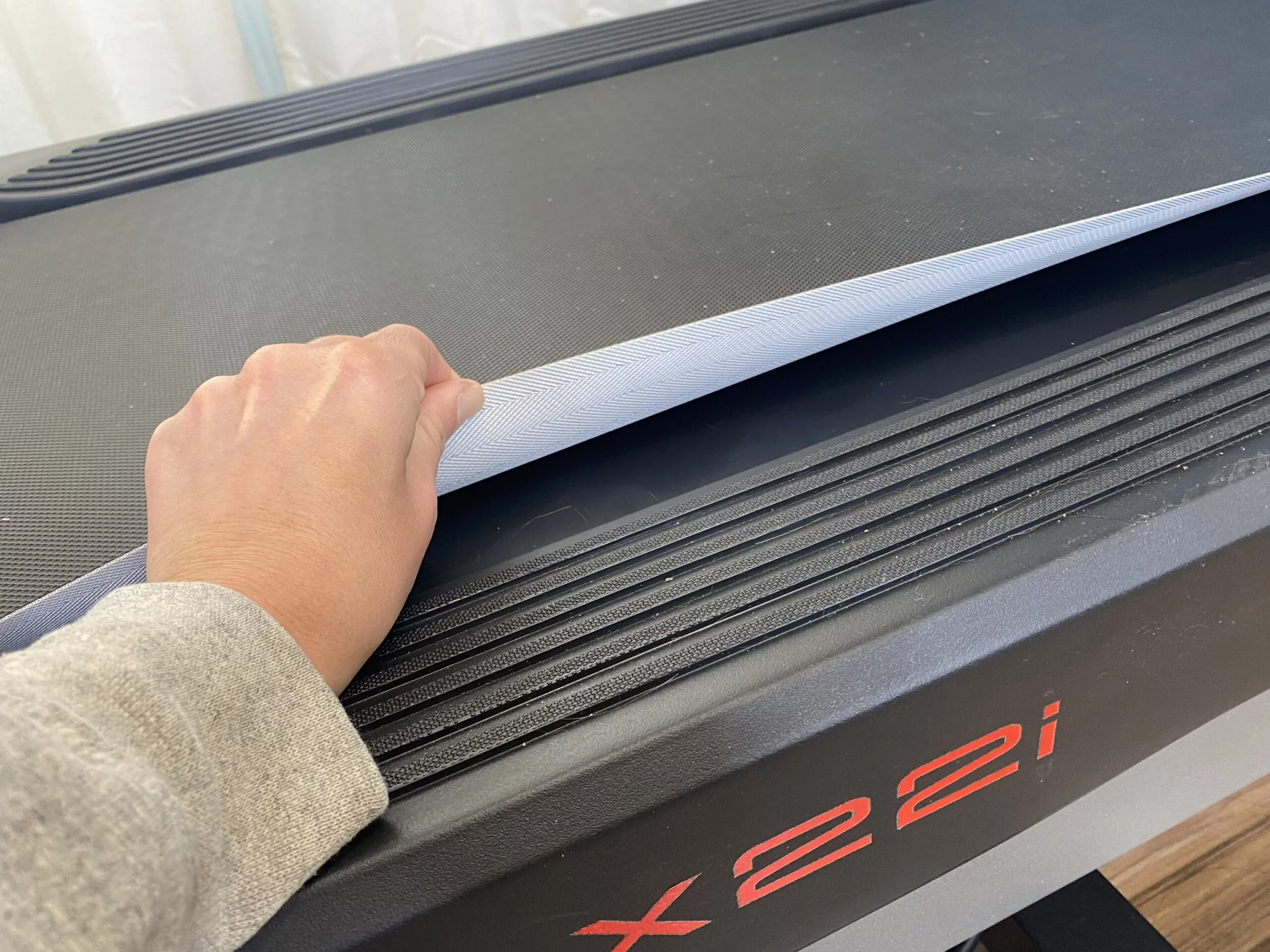
3. Test the belt lift
With the treadmill unplugged, stand beside the machine. Lift the belt near the center of the walking platform.
Many manufacturers recommend a small amount of lift, often about 2 to 3 inches, but this measurement is not universal. Some treadmills require a different gap. Use the manual’s measurement when one is provided.
If the belt lifts very high with little effort, it may be too loose. If it barely lifts or feels extremely stiff, it may be too tight.
4. Test for slipping by hand
Place one foot on the side rail and try to move the walking belt forward with your other foot. Do not force it.
A belt with normal tension should move with steady resistance. It should not feel completely loose, but it should not lock up. This test offers a useful clue, though it cannot replace a powered walking test.
5. Check belt movement at low speed
Plug in the treadmill and start it at a slow walking speed. Stand on the side rails first.
Watch the belt for several seconds. Step onto the belt only when it moves smoothly. Walk at a slow pace and notice whether the belt pauses, jumps, or slips under your feet.
If the belt slips only when you step down, it may be loose. If the motor sounds strained or the belt moves slowly, it may be too tight or the machine may have another fault.
How to Tighten a Loose Treadmill Belt
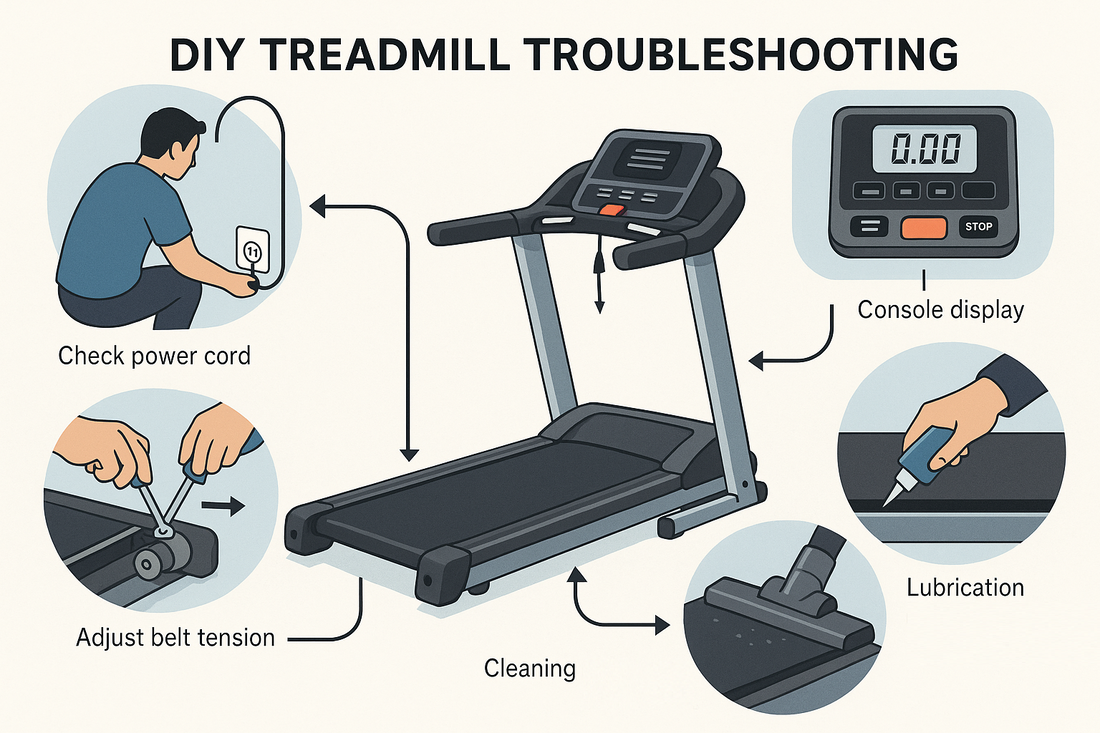
If your inspection shows a loose belt, make small adjustments. Large turns can over-tighten the belt quickly.
-
Turn off and unplug the treadmill.
-
Locate both rear roller adjustment bolts.
-
Turn the left bolt clockwise by one-quarter turn.
-
Turn the right bolt clockwise by one-quarter turn.
-
Keep both bolts turned by the same amount.
-
Recheck the belt position and lift.
-
Test the treadmill at a slow speed.
Equal adjustments help keep the belt centered. If you tighten only one side, the belt may drift toward the other side.
Many technicians use one-quarter-turn adjustments because they are easy to track and less likely to cause damage. If the belt still slips, repeat the process once at a time. Stop if you reach the manual’s tension limit.
Learning how to check treadmill belt tension also means knowing when not to keep tightening. A belt that still slips after reasonable adjustment may have a worn surface, damaged roller, weak motor, or loose drive belt.

How to Loosen an Overly Tight Treadmill Belt
An overly tight belt can create just as many problems as a loose one. It may produce a high-pitched sound, increase motor heat, or make the walking surface feel stiff.
To loosen the belt:
-
Turn off and unplug the treadmill.
-
Mark the current position of each adjustment bolt with a pencil.
-
Turn both bolts counterclockwise by one-quarter turn.
-
Make the same adjustment on both sides.
-
Recheck the belt lift and alignment.
-
Run the treadmill at a slow speed.
Do not loosen the bolts too much. The rear roller should remain secure, and the belt should not become visibly slack.
A common mistake is to loosen one bolt several turns because the belt feels tight. This can shift the roller and send the belt off center. Small, equal changes are safer.
How to Center the Treadmill Belt
Belt alignment and belt tension are closely related, but they are not the same issue. A belt can have acceptable tension and still move sideways.
Start the treadmill at a slow speed and observe the belt from behind. If it moves toward the left, follow the adjustment direction in the manual. On many models, tightening the left rear bolt slightly or loosening the right bolt slightly can move the belt back toward center. The correct direction varies by treadmill.
Make adjustments in small steps, such as one-eighth or one-quarter turn. Wait 30 to 60 seconds after each change so the belt has time to respond.
Keep your hands away from the moving belt. Use the side rails and stop the treadmill before making another adjustment if the belt moves sharply or behaves unpredictably.
How Lubrication Affects Belt Tension
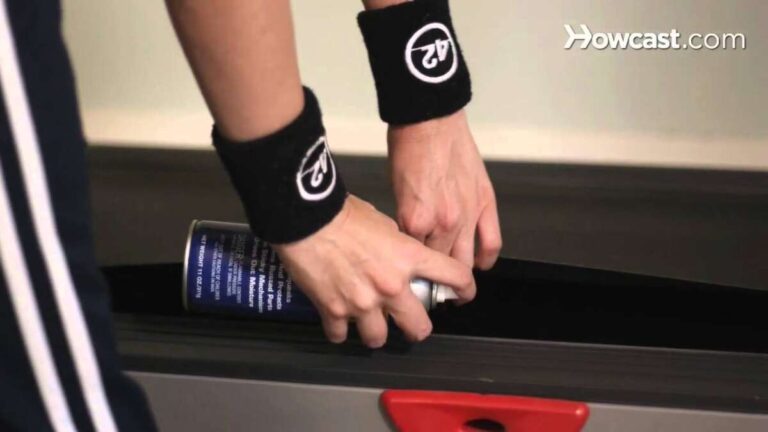
Lubrication does not replace correct belt tension, but it can affect how the belt feels and moves. A dry walking deck creates extra friction. That friction may feel like a tight belt and can increase motor load.
Only use lubricant made for treadmills and approved for your machine. Many models use 100% silicone lubricant, but some manufacturers use different instructions. Do not use automotive oil, WD-40, cooking oil, or household grease.
To lubricate safely:
• Unplug the treadmill.
• Lift the belt according to the manual.
• Apply the recommended amount beneath the belt.
• Spread it over the walking area.
• Run the treadmill slowly for a few minutes.
Too much lubricant can make the belt slide, collect dust, and create a safety issue. Check the manual before applying anything because some belts and decks are pre-lubricated or require no user lubrication.

Common Mistakes to Avoid
Poor adjustment often causes more trouble than the original problem. These mistakes are especially common when people check treadmill belt tension for the first time.
• Turning only one rear roller bolt: This can push the belt off center.
• Making large adjustments: A few full turns can create excessive tension.
• Testing with shoes on the belt while adjusting: This increases risk and can hide the true cause of slipping.
• Ignoring the owner’s manual: Belt lift and adjustment rules differ by model.
• Using the wrong lubricant: Household sprays may damage the belt or deck.
• Tightening a worn belt: A damaged belt needs replacement, not endless adjustment.
• Forgetting to mark bolt positions: Marks help you return to the starting point.
• Running the treadmill with loose covers: Moving parts may become exposed.
In my experience, the most useful habit is to change one thing at a time. Adjust both bolts equally, test the machine, and write down what happened. This simple method prevents guesswork.
A Practical Tension Check Example
Imagine that your treadmill belt slips whenever you jog. With the machine unplugged, you find that the belt lifts far higher than the measurement in the manual. The belt also feels loose when you move it by hand.
In this case, tighten both rear roller bolts by one-quarter turn. Test the machine again at a slow walk, then at a light jog. If the slipping stops and the belt remains centered, the adjustment may be complete.
Now imagine the belt still slips, but it looks cracked and shiny. More tension may not solve the issue. The belt surface may have lost grip, so replacement or professional inspection is the better choice.
When to Call a Treadmill Technician
Basic tension checks are suitable for many home users. However, some problems require a trained technician.
Ask for professional help if:
• The belt will not stay centered.
• The motor stops or smells hot.
• You hear grinding from the front or rear roller.
• The belt has exposed fabric, tears, or severe cracks.
• The treadmill trips a circuit breaker.
• The belt slips after correct adjustment.
• The rear roller bolts are damaged or stripped.
• You cannot identify the correct adjustment points.
A technician can measure motor current, inspect the drive belt, check roller bearings, and assess the walking deck. These tests can reveal faults that a simple tension check cannot find.
How Often Should You Check Treadmill Belt Tension?
Check the belt before buying a used treadmill and whenever you notice slipping, noise, or poor tracking. For a treadmill used several times each week, a quick visual and walking check every month is a sensible habit.
A deeper inspection can be part of regular maintenance every three to six months. Heavy use, frequent running, dust, humidity, and poor cleaning may require more frequent checks.
Follow the service schedule in your manual. A treadmill used by several family members may need attention sooner than one used for light walking.
Frequently Asked Questions
How tight should a treadmill belt be?
A treadmill belt should be firm but flexible. It should have the amount of lift listed in the owner’s manual and should not slip under normal walking or running.
How do I know if my treadmill belt is too loose?
A loose belt may pause or slide when you step on it, especially during acceleration. It may also lift much higher than the manufacturer’s recommended measurement.
How do I know if my treadmill belt is too tight?
A belt may be too tight if it barely lifts, creates unusual noise, makes the motor sound strained, or causes excess heat. Loosen both rear adjustment bolts in small, equal steps.
Can I tighten a treadmill belt while it is running?
Do not adjust the belt while the treadmill is running unless the manufacturer clearly permits it. Unplug the machine before turning the rear roller bolts, then test it safely at a slow speed.
Why does my treadmill belt keep slipping after tightening?
The belt may be worn, glazed, poorly lubricated, misaligned, or affected by a damaged roller or weak motor. Repeated tightening can cause more damage, so inspect these parts or contact a technician.
How often should I lubricate a treadmill belt?
Lubrication frequency depends on the model, use, belt type, and deck material. Follow the owner’s manual and use only approved treadmill lubricant.
Conclusion
Checking treadmill belt tension is a simple maintenance task when you work slowly and safely. Unplug the machine, inspect the belt, test its lift and movement, and adjust both rear roller bolts by small, equal amounts.
Remember that belt slipping can also come from poor alignment, a dry deck, worn parts, or motor trouble. Use your owner’s manual as the final authority, and stop adjusting if the problem does not improve.
Take a few minutes to check your treadmill today. A properly tensioned belt can make workouts smoother, protect key parts, and give you more confidence with every step. Share your maintenance experience or explore your treadmill manual for model-specific guidance.

Brandon Knoxley is a sport & fitness writer and training guide contributor at MySportFitHub. He focuses on practical workouts, performance-based training, and honest fitness gear insights designed for real people and real results. Brandon is passionate about helping beginners and active individuals train smarter, avoid common mistakes, and build sustainable fitness habits.