
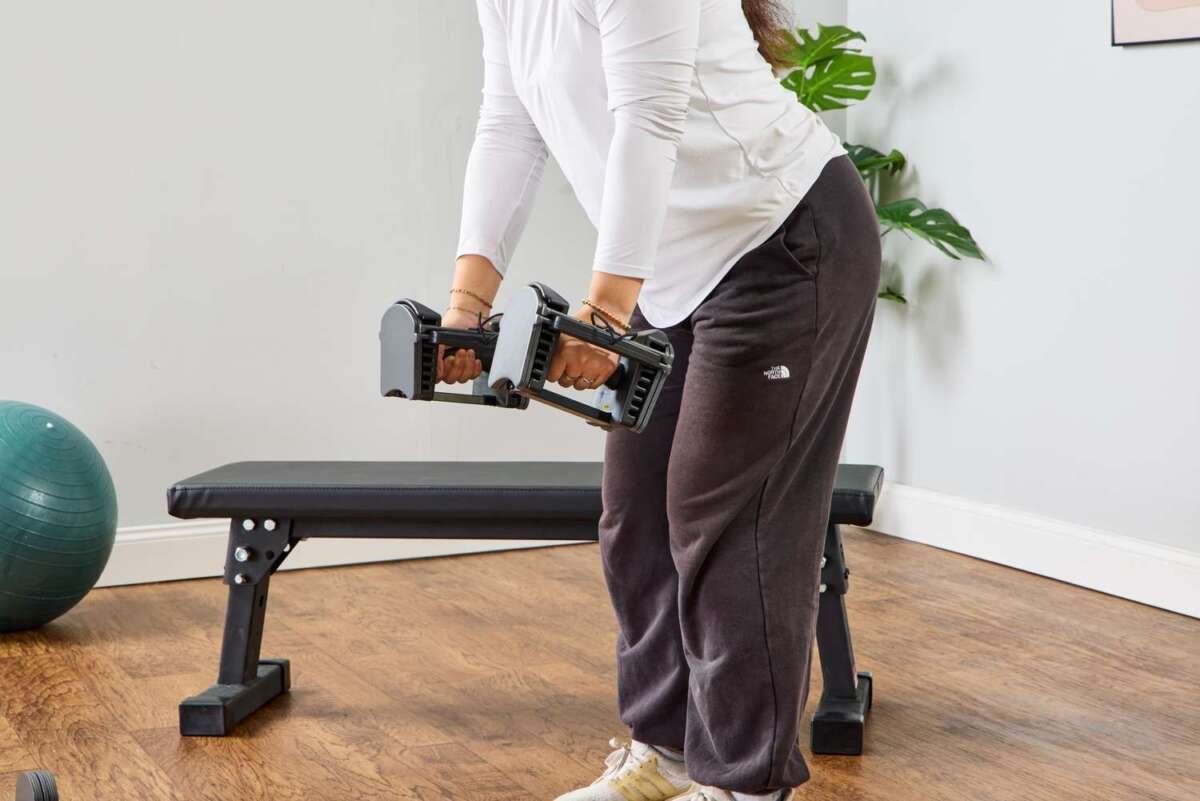
What Is The Best Weight For Dumbbells: Find Your Ideal Size
The best dumbbell weight lets you complete each set with good form while still making the final reps feel challenging.
The best weight for dumbbells depends on your goal, strength, exercise, experience, and training plan. A weight that feels perfect for a shoulder raise may be far too light for a goblet squat. This guide explains how to choose the right load, test it safely, progress over time, and avoid the common mistake of lifting more weight than your body can control.
What Is the Best Weight for Dumbbells?
There is no single best weight for dumbbells that works for everyone. The correct load is the heaviest weight you can lift through the full range of motion while keeping steady form and finishing your target reps.
For many beginners, the best weight for dumbbells may be:
• 2 to 5 pounds for small movements such as lateral raises and reverse flyes
• 5 to 10 pounds for biceps curls, triceps extensions, and shoulder presses
• 10 to 20 pounds for rows, chest presses, lunges, and goblet squats
These are starting points, not rules. A strong beginner may need heavier dumbbells, while someone returning after an injury may need much lighter ones.
The best weight for dumbbells should make the last two or three reps hard. However, you should still be able to control the dumbbell without swinging, holding your breath, or changing your body position.

How to Choose the Right Dumbbell Weight
Choosing the best weight for dumbbells becomes easier when you consider four factors: your goal, the exercise, your training level, and your rep range.
Consider your fitness goal
Your goal affects how heavy you should lift.
• Muscle endurance: Use a lighter weight for about 12 to 20 controlled reps.
• Muscle growth: Use a moderate to heavy weight for about 6 to 15 reps.
• Maximum strength: Use a heavier weight for about 1 to 6 reps, usually with careful supervision.
• General fitness: Use a moderate weight that allows 8 to 15 quality reps.
Most people do not need to train at their absolute maximum. For general health, strength, and muscle gain, a weight that challenges you within a moderate rep range is often the most useful choice.
Match the weight to the exercise
Different exercises use different amounts of muscle. A dumbbell squat uses your legs and hips, which are usually stronger than the muscles used in a lateral raise.
You may use:
• Heavier dumbbells for deadlifts, squats, rows, and chest presses
• Moderate dumbbells for lunges, shoulder presses, and one arm rows
• Lighter dumbbells for lateral raises, front raises, rear delt flyes, and some arm exercises
This is why asking for one best weight for dumbbells can be misleading. The right weight for a goblet squat may be five times heavier than the right weight for a lateral raise.
Think about your training level
Beginners should start with a weight that leaves two or three good reps “in reserve.” This means you could complete two or three more reps if needed, but you stop before your form breaks down.
Intermediate lifters can usually work closer to fatigue. experienced lifters may use several weights during one workout, depending on the exercise and training goal.
Your size can offer a rough clue, but it does not determine the best weight for dumbbells. Technique, joint health, past training, and muscle strength matter more than body weight alone.

A Simple Test to Find Your Best Dumbbell Weight
You can find the best weight for dumbbells with a short and safe test. This method works at home, in a gym, or when trying a new exercise.
-
Choose a light starting weight.
-
Perform 8 to 12 slow reps.
-
Check your form during every rep.
-
Ask whether you could complete two or three more clean reps.
-
Increase the weight slightly if the set feels very easy.
-
Reduce the weight if your form changes or your joints feel painful.
The correct weight should feel challenging near the end of the set. Your final reps may slow down, but they should not become messy.
For example, imagine you are testing a dumbbell chest press. You complete 12 reps with 15 pounds and feel that you could do eight more. That weight is likely too light for a strength or muscle-building set. If you use 25 pounds and can only complete five shaky reps, it is too heavy. A 20-pound dumbbell may be a better starting point.
A useful rating is the rate of perceived exertion, or RPE. An RPE of 7 to 9 means the set feels hard, but you still have control. This approach is supported by exercise research because people can gain strength and muscle across a range of loads when they train close enough to fatigue.

Best Dumbbell Weights for Beginners
The best weight for dumbbells for beginners is usually lighter than expected. Your first goal is not to prove how much you can lift. Your first goal is to learn safe movement and build control.
A practical starting guide looks like this:
| Exercise | Common beginner range |
|---|---|
| Lateral raise | 2 to 8 pounds |
| Biceps curl | 5 to 15 pounds |
| Triceps kickback | 3 to 10 pounds |
| Shoulder press | 5 to 15 pounds |
| Chest press | 8 to 20 pounds |
| One arm row | 10 to 25 pounds |
| Goblet squat | 10 to 30 pounds |
| Dumbbell deadlift | 15 to 40 pounds |
These ranges are broad because strength varies widely. They are not medical or performance limits.
Start with a weight that lets you practice the movement. Keep your wrists straight, move with control, and avoid using momentum. Once the exercise feels natural, increase the load in small steps.
A mistake I often see is choosing dumbbells based on what someone else lifts. That usually leads to rushed reps and poor form. Your best weight for dumbbells is the one that fits your current body, not another person’s workout.

How Much Should Dumbbells Weigh for Muscle Growth?
For muscle growth, the best weight for dumbbells is one that allows roughly 6 to 15 challenging reps with good form. Some people can build muscle with lighter weights and higher reps, especially when they train close to fatigue.
A simple plan is to choose a weight that allows 8 to 12 reps. When you can complete all sets at the top of that range without losing control, increase the dumbbell weight slightly.
For example:
• Week one: 15 pounds for 10, 9, and 8 reps
• Week two: 15 pounds for 12, 11, and 10 reps
• Week three: 15 pounds for 12, 12, and 12 reps
• Week four: Increase to 17.5 or 20 pounds and repeat
This method is called progressive overload. It does not always mean lifting heavier. You can also add reps, improve control, increase sets, or reduce rest time.
Research on resistance training shows that muscle growth can occur with both lighter and heavier loads when the effort is high enough. Still, moderate weights are often more comfortable and practical for most people.

How Much Should Dumbbells Weigh for Strength?
Strength training usually requires heavier dumbbells and fewer reps. The best weight for dumbbells for strength may allow 3 to 6 strong reps, depending on the exercise and your experience.
Heavy training demands more care. Warm up first, use stable positions, and stop before your technique breaks down. Compound exercises such as rows, presses, squats, and deadlifts are often better choices for strength work than small isolation exercises.
A safe strength session may include:
-
One or two warm-up sets with light dumbbells
-
Three to five working sets
-
Three to six reps per set
-
Two to three minutes of rest between hard sets
-
A weight increase of about 2.5 to 5 pounds when all reps feel controlled
Do not chase a personal record when you feel tired, sick, or distracted. Strength changes from day to day because of sleep, stress, nutrition, and recovery.

Best Dumbbell Weight for Weight Loss and Home Workouts
Dumbbells do not directly cause fat loss. Fat loss mainly depends on your overall energy balance, food intake, daily activity, sleep, and consistency. However, strength training can help you build or maintain muscle while you lose weight.
For a home workout, choose dumbbells that cover several movement types. Adjustable dumbbells can be useful because they let you change the load for different exercises.
A basic home setup may include:
• Light weights for raises and arm work
• Medium weights for presses and lunges
• Heavy weights for squats, rows, and deadlifts
If you only have one pair, choose a load that works for large movements. You can make the same weight harder by using one arm at a time, slowing each rep, adding pauses, or doing more repetitions.
The best weight for dumbbells in a home workout is the weight you can use often and safely. A smaller set that you actually use is better than a large set that sits in the corner.

Signs Your Dumbbells Are Too Light or Too Heavy
Your body gives useful feedback during training. Learning to read it helps you find the best weight for dumbbells without guessing.
Your dumbbells may be too light if:
• You finish the set with many reps left in reserve
• Your breathing stays almost unchanged
• You feel no challenge in the target muscle
• You can easily double the planned number of reps
• The last reps feel the same as the first reps
Your dumbbells may be too heavy if:
• You swing the weight to start each rep
• Your back arches or twists to create force
• You cannot use the full range of motion
• Your wrists bend sharply
• You feel sharp joint pain
• You cannot lower the dumbbell with control
Muscle burn and general effort can be normal. Sharp pain, numbness, or sudden joint pain is not. Stop the exercise and seek advice from a qualified health professional if symptoms continue.

Common Mistakes When Choosing Dumbbell Weight
Many training problems come from simple loading mistakes. Avoiding them can help you progress faster and stay healthy.
Starting too heavy
Heavy dumbbells can make a workout feel impressive, but they often hide weak technique. Start lighter, learn the movement, and increase the load when your control improves.
Using the same weight for every exercise
Your legs, back, chest, shoulders, and arms do not have equal strength. Expect to use different weights for different movements.
Ignoring the lowering phase
The lowering part of a rep matters. Lower the dumbbell slowly for about two or three seconds when learning a new movement. If you cannot control the descent, the weight may be too heavy.
Changing weights too often
Progress takes time. Changing the load every workout can make it hard to know what works. Keep a simple record of the weight, reps, sets, and how the exercise felt.
Treating pain as progress
Hard work can cause fatigue, but pain is not a requirement for results. Joint pain may signal poor technique, excessive load, limited mobility, or an injury.

How to Progress With Dumbbells Safely
Once you find the best weight for dumbbells, use gradual progression. Small increases often produce better results than large jumps.
Try this progression model:
-
Choose a rep range, such as 8 to 12.
-
Keep the same weight until you reach 12 reps for every set.
-
Increase the weight by the smallest available amount.
-
Return to the lower end of the rep range.
-
Build up again over the next few sessions.
For example, if you use 20-pound dumbbells for three sets, you might progress from 8, 8, 7 reps to 12, 11, 10 reps. Once you can complete 12 reps in all three sets, try 22.5 or 25 pounds.
Rest also affects performance. Small isolation exercises may need 30 to 90 seconds of rest. Heavy compound exercises may need two or three minutes. More rest can help you use the best weight for dumbbells without sacrificing form.
Sleep and food matter, too. A poor night of sleep may reduce your strength, and that is normal. Adjust the load when needed instead of forcing the same number every day.
Dumbbell Weight Safety Tips
Dumbbell training is safe for most healthy adults when it is performed with good technique. Still, basic safety steps matter.
• Warm up for five to 10 minutes before hard sets.
• Use a clear space with a stable floor.
• Wear shoes that give you a firm base.
• Keep dumbbells close to your body when carrying them.
• Do not hold your breath for long periods.
• Use a spotter for difficult presses when possible.
• Stop if you feel chest pain, dizziness, numbness, or sharp pain.
• Ask a qualified professional for guidance if you are pregnant, recovering from an injury, or managing a health condition.
The best weight for dumbbells should challenge your muscles without placing unnecessary stress on your joints. Good form is not just about appearance. It helps direct force toward the intended muscles and lowers the chance of injury.
How to Choose Dumbbell Weight for Different Exercises
Here is a simple exercise-by-exercise guide. Use it as a starting point, then adjust based on your performance.
Dumbbell curls
Choose a weight that allows 8 to 15 smooth reps. Keep your elbows near your sides and avoid leaning back.
Shoulder presses
Use less weight than you might expect. Your shoulders work through a longer range of motion, and poor control can place stress on the joint.
Lateral raises
Start very light. Many people need only 2 to 10 pounds because the side shoulder muscles are relatively small.
Dumbbell rows
You can often use heavier dumbbells for rows because your back muscles are strong. Keep your spine neutral and avoid twisting.
Goblet squats
Choose a load that lets you squat deeply with control. Hold the dumbbell close to your chest and keep your heels grounded.
Dumbbell deadlifts
Use a weight that allows you to keep your back stable. Push your hips back and keep the dumbbells close to your legs.
Chest presses
Choose a weight that allows a controlled lowering phase. Keep your shoulders stable and avoid bouncing the dumbbells off your chest.
Frequently Asked Questions About the Best Weight for Dumbbells
What is the best dumbbell weight for beginners?
The best weight for dumbbells for beginners is one that allows 8 to 12 controlled reps with two or three good reps left. Many beginners start with 5 to 15 pounds, but the right choice depends on the exercise and personal strength.
Are 20-pound dumbbells enough to build muscle?
Yes, 20-pound dumbbells can build muscle when they make your sets challenging and you train consistently. You can also increase reps, slow the movement, add pauses, or use single-arm exercises when heavier weights are not available.
Should I use the same dumbbell weight for every exercise?
No. Large muscle exercises such as squats and rows usually allow more weight than small movements such as lateral raises. Using different loads helps you train each exercise safely and effectively.
How do I know when to increase dumbbell weight?
Increase the weight when you can complete all planned reps and sets with steady form and little struggle. Raise the load in small steps, then return to the lower end of your rep range.
Is heavier weight always better?
No. Heavier is useful only when you can control the movement. A lighter dumbbell used with full range of motion and good technique is often more effective than a heavy dumbbell lifted with momentum.
Can I build muscle with light dumbbells?
Yes. Light dumbbells can build muscle when you perform enough challenging reps and get close to muscular fatigue. They are also useful for beginners, rehabilitation, endurance work, and exercises that target small muscles.
Conclusion
The best weight for dumbbells is not a fixed number. It is the load that challenges your muscles, fits your goal, and allows you to keep strong, controlled form from the first rep to the last.
Start lighter than your ego suggests, test your form, track your progress, and increase the weight in small steps. Use different dumbbell weights for different exercises, and treat pain as a warning rather than a challenge. Choose your next set with care, stay consistent, and explore more strength-training resources to keep building confidence and results.

Brandon Knoxley is a sport & fitness writer and training guide contributor at MySportFitHub. He focuses on practical workouts, performance-based training, and honest fitness gear insights designed for real people and real results. Brandon is passionate about helping beginners and active individuals train smarter, avoid common mistakes, and build sustainable fitness habits.


