Best Manual Treadmill For Running: Top Running Picks
The best manual treadmill for running balances smooth belt control, strong build quality, comfort, and useful resistance.
You may want to run at home but dislike loud motors, rising power bills, or bulky machines that sit unused. A manual treadmill can solve those problems with a belt that moves as you move. It also gives your legs more control over pace and effort. I reviewed these models with real home use in mind, focusing on belt feel, resistance, running space, storage, comfort, and value. Whether you want short sprints, steady cardio, or a simple training tool, this guide can help you choose with confidence.
Curved Manual Treadmill With 6-Level Resistance

This curved manual treadmill is built for people who want a more active running session without a motor. Its six resistance levels let you adjust the challenge as your workout changes. The curved deck encourages you to drive the belt with your feet, so your pace comes from your own effort. That design can feel more natural than waiting for a powered belt to catch up with you.
The five-layer shock-absorbing belt is a useful feature for home runners who care about comfort. The digital monitor also helps you track basic workout details while you train. I like this combination because it keeps the machine simple but still gives you useful feedback. The design appears suited to a home gym or light commercial setting, though serious runners should confirm the belt size and weight rating before purchase.
Pros:
- Six resistance levels support gradual training changes
- Curved belt encourages active foot control
- Five-layer belt design may improve running comfort
- Digital monitor makes basic tracking simple
- Motor-free design avoids electrical power use
- Useful for walking, jogging, and short running intervals
Cons:
- Manual running can feel harder than motorized treadmill running
- Users must confirm deck size for a long running stride
- Curved treadmills may require an adjustment period
Curved Manual Treadmill With 8 Resistance Levels

This non-electric curved treadmill offers eight resistance levels, giving it a broad range for home workouts. A lower setting may suit warmups and easy jogging, while a higher setting can make short intervals feel much tougher. Because the belt responds to your stride, you can speed up or slow down without pressing a motor control. That makes the machine appealing to runners who enjoy a direct, hands-on workout.
The main appeal here is flexibility. Eight levels give you more room to fine-tune effort than many basic manual treadmills. It may work well for a household where one person wants light cardio and another wants stronger sprint practice. Before ordering, I would check the product dimensions, belt width, assembly needs, and warranty terms, since those details affect daily comfort as much as resistance does.
Pros:
- Eight resistance levels offer fine workout control
- Self-powered belt works without a wall outlet
- Curved design supports pace changes during intervals
- Can suit several users with different fitness levels
- Quiet operation may fit shared living spaces
- Good option for runners who want a demanding workout
Cons:
- Higher resistance may tire new users quickly
- Manual belts need proper adjustment and regular care
- Product specifications should be checked before purchase
Sunny Health & Fitness Smart Curved Treadmill

Sunny Health & Fitness is a familiar name in home fitness, and this smart curved manual treadmill adds useful features to a motor-free format. Its eight-level magnetic resistance gives you a clear way to change effort during a workout. Magnetic resistance can feel smoother and easier to manage than a simple drag system. The curved running surface also lets you control speed with your stride.
This model may appeal to runners who want more than a basic belt and handrail. Smart features can make it easier to follow workouts and keep an eye on progress, although the exact connected functions depend on the current product setup. I recommend checking app support and device compatibility before buying. For many home users, the mix of brand support, manual movement, and adjustable resistance makes this a strong contender for the best manual treadmill for running.
Pros:
- Eight magnetic resistance levels provide useful control
- Curved deck supports natural pace changes
- Smart features can make workouts more engaging
- Recognizable fitness brand may offer better support options
- Non-electric belt can reduce power use
- Good fit for runners who like data and structure
Cons:
- Smart functions may require a compatible phone or app
- Connected features can add setup steps
- Manual running may feel demanding for beginners
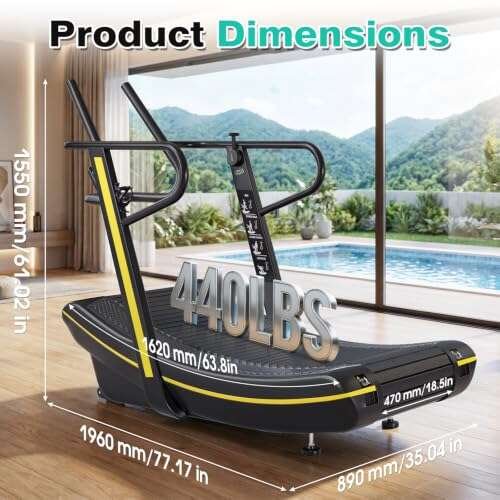
450-Pound Curved Manual Treadmill

This curved manual treadmill stands out because its listed weight capacity reaches 450 pounds. That makes it worth considering for larger users who often find home cardio equipment too restrictive. It uses a non-electric curved belt and four resistance levels, so the workout remains simple and user driven. The LCD can provide basic feedback without forcing you to connect a phone.
The air-runner style may suit people who want a sturdy platform for walking, jogging, and controlled running. Four resistance levels are not as precise as eight, but they can keep the controls easy to understand. I would still treat the capacity as a maximum limit rather than a target and leave room for safe movement. Check the frame dimensions, belt length, and floor space before choosing this model for a home gym.
Pros:
- Listed 450-pound capacity supports a wider range of users
- Four resistance levels keep operation simple
- Curved, self-powered belt requires no motor power
- LCD display offers quick workout feedback
- Sturdy format may feel secure during walking and jogging
- Suitable for users seeking a high-capacity home treadmill
Cons:
- Four levels offer less fine control than eight-level models
- Large frame may need more room than a folding treadmill
- Heavy users should verify all dimensions and safety details
Rongle Foldable Curved Manual Treadmill

The Rongle curved treadmill focuses on a feature many home users need: easier storage. Its foldable design can help free floor space when your workout ends. The 350-pound listed capacity also gives it broader appeal than a small walking pad. Since it is non-electric, you can place it in a room without planning around a nearby outlet.
Foldability can be a major advantage in an apartment, spare room, or shared home gym. I find that equipment is more likely to get used when it does not permanently block a walkway. Still, a folding frame may feel different from a heavy fixed commercial unit, so check the locking system and folded dimensions. This could be the best manual treadmill for running for users who value storage as much as exercise performance.
Pros:
- Foldable frame helps save room after workouts
- 350-pound capacity suits many home users
- Non-electric operation gives flexible placement
- Curved belt allows user-controlled pace
- Useful choice for apartments and smaller rooms
- Can support walking, jogging, and moderate running
Cons:
- Foldable designs may need extra care at the hinge
- Users should confirm folded and assembled dimensions
- Manual running may feel harder than expected at first
THERUN 9 MPH Manual Incline Treadmill

This THERUN treadmill is different from the curved manual models above. It uses a manual incline format and lists a top speed of 9 MPH, which is a useful target for runners who want faster training. The incline can add hill work without requiring a motor to lift the deck. That gives you a way to make a steady run feel more demanding.
A manual incline treadmill may suit runners who prefer a familiar straight deck but still want control over elevation. It can also help users build a workout around walking hills, tempo efforts, and short intervals. I would verify whether the belt is fully self-powered or whether the product includes any powered functions, since product names can vary by listing. Check the running surface and handrail position carefully if you plan to run near the advertised top speed.
Pros:
- Listed 9 MPH speed target supports faster workouts
- Manual incline can add hill-focused training
- Familiar straight treadmill style may ease transition
- Useful for walking, jogging, tempo work, and intervals
- May suit users who dislike curved treadmill geometry
- Can provide a demanding workout without complex controls
Cons:
- Users must confirm how the manual belt and incline operate
- Fast running requires careful attention to deck length
- Incline training may feel intense for new runners
DELAVIN Sturdy Curved Manual Treadmill

The DELAVIN curved manual treadmill is aimed at users who want a sturdy, motor-free running machine. Its curved deck lets your foot strike and push help move the belt. That can create a responsive feel during short bursts and changes of pace. The motorless design also removes one common source of noise and maintenance.
Stability matters when you run, especially during hard intervals. A solid frame can help the machine feel planted instead of nervous under your stride. I would look closely at the listed footprint, user capacity, belt width, and transport wheels before ordering. This model may be a good match for experienced home runners who want direct control and do not need app-based training.
Pros:
- Curved belt responds directly to each stride
- Motorless format reduces electrical parts
- Sturdy frame may improve confidence during running
- Useful for sprint intervals and pace changes
- Simple controls reduce setup time
- Can suit serious home workouts and gym use
Cons:
- Curved running takes practice for new users
- Sturdy frames can be difficult to move alone
- May offer fewer tracking tools than smart treadmills
AKLUER Dual-Flywheel Manual Treadmill

The AKLUER dual-flywheel manual treadmill combines a foldable frame with a non-electric running system. A flywheel can help the belt keep moving after each foot push, which may create a smoother feel than a very basic manual belt. The foldable design is helpful for people who need to store equipment between sessions. It can work in a home gym, bedroom, or compact workout area.
This treadmill may be especially useful for walkers and casual runners who want a simple machine with less permanent floor impact. I would not assume that “dual flywheel” means the same feel as a commercial curved air runner. Instead, consider it a practical home design that may balance motion and storage. Check the weight limit, incline details, and folded size before choosing it for regular running.
Pros:
- Dual-flywheel design may support smoother belt movement
- Foldable frame helps with storage
- Non-electric operation offers flexible placement
- Simple design can suit beginners and casual users
- Useful for walking, light jogging, and fitness sessions
- May take less visual space than a fixed treadmill
Cons:
- May not match the feel of a commercial air runner
- Casual design may limit hard sprint training
- Confirm capacity and deck length before running
Sunny Health & Fitness Manual Incline Wi-Fi Treadmill

This Sunny Health & Fitness model brings Wi-Fi and manual incline features to a foldable treadmill format. It may suit runners who enjoy guided workouts but still want a deck that does not rely on a standard drive motor. The incline can change the muscle demand and add variety to a short session. Its foldable frame also helps when you need to clear the room after training.
The connected design is the main reason to consider this treadmill over a plain manual model. Guided content can make a solo workout feel less like a chore and more like a class. I recommend checking subscription terms, app compatibility, and the exact meaning of “manual incline” before purchase. For a tech-friendly home user, this model offers a thoughtful mix of storage, training variety, and digital support.
Pros:
- Wi-Fi features can add guided workout options
- Manual incline supports hill-style training
- Foldable design helps save floor space
- Recognized brand may provide useful support resources
- Good fit for users who want connected fitness
- Can add variety to walking and running routines
Cons:
- Wi-Fi functions may require app setup or membership
- Connected features depend on compatible devices
- Manual incline needs careful product-spec verification
THERUN Foldable 9 MPH Incline Treadmill

The second THERUN option combines a foldable frame with a manual incline and a listed 9 MPH speed. This format may appeal to runners who want faster training but have limited room. Folding the treadmill after use can make a real difference in a shared space. The incline also gives you another way to raise effort without simply running faster.
I see this as a flexible home treadmill for users who want a familiar deck and a wider range of workouts. You can use a low effort for walking, raise the incline for hill work, or build short faster intervals when ready. Since product names can include both manual and motorized terms, I strongly suggest checking the current listing for belt operation. A safe handrail, adequate deck length, and correct user capacity should guide the final choice.
Pros:
- Listed 9 MPH speed supports challenging sessions
- Foldable frame works well in smaller homes
- Manual incline adds hill-training variety
- Suitable for walking, jogging, and interval work
- Familiar treadmill layout may feel easy to use
- Can support users who want storage and speed
Cons:
- Fast running demands careful attention to safety
- Users should verify motor and belt specifications
- Incline workouts may be too hard for beginners
How I Choose the Best Manual Treadmill for Running
A manual treadmill is not automatically better because it has no motor. The right model must match your stride, fitness level, room, and training goal. I start with the belt because it is the part your body feels on every step. A narrow or short belt can make running feel cramped, even when the frame looks strong.
Next, I consider the belt shape. A curved manual treadmill often rewards a midfoot landing and an active push. It can feel quick and responsive, but it may also place more demand on your legs. A manual incline treadmill may feel more familiar, especially if you already use a standard treadmill.
Resistance is another key point. More levels do not always mean a better machine, but they give you more ways to adjust the workout. A beginner may prefer simple controls, while an experienced runner may want small changes for intervals. I also check whether the resistance is magnetic, friction based, or linked to another belt system.
Capacity matters for safety and comfort. Never choose a treadmill based only on the maximum number in a product title. Leave a sensible margin between your weight and the listed limit. Also review the deck length, handrail height, machine weight, and warranty before buying.
Manual Versus Motorized Treadmills
A manual treadmill moves when you move. That gives you direct control and can make every step feel purposeful. It also means the first few minutes may feel harder than expected. Your legs must create the belt motion, so a manual treadmill can become a demanding training tool.
A motorized treadmill moves at the speed you set. This can make steady running easier and more predictable. It is often better for long, even runs, especially when you want to hold one pace. However, motorized models use power, create more mechanical noise, and may need more parts service over time.
Neither style wins for every runner. If you want sprint practice, natural pace changes, and no electrical use, manual may fit better. If you want long distance at a precise pace, a powered model may be easier. The best manual treadmill for running should make you want to train, not make every session feel like a test of will.
Curved or Flat Manual Treadmill?
Curved treadmills are popular because they let the user control speed with body position and foot pressure. A stronger push can move the belt faster. A shorter step or more upright stance can slow it down. This creates a simple rhythm that many runners enjoy after a short learning period.
Flat manual treadmills can feel more familiar. Some use a manual incline to add effort, while others use flywheels or belt resistance. They may be easier for walking and casual jogging. The best option depends on whether you value responsive running or a gentler learning curve.
If possible, try a curved treadmill before buying one online. Pay attention to where your feet land and whether you can reach the handrails without leaning. If you cannot test it, choose a model with clear measurements and a generous return policy. Good product research can prevent an expensive mismatch.
Benefits of Running on a Manual Treadmill
Manual treadmills have several practical benefits. They do not need a standard wall outlet, so you can place them in more parts of the home. They also avoid the humming sound of a drive motor. That can matter when you train near a bedroom, office, or living room.
They can also encourage active running form. You cannot simply stand still while the belt carries you forward. Your feet must help create the motion. This may increase the effort of short workouts, though it can also make long sessions more tiring.
Manual models often have fewer motor parts. That may reduce some maintenance concerns, but it does not make the machine maintenance-free. You still need to inspect the belt, frame, rollers, bolts, and display. Follow the care instructions and stop using the treadmill if it develops an unsafe movement or sound.
How to Use a Manual Treadmill Safely
Start with a slow walk. Hold the handrails while you learn how the belt reacts to your steps. Once you feel stable, release the rails and let your arms move naturally. Avoid jumping onto a moving belt.
Wear shoes with good grip and keep the area around the treadmill clear. Place the machine on a level surface. If the model includes an emergency stop feature, attach and use it as directed. Good lighting also helps you see your foot position and the display.
Keep your first sessions short. Try five minutes of easy walking, followed by short bouts of light jogging. Add time and effort in small steps. If you feel sharp pain, dizziness, chest pressure, or unusual shortness of breath, stop and seek appropriate medical help.
How to Maintain a Manual Treadmill
Wipe sweat from the rails and frame after each session. Sweat can damage metal and electronic parts over time. Check the belt for fraying, uneven movement, or rubbing. A belt that drifts to one side needs attention before you continue running.
Use only the lubricant recommended by the manufacturer. Too much lubricant can make the belt slip, while the wrong type can damage parts. Tighten loose bolts, but do not over-tighten the belt. If you hear grinding or feel a sudden change in resistance, stop and inspect the machine.
Storage also matters. Keep a foldable treadmill locked in its storage position. Do not place heavy items on the folded frame. Leave enough space around the machine when it is open. These small habits can protect your investment and keep the best manual treadmill for running working well.
Which Manual Treadmill Is Best for Your Needs?
The first curved six-level model is a balanced choice for users who want adjustable resistance and belt cushioning. The eight-level curved models suit people who want more training control. The 450-pound model is the clearest option for users who need a high listed capacity.
Choose the Rongle or AKLUER if storage is your main concern. Their foldable designs may work better in compact rooms. Pick one of the THERUN treadmills if you want a manual incline format and a listed speed target of 9 MPH. The Sunny models are more appealing if brand familiarity, smart functions, or Wi-Fi features matter to you.
My Recommendation
For most home runners, I would start with the Sunny Health & Fitness Smart Curved Manual Treadmill. Its eight-level magnetic resistance, curved belt, and smart features create a strong mix of training control and modern convenience. It is a good candidate for the best manual treadmill for running when you want challenging workouts but still value data and guided sessions.
| Best for | Why |
|---|---|
| Smart training | Sunny curved model combines adjustable resistance with connected features. |
| Small spaces | Rongle and AKLUER foldable designs make storage easier after workouts. |
| Higher user capacity | The 450-pound curved model is designed for users who need more support. |
If you want a sturdy, simple machine, the DELAVIN curved treadmill is worth a close look. If you want speed and incline, compare the THERUN models. Always confirm current dimensions, capacity, warranty, belt operation, and return terms on Amazon because listings can change. The best manual treadmill for running is the one that fits your body, room, and training plan.
FAQs Of best manual treadmill for running
Is a manual treadmill good for running?
Yes. A manual treadmill can work very well for running, especially for intervals, hill work, and pace changes. It usually requires more effort than a motorized treadmill because your stride moves the belt.
What is the best manual treadmill for running beginners?
Beginners may prefer a model with simple resistance controls, stable handrails, and a comfortable deck. Start with walking and light jogging before adding hard intervals.
Are curved manual treadmills hard to use?
They can feel unusual at first. Walk slowly, keep your posture tall, and learn how your foot pressure changes belt speed. Most users need a short adjustment period.
Do manual treadmills need electricity?
Most fully manual treadmills do not need a wall outlet. Some smart displays or connected features may use batteries or another power source, so check the product details.
Can I train for a race on a manual treadmill?
You can use one for intervals, strength, hills, and general conditioning. For long pace-specific race training, a motorized treadmill may offer more consistent speed control.
Final Verdict: Which Should You Buy?
I recommend the Sunny Health & Fitness Smart Curved Manual Treadmill for most runners. Its adjustable resistance and smart features make it a strong all-around pick.
The best manual treadmill for running should fit your stride, space, and goals. Compare the listed features, capacity, warranty, and current Amazon price before ordering.

Brandon Knoxley is a sport & fitness writer and training guide contributor at MySportFitHub. He focuses on practical workouts, performance-based training, and honest fitness gear insights designed for real people and real results. Brandon is passionate about helping beginners and active individuals train smarter, avoid common mistakes, and build sustainable fitness habits.