Does The Treadmill Build Muscle: What To Know
The treadmill can build some leg muscle, especially with incline walking, but it is not a full strength workout.
So, does the treadmill build muscle, or does it only improve cardio? The honest answer depends on your speed, incline, training level, and goals. A treadmill can challenge your glutes, calves, hamstrings, and quadriceps, but it usually builds less muscle than squats, lunges, deadlifts, and other resistance exercises.
This guide explains how treadmill training affects muscle growth, which settings work best, common mistakes to avoid, and how to combine cardio with strength training for better results.

Does the treadmill build muscle?
Yes, the treadmill can build a small amount of muscle, mainly in the lower body. This is most likely when you use a steep incline, walk fast, run, or train with enough effort and volume.
Your muscles work harder to move your body forward and upward. Incline walking is especially useful because it increases the demand on the glutes and calves. Still, treadmill exercise is usually better for muscle endurance and fitness than for large increases in muscle size.
The treadmill can build muscle more effectively when:
• You are new to exercise and your muscles are not used to regular training.
• You walk or run on a steep incline.
• You increase the workout challenge over time.
• You eat enough protein and calories to support recovery.
• You also include strength exercises.
A treadmill workout is similar to carrying a light backpack up a hill. It can make your legs stronger and more capable, but it may not provide enough resistance for major muscle growth.

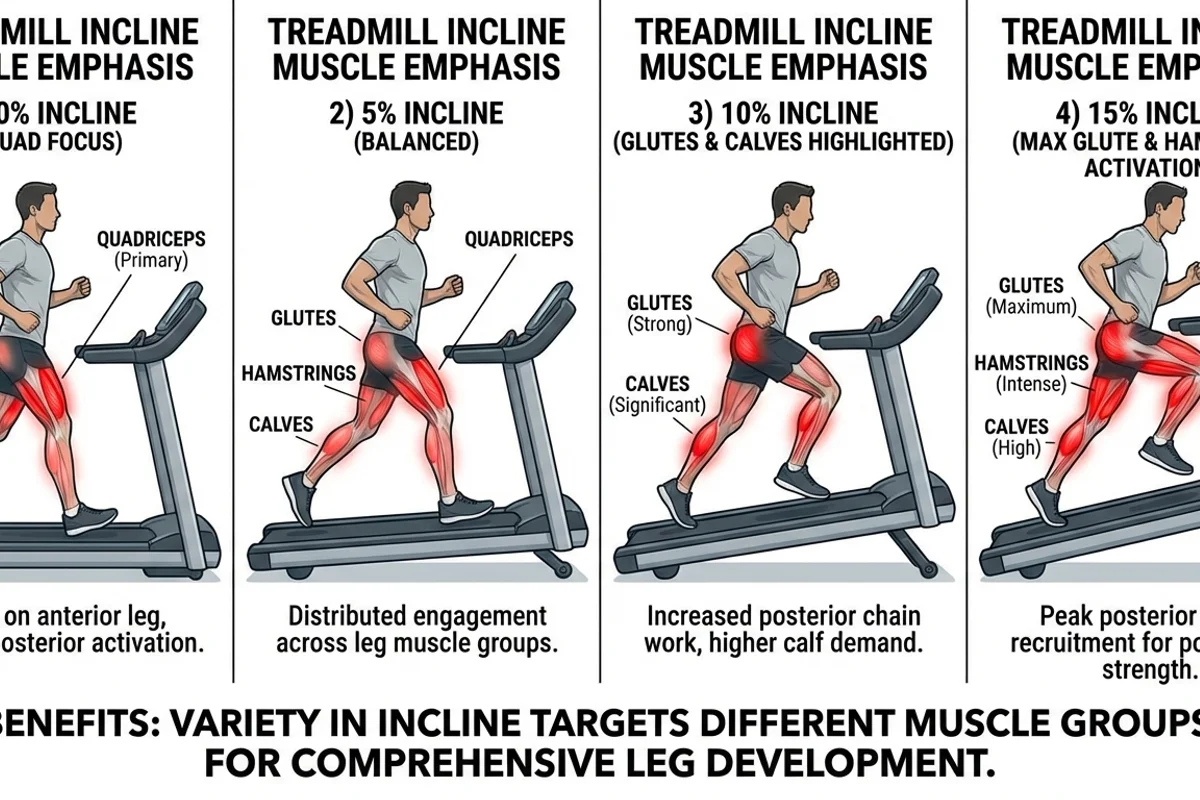
Which muscles does treadmill walking and running work?
Treadmill exercise mainly trains the muscles used to support, stabilize, and move your body. The exact muscles involved depend on your speed, incline, stride, and posture.
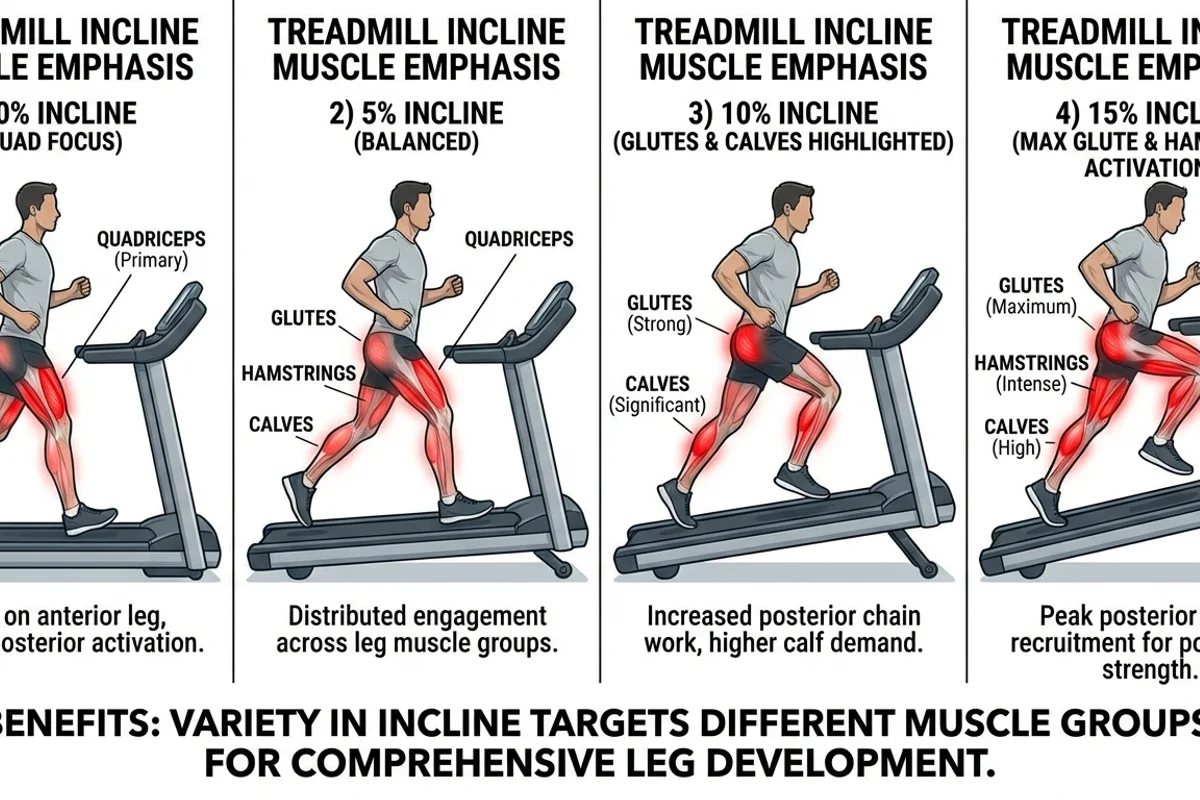
Quadriceps
Your quadriceps sit at the front of your thighs. They help straighten your knee and push your body forward.
Running and walking uphill place more stress on the quadriceps than easy walking on a flat treadmill. If your thighs feel tired after an incline workout, your quadriceps are doing much of the work.
Hamstrings
Your hamstrings are located at the back of your thighs. They help bend your knee and extend your hip.
Running usually recruits the hamstrings more than slow walking. However, treadmill training does not provide the same strong resistance as exercises such as Romanian deadlifts or leg curls.
Glutes
Your gluteus maximus is the largest muscle in your body. It helps extend your hip and drive your body upward.
Incline walking can increase glute activity because your body must push against gravity. To involve your glutes more, keep your chest tall, take natural steps, and avoid leaning heavily on the handrails.
Calves
Your calf muscles help push your foot away from the ground. They work during every step, but hills and faster speeds can make them work harder.
Incline walking may create a strong calf burn. That feeling shows effort, but it does not always mean major muscle growth. Muscle growth still requires enough resistance, recovery, and progressive overload.
Core muscles
Your abdominal and lower back muscles help keep your body stable while you walk or run. They work more when you maintain good posture and avoid holding the front bar.
However, treadmill exercise is not a replacement for direct core training. Planks, loaded carries, and controlled resistance exercises provide a stronger stimulus for the trunk.

How incline walking builds more muscle
Incline walking is one of the best ways to use a treadmill for muscle development. When the belt rises, you must push your body upward with each step.
A higher incline increases the demand on the glutes, calves, and thighs. It can also raise your heart rate without requiring a fast running pace. This makes incline walking useful for people who want a lower-impact workout.
Try this beginner workout:
-
Warm up for five minutes at a comfortable pace.
-
Walk for two minutes at a 5% incline.
-
Walk for two minutes at an 8% incline.
-
Repeat the pattern four to six times.
-
Cool down for five minutes at a flat incline.
Use a pace that lets you maintain control. If you must pull yourself forward with the handrails, reduce the incline or speed. Holding the rails lowers the true workload and may reduce the benefit to your legs.
For more advanced training, use short hill intervals. Walk or jog at a challenging incline for 30 to 90 seconds, then recover at a lower incline. This approach adds intensity without forcing you to run at a very high speed.

Can running on a treadmill build muscle?
Treadmill running can build some muscle, especially in beginners. It can improve the strength and endurance of the calves, quadriceps, hamstrings, glutes, and muscles around the feet and ankles.
However, running is not usually the most efficient way to gain muscle size. The resistance comes mainly from your body weight and repeated movement. Once your body adapts, the same pace may no longer provide enough overload for further growth.
Sprinting can create a stronger muscle stimulus than easy jogging. Fast running requires greater force from the glutes, hamstrings, and calves. Even so, sprinting carries more impact and injury risk, so it should be added slowly.
A simple treadmill running progression may look like this:
• Week one: Run for 20 seconds, then walk for 100 seconds. Repeat six times.
• Week two: Run for 30 seconds, then walk for 90 seconds. Repeat six times.
• Week three: Run for 40 seconds, then walk for 80 seconds. Repeat six times.
• Week four: Run for 45 seconds, then walk for 75 seconds. Repeat eight times.
Warm up first, and stop if you feel sharp pain. Muscle fatigue is normal, but joint pain is a warning sign.
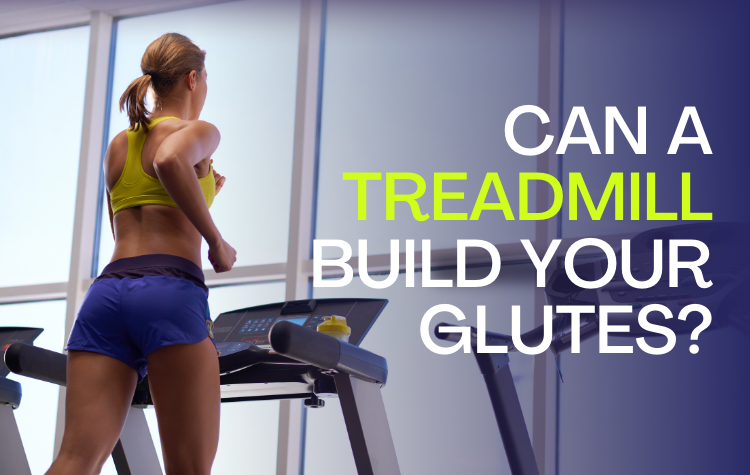
Treadmill versus strength training for muscle growth
The treadmill and strength training serve different purposes. Treadmill exercise improves cardiovascular fitness, work capacity, and lower-body endurance. Resistance training is usually better for increasing muscle size and maximum strength.
Strength exercises allow you to add weight in small steps. This makes progressive overload easier to track. You can increase the load, repetitions, sets, or range of motion as your muscles adapt.
Useful muscle-building exercises include:
• Squats for the quadriceps, glutes, and core.
• Step-ups for the legs and balance.
• Lunges for the glutes and thighs.
• Romanian deadlifts for the hamstrings and glutes.
• Calf raises for the lower legs.
• Hip thrusts for the glutes.
A treadmill can support these exercises, but it should not replace them if your main goal is muscle growth. Think of the treadmill as a useful tool in your fitness toolbox, not the entire toolbox.
For many people, the best plan combines both forms of training:
-
Complete strength training two to four days per week.
-
Use the treadmill for cardio two to five days per week.
-
Separate hard running from heavy leg training when possible.
-
Take at least one easier day each week.
-
Increase only one major training factor at a time.
This balanced approach can improve strength, endurance, body composition, and overall health.

How to use the treadmill for muscle growth
If you want the treadmill to build more muscle, focus on effort, control, and gradual progression. Simply spending more time on the treadmill is not always the answer.
Increase the incline
Incline walking can make a moderate pace feel much harder. Start with a 3% to 5% incline, then increase it as your fitness improves.
You do not need to use the highest setting. A moderate incline performed with good posture can be more useful than a steep incline performed while hanging on the rails.
Add intervals
Intervals alternate hard and easy periods. They can challenge your legs and improve your fitness in less time.
For example:
• Warm up for five minutes.
• Walk or jog hard for one minute.
• Recover for two minutes.
• Repeat six to eight times.
• Cool down for five minutes.
You can adjust the speed or incline. Choose one change first so you know what your body is responding to.
Use progressive overload
Your muscles need a reason to adapt. Increase the challenge gradually by changing one of these factors:
• Walking speed.
• Running speed.
• Incline.
• Workout length.
• Number of intervals.
• Recovery demands.
Avoid increasing everything at once. That can cause excessive soreness, poor form, and overuse injuries.
Avoid the handrails
Holding the rails can reduce the amount of body weight your legs support. It can also change your posture and make the workout less natural.
If you need the rails for balance, lower the speed or incline. Safety is more important than using a difficult setting.
Keep good posture
Look forward, keep your shoulders relaxed, and let your arms swing naturally. Do not lean far back or bend over the console.
Good form helps spread the workload across your muscles and reduces unnecessary strain on your back and hips.
Does treadmill walking build muscle in the legs?
Treadmill walking can build or maintain some leg muscle, especially if you are new to exercise or use an incline. It is also helpful for improving muscular endurance and daily movement.
Flat walking at a relaxed pace usually provides a small muscle-building stimulus. Incline walking, brisk walking, and longer sessions create more demand.
Older adults and people returning to exercise may notice meaningful strength improvements from regular treadmill walking. Early gains often come from better coordination and nervous system adaptation, not only from larger muscles.
For stronger legs, combine treadmill walking with two or three weekly strength sessions. Even a short routine can help:
• Bodyweight squats.
• Supported reverse lunges.
• Glute bridges.
• Step-ups.
• Standing calf raises.
Perform one to three sets of each exercise. Use slow, controlled movements and stop before your form breaks down.
Does the treadmill build muscle while losing weight?
The treadmill can help with weight loss, but fat loss and muscle growth are separate processes. Treadmill exercise burns calories and can support a calorie deficit. Muscle growth requires training, protein, recovery, and enough overall energy.
If you eat too little while doing a large amount of cardio, you may lose body fat but struggle to build muscle. You may also feel tired and recover poorly.
To protect muscle during weight loss:
• Include resistance training.
• Eat enough protein.
• Avoid extreme calorie restriction.
• Sleep about seven to nine hours when possible.
• Keep some treadmill sessions easy.
• Track strength and energy, not just body weight.
A gradual weight-loss plan is often easier to maintain. The Centers for Disease Control and Prevention notes that steady weight loss is more likely to stay off than rapid loss. Your exact calorie needs depend on your age, body size, activity, and health status.
Common treadmill mistakes that limit muscle gains
Many people work hard on the treadmill but get less benefit because of small technique or programming errors.
Doing the same workout every time
Your body adapts to repeated stress. If you always walk at the same speed and incline, your progress may slow.
Change one variable every one to two weeks. Small changes are enough.
Using a steep incline too soon
A steep incline can stress the calves, Achilles tendons, knees, and lower back. Start with a manageable level and build gradually.
Soreness is not a required sign of progress. Consistent training matters more than extreme sessions.
Holding the rails
This reduces the workload on your legs and can create poor posture. Lower the settings until you can walk safely without support.
Turning every workout into a hard workout
Hard sessions need recovery. Too much intensity can increase fatigue and reduce your performance during strength training.
Use a mix of easy, moderate, and hard workouts.
Ignoring strength training
If muscle size is your main goal, treadmill exercise alone may disappoint you. Add resistance exercises that directly load the muscles you want to develop.
Wearing poor shoes
Old or poorly fitted shoes can contribute to foot, shin, knee, and hip discomfort. Choose comfortable shoes that suit your foot shape and activity.
A practical weekly treadmill and muscle plan
This sample plan works well for a healthy beginner. Adjust it based on your fitness, schedule, and medical needs.
Monday: Lower-body strength
Perform squats, glute bridges, step-ups, and calf raises. Use controlled repetitions and rest between sets.
Tuesday: Easy treadmill walk
Walk for 25 to 35 minutes at a pace that allows normal conversation. Keep the incline low or moderate.
Wednesday: Rest or light movement
Take a rest day or do gentle mobility work. Recovery helps your muscles adapt.
Thursday: Incline treadmill intervals
Warm up for five minutes. Alternate one minute at a challenging incline with two minutes at an easy incline for six rounds.
Friday: Full-body strength
Train the legs, hips, back, chest, shoulders, and core. Keep the session moderate if your legs are still tired.
Saturday: Easy treadmill session
Walk or jog for 20 to 40 minutes. Keep the effort controlled.
Sunday: Rest
Take a full rest day or enjoy an easy walk outside.
This plan is only a starting point. Beginners may need fewer sessions, while experienced exercisers may handle more training. If you have heart disease, major joint pain, diabetes, or another medical condition, speak with a qualified health professional before starting a demanding program.
How nutrition supports treadmill muscle gains
Exercise gives your muscles a reason to adapt. Food provides the materials and energy needed for that adaptation.
Protein is especially important. A common evidence-based range for active adults is about 1.2 to 2.0 grams of protein per kilogram of body weight per day, depending on training goals and total diet. People with kidney disease should ask a health professional about appropriate protein intake.
Good protein choices include:
• Eggs.
• Greek yogurt.
• Fish.
• Chicken or turkey.
• Beans and lentils.
• Tofu and tempeh.
• Milk or fortified soy milk.
Carbohydrates can support treadmill performance by providing fuel for walking, running, and intervals. Healthy fats support hormones and overall health.
You do not need a perfect meal plan. Aim for regular meals, enough fluids, and a protein source at each meal. A simple meal after training might include rice, vegetables, and chicken, or beans, potatoes, and Greek yogurt.
Personal lessons and practical advice
A common mistake I see in treadmill training is chasing the biggest incline instead of building a repeatable routine. People often set the machine too high, lean on the rails, and finish exhausted. They may then skip the next workout because their calves and hips are too sore.
A better approach is to choose a level that feels challenging but controlled. Keep your hands free, maintain an upright posture, and finish with enough energy to train again later in the week.
Another useful lesson is to judge progress by more than muscle size. You may notice that stairs feel easier, your walking pace improves, or your legs recover faster. These are real signs of better muscle endurance and fitness.
If your goal is visibly larger muscles, track strength exercises, measurements, and progress photos. The treadmill can support your plan, but resistance training should lead it.
Frequently asked questions about does the treadmill build muscle
Does the treadmill build muscle in your butt?
The treadmill can work the glutes, especially during incline walking, hill intervals, and running. For greater glute growth, combine treadmill training with hip thrusts, squats, lunges, and step-ups.
Does the treadmill build muscle in your legs?
Yes, treadmill walking and running can strengthen the legs and improve muscular endurance. Incline work creates a stronger stimulus than relaxed flat walking, but resistance training is usually better for increasing leg size.
How long should I use the treadmill to build muscle?
Many people can start with 20 to 40 minutes, two to four times per week. Workout quality, incline, effort, and consistent progression matter more than simply staying on the treadmill longer.
Is incline walking better than running for muscle growth?
Incline walking can place more focus on the glutes and calves while creating less impact than running. Running may challenge the legs more at high speeds, but neither option replaces a complete strength program.
Can I build muscle using only a treadmill?
You may build some beginner-level muscle and improve leg endurance with treadmill training alone. For significant muscle growth, add progressive resistance exercises and eat enough protein.
Should I use the treadmill before or after lifting weights?
If muscle growth and strength are your main goals, lift weights before hard treadmill work. Easy walking can be used before lifting as a warm-up, while intense running may be better placed after lifting or on a separate day.
Conclusion
So, does the treadmill build muscle? Yes, but mostly in a limited and specific way. Incline walking, running, and intervals can train your glutes, thighs, calves, and supporting muscles, especially when you are new to exercise.
For major muscle growth, pair treadmill workouts with progressive strength training, adequate protein, good sleep, and gradual increases in difficulty. Start with a safe pace, use proper posture, avoid the handrails, and build a routine you can repeat.
Choose one treadmill workout this week and add two simple strength sessions. Track your progress for a month, then adjust your speed, incline, or resistance exercises as needed.

Brandon Knoxley is a sport & fitness writer and training guide contributor at MySportFitHub. He focuses on practical workouts, performance-based training, and honest fitness gear insights designed for real people and real results. Brandon is passionate about helping beginners and active individuals train smarter, avoid common mistakes, and build sustainable fitness habits.