How Many Calories Burned On Treadmill For One Hour: Guide
Most people burn about 300 to 900 calories on a treadmill in one hour, depending on weight, speed, and incline.
Knowing how many calories burned on treadmill for one hour can help you plan workouts, manage weight, and set realistic fitness goals. The number on the treadmill display is only an estimate, though. Your body weight, walking or running speed, incline, fitness level, and workout style all change the final result. This guide explains the numbers in a clear way, with practical examples you can use during your next session.

How many calories burned on treadmill for one hour?
The answer depends mainly on your body weight and exercise intensity. A lighter person usually burns fewer calories than a heavier person doing the same workout. Running also uses more energy than walking, while adding an incline makes either activity harder.
Here are useful estimates for one hour on a treadmill:
| Treadmill workout | 125-pound person | 155-pound person | 185-pound person |
|---|---|---|---|
| Easy walk at 2.5 mph | 180 to 220 | 225 to 275 | 270 to 330 |
| Brisk walk at 3.5 mph | 240 to 300 | 300 to 375 | 360 to 445 |
| Fast walk at 4.0 mph | 300 to 375 | 375 to 465 | 450 to 555 |
| Jog at 5.0 mph | 420 to 525 | 525 to 650 | 630 to 775 |
| Run at 6.0 mph | 600 to 750 | 750 to 930 | 900 to 1,115 |
| Run at 8.0 mph | 780 to 1,000 | 975 to 1,200 | 1,170 to 1,450 |
These ranges come from standard metabolic estimates used in exercise science. They are not exact promises. For most adults, how many calories burned on treadmill for one hour falls between 250 and 800, with faster running and steep incline work producing higher totals.

Calorie estimates by treadmill speed
Speed is one of the easiest ways to estimate how many calories burned on treadmill for one hour. The faster you move, the more energy your body needs to support your muscles, heart, and breathing.
Walking at 2 to 3 miles per hour
Easy treadmill walking may burn about 150 to 350 calories per hour. This pace is useful for beginners, active recovery, older adults, or people returning to exercise after a break.
A 155-pound person may burn around 230 calories while walking at 2.5 mph. Holding the rails can lower the actual effort, so the true number may be smaller than the treadmill shows.
Brisk walking at 3 to 4 miles per hour
Brisk walking often burns 250 to 500 calories per hour. You should feel warmer and breathe faster, but you should still be able to speak in short sentences.
For many people, this is the best balance between calorie burn and comfort. It is also easier to repeat several times per week than hard running.
Jogging at 5 miles per hour
A light jog may burn 400 to 750 calories per hour. The exact amount depends on your weight, stride, and whether you jog without stopping.
Jogging places more stress on the ankles, knees, hips, and lower back. Start with short jog periods if you are new to impact exercise.
Running at 6 miles per hour or faster
Running can burn 600 to more than 1,000 calories per hour for some people. However, very high estimates often apply to heavier runners or very fast speeds.
You do not need to run for one full hour to get strong results. Short intervals can provide a challenging workout while reducing boredom and joint stress.

How incline changes treadmill calorie burn
Incline is a powerful factor in how many calories burned on treadmill for one hour. Walking uphill forces your glutes, hamstrings, calves, and heart to work harder.
For example, a 155-pound person may burn roughly:
• 230 calories walking at 2.5 mph with no incline
• 350 to 450 calories walking at 3.0 mph with a 5% incline
• 450 to 600 calories walking at 3.0 mph with a 10% incline
These are broad estimates. A steep incline can feel much harder than a small speed increase. It may also improve leg strength and raise your heart rate without requiring a fast running pace.
Avoid leaning heavily on the handrails. This reduces the load on your legs and can make the treadmill overestimate how many calories burned on treadmill for one hour. Stand tall, keep your hands free when safe, and lower the incline if your form breaks down.

Calories burned by body weight
Body weight has a direct effect on energy use. A larger body usually requires more energy to move, just as a heavier car needs more fuel to travel the same distance.
At the same treadmill speed, a 185-pound person may burn about 20% more calories than a 155-pound person. A 125-pound person may burn about 20% fewer calories.
This does not mean one body is better than another. It only explains why calorie estimates differ. Fitness level, muscle mass, age, sex, and movement skill also matter, but body weight and exercise intensity usually have the biggest effect.
If you are tracking how many calories burned on treadmill for one hour, use your current weight in the treadmill settings. Update it from time to time, because an old weight entry can make the estimate less useful.

How to calculate treadmill calories yourself
You can estimate calorie burn with a formula based on METs, or metabolic equivalents. One MET represents the energy your body uses at rest.
A common formula is:
Calories per minute = MET × 3.5 × body weight in kilograms ÷ 200
To use it:
- Divide your body weight in pounds by 2.205 to get kilograms.
- Find the approximate MET value for your treadmill speed and incline.
- Multiply the result by the number of minutes you exercise.
For example, a 155-pound person weighs about 70 kilograms. Walking at 3.5 mph has an estimated MET value near 4.3.
4.3 × 3.5 × 70 ÷ 200 = about 5.3 calories per minute
Over 60 minutes:
5.3 × 60 = about 318 calories
This estimate shows how many calories burned on treadmill for one hour, but it does not account for every personal difference. The Compendium of Physical Activities provides widely used MET values, yet real calorie use can still vary.

Treadmill workouts and their calorie ranges
Different workout styles create different calorie results. The best choice is the one you can do safely and repeat with steady effort.
Steady walking workout
Try this simple plan:
- Warm up at 2.0 to 2.5 mph for five minutes.
- Walk at 3.0 to 3.5 mph for 45 minutes.
- Cool down for 10 minutes.
This workout may burn 200 to 450 calories for many adults. It is a good starting point for building a regular habit.
Incline walking workout
Try walking at 3.0 mph while changing the incline:
- Warm up flat for five minutes.
- Walk at a 3% incline for 10 minutes.
- Walk at a 6% incline for 10 minutes.
- Walk at a 3% incline for 10 minutes.
- Repeat once if your form stays strong.
- Cool down flat for five minutes.
Incline walking can raise calorie burn without the pounding of fast running. It may burn 300 to 600 calories per hour, depending on your weight and effort.
Walk and jog intervals
A simple interval plan looks like this:
- Walk for five minutes.
- Jog for one minute.
- Walk for two minutes.
- Repeat the cycle 12 to 15 times.
- Cool down for five minutes.
Intervals can make one hour pass quickly. They may also improve cardiovascular fitness while increasing how many calories burned on treadmill for one hour.
Continuous running
If you already run comfortably, a steady pace can burn a large number of calories. Keep the speed controlled enough that your stride stays smooth.
A common mistake is starting too fast. I have seen many treadmill users sprint during the first 10 minutes, then spend the rest of the session holding the rails or walking. A steady pace usually gives a better workout than an aggressive start followed by a long struggle.

Why treadmill calorie displays are not exact
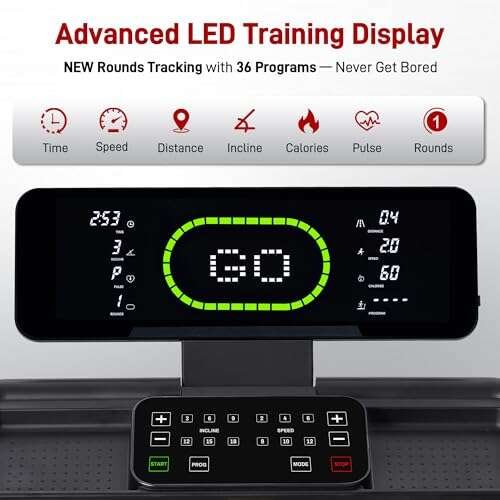
Treadmill calorie counters can be useful, but they are not laboratory devices. Some machines use your speed and incline only. Others also use your weight, age, sex, and heart rate.
The display may overestimate how many calories burned on treadmill for one hour when:
• Your weight is entered incorrectly
• You hold the handrails
• The machine has poor calibration
• Your heart rate reading is inaccurate
• You take frequent breaks
• The belt speed or incline is not precise
Wearable fitness trackers also have limits. Wrist devices can struggle during gripping, fast intervals, or strength-based incline walks. Use the number as a guide, not as a food budget.
A better approach is to track several signs together:
• Workout time
• Speed and incline
• Heart rate
• Perceived effort
• Weekly body weight trend
• Changes in endurance

How to burn more calories safely
You do not need extreme workouts to increase calorie use. Small changes can make a big difference over time.
Try these practical methods:
• Add a 1% to 5% incline during walking.
• Increase speed slowly by 0.1 to 0.3 mph.
• Use short jog intervals.
• Keep your posture tall.
• Swing your arms naturally.
• Avoid holding the rails.
• Exercise for five to 10 minutes longer when appropriate.
• Train three to five days each week.
• Add strength training on separate days.
Do not chase the largest number on the screen. A workout that leaves you too sore to move for several days is not a strong long-term plan. Consistency beats one heroic session.
For fat loss, remember that food intake matters too. Burning 500 calories on a treadmill does not guarantee weight loss if you later replace those calories with extra food. A moderate calorie deficit, regular activity, sleep, and protein-rich meals work better as a complete plan.

Common mistakes that lower calorie burn
Many people focus on speed but miss the small details that affect effort.
Holding the handrails
Holding the rails takes weight off your legs. It can also place your body in a poor position. If you need support, reduce the speed or incline instead.
Using an old body weight
If the treadmill thinks you weigh 180 pounds but you weigh 150, the calorie display may be too high. Enter accurate information before starting.
Ignoring warm-up and cool-down
A warm-up prepares your muscles and joints. A cool-down lets your heart rate fall in a controlled way. Both make the session feel better and may help you exercise more consistently.
Treating calories as exact
The question of how many calories burned on treadmill for one hour does not have one universal answer. Estimates are useful for comparison, but they should not control every meal or decision.
Increasing everything at once
Do not raise speed, incline, and workout time in the same week. Change one main factor at a time. This lowers your risk of pain and helps you learn what your body can handle.
Safety tips for treadmill exercise
Treadmill workouts are safe for most healthy adults when built up gradually. Still, the moving belt can cause falls, so use the safety clip and keep the area around the machine clear.
Follow these safety steps:
• Wear stable athletic shoes.
• Start at a slow speed.
• Keep your eyes forward.
• Step onto the side rails when stopping.
• Do not jump off a fast-moving belt.
• Drink water before and after exercise.
• Stop if you feel chest pain, severe dizziness, or unusual shortness of breath.
If you have heart disease, uncontrolled high blood pressure, a major joint problem, or another medical condition, speak with a health professional before starting hard treadmill workouts.
Pain is not a badge of honor. Mild muscle tiredness is normal. Sharp pain, swelling, or pain that changes your walking pattern needs attention.
How to use calorie burn for weight loss
Calorie burn estimates can support weight loss, but they are only one piece of the puzzle. Your total daily energy use includes your resting metabolism, daily movement, digestion, and exercise.
If you want to lose weight, begin with a realistic routine:
- Walk or run on the treadmill three to five times per week.
- Start with 20 to 30 minutes if one hour feels too hard.
- Add five minutes every one or two weeks.
- Eat enough protein and fiber to manage hunger.
- Weigh yourself under similar conditions.
- Review progress over four weeks instead of one day.
For example, a 155-pound person may burn about 300 calories during a brisk one-hour walk. Doing that four times per week creates about 1,200 calories of additional weekly activity. The result may seem small, but repeated effort is like filling a jar one coin at a time.
Frequently asked questions about how many calories burned on treadmill for one hour
How many calories does walking on a treadmill for one hour burn?
Walking for one hour may burn about 180 to 500 calories for many adults. Body weight, walking speed, incline, and rail use can change the result.
How many calories burned on treadmill for one hour at 3 mph?
A 125-pound person may burn around 220 to 280 calories at 3 mph. A 155-pound person may burn about 275 to 350 calories, while a 185-pound person may burn about 330 to 420 calories.
Does incline increase treadmill calorie burn?
Yes, incline increases the work required from your legs and cardiovascular system. A moderate incline can raise calorie use substantially compared with walking at the same speed on a flat belt.
Is running better than walking for burning calories?
Running usually burns more calories per hour because it requires more energy. Brisk incline walking may be a better choice for people who want lower-impact exercise or cannot run comfortably.
Can I trust the treadmill calorie counter?
Treat the counter as a general estimate, not an exact measurement. The result is more useful when you enter accurate personal details and avoid holding the rails.
How many calories should I burn on a treadmill to lose weight?
There is no single required number. A sustainable workout that supports a moderate calorie deficit is more useful than trying to burn a very high number in one session.
Conclusion
How many calories burned on treadmill for one hour can range from about 150 to more than 1,000, but most people fall somewhere between 250 and 800. Weight, speed, incline, fitness level, and workout style all affect the result.
Use treadmill calorie numbers to compare workouts, not to measure your worth or control every meal. Choose a pace you can repeat, increase the challenge slowly, and focus on weekly consistency. Try one of the workouts above, track how you feel, and share your results or questions in the comments.

Brandon Knoxley is a sport & fitness writer and training guide contributor at MySportFitHub. He focuses on practical workouts, performance-based training, and honest fitness gear insights designed for real people and real results. Brandon is passionate about helping beginners and active individuals train smarter, avoid common mistakes, and build sustainable fitness habits.