How Many Calories To Burn On Treadmill To Lose Weight: Guide
Aim to burn about 250 to 500 calories per treadmill workout to support steady weight loss.
Knowing how many calories to burn on a treadmill to lose weight is useful, but the best target depends on your body size, diet, workout plan, and health. A treadmill can help create the calorie deficit needed for fat loss, yet it works best as one part of a balanced plan rather than as a punishment for eating.
This guide explains how to set a realistic calorie goal, estimate treadmill calorie burn, choose the right speed and incline, avoid common mistakes, and build a plan you can follow for months.
How Many Calories Should You Burn on a Treadmill to Lose Weight?
For many adults, burning 250 to 500 calories per treadmill workout is a practical starting point. If you exercise four or five days each week, this may create a weekly exercise burn of about 1,000 to 2,500 calories.
However, exercise is only one part of weight loss. Your total calorie deficit comes from both:
• Calories burned through movement and exercise
• Fewer calories eaten than your body uses
A pound of body fat is often estimated at about 3,500 calories. This is a useful guide, not a perfect rule. The body adapts during weight loss, and changes in water, muscle, hormones, and appetite can affect the scale.
A steady goal is often a calorie deficit of about 300 to 500 calories per day. This may support gradual weight loss without leaving you exhausted or overly hungry. Some people lose weight with less, while others need more time.
If you are new to exercise, do not chase a large calorie number right away. Burning 150 to 250 calories several times per week can still improve fitness and help build a lasting habit.
What Affects Treadmill Calorie Burn?
The treadmill display gives an estimate. It does not measure your exact calorie use. Several factors can change how many calories to burn on a treadmill to lose weight.
Body weight
A heavier person usually burns more calories during the same walk because the body moves more mass. For example, a 200 pound person may burn more calories walking at 3.5 miles per hour than a 130 pound person walking at the same speed.
This does not mean body weight determines your health or fitness. It only explains why calorie targets should be personal.
Walking or running speed
Faster movement usually requires more energy. A brisk walk may burn a moderate amount, while jogging or running can raise calorie use much faster.
Still, speed is not the only way to increase calorie burn. A gradual incline can make a brisk walk feel much harder without forcing you to run.
Incline
Walking uphill increases the work done by your legs, hips, and heart. A 3% to 8% incline can raise effort while keeping your speed comfortable.
Use the incline with care. Holding the treadmill rails reduces the work and may make the calorie reading less useful. Keep your posture tall and lightly touch the rails only when needed for balance.
Workout length
A 20 minute workout burns fewer total calories than a 45 minute workout at the same pace. You do not need to exercise for hours, though. Short sessions still count, especially when they fit your schedule.
Fitness level
As your body becomes more efficient, the same workout may feel easier. You may need a little more time, speed, or incline to create the same challenge.
This does not mean your workout stopped helping. Better fitness is a major benefit, even when the treadmill number changes slowly.
How to Calculate Calories Burned on a Treadmill
A simple formula can provide a better estimate than relying only on the treadmill screen:
Calories per minute = MET × 3.5 × body weight in kilograms ÷ 200
MET means metabolic equivalent. It describes how hard an activity is compared with resting.
Common treadmill activities have approximate MET values:
• Easy walking at 2 miles per hour: about 2.8 METs
• Brisk walking at 3.5 miles per hour: about 4.3 METs
• Fast walking at 4 miles per hour: about 5 METs
• Jogging at 5 miles per hour: about 8.3 METs
• Running at 6 miles per hour: about 9.8 METs
Example calculation
Imagine a person who weighs 180 pounds. That equals about 81.6 kilograms.
At 3.5 miles per hour, the estimated calorie burn is:
4.3 × 3.5 × 81.6 ÷ 200 = about 6.1 calories per minute
A 40 minute walk would burn about 244 calories.
This is an estimate, not a lab result. Your walking form, fitness level, incline, and treadmill accuracy can change the real number.
Why treadmill calorie counters can be wrong
Treadmill displays may overestimate calorie burn. The error can be larger when:
• Your weight is entered incorrectly
• You hold the handrails
• The machine does not account for your fitness level
• The incline setting is inaccurate
• You use a wrist tracker that guesses energy use from heart rate
Use the display as a rough guide. Watch your workout time, effort, pace, and weekly progress too. No device can perfectly measure calorie burn during normal gym exercise.
A Practical Treadmill Calorie Goal by Workout Type
The question of how many calories to burn on a treadmill to lose weight has no single answer. Your best target depends on your current fitness and how often you train.
Here is a simple guide:
• Beginner: 150 to 250 calories per workout
• Regular exerciser: 250 to 400 calories per workout
• Advanced exerciser: 400 to 600 calories per workout
These ranges are not rules. A 20 minute incline walk may be enough for one person, while another person may need 45 minutes to reach the same number.
The most useful target is one you can repeat. A smaller workout done four times each week is usually more helpful than one exhausting session followed by several days of rest.
Sample weekly plans
Beginner plan
• Monday: 25 minute easy walk
• Tuesday: Rest or gentle mobility work
• Wednesday: 30 minute brisk walk
• Thursday: Rest
• Friday: 25 minute incline walk
• Saturday: Optional easy walk
• Sunday: Rest
This plan may burn 500 to 1,200 exercise calories per week, depending on body weight and pace.
Intermediate plan
• Monday: 35 minute brisk walk with light incline
• Tuesday: 25 minute walk with short faster intervals
• Wednesday: Rest
• Thursday: 40 minute incline walk
• Friday: Rest or strength training
• Saturday: 45 minute walk or jog
• Sunday: Rest
This routine may burn about 1,200 to 2,500 calories per week.

Best Treadmill Workouts for Weight Loss
You do not need one perfect treadmill workout. Different forms of training can help you burn calories and improve fitness.
Steady brisk walking
Walk at a pace that raises your breathing but still lets you speak in short sentences. For many people, this means about 3 to 4 miles per hour.
Try this:
• Warm up for 5 minutes
• Walk briskly for 25 to 40 minutes
• Cool down for 5 minutes
This is a good choice for beginners, people with joint concerns, and anyone who wants a low stress routine.
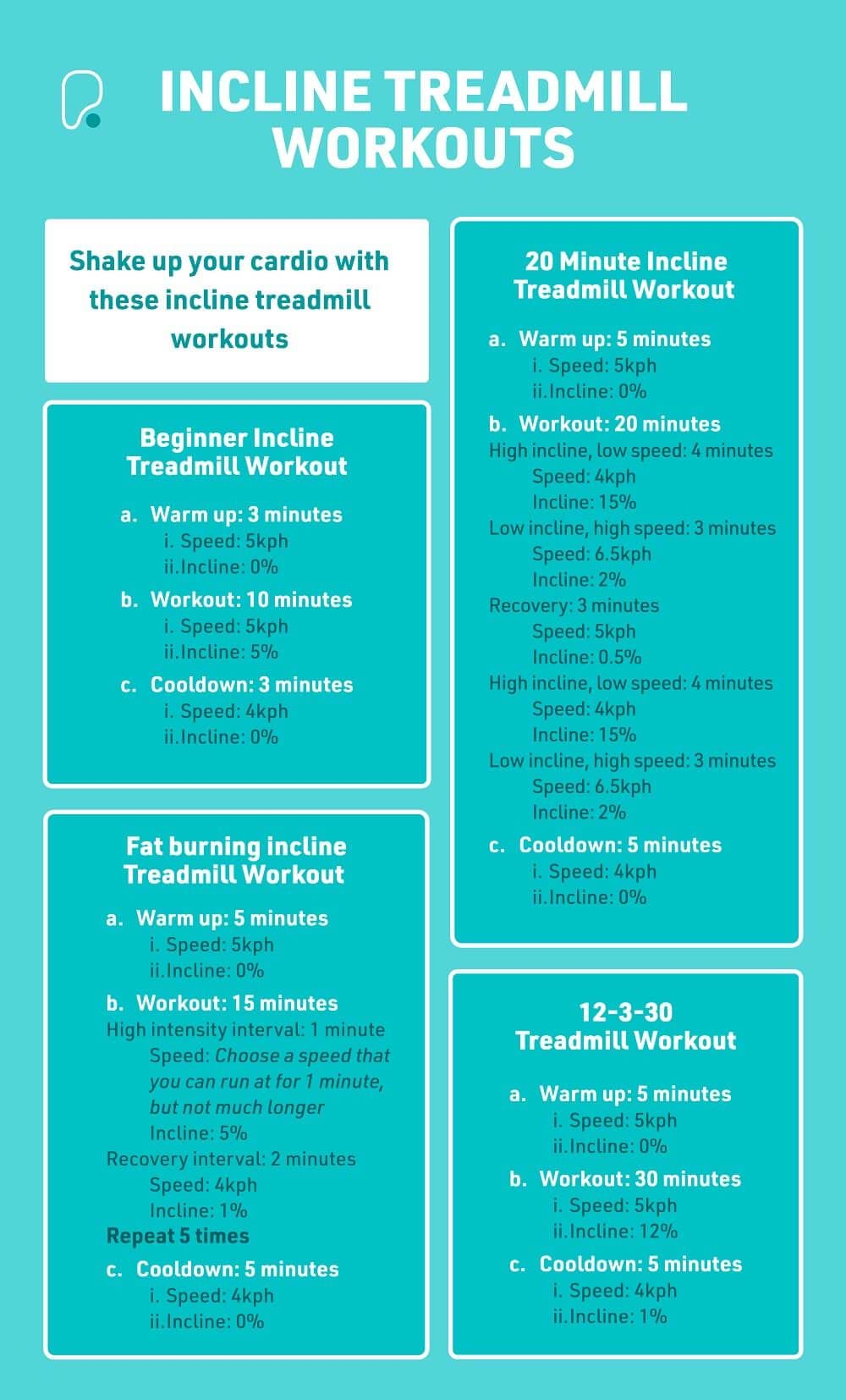
Incline walking
Incline walking can increase effort without requiring a fast pace.
Try this:
• Warm up at 0% incline for 5 minutes
• Walk at 3 to 3.5 miles per hour
• Set the incline at 3% for 5 minutes
• Raise it to 5% for 5 minutes
• Return to 3% for 5 minutes
• Cool down at 0% for 5 minutes
Adjust the incline if your knees, hips, or lower back feel strained.
Walking intervals
Intervals alternate easier and harder periods. They can make a workout feel less boring and may improve cardiovascular fitness.
Try this:
• Walk easily for 5 minutes
• Walk briskly for 2 minutes
• Walk faster or add incline for 1 minute
• Repeat the cycle 6 to 10 times
• Cool down for 5 minutes
Hard intervals should feel challenging, not painful. You should recover during the easier periods.
Walk and jog intervals
If you want to begin running, alternate walking and jogging instead of running continuously.
Try this:
• Walk for 5 minutes
• Jog for 30 seconds
• Walk for 2 minutes
• Repeat 8 to 10 times
• Cool down for 5 minutes
Increase the jogging time slowly. Your muscles and joints need time to adapt.

How Often Should You Use a Treadmill to Lose Weight?
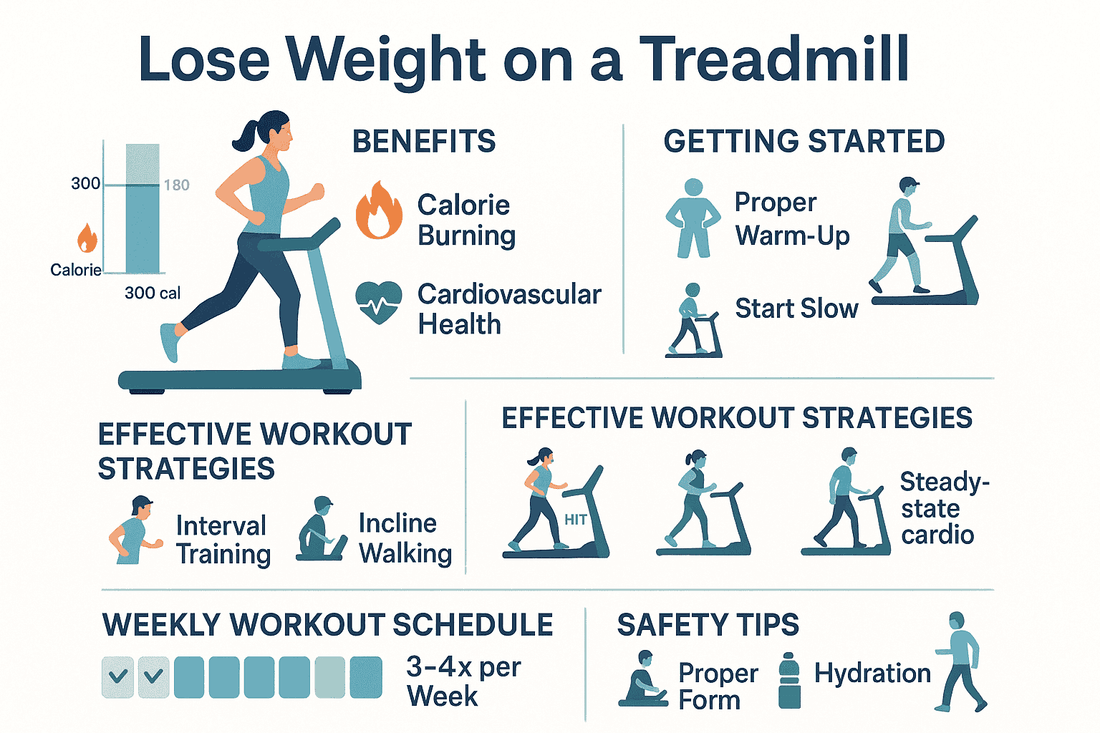
Most adults can start with three to five treadmill sessions per week. Your total activity should also include daily walking, household movement, and strength training.
Public health guidance commonly recommends at least 150 minutes of moderate aerobic activity each week, or 75 minutes of vigorous activity. More activity may provide extra benefits, but more is not always better if it causes injury or burnout.
A balanced weekly plan could include:
• Three treadmill workouts
• Two strength training sessions
• One or two easy walking days
• At least one full rest day
Strength training matters because it helps maintain muscle while you lose weight. More muscle can support strength, movement, and long term body composition.
When deciding how many calories to burn on a treadmill to lose weight, think in weekly totals rather than one workout. Consistency is the engine. One hard session is only a spark.

Should You Burn 500 Calories on the Treadmill Every Day?
You do not need to burn 500 calories on the treadmill every day to lose weight. For some people, that goal may require a long workout and can increase hunger, soreness, or injury risk.
A daily 500 calorie treadmill goal could mean 3,500 exercise calories per week. That may support weight loss, but only if you can recover and avoid eating back all the calories.
Many people do better with a flexible range:
• 200 to 300 calories on easy days
• 300 to 500 calories on regular days
• Rest or gentle movement when tired
Your food intake also matters. A workout that burns 400 calories can be canceled by a large snack or sugary drink. This is not a reason to fear food. It is simply a reminder that weight loss is shaped by the full day, not just the treadmill.

How to Set a Safe Calorie Deficit
A safe weight loss plan should protect your energy, muscle, mood, and health. Fast results can look exciting, but extreme restriction often leads to fatigue and rebound eating.
Use these steps:
-
Estimate your usual calorie needs.
-
Create a modest food deficit of about 250 to 400 calories per day.
-
Add treadmill exercise three to five times each week.
-
Eat enough protein and fiber to support fullness.
-
Review your progress after three to four weeks.
-
Adjust only if your trend has not changed and your plan feels sustainable.
Avoid very low calorie diets unless a qualified medical professional is supervising you. People with diabetes, heart disease, high blood pressure, eating disorder history, pregnancy, or major joint problems should seek personalized medical advice before starting a weight loss exercise plan.
Weight can change from day to day because of salt, stress, sleep, hormones, and digestion. Use a weekly average instead of reacting to one scale reading.
Nutrition Tips That Make Treadmill Weight Loss Easier
Exercise cannot fully overcome a diet that leaves you hungry all day. You do not need a perfect diet, but you do need foods that support your goal.
Build most meals around:
• Protein such as eggs, fish, chicken, tofu, beans, or Greek yogurt
• High fiber foods such as vegetables, fruit, oats, beans, and whole grains
• Healthy fats such as nuts, seeds, olive oil, and avocado
• Water and low calorie drinks
A small meal before exercise may help if you feel weak when training fasted. Try a banana, toast with peanut butter, or yogurt.
After a longer workout, eat a normal balanced meal. You do not need a special shake unless it helps you meet your protein needs.
One common mistake is treating exercise calories as a reward for extra food. A better approach is to fuel your body, enjoy treats in sensible portions, and keep your weekly pattern steady.
Common Treadmill Weight Loss Mistakes
Chasing the calorie display
The number on the screen is not a score. If it makes you push through pain or feel guilty, stop using it as your main measure.
Track time, effort, distance, strength, sleep, and waist measurements too.
Holding the rails
Leaning on the rails reduces the effort of incline walking. It can also change your posture and place stress on your joints.
Lower the speed or incline until you can walk without support.
Starting too hard
A sudden jump from no exercise to daily running can cause blisters, shin pain, knee pain, or deep fatigue.
Increase time or intensity gradually. A small rise each week is enough.
Ignoring strength training
Treadmill exercise is useful, but strength work supports muscle and daily function. Include exercises such as squats, rows, presses, lunges, and hip hinges if they are safe for you.
Eating back every exercise calorie
Fitness trackers often overestimate calorie burn. If you automatically eat every calorie shown, your deficit may disappear.
Eat according to hunger, training needs, and your overall plan rather than trusting one device.
How to Know If Your Treadmill Plan Is Working
Progress is more than a lower scale number. Look for several signs:
• Your average body weight trends down over several weeks
• Your clothes fit more comfortably
• You can walk faster or longer
• Your heart rate recovers faster after exercise
• Your energy and sleep improve
• Your waist measurement decreases
Weigh yourself under similar conditions, such as in the morning after using the bathroom. Record the number two to seven times per week and compare weekly averages.
If your average does not change after three to four weeks, review portions, drinks, weekend eating, sleep, and exercise accuracy. You may need a small adjustment, such as adding ten minutes to two weekly sessions or reducing daily intake slightly.
Do not make several major changes at once. If the scale drops rapidly and you feel weak, cold, dizzy, or constantly hungry, your plan may be too aggressive.
Personal Lessons From Treadmill Weight Loss Plans
One lesson I often emphasize is that the best answer to how many calories to burn on a treadmill to lose weight is not the highest number. It is the number you can reach without dreading your next workout.
Many people begin with a strong burst of motivation. They set the treadmill to a steep incline, run until exhausted, and expect fast results. Then soreness, hunger, or a busy week breaks the routine. A moderate plan often wins because it leaves room for real life.
Another useful lesson is to judge effort by breathing, not by speed alone. A 3 mile per hour incline walk may be harder than a 4 mile per hour flat walk. Your workout should match your body, not someone else’s treadmill screen.
Treat the plan like brushing your teeth. A simple habit done often can protect your health better than an extreme habit done once in a while.
Frequently Asked Questions About How Many Calories to Burn on a Treadmill to Lose Weight
How many calories should I burn on a treadmill each day to lose weight?
A practical starting point is 250 to 500 calories per workout, three to five days per week. Your total calorie deficit also depends on food intake, daily movement, body size, and metabolism.
Is burning 300 calories on a treadmill enough to lose weight?
Yes, burning 300 calories can support weight loss when it contributes to a consistent weekly calorie deficit. You do not need to burn a large number in one session if your overall routine is steady.
How long should I walk on a treadmill to burn 500 calories?
Many people need about 45 to 75 minutes of brisk walking, but the exact time depends on body weight, speed, and incline. A heavier person or someone using a higher incline may reach 500 calories sooner.
Is treadmill walking better than running for weight loss?
Running burns more calories per minute, but walking is often easier to repeat and easier on the joints. The best option is the one you can perform safely and consistently.
Can I lose weight by using a treadmill every day?
Daily treadmill use can support weight loss if you recover well and manage your food intake. Mix harder and easier days, and include rest or gentle movement if your body feels sore or tired.
Why am I not losing weight after burning calories on a treadmill?
The treadmill may overestimate calorie burn, or food intake may be higher than expected. Water changes, stress, poor sleep, medications, and hormonal factors can also hide fat loss for a time.
Should I eat back the calories burned on the treadmill?
Usually, you do not need to eat back every calorie shown on the treadmill. Device estimates are imperfect, so focus on balanced meals and adjust based on your energy, hunger, and long term progress.
Conclusion
The right answer to how many calories to burn on a treadmill to lose weight is usually 250 to 500 calories per workout, three to five times each week. That target is flexible and should match your fitness level, schedule, health, and ability to recover.
Use brisk walking, incline training, or intervals to increase effort. Pair treadmill exercise with balanced meals, strength training, enough sleep, and realistic expectations. Start with a plan you can repeat, track your weekly trend, and make small changes when needed.
Choose your first workout today, record how it feels, and build from there. Share your experience or explore more evidence based fitness resources to keep your progress moving.

Brandon Knoxley is a sport & fitness writer and training guide contributor at MySportFitHub. He focuses on practical workouts, performance-based training, and honest fitness gear insights designed for real people and real results. Brandon is passionate about helping beginners and active individuals train smarter, avoid common mistakes, and build sustainable fitness habits.