
How Much Incline On Treadmill: Find Your Best Setting
For most people, a treadmill incline of 1% to 5% builds fitness without adding excessive joint stress.
The right answer to “how much incline on treadmill” depends on your goal, fitness level, speed, and health. A gentle incline can make walking harder, while a steep grade turns a simple workout into a demanding hill climb. This guide explains how to choose the right incline, use it safely, and build a treadmill workout that supports your goals.
What Does Incline Mean on a Treadmill?
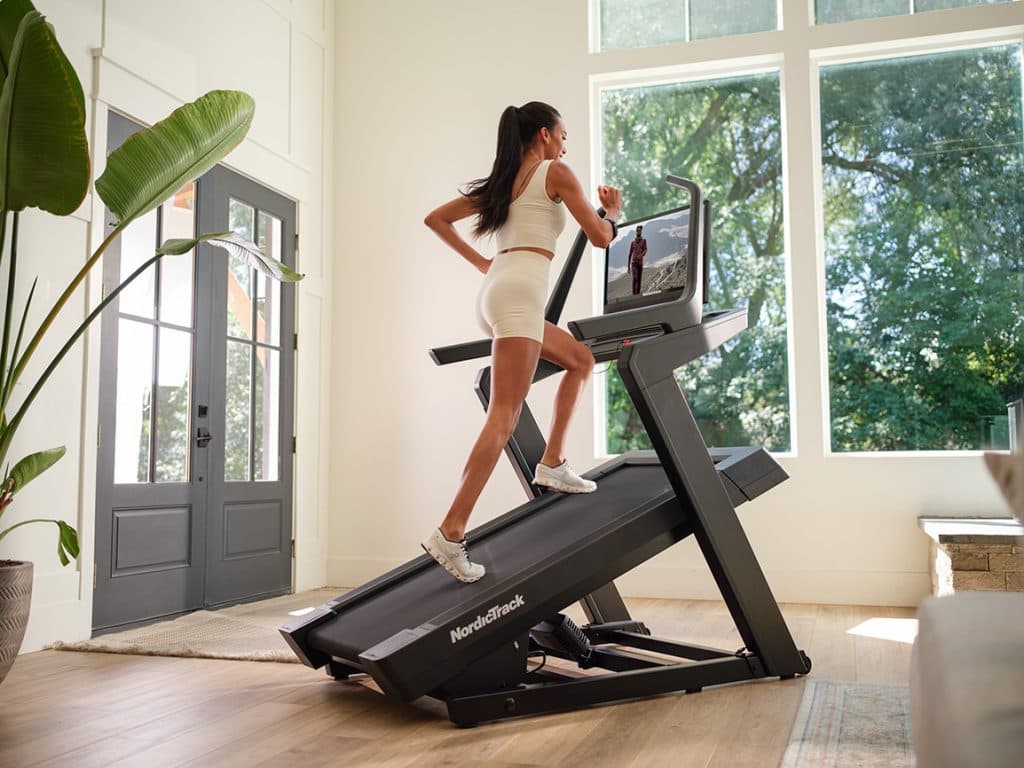
Treadmill incline shows how steep the walking or running surface is. It is usually shown as a percentage, not as an angle in degrees.
A 5% incline means the treadmill rises 5 feet for every 100 feet of forward travel. It does not mean the belt is at a 5 degree angle.
The incline setting changes the effort of your workout in several ways:
• It raises your heart rate at the same speed.
• It increases the work done by your calves, hamstrings, and glutes.
• It can improve hill fitness for outdoor walking or running.
• It may increase calorie use, although the exact amount varies by body weight, speed, workout time, and fitness level.
When people ask how much incline on treadmill is best, they often want one simple number. In practice, the best incline is the lowest setting that creates the desired challenge while allowing good posture and smooth movement.
How Much Incline on Treadmill Should You Use?
For general fitness, start with 1% to 3%. This range adds a mild challenge without making the workout feel like a hill sprint.
Use the following guide as a starting point:
• 0% to 1%: Easy walking, warmups, cooldowns, and recovery sessions
• 1% to 3%: General walking and steady aerobic exercise
• 3% to 5%: Brisk walking and moderate fitness training
• 5% to 8%: Challenging hill walking or short running intervals
• 8% to 12%: Advanced incline walking and hill simulation
• 12% to 15%: Very hard efforts for trained users
A new treadmill user should not jump straight to 10% or 15%. Begin with a comfortable speed and add only 1% of incline at a time. Stay at that level for several minutes before deciding whether to increase it.
For many people, 3% to 6% is the most useful range. It makes walking more demanding but still allows steady breathing and proper form.

Best Treadmill Incline for Different Goals
The ideal answer to how much incline on treadmill changes with your goal. A person training for a 5K needs a different setting from someone who wants a low impact walking workout.
For weight loss
Incline walking can help you burn more energy without relying only on a faster pace. A moderate incline may also feel easier than running for people who are new to exercise or have sensitive joints.
Try this starting workout:
-
Warm up at 0% to 2% incline for five minutes.
-
Walk at 3% to 5% incline for 20 to 30 minutes.
-
Lower the incline to 0% to 2% for a five minute cooldown.
Your total calorie use still depends on your diet, body size, pace, workout time, and weekly activity. Incline does not replace a balanced eating plan or regular strength training.
For improving cardiovascular fitness
Use a mix of flat walking and incline intervals. For example, walk for two minutes at 2%, then walk for one minute at 6%. Repeat the pattern for 20 to 30 minutes.
This approach raises and lowers your heart rate in a controlled way. It also keeps the workout more interesting than using one incline for the entire session.
For stronger glutes and legs
A 5% to 10% incline can increase the demand on the lower body. Keep your speed moderate so you can drive through each step without leaning heavily on the handrails.
Incline walking can train the glutes and calves, but it is not a complete strength program. Add exercises such as squats, step ups, lunges, and calf raises for more balanced muscle development.
For preparing for outdoor hills
Use an incline that matches the hills in your route. A workout might include three minutes at 2%, three minutes at 5%, and two minutes at 8%.
Outdoor hills are not perfectly steady, so changing the incline every few minutes can better prepare your body than holding one fixed setting.
For running
Many runners use 0% to 1% incline for easy treadmill runs. A 1% incline has often been used to make treadmill running feel more like outdoor running, but it is not required for every runner or every workout.
For speed work, start at 0% to 1%. For hill repeats, use 3% to 8% for short intervals and recover at a lower grade. Faster runners may use steeper settings, but speed and incline together can create a very high load.

How Incline Changes Walking and Running Effort
Walking uphill requires more force with each step. Your body must lift itself against gravity, much like carrying a light backpack up a ramp.
At the same speed, a higher incline generally increases your oxygen use and heart rate. Exercise research and guidance from organizations such as the American College of Sports Medicine support using incline as a way to raise exercise intensity without simply increasing speed.
The effect is not unlimited. A steep incline can shorten your stride and change your posture. If you hold the handrails, you also reduce the amount of body weight your legs must move.
A useful effort scale is the talk test:
• Easy effort: You can speak in full sentences.
• Moderate effort: You can speak, but you need a few breaths between sentences.
• Hard effort: You can say only a few words at a time.
For most steady workouts, aim for moderate effort. Save hard efforts for short intervals if you are healthy, trained, and able to recover well.

Treadmill Incline and Calorie Burn
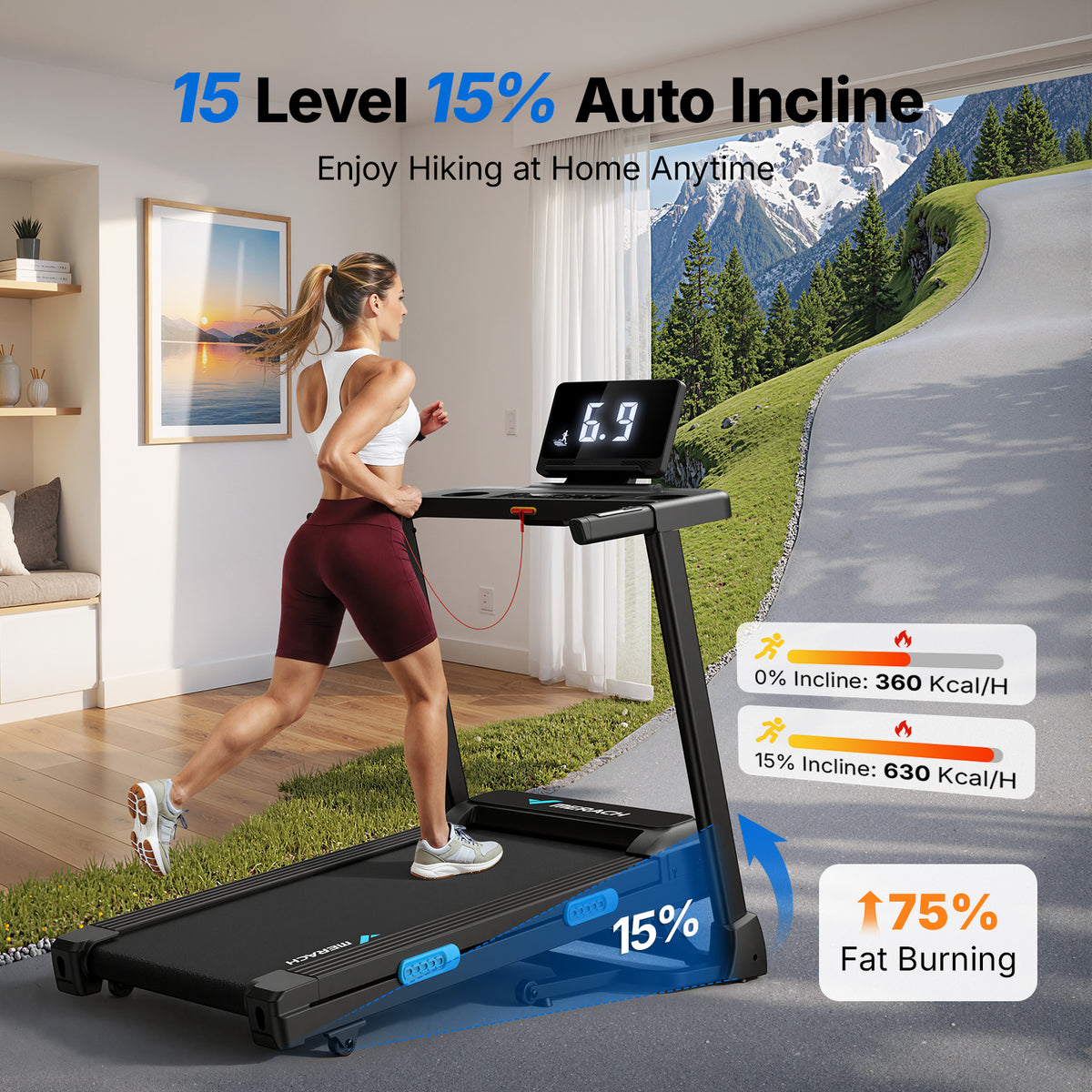
Incline usually increases calorie burn because your muscles perform more work. However, treadmill calorie displays are estimates, not exact measurements.
The display may not know your true body composition, stride, fitness level, or whether you are holding the rails. Some machines also use different formulas, so two treadmills may show different results for the same workout.
To make incline walking more effective:
• Use a pace that feels purposeful.
• Keep your hands off the rails when safe.
• Maintain the incline for a consistent period.
• Increase total weekly activity gradually.
• Focus on workout consistency instead of a single calorie number.
Weight loss happens when your average energy use is lower than your average energy intake over time. Incline walking can support that process, but no treadmill setting guarantees fat loss.
How to Choose the Right Incline
The best answer to how much incline on treadmill is personal. Start by considering your training history, joint health, current pace, and workout goal.
Use these steps:
-
Begin at 0% to 2% for five minutes.
-
Increase the incline by 1% every few minutes.
-
Stop raising it when your form changes or your effort becomes too hard.
-
Hold the setting for 10 to 20 minutes if you can move comfortably.
-
Lower the incline if you need to grip the rails or lean forward.
-
Record the incline, speed, time, and effort so you can track progress.
Your breathing and movement matter more than the number on the console. A 4% incline at a steady pace may be more useful than a 12% incline that forces you to stop every minute.
Incline Treadmill Workouts for Beginners
A beginner can make progress with short, simple sessions. The goal is to build tolerance, not to prove how steep a treadmill can go.
Beginner steady incline workout
• Warm up: Five minutes at 0% to 2%
• Main set: 15 to 20 minutes at 2% to 4%
• Cooldown: Five minutes at 0% to 1%
Keep the pace easy enough to maintain a conversation. Do this two or three times per week, with rest or light activity between sessions.
Beginner incline interval workout
• Warm up: Five minutes at 1%
• Work interval: One minute at 5%
• Recovery interval: Two minutes at 1%
• Repeat: Five to eight times
• Cooldown: Five minutes at 0%
Lower the speed before raising the incline if you feel unstable. It is better to complete a controlled workout than to chase a steep grade.
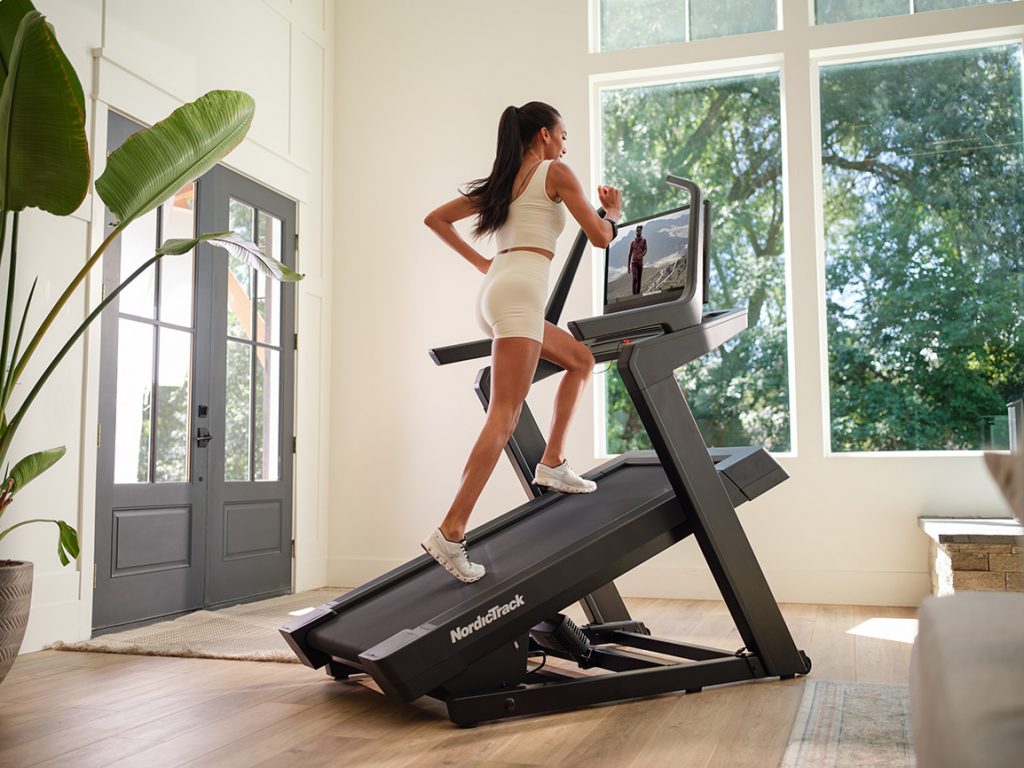
Advanced Incline Treadmill Workouts
Experienced users can combine incline, speed, and time. Still, increase only one major training factor at a time. Raising both speed and incline sharply can overload the calves, Achilles tendons, knees, or lower back.
Hill interval workout
-
Warm up for 10 minutes at 0% to 2%.
-
Walk or run for two minutes at 6% to 8%.
-
Recover for two minutes at 1% to 2%.
-
Repeat four to eight times.
-
Cool down for five to 10 minutes.
Incline ladder workout
• Five minutes at 2%
• Five minutes at 4%
• Five minutes at 6%
• Five minutes at 8%
• Five minutes at 2% for recovery
Use a slower speed as the incline rises. An incline ladder should feel challenging, not reckless.
In my experience helping people adjust treadmill workouts, the most common mistake is choosing an advanced incline before building a steady aerobic base. The workout may look impressive, but poor posture and excessive fatigue reduce its value.
Common Incline Treadmill Mistakes
Small technique errors can turn a useful workout into an uncomfortable one.
Holding the handrails
Holding the rails supports part of your body weight and can reduce the true effort. It also encourages you to lean backward or hunch over.
If you need the rails for balance, lower the speed or incline. Lightly touching the front bar for a moment is different from leaning your full weight on it.
Leaning too far forward
A slight forward angle from the ankles is normal on a hill. Bending at the waist is not. Keep your chest open, eyes forward, and shoulders relaxed.
Using too much incline
A steep setting is not automatically better. If it causes knee pain, sharp calf tightness, foot discomfort, or severe breathlessness, reduce the grade.
Ignoring recovery
Incline intervals place stress on the lower legs and hips. Give your body time to recover, especially when you are new to hill training.
Chasing the calorie display
The console can guide your workout, but it cannot measure your results perfectly. Use time, effort, consistency, and progress as better markers.
Is Incline Walking Safe for Everyone?
Incline walking is safe for many healthy adults when progressed slowly. It may be more comfortable than running, but it still increases the demands on your muscles and cardiovascular system.
Speak with a health professional before starting or changing exercise if you have heart disease, uncontrolled high blood pressure, severe joint pain, balance problems, recent surgery, or another condition that affects exercise safety.
Stop the workout and seek medical help for warning signs such as:
• Chest pain or pressure
• Fainting or severe dizziness
• Unusual shortness of breath
• Sudden weakness
• Severe pain that does not improve
People with diabetes may also need to monitor blood glucose around exercise, based on their medical advice. Safety should always come before finding the perfect incline number.
How to Progress Your Incline Safely
Progress slowly so your bones, tendons, muscles, and heart can adapt. A simple rule is to change only one factor at a time: incline, speed, duration, or workout frequency.
For example, keep your speed and workout time steady while moving from 2% to 3%. After one or two weeks of comfortable sessions, add a few minutes or a small amount of speed.
A practical progression may look like this:
• Week one: 15 minutes at 2%
• Week two: 20 minutes at 2%
• Week three: 20 minutes at 3%
• Week four: 25 minutes at 3%
This is only an example. Your pace may be faster or slower based on your starting point.
A lesson many treadmill users learn the hard way is that muscles may feel ready before tendons do. Calf and Achilles soreness can appear after several sessions, so increase gradually and include easy days.
Frequently Asked Questions About How Much Incline on Treadmill
Is a 10% incline on a treadmill too much?
A 10% incline is challenging but not automatically too much for a healthy, experienced user. Beginners should build toward it gradually and lower the speed to maintain good form.
What is the best treadmill incline for walking?
A 1% to 5% incline works well for many walking workouts. Choose the setting that raises your effort without forcing you to hold the rails or lose a natural stride.
Is walking at an incline better than walking flat?
Incline walking increases exercise intensity and places more demand on the lower body. Flat walking may be better for warmups, recovery, longer sessions, or people who do not tolerate hills well.
Does incline walking burn belly fat?
Incline walking can support overall fat loss by increasing energy use, but it cannot target belly fat alone. Fat loss depends on total activity, nutrition, sleep, genetics, and long-term consistency.
What incline should beginners use on a treadmill?
Most beginners can start at 0% to 2% after a short warmup. If that feels easy, add 1% at a time and keep the speed slow enough to stay balanced.
Is a 1% incline best for treadmill running?
A 1% incline can make some treadmill runs feel closer to outdoor running, but it is not required for every workout. Use 0% to 1% for easy runs and adjust the setting based on your goal and comfort.
Can incline walking build muscle?
Incline walking can strengthen and condition the calves, hamstrings, and glutes. It does not replace resistance training when your goal is significant muscle growth or maximum strength.
Conclusion
The right answer to how much incline on treadmill depends on your goal and current fitness. Start with 1% to 3% for general exercise, use 3% to 6% for a stronger walking challenge, and save 8% to 15% for short, controlled efforts if you are ready.
Keep your posture tall, avoid leaning on the rails, and increase the incline slowly. Choose a setting you can repeat with good form, because steady progress will always beat a single exhausting workout. Try one of the plans above this week, track how you feel, and explore more training guidance to keep your treadmill routine moving forward.

Brandon Knoxley is a sport & fitness writer and training guide contributor at MySportFitHub. He focuses on practical workouts, performance-based training, and honest fitness gear insights designed for real people and real results. Brandon is passionate about helping beginners and active individuals train smarter, avoid common mistakes, and build sustainable fitness habits.
