How To Apply Treadmill Lubricant: Easy Step-By-Step Guide
Apply the correct silicone lubricant under the belt, then run the treadmill slowly to spread it evenly.
Learning how to apply treadmill lubricant is simple, but the details matter. The right product and method can reduce belt friction, protect the motor, and make your workouts smoother. This guide explains the process step by step, including safety checks, common mistakes, timing, and signs that your treadmill needs attention.
Why Treadmill Lubrication Matters
A treadmill belt slides over a smooth platform with every step. This creates friction between the walking belt and the deck. A small amount of proper lubricant helps the belt move with less resistance.
Lower friction can help your treadmill run more smoothly. It may also reduce stress on the drive motor, rollers, and belt. Lubrication cannot fix a worn belt, a damaged deck, or a failing motor, but it can support normal operation.
Think of the lubricant as a thin layer of protection. It should help the belt glide, not make it wet or slippery on top.
Regular treadmill maintenance may help prevent:
• A noisy belt
• A belt that hesitates or sticks
• Excess heat near the motor
• Uneven belt movement
• Extra wear on the walking deck
• Higher electrical demand during use
The exact service schedule depends on the model, how often you use it, your body weight, and the room environment. A home treadmill used several times each week may need lubrication every three to six months, but the owner’s manual should always guide the final decision.

Choose the Right Treadmill Lubricant
Most modern treadmills use 100% silicone treadmill lubricant. It usually comes as a liquid, gel, or spray with a narrow applicator tube.
Before you start, check the owner’s manual. Some treadmills use a waxed deck or a special maintenance system. These models may not need liquid silicone. Adding the wrong product can damage the deck or interfere with the belt.
Use a lubricant that is:
• Made for treadmills
• Clearly labeled as silicone-based
• Compatible with your treadmill model
• Supplied with an applicator when possible
Avoid household oils and general-purpose sprays. Do not use:
• WD-40 or penetrating oil
• Motor oil
• Vegetable oil
• Grease
• Furniture polish
• Automotive silicone products unless the manual approves them
These products may attract dust, damage belt materials, or create too much slip. Some can also affect the walking deck or belt adhesive.
A common mistake I’ve seen is using too much lubricant because the belt feels dry. More is not better. Excess silicone can spread onto the sides of the treadmill, collect dust, or make the belt slip during use.

How to Apply Treadmill Lubricant Step by Step
Follow these steps for most belt-and-deck treadmills. If your manual gives different instructions, use the manufacturer’s instructions instead.
1. Turn off and unplug the treadmill
Stop the treadmill with the normal stop button. Then remove the power plug from the wall.
This step protects you from accidental startup. It also gives the belt time to cool if you just finished a workout. Never place your hands under a moving belt.
2. Clean the walking belt and deck area
Wipe dust from the top of the belt, side rails, and nearby frame. If you can safely reach the deck edges, remove loose dirt with a dry cloth.
Do not soak the belt or deck. Water and cleaning fluid can reach electrical parts. Avoid spraying cleaner directly onto the treadmill.
Cleaning first matters because dirt can mix with silicone and form a gritty layer. That layer may increase wear instead of reducing it.
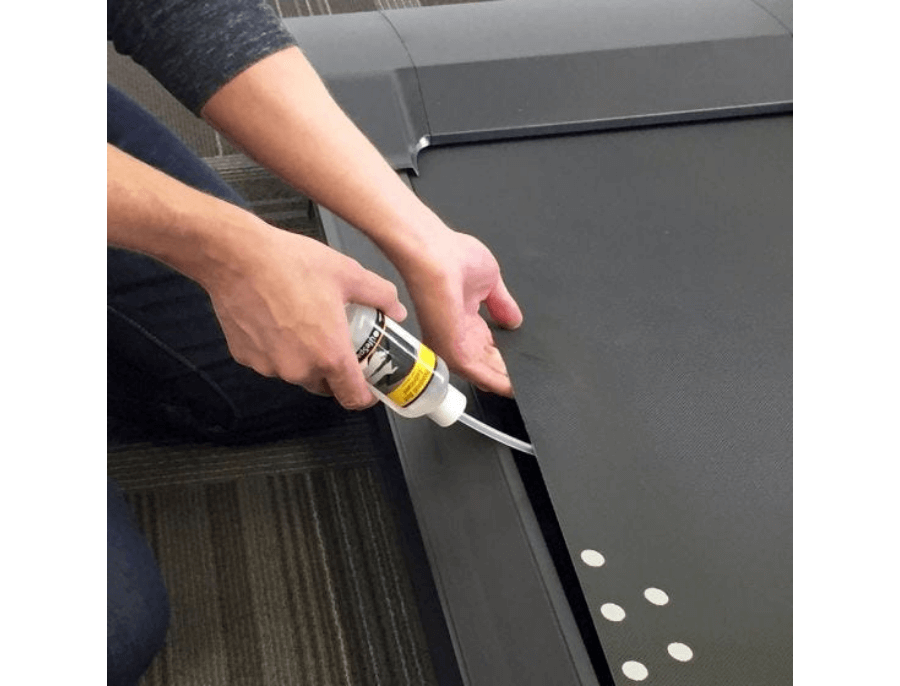
3. Lift the walking belt
Stand beside the treadmill. Reach under the belt near the center of the deck and gently lift it.
You do not need to remove the belt. You only need enough space to place the applicator under it. Lift one side at a time if that feels easier.
Do not pull hard. A belt that will not lift may be too tight, damaged, or attached to a design that requires another method.
4. Apply the lubricant under the belt
Place the nozzle or applicator under the belt. Apply a thin line from the center toward the front or rear of the deck.
Many manufacturers suggest a small measured amount, often about ½ to 1 fluid ounce for a standard home treadmill. However, the correct amount varies by model. Follow the label and owner’s manual rather than using a fixed amount for every treadmill.
Apply lubricant to both sides of the deck when the instructions call for it. Try to keep the product on the walking surface beneath the belt. Do not pour it onto the top of the belt.
If you use a spray, spray onto the applicator or under the belt with care. Avoid spraying near the motor, power board, sensors, or other electrical parts.
5. Repeat on the other side
Move to the opposite side of the treadmill. Lift the belt and apply a similar thin line.
The goal is even coverage. A heavy puddle on one side can cause uneven belt movement. A completely dry section may continue to create friction.
6. Spread the lubricant at low speed
Plug the treadmill back in. Start it at the lowest walking speed, usually around 1 to 2 miles per hour.
Let it run for about three to five minutes. Watch the belt from the side and front. Keep your hands, clothing, and feet away from the moving belt.
This step spreads the silicone across the deck. If the manual says to walk on the belt during this process, do so only at a slow speed and while holding the handrails.
7. Wipe away excess product
Turn the treadmill off and unplug it again. Wipe any silicone that has reached the side rails, frame, or floor.
Then inspect the belt. It should move smoothly without visible pools of lubricant. If the belt slips, stops, or feels unusually loose, stop using the treadmill and check the manual.
That completes the basic process for how to apply treadmill lubricant safely and evenly.

How Often Should You Lubricate a Treadmill?
There is no single schedule that fits every treadmill. The owner’s manual is the best source because belt materials and deck coatings differ between brands and models.
As a general guide:
• Light use, such as one or two workouts each week: check the belt every four to six months
• Moderate use, such as three to five workouts each week: check the belt every three to four months
• Heavy use, such as daily workouts or multiple users: inspect it more often
• Commercial or shared use: follow the facility’s service schedule
Your treadmill may need attention sooner if it is in a dusty room, garage, basement, or hot space. Heavy users may also create more friction because of longer workouts and higher loads.
Do not lubricate only because the calendar says it is time. Check the manual and inspect the belt. Some treadmills have a lubrication reminder or maintenance light. Reset that feature only after completing the service.
A simple maintenance record can help. Write down the date, product, amount, and any changes in belt noise or movement.

Signs Your Treadmill Needs Lubrication
A dry or high-friction treadmill may show several warning signs. These signs do not prove that lubrication is the only problem, but they are useful clues.
Look for:
• A squeaking or rubbing sound
• A belt that slows when you step on it
• A jerky start or stop
• A hot smell near the motor
• A walking belt that feels less smooth than usual
• A noticeable increase in belt noise
• A maintenance message on the console
A treadmill belt that pauses when you walk may have too much friction. It may also be too tight, worn out, or misaligned. Lubrication will not solve every cause.
You can perform a simple check after unplugging the treadmill. Lift the belt and slide your hand across the deck. It should feel smooth, not gritty or dry. Do not use this check as a substitute for professional service if the treadmill has electrical, motor, or structural problems.

Common Mistakes to Avoid
Knowing how to apply treadmill lubricant also means knowing what not to do. Small errors can create new problems.
Using the wrong product
Household oils may damage the belt or deck. Always choose a product designed for treadmill lubrication unless the manufacturer specifies another type.
Applying too much lubricant
Too much silicone can make the belt slip. It may also spread onto the motor cover or floor. Use a measured amount and add more only if the manual recommends it.
Applying lubricant to the top of the belt
The walking surface should not be lubricated. Silicone on top can make the belt unsafe and may reduce traction.
Lubricating a waxed deck
Waxed systems may need a special service method. Liquid silicone may interfere with the coating.
Ignoring belt tension
A loose belt can slip even when it is well lubricated. A tight belt can create excess friction and stress. Adjust tension only in small steps and follow the manual.
Spraying near electrical parts
Silicone and electrical components do not belong together. Keep lubricant away from the motor, circuit board, speed sensor, and power connections.
Using the treadmill immediately at high speed
Start slowly after lubrication. A low-speed test helps spread the product and lets you notice slipping or unusual noise early.
Skipping professional help
Stop and seek service if you notice smoke, burning, exposed wires, a damaged belt, repeated breaker trips, or a motor that struggles under light use.

How to Tell if the Belt Is Too Tight or Too Loose
Lubrication and belt adjustment are different maintenance tasks. A properly lubricated belt can still perform poorly if the tension is wrong.
A belt may be too loose if it:
• Slips when you walk
• Pauses while the motor continues
• Moves from side to side
• Makes a flapping sound
A belt may be too tight if it:
• Feels stiff when moved by hand
• Creates a loud hum
• Causes the motor to work hard
• Shows excessive drag
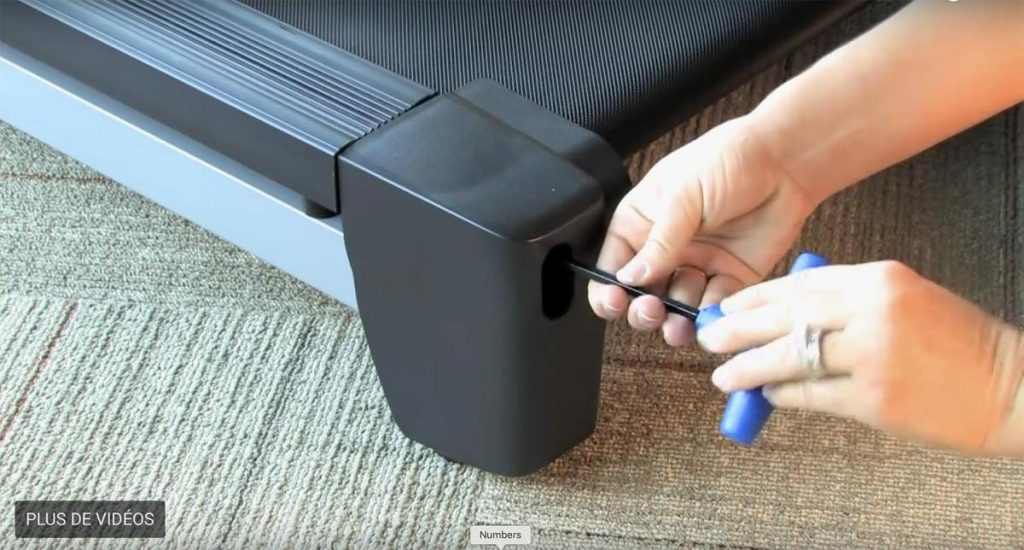
Many treadmills use two rear roller adjustment bolts. If your manual permits adjustment, turn each bolt in small, equal increments. Make only a quarter-turn change at a time, then test the treadmill.
Do not make large adjustments based on guesswork. Uneven turns can move the belt off center. If the belt remains unstable, a technician can check the rollers, deck, belt, and motor.

Maintenance Tips That Extend Treadmill Life
Lubrication works best as part of a simple maintenance routine. It is not a cure-all.
Use these habits:
• Vacuum dust around the treadmill each week
• Wipe sweat from the frame after workouts
• Keep the treadmill on a firm, level surface
• Leave space around the motor cover for airflow
• Check belt alignment during regular inspections
• Keep children and pets away during maintenance
• Use a surge protector if the manual allows it
• Avoid storing the treadmill in a damp area
• Follow the recommended user weight limit
Dust acts like fine sand inside moving parts. Sweat can also cause corrosion on metal surfaces. A clean, dry workout area helps protect the machine.
If you use a treadmill mat, clean beneath it from time to time. Mats can trap dust and moisture. They can also hide small signs of leakage or frame damage.
What Manufacturers and Safety Guidance Recommend
The owner’s manual should take priority over general advice. Manufacturers may use different belt compounds, deck coatings, and lubrication systems. They may also set different service intervals.
Safety guidance for exercise equipment consistently emphasizes unplugging equipment before cleaning or servicing it. It also recommends keeping hands and loose clothing away from moving parts.
Product labels matter as well. Follow the lubricant manufacturer’s instructions for storage, application, and ventilation. If the product label conflicts with a general online guide, use the label and contact the treadmill manufacturer for clarification.
Research on equipment friction supports the basic maintenance principle: unnecessary friction can increase heat and mechanical load. Still, lubrication alone does not guarantee longer equipment life. Belt condition, alignment, deck wear, motor quality, and correct tension all matter.
Frequently Asked Questions About How to Apply Treadmill Lubricant
How do you apply treadmill lubricant correctly?
Unplug the treadmill, lift the walking belt, and apply a thin line of approved silicone lubricant under the belt. Run the treadmill at low speed for three to five minutes so the lubricant spreads across the deck.
How much treadmill lubricant should you use?
The correct amount depends on the treadmill model and product instructions. Many home treadmills use roughly ½ to 1 fluid ounce, but using too much can cause belt slipping and attract dust.
Can you use WD-40 on a treadmill belt?
No. WD-40 and similar penetrating oils are not suitable substitutes for treadmill silicone lubricant. They may damage belt materials, affect traction, and leave a residue that collects dirt.
Should you lubricate the top or bottom of a treadmill belt?
Apply lubricant only beneath the walking belt, between the belt and deck. Never apply it to the top walking surface because it can make the belt dangerously slippery.
How often should you lubricate a treadmill?
Many treadmills need inspection and possible lubrication every three to six months, but the correct schedule depends on use and the manufacturer’s instructions. Heavy use, dust, and heat may require more frequent checks.
Why does my treadmill belt still slip after lubrication?
Slipping may result from incorrect belt tension, poor alignment, a worn belt, or excess lubricant. Stop the treadmill, check the manual, and adjust or service the machine only as directed.
Can you lubricate a treadmill without unplugging it?
You should unplug the treadmill before lifting the belt or placing your hands near the deck. Reconnect it only for the low-speed spreading test, and keep clear of moving parts.
Conclusion
Learning how to apply treadmill lubricant takes only a few minutes when you use the right product and follow a careful process. Unplug the machine, clean the area, apply a thin layer of approved silicone beneath the belt, and run the treadmill slowly to spread it.
Avoid household oils, excess lubricant, and guesswork about belt tension. Check your owner’s manual first, keep a simple maintenance record, and stop using the treadmill if you notice smoke, burning smells, damaged parts, or repeated slipping.
Give your treadmill a quick inspection before your next workout, and explore your manufacturer’s maintenance resources for model-specific advice.

Brandon Knoxley is a sport & fitness writer and training guide contributor at MySportFitHub. He focuses on practical workouts, performance-based training, and honest fitness gear insights designed for real people and real results. Brandon is passionate about helping beginners and active individuals train smarter, avoid common mistakes, and build sustainable fitness habits.