Can You Walk Barefoot On A Treadmill: Safe Tips And Benefits
Yes, you can walk barefoot on a treadmill, but only briefly and with careful safety checks.
The answer to “can you walk barefoot on a treadmill” depends on your feet, the machine, and how you use it. Barefoot walking may improve body awareness, but it can also cause burns, blisters, falls, or foot injuries. This guide explains the benefits, risks, safest method, and when shoes are the better choice.

Can you walk barefoot on a treadmill safely?
Yes, you can walk barefoot on a treadmill if you are healthy, comfortable, and using a slow speed. However, barefoot treadmill walking is not automatically safer or better than walking in athletic shoes.
A treadmill belt moves under your feet again and again. That repeated motion creates friction. Even at a slow pace, friction can heat the skin and cause irritation. A rough, dirty, or poorly maintained belt increases this risk.
If you are asking, “can you walk barefoot on a treadmill,” think of it as a short training drill rather than a long workout. Start with a few minutes and pay close attention to your feet.
Barefoot walking may feel natural because your feet can sense the belt directly. Still, a treadmill is different from grass, sand, or a clean floor. The belt moves at a steady speed, and you cannot simply step away from it without slowing the machine.
Possible benefits of barefoot treadmill walking
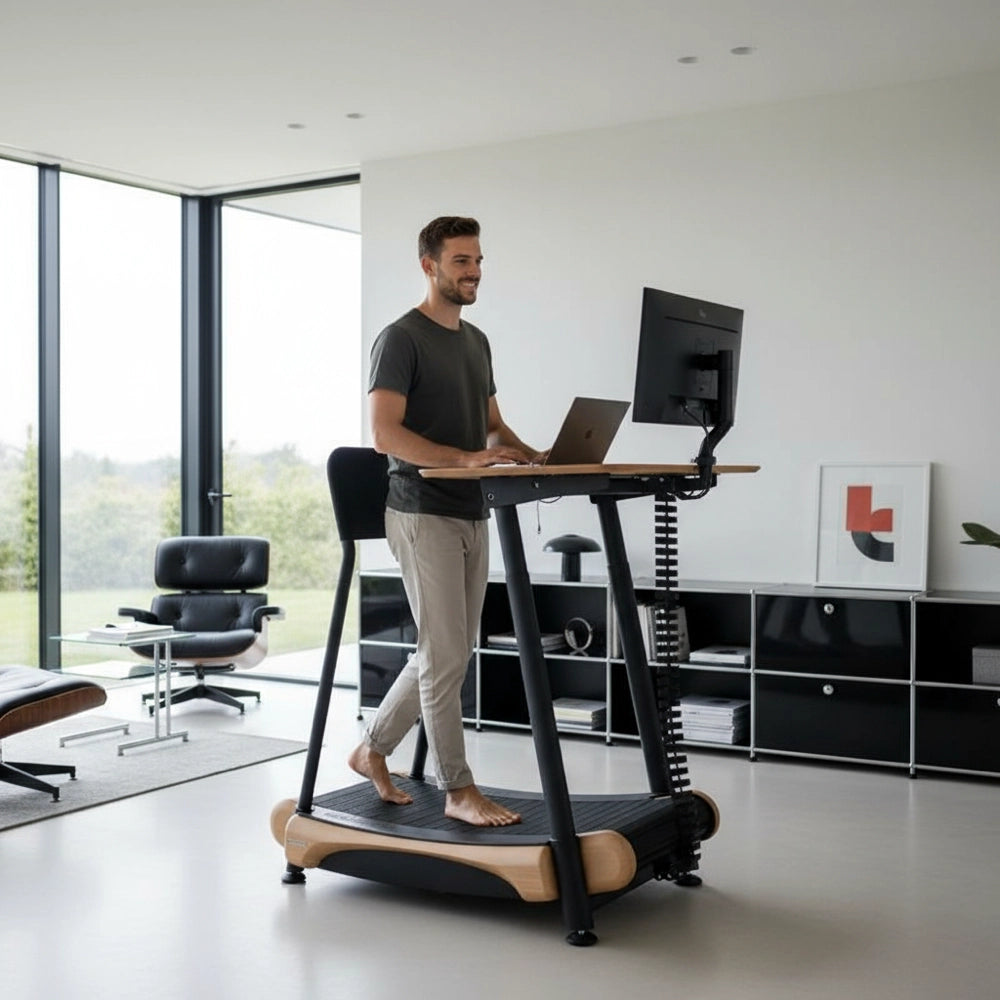
Barefoot treadmill walking can offer some useful benefits when done with care. These benefits are not guaranteed, and research does not prove that barefoot exercise is best for everyone.
Better foot awareness
Without shoes, you can feel how your foot lands and pushes off. This may help you notice whether you place too much weight on your heel, toes, or outer foot.
This sense is called proprioception. It helps your brain understand where your body is in space. Better awareness may support balance and walking control.
More natural movement
Some people take shorter steps and land more softly when they walk barefoot. The lack of a thick sole can make you more aware of heavy foot strikes.
That does not mean barefoot walking will automatically fix your gait. Your walking style also depends on your strength, flexibility, posture, speed, and past injuries.
Gentle foot muscle training
The small muscles in your feet help support your arch and control your toes. Barefoot movement may ask these muscles to work in a different way.
The effect is usually mild during normal walking. It should not be treated as a replacement for specific foot and ankle exercises.
A useful form check
A short barefoot session can help you study your walking pattern. You may notice:
• Whether your steps are too long
• Whether your feet turn inward or outward
• Whether you grip the belt with your toes
• Whether one foot lands harder than the other
• Whether your hips and knees stay aligned
If you feel pain while checking your form, stop. Pain is not proof that the exercise is working.

Risks of walking barefoot on a treadmill
The main concern is not that the treadmill will harm every bare foot. The concern is that a moving belt creates risks that are easy to underestimate.
Friction burns and blisters
The belt can rub the soles of your feet. This may lead to hot spots, redness, blisters, or a burning feeling.
Friction injuries can appear during the workout or several hours later. If your skin feels warm, tender, or raw, stop the session and let it heal.
Cuts and skin damage
Small stones, dirt, loose parts, or rough patches on the belt can cut bare skin. A damaged belt may also catch or scrape your foot.
Inspect the treadmill before use. Do not walk barefoot on a machine with a cracked, frayed, loose, or unusually rough belt.
Slipping and falling
Sweat can make your feet less secure. Some treadmill belts also feel slippery without shoes, especially at higher speeds or when the incline is raised.
A fall from a moving treadmill can cause serious injury. Use the safety clip, keep your posture upright, and stay close to the front of the walking area without stepping too far forward.
Heat from the motor and belt
A treadmill belt can become warm during long workouts. This is more noticeable when the machine needs lubrication, has poor airflow, or carries a heavy load.
Bare feet have less protection from this heat. A warm belt may feel harmless at first but become uncomfortable over time.
Infection risk
Sweat, skin flakes, and germs can collect on shared gym equipment. Small cracks in the skin make it easier for germs to enter.
Clean the belt before use if you are at a gym. Avoid barefoot treadmill walking in public spaces when the surface looks dirty or wet.
Who should avoid barefoot treadmill walking?
For some people, the risks are greater than the possible benefits. Ask a health professional before trying it if you have a medical condition or a history of foot problems.
Avoid barefoot treadmill walking if you have:
• Diabetes, especially with reduced sensation
• Peripheral neuropathy or numbness
• Poor blood flow in the legs or feet
• Open cuts, blisters, rashes, or wounds
• A recent foot, ankle, knee, or hip injury
• Balance problems or a high fall risk
• A severe bunion or painful arthritis
• A skin infection or contagious foot condition
People with diabetes need special care because nerve damage can reduce pain sensation. You may not notice a burn or cut until it becomes serious. Medical guidance commonly recommends daily foot checks and protective footwear for people at risk of foot complications.
Children and older adults may also need closer supervision. A treadmill can speed up quickly, and a small loss of balance can become a major fall.
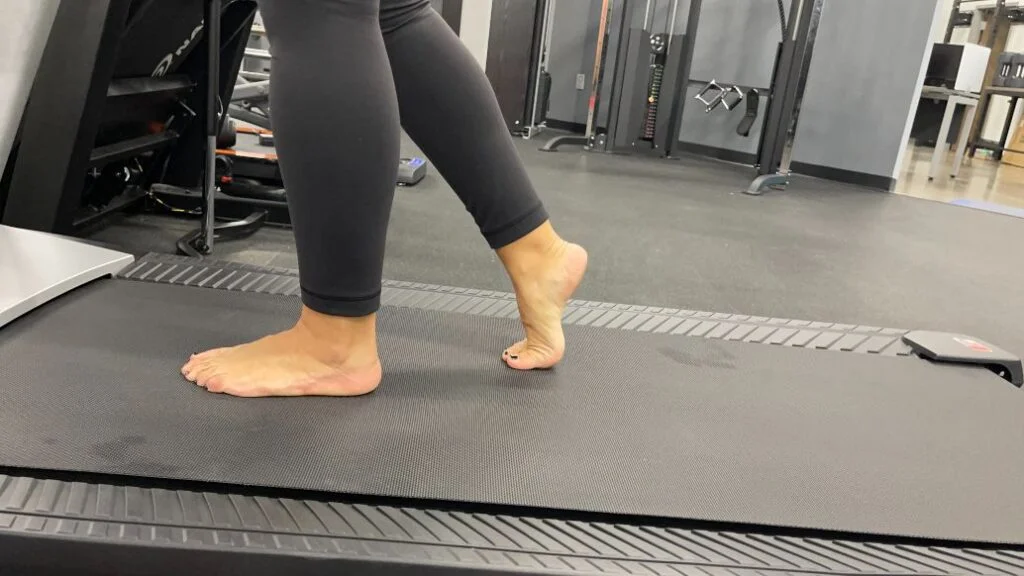
How to walk barefoot on a treadmill safely
If you are healthy and want to try it, use a gradual approach. The goal is to learn how your feet respond, not to prove how long you can last.
1. Check the treadmill
Before you begin, look at the belt and deck. Make sure the belt runs smoothly and does not jerk, slip, or make unusual sounds.
Also check the user manual. Some manufacturers may recommend athletic shoes or may not cover barefoot use under their safety guidance.
2. Clean your feet and the belt
At home, clean the belt and remove dust or small objects. At a gym, wipe the walking surface with the approved cleaner and allow it to dry.
Do not use a treadmill with a wet belt. Moisture can reduce traction and increase the chance of slipping.
3. Start at a slow speed
Begin at about 1 to 2 miles per hour. Hold the side rails only while starting, then release them if you can walk safely without support.
Do not start with jogging, a steep incline, or a fast pace. Barefoot treadmill walking should begin as a controlled test.
4. Keep the first session short
Try two to five minutes at first. Check your feet during the session and again later in the day.
If your skin feels normal, add one or two minutes in a later session. Do not increase speed and time at the same time.
5. Use the safety clip
Attach the emergency stop clip to your clothing. Know where the stop button is before the belt begins moving.
If you stumble, feel sharp pain, or lose control, stop the treadmill. Do not jump off a moving belt unless you have no safer option.
6. Stop at the first warning sign
Stop if you notice:
• Burning or heat
• Sharp pain
• Numbness or tingling
• Redness that keeps spreading
• A new blister
• Toe gripping or foot cramping
• Trouble keeping your balance
A short session that ends early is safer than a long session that causes an injury.
Barefoot walking versus walking in shoes
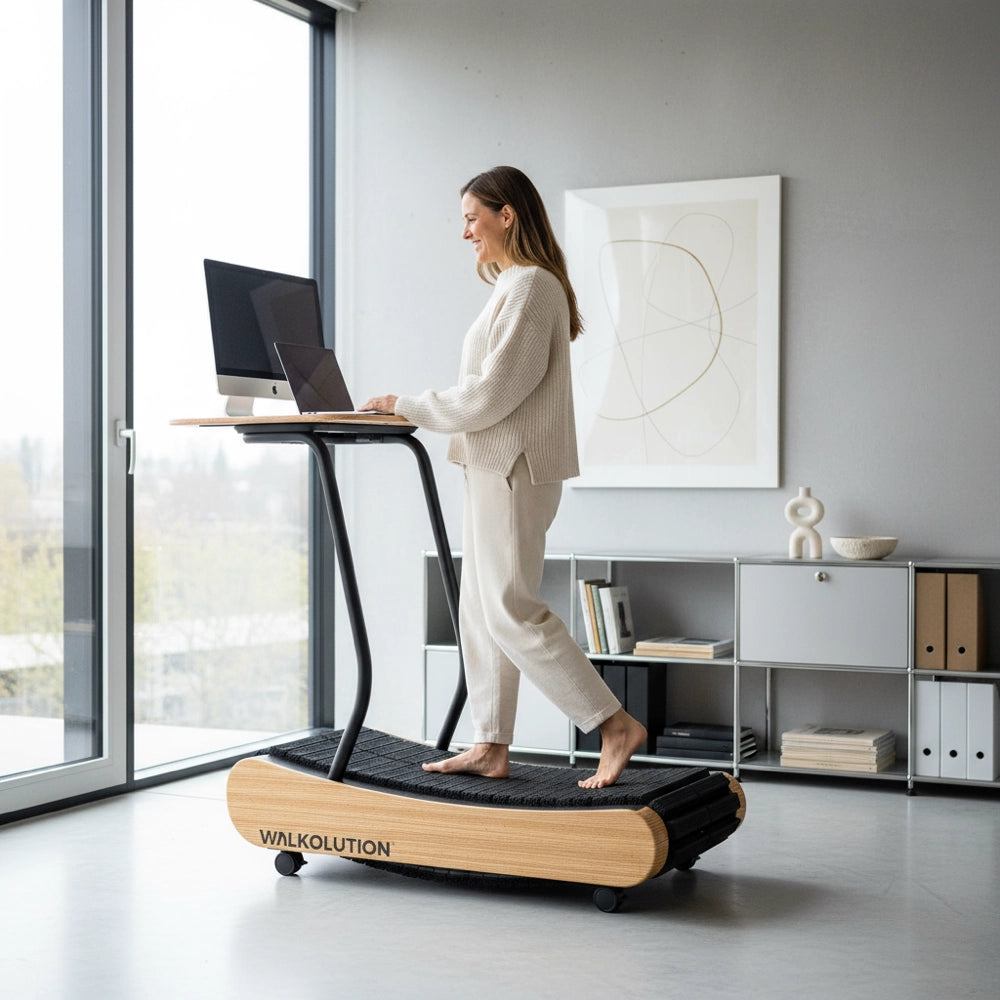
Walking shoes provide a protective layer between your skin and the treadmill belt. They can also improve grip, reduce friction, and offer support for people with weak or painful feet.
Barefoot walking gives you more direct feedback from the surface. This may help with body awareness, but it also exposes your skin and joints to more stress.
Here is a simple comparison:
| Feature | Barefoot walking | Walking in shoes |
|---|---|---|
| Skin protection | Low | High |
| Surface feedback | High | Moderate |
| Blister risk from belt friction | Possible | Usually lower |
| Support for weak feet | Limited | Usually better |
| Germ protection | Low | Better |
| Best for long workouts | Not usually | Usually safer |
For most people, well-fitting walking shoes are the better choice for regular treadmill exercise. A flexible, comfortable shoe does not prevent you from building foot strength. You can add foot exercises separately if needed.

Can barefoot walking improve your gait?
Barefoot walking can make some people more aware of their steps, but it does not guarantee better gait mechanics. A person may walk more softly without shoes, while another person may tighten the toes or change the stride in an unhelpful way.
Your gait includes your foot strike, step length, hip motion, knee control, balance, and posture. One short barefoot session cannot assess all of these factors.
If you have ongoing pain, a physical therapist can evaluate your walking pattern. They may use strength tests, balance tasks, and movement analysis to find the real cause.
Use barefoot treadmill walking as feedback, not as a cure. If your form feels better in shoes, keep wearing shoes.
Common mistakes to avoid
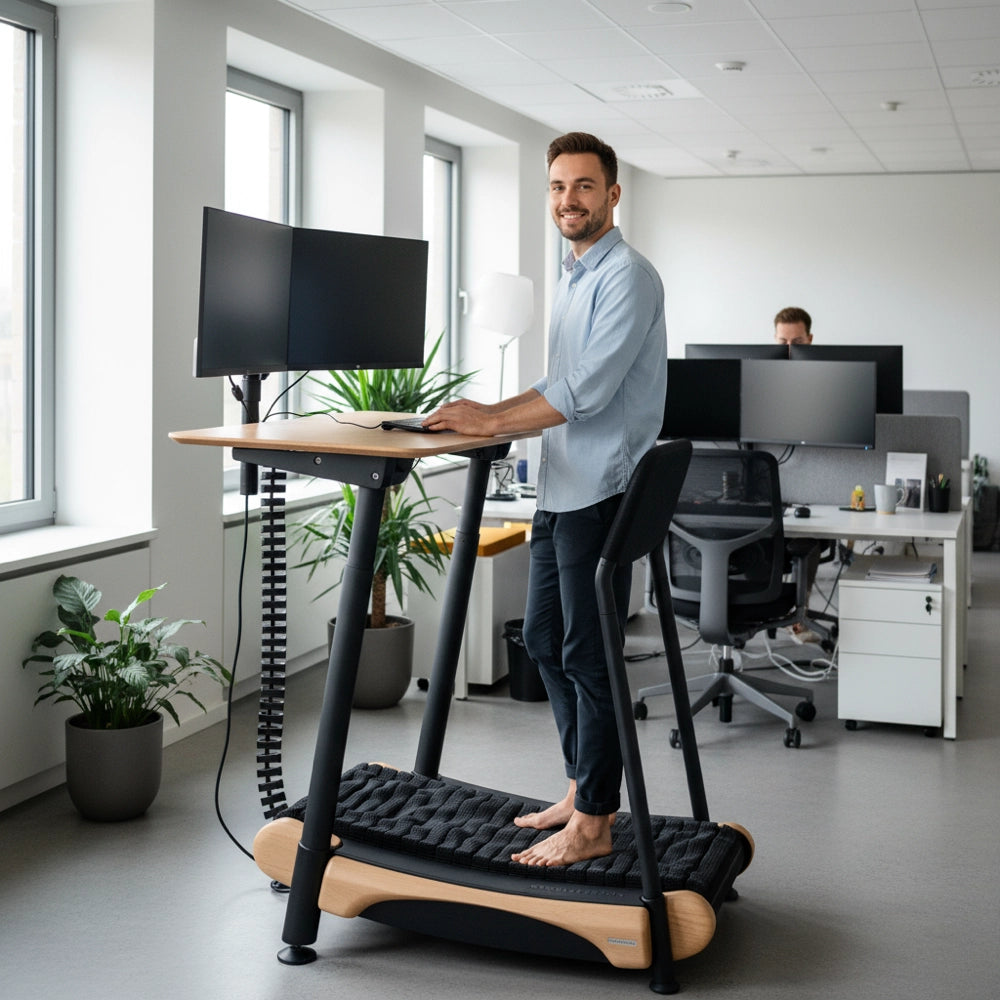
Many problems happen because people treat a treadmill like a normal floor. Avoid these common errors:
• Starting at a fast speed
• Walking barefoot for 30 minutes or more right away
• Using a steep incline
• Ignoring heat or skin redness
• Holding the rails throughout the workout
• Walking on a dirty or damaged belt
• Exercising with a fresh blister or cut
• Assuming pain means the feet are getting stronger
• Jumping off while the belt is moving
• Wearing socks that slide on the belt
One mistake I often see in treadmill training is adding too much time too soon. The feet may feel fine for the first few minutes, then develop a hot spot after the workout. Slow progress is much easier on the skin and foot muscles.

A simple beginner plan
This plan is suitable only for healthy adults without foot pain, nerve problems, or balance concerns. Wear shoes if you feel unsure.
- Inspect and clean the treadmill.
- Attach the safety clip.
- Stand on the side rails before starting the belt.
- Begin at 1 to 2 miles per hour.
- Walk barefoot for two minutes.
- Stop and inspect both feet.
- Add one minute in a later session if there is no soreness or redness.
- Return to shoes for the rest of your workout.
- Wait at least a day before increasing the barefoot time.
Do not increase the session if your feet feel tender later that day. Skin and soft tissue need time to adapt.
When shoes are the better option
Shoes are usually the better option for long treadmill walks, incline workouts, speed training, and jogging. They are also a safer choice when the treadmill belt feels hot, rough, or slippery.
Choose athletic shoes that fit well and have:
• A secure heel
• Enough room for the toes
• A stable sole
• Good traction
• No worn or uneven tread
Avoid shoes that pinch the toes or allow the heel to slide. Poorly fitted shoes can create their own problems, including blisters and ankle strain.
If you want the feeling of a more flexible foot, try a lightweight walking shoe instead of going completely barefoot.
What to do after barefoot treadmill walking
Check the soles, heels, sides of the feet, and spaces between the toes. Look for redness, swelling, blisters, cuts, or areas that feel unusually warm.
Wash your feet and keep any small blister clean and covered. Do not pop a blister unless a qualified health professional advises it.
Seek medical care for increasing pain, pus, spreading redness, fever, deep cuts, or a wound that does not heal. People with diabetes or poor circulation should contact a clinician promptly about any foot injury.
Frequently Asked Questions About Can You Walk Barefoot on a Treadmill
Can you walk barefoot on a treadmill every day?
You can if your skin remains healthy and you have no pain, numbness, or balance problems. Still, daily barefoot treadmill walking is not necessary, and shoes are usually safer for longer workouts.
Is it better to walk barefoot or with shoes on a treadmill?
Neither option is best for everyone. Barefoot walking offers more surface feedback, while shoes provide protection, traction, and support.
Can you run barefoot on a treadmill?
Running barefoot carries more friction, impact, and balance risk than walking. If you try it, use expert guidance and a very gradual plan; most runners should use suitable running shoes.
Can barefoot treadmill walking strengthen your feet?
It may challenge the small muscles in your feet, but the effect is limited during normal walking. Targeted exercises, such as toe lifts and calf raises, may provide more controlled foot and ankle training.
Can you walk barefoot on a treadmill if you have plantar fasciitis?
It may increase strain for some people with plantar fasciitis, especially on an incline or at a fast pace. Ask a physical therapist or health professional for advice based on your symptoms.
How long can you walk barefoot on a treadmill?
Start with two to five minutes and increase slowly only if your feet stay comfortable. Stop immediately if you feel burning, pain, numbness, or skin irritation.
Can you walk barefoot on a treadmill at an incline?
An incline increases the demand on your calves, feet, and Achilles tendons. Begin on a flat belt, and use shoes for incline work unless a qualified professional has approved barefoot training.
Conclusion
So, can you walk barefoot on a treadmill? Yes, but it should be a short, slow, and careful activity for people with healthy feet. Barefoot walking can improve surface awareness, yet it also raises the risk of friction burns, blisters, slipping, and cuts.
Inspect the belt, start slowly, use the safety clip, and check your feet after every session. For regular or intense treadmill workouts, supportive walking or running shoes are usually the safer choice.
Try the advice above, listen to your feet, and speak with a health professional if you have pain or a medical condition. Share your treadmill experience or explore more evidence-based walking guides to build a safer routine.

Brandon Knoxley is a sport & fitness writer and training guide contributor at MySportFitHub. He focuses on practical workouts, performance-based training, and honest fitness gear insights designed for real people and real results. Brandon is passionate about helping beginners and active individuals train smarter, avoid common mistakes, and build sustainable fitness habits.