
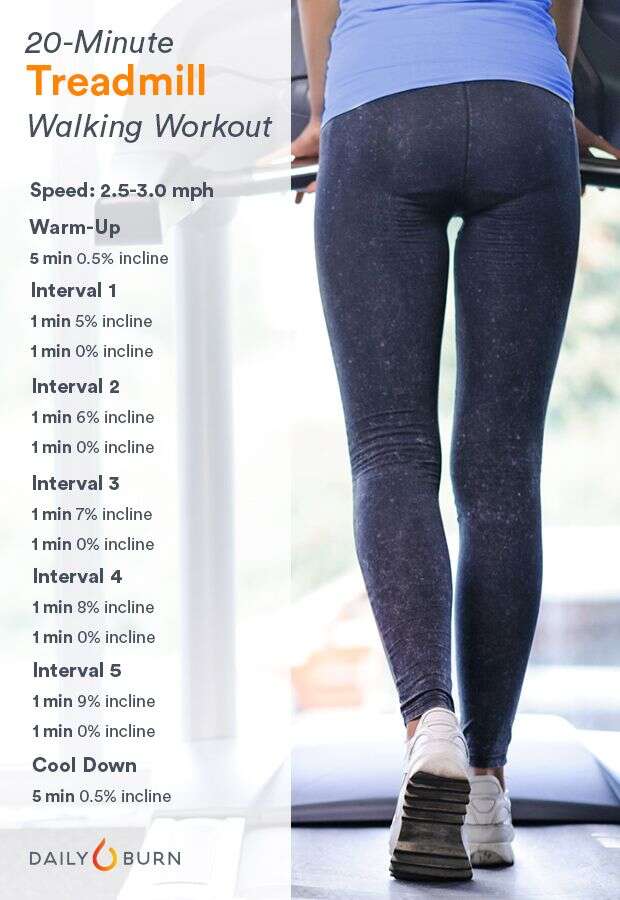
Treadmill Incline And Speed: Best Walking Guide
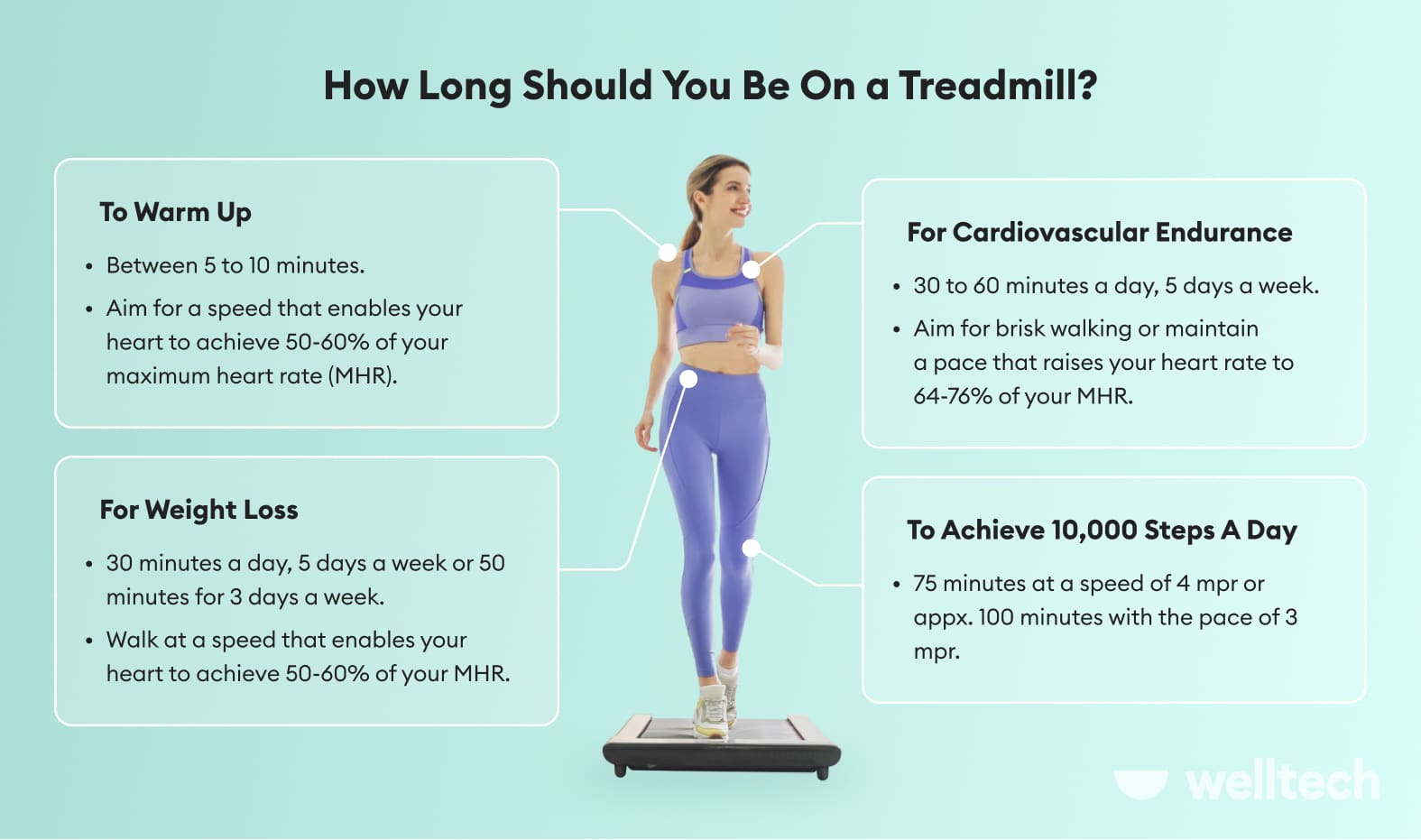
For most people, walk at 2.5–3.5 mph at a 1–5% treadmill incline.
Knowing what incline and speed should I walk on a treadmill depends on your fitness level, goal, age, and comfort. A gentle pace can support daily movement, while a higher incline can make walking feel more like hiking and raise your heart rate. This guide explains how to choose safe settings, adjust them over time, and get better results without turning every walk into a hard workout.
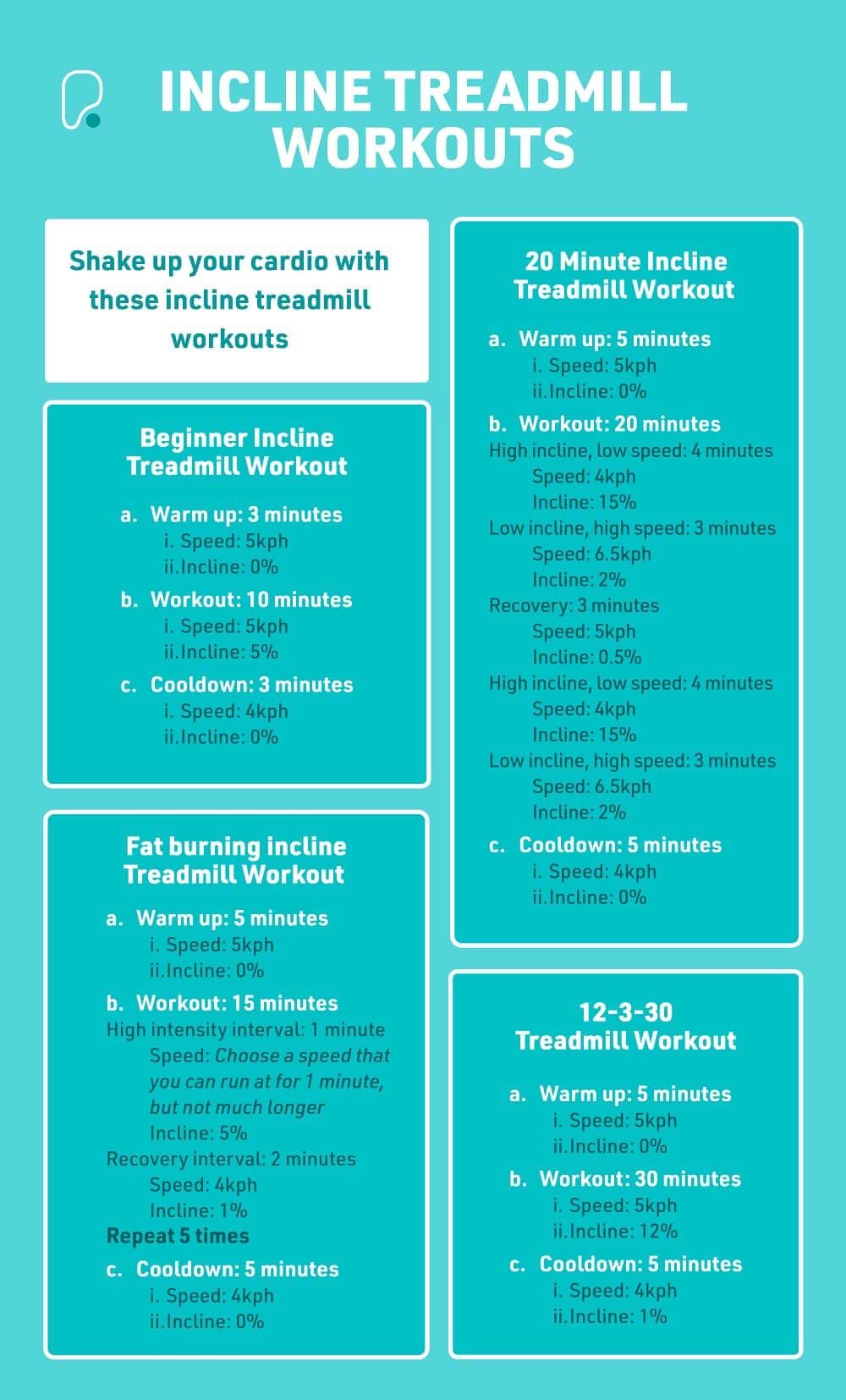
The Best Treadmill Speed and Incline for Most People
A good starting point for most adults is 2.5–3.5 miles per hour with a 1–3% incline. This pace should feel steady, but you should still be able to speak in short sentences.
If you are new to treadmill walking, begin at the lower end:
• Speed: 2.0–2.5 mph
• Incline: 0–1%
• Time: 15–20 minutes
As your body adapts, increase one factor at a time. You might add 0.1–0.3 mph or raise the incline by 1%. Small changes work better than sudden jumps.
For regular walkers, a useful moderate workout may look like this:
• Speed: 3.0–3.8 mph
• Incline: 2–5%
• Time: 25–45 minutes
The right answer to what incline and speed should I walk on a treadmill is not one fixed number. It is the setting that raises your breathing and heart rate without harming your form.

How to Choose Your Treadmill Walking Speed
Your walking speed should match your current ability. A speed that feels easy for one person may feel intense for another.
Use the talk test as your simplest guide. At a light pace, you can speak in full sentences. At a moderate pace, you can talk but need to pause for breath. At a hard pace, you can only say a few words.
Beginner speed
Start between 1.5 and 2.5 mph if you are new to exercise, recovering from a long break, or managing joint discomfort. Focus on smooth steps instead of chasing a high number.
A beginner workout could include:
- Walk at 1.8 mph for 5 minutes.
- Increase to 2.2 mph for 10 minutes.
- Return to 1.8 mph for 5 minutes.
- Cool down at 1.5–1.8 mph for 3–5 minutes.
This approach lets your muscles and joints warm up before the main part of the workout.
Moderate walking speed
Many people reach a moderate pace between 2.5 and 3.5 mph. This range works well for general fitness, calorie use, and cardiovascular health.
At this speed, you should feel warmer and breathe more deeply. You should not feel as if you are racing to keep up with the belt.
Brisk walking speed
A brisk treadmill walk often falls between 3.5 and 4.5 mph. Some people can walk comfortably at 4.5 mph, while others may need to jog at that speed.
Keep your stride natural. Do not stretch your legs too far in front of your body to match the belt. Shorter, quicker steps often feel safer and more efficient.
When deciding what incline and speed should I walk on a treadmill, choose the fastest speed that allows you to keep good posture and a controlled stride.
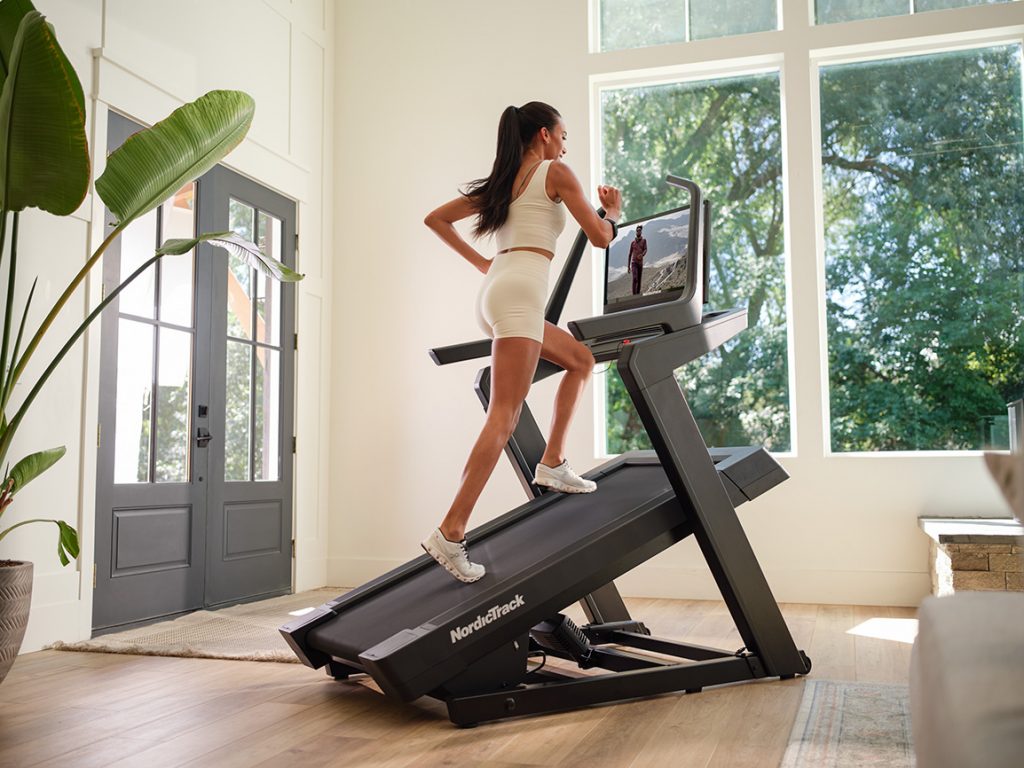
How to Choose the Right Treadmill Incline
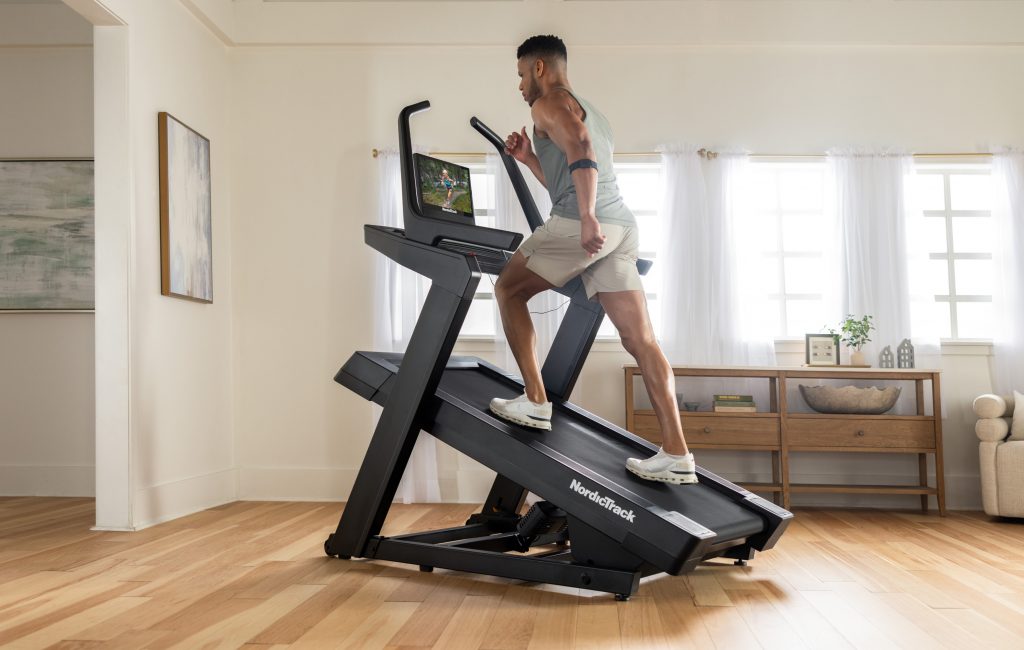
Incline changes the demand of your workout without requiring a much faster pace. It can make flat walking feel more like walking uphill outdoors.
A 0% incline is the easiest setting. A 1% incline may feel more natural than completely flat treadmill walking because it can better match outdoor air resistance and small changes in terrain.
Here is a simple guide:
• 0–1% incline: Easy walking and warmups
• 1–3% incline: General fitness and moderate walking
• 3–5% incline: Stronger cardiovascular challenge
• 5–8% incline: Hill walking and higher effort
• 8–12% incline: Advanced incline work for experienced walkers
You do not need a steep incline to get results. Even a 2% or 3% grade can make your workout harder.
When using a high incline, reduce your speed if needed. Walking at 2.5 mph on a 7% incline may feel much harder than walking at 3.5 mph on a flat belt.

Treadmill Settings Based on Your Fitness Goal
The best answer to what incline and speed should I walk on a treadmill changes with your goal. Fat loss, endurance, heart health, and hill training all require slightly different approaches.
For general health
Use a moderate pace that you can repeat several times each week.
• Speed: 2.5–3.5 mph
• Incline: 1–3%
• Duration: 20–40 minutes
• Frequency: Most days of the week
Federal physical activity guidance commonly recommends at least 150 minutes of moderate aerobic activity each week for adults. Treadmill walking can help you reach that target.
For weight loss
Walking can support weight loss by increasing daily energy use. However, food intake, sleep, stress, and total activity also matter.
Try this workout:
• Warm up at 2.0–2.5 mph for 5 minutes
• Walk at 2.8–3.5 mph with a 2–5% incline for 20–30 minutes
• Cool down at 2.0 mph for 5 minutes
A higher incline may increase calorie use, but it also increases muscle fatigue. The best workout is one you can perform consistently.
For improving endurance
Use longer sessions at a steady pace. Start with 20 minutes and add 5 minutes every one or two weeks.
A sample endurance walk:
• 5 minutes at 2.5 mph and 0–1% incline
• 25 minutes at 3.0–3.6 mph and 1–3% incline
• 5 minutes at 2.0 mph and 0% incline
Your breathing should be controlled. Endurance training should feel challenging but repeatable.
For hill training
Incline intervals can prepare you for hikes, travel, or outdoor hills.
Try this plan:
- Warm up for 5 minutes at 2.5 mph and 1% incline.
- Walk uphill for 2 minutes at 3.0 mph and 5% incline.
- Recover for 3 minutes at 2.7 mph and 1% incline.
- Repeat four to six times.
- Cool down for 5 minutes.
Lower the speed if you must hold the handrails. Holding on reduces the work placed on your legs and may change your posture.
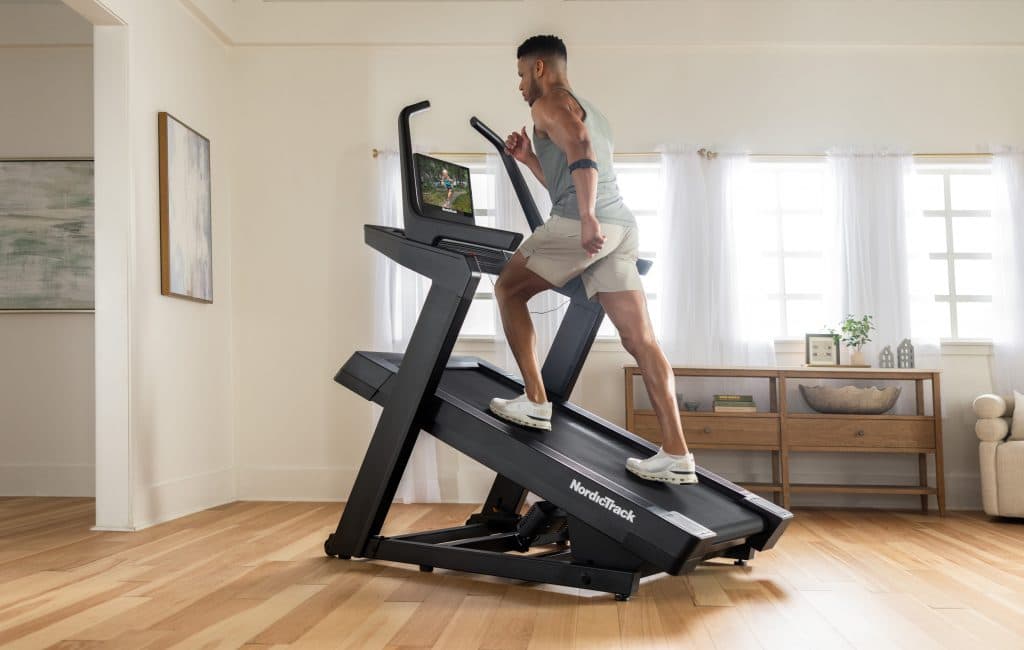
Treadmill Walking Heart Rate and Effort
Heart rate can help you judge effort, but it should not be your only guide. Wrist monitors and treadmill sensors can be useful, yet they may not always be exact.
A broad estimate for maximum heart rate is 220 minus your age. Moderate effort is often described as about 50% to 70% of that estimate, while vigorous effort is about 70% to 85%.
These ranges are general. Medication, stress, heat, sleep, and fitness level can change your heart rate. The talk test is often more practical for everyday walking.
Use these signs:
• Easy effort: You can speak and breathe comfortably.
• Moderate effort: You can talk, but you need short pauses.
• Hard effort: You can say only a few words.
• Too hard: You feel dizzy, weak, confused, or unusually short of breath.
Stop exercising and seek medical advice if you have chest pain, faintness, severe breathlessness, or unusual pressure.
When asking what incline and speed should I walk on a treadmill, use your effort level as the final check. The machine’s numbers are only a guide.

A Simple Treadmill Walking Plan
A structured plan can make treadmill walking easier to follow. It also reduces the temptation to increase speed and incline too quickly.
Week 1: Build comfort
• Walk 15–20 minutes
• Use 1.8–2.5 mph
• Keep the incline at 0–1%
• Exercise three or four days
Focus on balance, posture, and steady breathing.
Week 2: Add time
• Walk 20–25 minutes
• Use 2.2–2.8 mph
• Keep the incline at 1%
• Exercise four days
Add time before adding a lot of intensity.
Week 3: Add a gentle incline
• Walk 25–30 minutes
• Use 2.5–3.2 mph
• Use a 1–3% incline
• Exercise four or five days
You can add two short incline periods of three minutes each.
Week 4: Add intervals
• Warm up for 5 minutes
• Alternate three minutes at 3.0–3.5 mph and two minutes at 2.5–2.8 mph
• Use a 2–4% incline during faster periods
• Cool down for 5 minutes
This gradual plan helps you learn what incline and speed should I walk on a treadmill without guessing every time.

How Incline Affects Your Muscles and Joints
Walking uphill usually increases the demand on your glutes, calves, and hamstrings. It can also raise your heart rate at the same speed.
That extra demand is useful, but it is not free. A steep incline may cause calf tightness, Achilles tendon stress, knee discomfort, or low back strain if your form breaks down.
Use these form tips:
• Keep your chest lifted.
• Look forward, not down at your feet.
• Let your arms swing naturally.
• Take shorter steps as the incline rises.
• Keep your feet pointed forward.
• Avoid leaning heavily on the front bar.
A slight forward lean from the ankles is normal on an incline. Bending at the waist is not. If you feel pulled forward, lower the incline or slow the belt.
People with arthritis or joint pain may prefer a slower speed and a mild incline. Others may find that incline walking places more stress on their knees. Your personal response matters.
Common Treadmill Walking Mistakes
Many treadmill users make the workout harder in ways that do not improve results. Avoiding these errors can make your sessions safer and more effective.
Holding the handrails
Holding the rails supports part of your body weight. It can also reduce the natural work of your legs and lead to poor posture.
If you need the rails for balance, lower the speed and incline. Balance support is more important than a higher display number.
Starting too fast
A fast start can make the first few minutes feel exciting. It may also leave you tired before the useful part of the workout begins.
Warm up at an easy pace. Increase speed only after your breathing, joints, and muscles feel ready.
Using a steep incline every day
Incline walking is demanding. Doing hard hill work daily can lead to sore calves and overuse problems.
Use easy and hard days. For example, follow one incline workout with a flat, relaxed walk or a rest day.
Taking very long steps
Long steps can make you reach forward and strike the belt with a stiff leg. This may increase stress on your knees and hips.
Aim for light, quick, and quiet steps. Your stride may naturally shorten as the incline rises.
Chasing calorie numbers
Treadmill calorie estimates are not exact. They may not account for body composition, fitness, handrail use, or individual movement patterns.
Treat the number as a rough estimate. Use time, effort, and consistency as better measures of progress.
How to Progress Safely
Progress means asking your body to do a little more over time. It does not mean making every workout difficult.
Use the one-change rule. Increase speed, incline, or workout time, but not all three at once.
A safe progression may look like this:
- Keep the same speed and add five minutes.
- Keep the new duration for one or two weeks.
- Add 1% incline.
- Return to the previous incline if soreness lasts more than two days.
- Increase speed only when your stride remains smooth.
A small increase can be enough. For example, moving from 2.8 mph to 3.0 mph may feel minor, but repeated over many sessions, it can improve fitness.
Pay attention to delayed soreness. Mild muscle fatigue is common. Sharp pain, swelling, limping, or pain that worsens during exercise needs attention.
Treadmill Walking Safety Tips
Treadmills are convenient, but the moving belt requires focus. Good habits lower your risk of losing balance.
• Wear supportive shoes with a secure fit.
• Keep the emergency stop clip attached when possible.
• Start with your feet on the side rails, not on the moving belt.
• Keep children and pets away from the machine.
• Drink water before and after longer sessions.
• Leave space behind the treadmill.
• Do not read or use your phone while walking fast.
• Stop if you feel dizzy, faint, or unwell.
If you have heart disease, uncontrolled blood pressure, diabetes, balance problems, or a recent injury, ask a health professional about suitable exercise settings.
Pregnant people and those returning after surgery should also seek individualized guidance. General treadmill advice cannot replace personal medical care.
Treadmill Walking Compared With Outdoor Walking
Treadmill walking offers a controlled surface, steady speed, and protection from rain, heat, traffic, and poor sidewalks. It can also help beginners track time and effort.
Outdoor walking adds changes in terrain, wind, turns, and surface texture. These changes may challenge balance and small stabilizing muscles more than a treadmill does.
Neither option is automatically better. The best choice is the one you can do regularly.
If you want your treadmill walk to feel more like outdoor walking, try a 1% incline. You can also vary the incline every few minutes to imitate gentle changes in terrain.
The answer to what incline and speed should I walk on a treadmill may differ indoors and outdoors. A 3.0 mph treadmill walk is steady and controlled, while a 3.0 mph outdoor walk may feel different because of hills, wind, and ground conditions.
My Practical Lessons From Treadmill Walking
One lesson I often share is that people tend to overvalue speed and undervalue control. A slower walk with a steady stride can be more useful than a fast walk that makes you grip the rails.
Another common mistake is adding incline too soon. Many walkers feel fine for the first ten minutes, then develop tight calves later that day. Starting with 1–2% incline and building gradually is usually a better long-term choice.
I also recommend writing down three details after each workout:
• Speed
• Incline
• How the workout felt
This simple record shows patterns. You may discover that 3.0 mph at 2% incline feels productive, while 3.5 mph at 5% incline leaves you too sore to train again.
The most effective answer to what incline and speed should I walk on a treadmill is the setting that fits your body today and supports your next workout.
How to Adjust the Workout for Your Body
Fitness advice should be flexible. The right settings for a healthy beginner may not suit someone with knee pain, poor balance, or a recent illness.
If you have joint pain, try reducing the speed first. A lower speed may let you keep moving without forcing a painful stride. You can also test a 0–1% incline, since some people find flat walking more comfortable.
If you have good fitness but limited time, use short intervals. Alternate one minute of brisk walking with two minutes of easier walking for 15–20 minutes.
If you are older or concerned about balance, stay near the side rails without gripping them. A slower pace, proper shoes, and a clear emergency plan matter more than intensity.
Your body gives useful feedback. Warm muscles, steady breathing, and mild fatigue are normal. Pain, dizziness, chest pressure, and sudden weakness are not normal training signals.
How Many Calories Does Treadmill Walking Burn?
Calorie use depends on body weight, speed, incline, workout length, and individual metabolism. A heavier person usually uses more energy than a lighter person at the same setting, but estimates still vary.
Incline walking generally uses more energy than flat walking at the same speed. However, the difference shown on a treadmill may not be precise.
For better progress tracking, focus on:
• Total weekly walking time
• Average speed
• Incline used
• Perceived effort
• Waist or clothing changes
• Improvements in stamina
Weight loss requires a sustained energy deficit, but walking can support that process. Avoid treating one workout as a test of your worth or discipline. Consistent movement is the bigger win.
Frequently Asked Questions About What Incline and Speed Should I Walk on a Treadmill
What is the best treadmill speed for beginners?
A beginner can start at 1.5–2.5 mph with a 0–1% incline. Increase the speed only when you can walk with stable balance and comfortable breathing.
What incline should I use on a treadmill to lose weight?
Try a 1–5% incline at a moderate speed, such as 2.5–3.5 mph. The best setting is one you can repeat consistently without pain or excessive fatigue.
Is walking at a 12% incline good for you?
A 12% incline can create a demanding workout for experienced walkers. It is not necessary for general health, and beginners should use a lower incline to reduce calf, knee, and Achilles tendon stress.
Is 3 mph a good treadmill walking speed?
Yes, 3 mph is a useful moderate pace for many people. Your breathing, stride, and fitness level matter more than the number itself.
Should I use incline or speed on a treadmill?
Use speed when you want to practice brisk walking, and use incline when you want more hill-like resistance. Change one at a time so you can judge how your body responds.
Is walking on a treadmill every day safe?
Daily treadmill walking can be safe if you vary intensity and allow recovery when needed. Alternate harder incline sessions with easy walks, and stop if pain or unusual symptoms develop.
Should I hold the treadmill handles while walking uphill?
Use the handles for balance if needed, but avoid leaning heavily on them. If you cannot walk uphill without pulling on the rails, reduce the incline or speed.
Conclusion
For most people, a treadmill setting of 2.5–3.5 mph and a 1–5% incline offers a useful starting point. Beginners should begin more slowly, while experienced walkers can add incline intervals or brisk speeds.
The best answer to what incline and speed should I walk on a treadmill depends on your goal, fitness, comfort, and ability to maintain good form. Start gently, change one setting at a time, and build your weekly walking time with patience.
Choose a setting you can repeat, track how you feel, and adjust as your fitness improves. Then explore more walking plans or share your favorite treadmill settings in the comments.

Brandon Knoxley is a sport & fitness writer and training guide contributor at MySportFitHub. He focuses on practical workouts, performance-based training, and honest fitness gear insights designed for real people and real results. Brandon is passionate about helping beginners and active individuals train smarter, avoid common mistakes, and build sustainable fitness habits.


