What Is Running Speed On A Treadmill: Ideal Pace Guide
Running speed on a treadmill is the belt’s pace, shown in miles per hour, that sets your workout intensity.
Understanding what is running speed on a treadmill helps you choose the right pace for walking, jogging, running, or sprinting. The number on the console is more than a setting. It affects your heart rate, breathing, stride, calorie use, and training results. This guide explains treadmill speed in simple terms, with practical examples and safe ways to improve.
What Is Running Speed on a Treadmill?
Running speed on a treadmill is the rate at which the belt moves beneath you. Most treadmills show this speed in miles per hour, or mph, in the United States. Some machines also display kilometers per hour, or km/h.
For example, a treadmill setting of 6.0 mph means the belt moves 6 miles in one hour. You do not need to run for a full hour to use this setting. If you run at 6.0 mph for 30 minutes, you cover about 3 miles.
Running speed on a treadmill differs from pace:
• Speed tells you how fast you move, such as 6.0 mph.
• Pace tells you how long it takes to cover one mile, such as 10 minutes per mile.
The higher the treadmill speed, the shorter your pace becomes. A speed of 5.0 mph equals a 12-minute mile, while 7.5 mph equals an 8-minute mile.
Treadmill Speed Compared With Walking, Jogging, and Running
There is no single speed that counts as running for every person. Fitness level, leg length, age, and running skill all affect how a pace feels.
These ranges offer a useful starting point:
• Easy walking: 2.0 to 3.0 mph
• Brisk walking: 3.0 to 4.0 mph
• Fast walking: 4.0 to 4.5 mph
• Easy jogging: 4.5 to 5.5 mph
• Comfortable running: 5.5 to 7.0 mph
• Fast running: 7.0 to 9.0 mph
• Sprinting: More than 9.0 mph
These are general ranges, not strict rules. Some people may jog at 4.5 mph, while others may need 6.0 mph to feel comfortable. Your breathing and effort level matter more than the label.
A simple test is the talk test. If you can speak in full sentences, you are likely working at a light or moderate level. If you can say only a few words, your effort is vigorous.
How Fast Should You Run on a Treadmill?
The best running speed on a treadmill depends on your goal. A beginner needs a different speed than a marathon runner or a person completing short sprint intervals.
For beginners
Start with a pace that feels controlled. Many new runners begin with a 4.5 to 5.5 mph jog. If that feels too hard, use walking intervals at 3.0 to 4.0 mph.
Try this simple workout:
-
Walk for 5 minutes at 2.5 to 3.0 mph.
-
Jog for 1 minute at 4.5 to 5.0 mph.
-
Walk for 2 minutes at 3.0 mph.
-
Repeat the jog and walk cycle six times.
-
Cool down for 5 minutes.
For general fitness
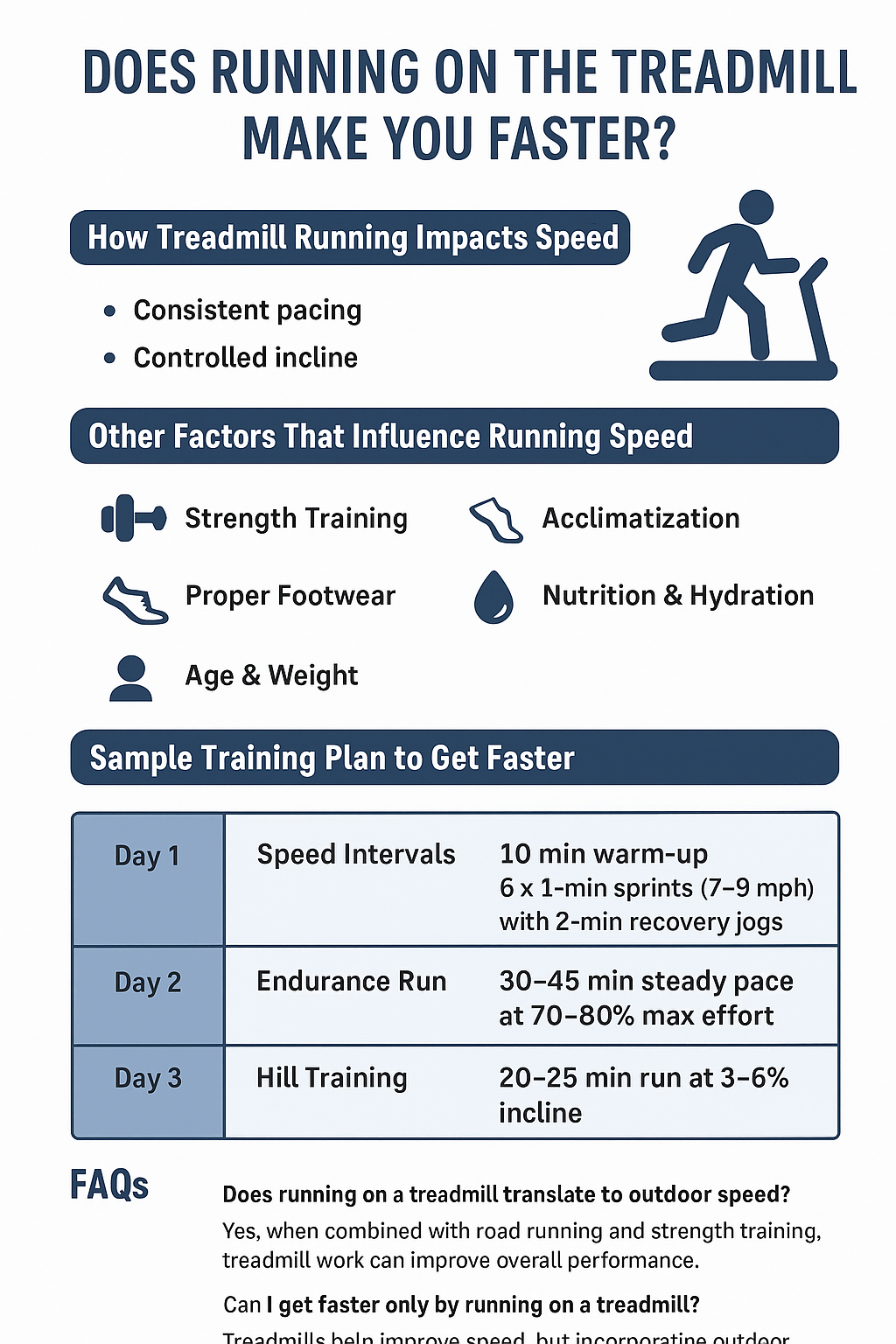
A running speed on a treadmill between 5.0 and 7.0 mph can improve aerobic fitness for many adults. Use a pace that raises your breathing but still allows you to maintain good form.
Aim for steady effort instead of chasing a large number. A slower pace performed consistently is more useful than a fast pace that causes pain or forces you to stop.
For speed training
Experienced runners may use speeds from 7.0 to 12.0 mph or higher during intervals. Short bursts should have a clear purpose and enough recovery time.
For example, you might run at 8.0 mph for 60 seconds, then walk at 3.5 mph for 90 seconds. Repeat four to eight times based on your fitness and training plan.
Treadmill Speed and Pace Conversion
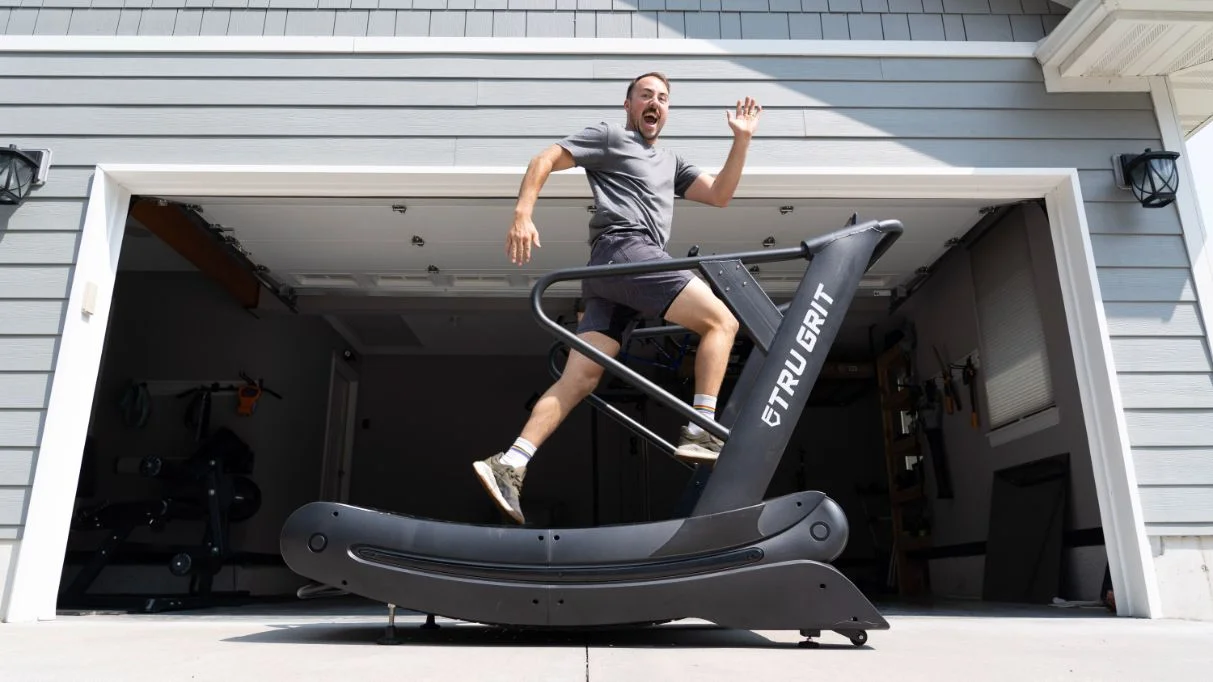
Knowing how to convert treadmill speed into running pace makes training easier. The basic formula is:
Pace in minutes per mile = 60 ÷ speed in mph
Here are common examples:
| Treadmill speed | Approximate pace |
|---|---|
| 4.0 mph | 15:00 per mile |
| 4.5 mph | 13:20 per mile |
| 5.0 mph | 12:00 per mile |
| 5.5 mph | 10:55 per mile |
| 6.0 mph | 10:00 per mile |
| 6.5 mph | 9:14 per mile |
| 7.0 mph | 8:34 per mile |
| 7.5 mph | 8:00 per mile |
| 8.0 mph | 7:30 per mile |
| 9.0 mph | 6:40 per mile |
| 10.0 mph | 6:00 per mile |
For example, if your outdoor goal is a 9-minute mile, set the treadmill near 6.7 mph. The treadmill may show a slightly different result because of belt movement, incline, and calibration.
Running speed on a treadmill may also appear in kilometers per hour. To convert mph to km/h, multiply by 1.609. To convert km/h to mph, divide by 1.609.

Does Treadmill Speed Match Outdoor Running Speed?
Treadmill speed and outdoor running speed can be close, but they do not always feel the same. On a treadmill, the belt moves under your feet. Outdoors, you push against the ground and deal with wind, turns, hills, and changes in surface.
A treadmill may feel easier because there is no wind resistance. Setting the incline to about 1% can make some treadmill runs feel more like outdoor running. However, the 1% rule is not perfect for every speed or runner.
Factors that affect the comparison include:
• Treadmill belt condition
• Machine calibration
• Incline setting
• Running speed
• Indoor temperature
• Outdoor wind
• Running experience
A well-maintained treadmill may be accurate, but many home machines are not tested often. If the speed feels very different from your outdoor pace, trust your effort, heart rate, and perceived exertion rather than the number alone.
How Incline Changes Running Speed
Incline increases the effort of a treadmill workout without requiring a faster belt speed. A 5.0 mph run at a 5% incline can feel much harder than a 5.0 mph run at 0% incline.
Incline training can help build strength in the calves, hamstrings, glutes, and hips. It can also raise your heart rate quickly. For this reason, you may need to reduce your running speed when adding hills.
Try these examples:
• Easy hill: 3.0 to 5.0 mph at 2% to 4% incline
• Moderate hill: 4.0 to 6.0 mph at 4% to 7% incline
• Hard hill interval: 5.0 to 7.0 mph at 6% to 10% incline
Do not hold the front rails while running uphill. Holding the rails changes your posture and reduces the true workload. Lower the speed or incline instead.
How to Find Your Ideal Treadmill Running Speed
Your ideal running speed on a treadmill is the fastest pace you can control with good form for the intended workout. It should match your goal, fitness level, and current health.
Use this step-by-step method:
-
Warm up by walking for 5 to 10 minutes.
-
Increase the speed by 0.2 to 0.5 mph.
-
Run for 2 to 3 minutes at that speed.
-
Check your breathing and posture.
-
Increase the speed only if you feel stable and controlled.
-
Stop increasing when your form becomes strained.
Signs that the speed is appropriate include:
• Your foot lands under your body.
• Your shoulders stay relaxed.
• Your arms swing naturally.
• You can control your breathing.
• You do not need to hold the rails.
• You can finish the planned time.
If your feet feel as if they are being pulled backward, the speed may be too high. If you are reaching far forward with each step, slow down and shorten your stride.
Treadmill Speed for Different Workout Goals
Different workouts require different levels of running speed on a treadmill. Using one speed for every session can limit progress and increase fatigue.
Easy aerobic runs
Use a relaxed speed that allows you to speak in short sentences. This may be 4.5 to 6.5 mph for many runners. Easy runs should feel sustainable, not like a race.
Tempo runs
A tempo pace feels challenging but controlled. Many runners use a speed they could hold for about 20 to 40 minutes. You may be able to speak only a few words at a time.
Interval workouts
Intervals use periods of fast running followed by recovery. For example, run at 7.5 mph for 1 minute, then walk or jog at 3.5 to 4.5 mph for 2 minutes.
Long runs
Long runs usually use a slower speed than short runs. The goal is to build endurance, so choose a pace that does not leave you exhausted early in the workout.
Hill workouts
Lower the belt speed and raise the incline. This creates resistance while reducing the need for very fast leg turnover.

Common Treadmill Running Mistakes
Many treadmill problems come from using the wrong speed for the workout. More speed is not always better.
Avoid these common mistakes:
• Starting too fast: Begin with a gradual warm-up.
• Skipping the warm-up: Cold muscles are less ready for fast movement.
• Holding the rails: This can change your stride and posture.
• Looking down: Keep your eyes forward to support balance.
• Using the same speed every day: Vary easy runs, hills, and intervals.
• Ignoring pain: Stop if you feel sharp pain, chest pain, dizziness, or unusual shortness of breath.
• Chasing calorie numbers: Treadmill calorie estimates can be inaccurate because they may not account for fitness level, body composition, or machine error.
• Increasing speed and incline at once: Change one main variable at a time.
One practical lesson from treadmill testing is that small changes matter. Increasing speed by just 0.2 mph can make a long workout feel much harder. Make small adjustments, then give your body time to respond.
How to Improve Your Running Speed on a Treadmill
Improving running speed on a treadmill requires regular training, recovery, and patience. Most runners benefit from building endurance before adding frequent sprint work.
Use these strategies:
-
Build a steady base with easy runs.
-
Add one interval session each week.
-
Include gentle incline work.
-
Strengthen your calves, glutes, hips, and core.
-
Increase weekly training slowly.
-
Take rest days seriously.
-
Record speed, incline, time, and how the workout felt.
A useful rule is to increase either speed, duration, or incline, but not all three during the same workout. This makes it easier to identify what caused fatigue or discomfort.
Good running form also improves efficiency. Keep your body tall, lean slightly from the ankles, relax your hands, and avoid taking very long steps.
Is Running on a Treadmill Safe?
For most healthy adults, treadmill running can be a safe and effective form of exercise. The machine provides a predictable surface and lets you control speed, incline, and workout time.
Safety steps matter:
• Attach the emergency safety clip.
• Keep the area around the treadmill clear.
• Start at a slow walking speed.
• Do not step onto a moving belt from the side.
• Wear secure athletic shoes.
• Keep children and pets away from the machine.
• Stop if you feel faint, confused, or unusually weak.
People with heart disease, uncontrolled high blood pressure, major joint problems, or other medical concerns should ask a health professional before starting hard treadmill workouts. A gradual plan is usually safer than sudden high-speed training.
How Accurate Are Treadmill Speed Displays?
Treadmill speed displays are useful, but they are not always exact. Accuracy can change because of belt tension, motor wear, poor maintenance, or incorrect calibration.
A treadmill that shows 6.0 mph may run slightly faster or slower. This does not make the workout useless. It simply means the displayed speed should be treated as an estimate.
To improve accuracy:
• Keep the belt clean and lubricated as recommended.
• Check belt tension according to the manual.
• Have the machine serviced when needed.
• Compare effort with a heart rate monitor or running watch.
• Use the same treadmill for repeat tests when possible.
Consistency is often more important than perfect accuracy. If you train on the same machine, you can still track progress by comparing time, distance, incline, and effort.
Frequently Asked Questions About What Is Running Speed on a Treadmill
What is a good running speed on a treadmill for beginners?
A good starting speed is often between 4.5 and 5.5 mph, but some beginners should start with walking intervals. Choose a pace that allows control, steady breathing, and safe form.
Is 6 mph considered running on a treadmill?
For many people, 6 mph is a light running pace. It equals a 10-minute mile, but the effort may feel different based on fitness, body size, and running experience.
What treadmill speed equals a เดิน 10-minute mile?
A 10-minute mile equals 6.0 mph on a treadmill. You can use the treadmill’s speed setting to hold that pace more consistently.
Should I use a 1% incline when running on a treadmill?
A 1% incline may make some treadmill runs feel closer to outdoor running by adding a small amount of resistance. It is optional, and you should adjust it based on your goal, fitness, and comfort.
Is treadmill speed the same as pace?
No. Speed is measured in miles per hour, while pace is measured in minutes per mile. A higher speed creates a faster pace and a lower number of minutes per mile.
How fast should I run on a treadmill to lose weight?
Use a speed that lets you exercise consistently and safely, often with a mix of walking, jogging, and running. Weight loss depends on total activity, food intake, sleep, and other factors, not treadmill speed alone.
Why does the same treadmill speed feel harder some days?
Sleep, stress, heat, hydration, illness, and previous workouts can change how a speed feels. Use effort and breathing as guides rather than forcing the same pace every day.
Conclusion
Running speed on a treadmill is the belt pace that controls how fast you walk, jog, or run. The right setting depends on your goal, fitness, incline, workout length, and how your body feels. Use speed and pace conversions to plan workouts, but also pay attention to breathing, form, and effort.
Start slowly, make small changes, and build consistency before chasing faster numbers. Try one treadmill workout this week, record your speed and incline, and adjust your plan as your fitness improves. Share your favorite treadmill pace or explore more training guides for practical running advice.

Brandon Knoxley is a sport & fitness writer and training guide contributor at MySportFitHub. He focuses on practical workouts, performance-based training, and honest fitness gear insights designed for real people and real results. Brandon is passionate about helping beginners and active individuals train smarter, avoid common mistakes, and build sustainable fitness habits.