Do You Add Dumbbell Weights Together: Quick Guide
Yes, add dumbbell weights together when you want to calculate the total load lifted.
The answer depends on what you are measuring. In most gyms, a “30-pound dumbbell press” means 30 pounds in each hand, or 60 pounds total. Knowing how to add dumbbell weights together helps you track progress, compare exercises, and avoid common training mistakes.
Do You Add Dumbbell Weights Together?
Yes, you add dumbbell weights together when you want the combined weight used in an exercise.
For example, if you hold a 25-pound dumbbell in each hand:
25 pounds + 25 pounds = 50 pounds total
However, many exercise programs list dumbbell weight per hand. A workout that says “3 sets of 10 with 25-pound dumbbells” usually means 25 pounds in each hand, not 25 pounds total.
This is why the phrase “do you add dumbbell weights together” can cause confusion. The correct answer depends on whether you are discussing:
- The weight of one dumbbell
- The total weight in both hands
- The load on one side of your body
- The weight used to compare the exercise with a barbell or machine
When people talk about strength training, they often use both numbers. Someone may say, “I bench pressed two 40-pound dumbbells,” meaning 40 pounds per hand and 80 pounds combined.

How to Calculate the Total Dumbbell Weight
To find the total dumbbell load, multiply the weight of one dumbbell by the number of dumbbells used.
Two dumbbells
Use this simple formula:
Total weight = weight of one dumbbell × 2
Examples:
- Two 10-pound dumbbells equal 20 pounds total.
- Two 20-pound dumbbells equal 40 pounds total.
- Two 35-pound dumbbells equal 70 pounds total.
- Two 50-pound dumbbells equal 100 pounds total.
If you are asking, “Do you add dumbbell weights together?” this is the basic calculation for most two-arm exercises.
One dumbbell
You do not add the weight together when you use only one dumbbell.
For example, a one-arm row with a 40-pound dumbbell uses a 40-pound external load. The exercise may still feel demanding because your back, shoulder, core, and legs help stabilize your body.
A goblet squat also uses one dumbbell. If the dumbbell weighs 50 pounds, the external weight is 50 pounds, not 100 pounds.
Multiple dumbbells
Some exercises use more than two dumbbells. For example, a farmer’s carry may use two dumbbells, while a complex workout may include several weights placed around a training area.
Add every dumbbell used if you want the total external load. Do not add weights that are not being lifted during that specific movement.

When Dumbbell Weight Means Per Hand
Most strength coaches and gym members describe dumbbell exercises by the weight of each dumbbell.
For example, “I performed shoulder presses with 20s” usually means 20 pounds in each hand. The total weight is 40 pounds, but the number 20 describes the individual dumbbell.
This convention makes sense because each arm must control its own weight. A barbell has one shared load, but dumbbells divide the load between the left and right sides.
Consider this example:
- Dumbbell bench press with two 30-pound dumbbells: 60 pounds total
- Barbell bench press with 60 pounds on the bar: 60 pounds total
- One-arm dumbbell row with a 30-pound dumbbell: 30 pounds external load
The numbers may match, but the exercises do not feel the same. Dumbbells require more balance and independent control. A barbell can let one side help the other, while dumbbells expose left-to-right differences.
This is one reason you should record both the dumbbell weight and the total weight when keeping a workout log.

Dumbbell Weight Compared With Barbell Weight
A common mistake is to compare dumbbell weight with barbell weight as if the exercises were identical.
Suppose you perform a dumbbell bench press with two 40-pound dumbbells. You are lifting 80 pounds in total. Still, this does not mean it will feel exactly like an 80-pound barbell bench press.
Dumbbells may feel harder because:
- Each arm must stabilize its own weight.
- Your hands can move separately.
- You must control the dumbbells while setting up and finishing the set.
- The range of motion may be greater.
- Weakness on one side becomes easier to notice.
A barbell may feel more stable because both hands connect to one solid object. This can make it easier to use heavier total loads in some exercises.
The reverse can also happen. Some people find dumbbell movements more comfortable because the hands can rotate naturally. Joint structure, technique, body size, and training history all affect the result.
When comparing exercises, focus on the movement, form, repetitions, tempo, and effort. Do not compare only the number on the dumbbell.

Examples of Adding Dumbbell Weights
Practical examples make the rule much easier to understand.
Dumbbell chest press
You use two 45-pound dumbbells.
45 + 45 = 90 pounds total
You would normally record this as “45-pound dumbbell bench press,” because the weight is listed per hand. You may also write “90 pounds total” for clear tracking.
Dumbbell shoulder press
You use two 25-pound dumbbells.
25 + 25 = 50 pounds total
Each shoulder handles a 25-pound dumbbell. The total external load is 50 pounds.
One-arm row
You use one 60-pound dumbbell.
The total external load is 60 pounds. You do not double it simply because the exercise trains both sides. If you complete the set with the right arm and then the left arm, each side lifted 60 pounds.
Walking lunge
You carry two 20-pound dumbbells.
20 + 20 = 40 pounds total
Your legs move your body weight as well as the 40 pounds of external weight. The total force placed on your body is more complex than simply adding body weight and dumbbell weight, but 40 pounds is the correct dumbbell load.
Dumbbell deadlift
You hold two 50-pound dumbbells.
50 + 50 = 100 pounds total
This is the combined weight in your hands. The exercise also involves your body weight, but body weight is not normally added to the dumbbell number in a workout log.
How Adjustable Dumbbells Are Counted
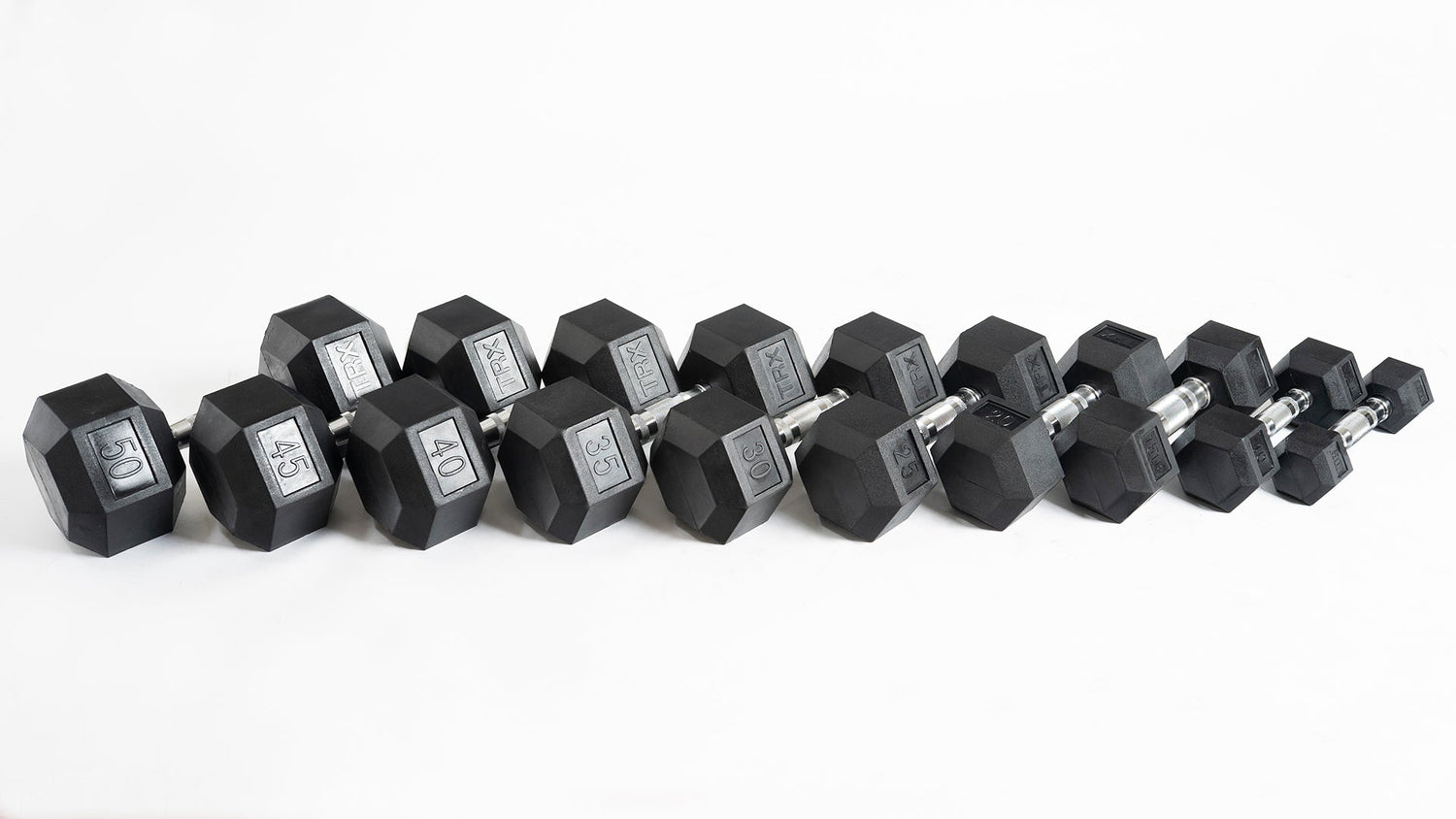
Adjustable dumbbells create another common source of confusion. You must count the plates on each dumbbell, not just the plates on one side.
Suppose each adjustable dumbbell has:
- One 5-pound plate on each side
- One 2.5-pound plate on each side
- A 10-pound handle
Each dumbbell weighs:
5 + 5 + 2.5 + 2.5 + 10 = 25 pounds
If you use two of them:
25 + 25 = 50 pounds total
Always check whether the listed weight includes the handle. Some adjustable dumbbells show the complete weight, while others describe only the plates.
A reliable method is to weigh the finished dumbbell on a luggage scale or household scale. This is useful when the markings are unclear or when different brands use different labeling systems.
Never assume two adjustable dumbbells weigh the same just because they look similar. Check the plates, collars, and handles before calculating the total.
Why Total Dumbbell Weight Matters
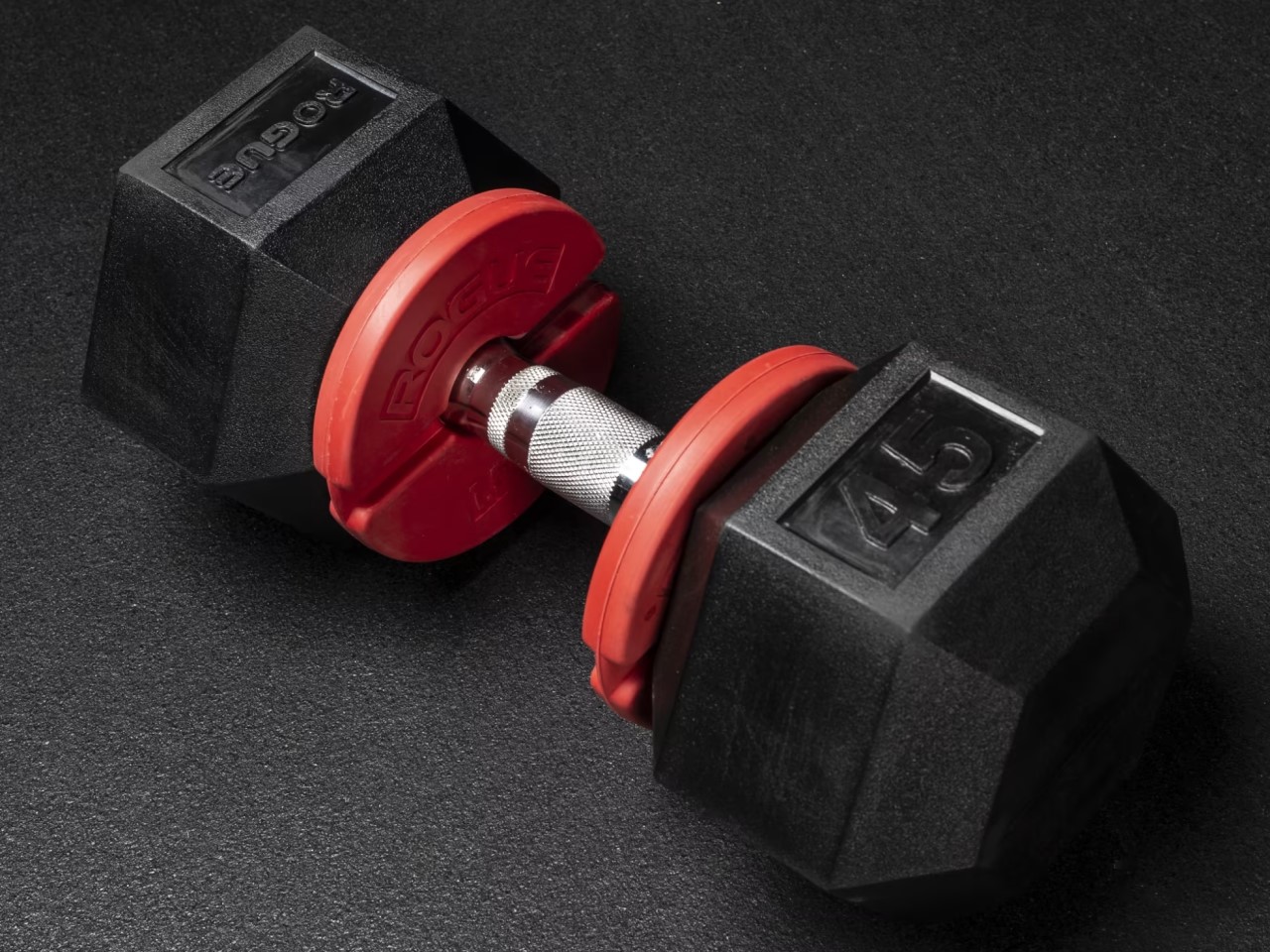
Knowing the total dumbbell weight helps you measure training volume and progress.
Training volume is often estimated with this formula:
Volume = sets × repetitions × load
For a two-arm exercise, you can use either the per-hand load or the combined load. The key is to stay consistent.
For example, three sets of 10 repetitions with two 30-pound dumbbells equals:
- Per-hand tracking: 3 × 10 × 30 = 900 pounds per arm
- Combined-load tracking: 3 × 10 × 60 = 1,800 pounds total
Both methods can be useful. The second method counts the combined dumbbell load. The first method shows the work performed by each arm.
Do not treat volume as a perfect measure of muscle growth. It does not account for range of motion, lifting speed, pauses, technique, or how close the set was to failure. Still, consistent tracking gives you a useful picture of progress.
In practical training, I have seen people add weight too quickly because they recorded only the number on one dumbbell. Writing “25 pounds each, 50 pounds total” removes that doubt and makes future workouts easier to plan.
Common Mistakes When Counting Dumbbells
The question “do you add dumbbell weights together” usually appears after one of several simple mistakes.
Mistake 1: Treating a pair as one dumbbell
If you pick up two 30-pound dumbbells, you are using 60 pounds total. Calling it a “30-pound load” may confuse your workout records.
Mistake 2: Doubling a one-arm exercise
A one-arm row with a 40-pound dumbbell uses 40 pounds at a time. You should not record it as 80 pounds unless you are deliberately adding the work from both sides.
Mistake 3: Comparing dumbbells directly with a barbell
Two 35-pound dumbbells equal 70 pounds total, but the movement may not match a 70-pound barbell exercise. Stability and technique change the difficulty.
Mistake 4: Ignoring the handle weight
Adjustable dumbbells may weigh more than the plates alone. Check the manufacturer’s label or weigh the dumbbell.
Mistake 5: Changing the counting method
If you track one week by per-hand weight and the next week by combined weight, your volume numbers will look misleading. Choose one system and use it every time.
Mistake 6: Sacrificing form to lift more
A heavier dumbbell is not always better. If your back arches, shoulders shrug, or movement becomes rushed, lower the weight and regain control.

The Best Way to Record Dumbbell Exercises
A clear workout log should show enough detail for another person to understand the exercise.
Use this format:
Exercise: Dumbbell bench press
Sets: 3
Repetitions: 8
Weight: 40 pounds each hand
Total load: 80 pounds
For a single-arm exercise, write:
Exercise: One-arm dumbbell row
Sets: 3 per side
Repetitions: 10 per side
Weight: 50 pounds
Total load per repetition: 50 pounds
You can also note whether the exercise was alternating or performed with both arms at the same time.
Good records help you:
- Repeat successful workouts
- See gradual progress
- Compare left and right sides
- Avoid accidental jumps in weight
- Discuss your training clearly with a coach
A small note such as “30 pounds per hand” can prevent a large amount of confusion later.

Safety Tips for Using Heavier Dumbbells
Adding dumbbell weights together is a math task, but safe lifting requires more than math.
Use these habits:
- Warm up with light weights before hard sets.
- Choose a weight you can control through the full range.
- Keep your wrists in a neutral position when possible.
- Stop if you feel sharp pain, numbness, or sudden weakness.
- Use a spotter for heavy presses when the setup feels unsafe.
- Place dumbbells down with control instead of dropping them near your feet.
- Increase weight in small steps.
- Keep the same technique when you increase the load.
Heavy dumbbells can be awkward before the first repetition even begins. Getting them into position may place stress on your shoulders, hips, or lower back. Learn a safe setup, and ask a qualified trainer for help if you are unsure.
Research on resistance training consistently supports gradual progression, controlled technique, and adequate recovery. More weight only helps when you can use it safely and repeat the quality of the movement.
Does Adding Dumbbell Weights Show How Hard an Exercise Is?
Not by itself. Total weight is useful, but it does not fully explain exercise difficulty.
A 50-pound dumbbell deadlift and a 50-pound dumbbell lateral raise use the same listed weight but create very different demands. The muscles, leverage, range of motion, and position of the weight all change the challenge.
Other factors include:
- Repetitions
- Sets
- Rest time
- Movement speed
- Range of motion
- Exercise order
- Training experience
- Muscle fatigue
This is why a person may use two 60-pound dumbbells for rows but only two 15-pound dumbbells for lateral raises. The numbers are not meant to match across all exercises.
Think of dumbbell weight as one piece of the training puzzle. It matters, but it is not the whole picture.
Frequently Asked Questions About Adding Dumbbell Weights
Do you add dumbbell weights together for two-arm exercises?
Yes. If you use two dumbbells, add their weights to find the combined load. For example, two 25-pound dumbbells equal 50 pounds total.
Does “30-pound dumbbells” mean 30 pounds total?
Usually, it means 30 pounds in each hand. When two are used, the combined weight is 60 pounds.
Do you add dumbbell weights together for one-arm exercises?
No, not during one repetition with one dumbbell. A one-arm curl with a 20-pound dumbbell uses a 20-pound external load, even if you train both arms during the workout.
Are two 40-pound dumbbells the same as a 80-pound barbell?
They equal 80 pounds in combined dumbbell weight, but the exercises may not feel the same. Dumbbells require separate control, while a barbell connects both hands to one stable object.
How do you count adjustable dumbbell weight?
Count the handle, plates, and collars if they contribute to the load. Then add the weight of both completed dumbbells when you want the total weight.
Should workout logs show per-hand weight or total weight?
Either method works if you use it consistently. The clearest record shows both, such as “35 pounds each hand, 70 pounds total.”
Does more total dumbbell weight always mean better results?
No. Results also depend on good form, enough effort, progressive training, recovery, and nutrition. A lighter weight used with control can be more effective than a heavier weight lifted poorly.
Conclusion
So, do you add dumbbell weights together? Yes, when you want the total load from two or more dumbbells. Two 30-pound dumbbells equal 60 pounds total, while a single 30-pound dumbbell remains a 30-pound load.
Remember that gyms usually describe dumbbells by the weight of each hand. Record both the per-hand number and the combined total, especially when comparing exercises or tracking training volume. Use this simple habit in your next workout, and leave a comment with your favorite dumbbell exercise or explore more strength-training guides for better progress.

Brandon Knoxley is a sport & fitness writer and training guide contributor at MySportFitHub. He focuses on practical workouts, performance-based training, and honest fitness gear insights designed for real people and real results. Brandon is passionate about helping beginners and active individuals train smarter, avoid common mistakes, and build sustainable fitness habits.