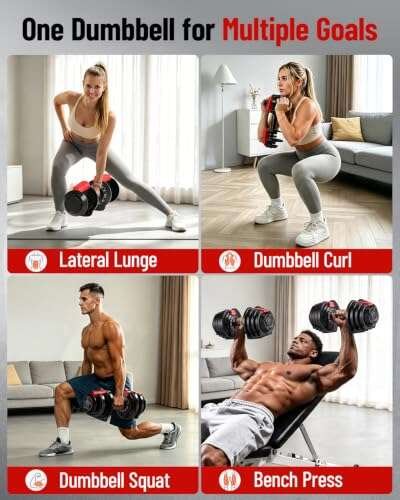
How Much Do Adjustable Dumbbells Weigh: Quick Weight Guide
Most adjustable dumbbells weigh 5 to 50 pounds each, but models can range from 2.5 to 90 pounds.
Knowing how much do adjustable dumbbells weigh helps you choose the right set for strength training, home workouts, and progressive overload. The answer depends on the design, weight plates, handle, adjustment system, and whether the listed weight applies to one dumbbell or the pair. This guide explains the real numbers, common mistakes, and how to pick the best weight range for your goals.

How Much Do Adjustable Dumbbells Weigh?
Most adjustable dumbbells weigh between 5 and 50 pounds each. Some compact models start at 2.5 pounds, while advanced adjustable dumbbells can reach 80, 90, or even 100 pounds per hand.
The most common weight ranges are:
| Adjustable dumbbell type | Common weight range per dumbbell | Best for |
|---|---|---|
| Small plate-loaded set | 2.5 to 25 pounds | Beginners and light exercises |
| Standard home set | 5 to 50 pounds | General strength training |
| Heavy selectorized set | 10 to 80 pounds | Experienced lifters |
| Commercial-grade set | 10 to 90 or 100 pounds | Serious home gyms and athletes |
The key detail is “per dumbbell.” A pair marked as 50 pounds usually means each dumbbell can hold 50 pounds. Together, the pair can weigh 100 pounds at the top setting.
Some products use different wording. A seller may advertise a “50-pound dumbbell set,” meaning two dumbbells with a combined maximum of 50 pounds. Always check whether the listed weight is for one dumbbell or the full pair.
The answer to how much do adjustable dumbbells weigh also depends on the minimum setting. A dumbbell with a 50-pound maximum may begin at 5 pounds. Another may begin at 10 pounds because its handle and built-in plates are heavier.

Adjustable Dumbbell Weight Ranges Explained
Adjustable dumbbells are not all built the same. Their weight range depends on the adjustment method and the amount of metal included in the handle or base.
2.5 to 25 pounds
These lighter sets are often plate-loaded. You add small plates to a short handle and secure them with collars.
They work well for:
• Beginners
• Older adults
• Rehabilitation workouts
• Shoulder raises
• Arm exercises
• Small home spaces
A 25-pound maximum can feel limiting for lower-body moves. However, it may be enough for curls, presses, raises, and light rows.
5 to 50 pounds
This is the most useful range for many home users. It supports a wide mix of exercises without taking up much space.
A 50-pound adjustable dumbbell can handle:
• Goblet squats
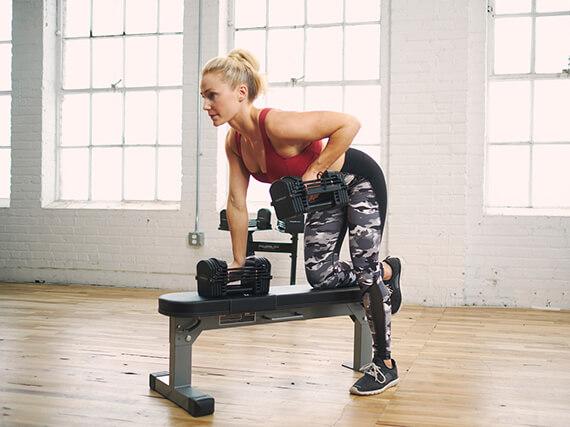
• One-arm rows
• Floor presses
• Overhead presses
• Romanian deadlifts
• Split squats
For most beginners and many intermediate lifters, this range offers a strong balance between cost, size, and training potential.
10 to 80 pounds
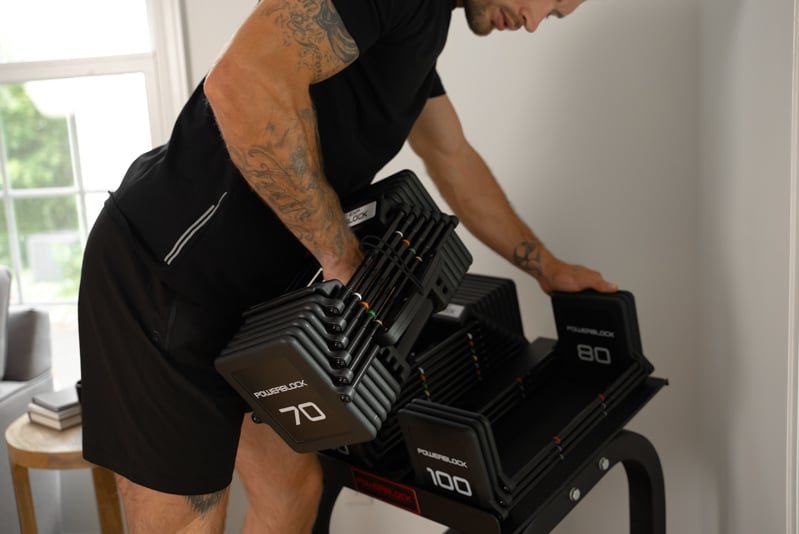
Heavy selectorized dumbbells are designed for people who need more load. They often use a storage cradle and a dial, pin, or digital system to change the weight.
This range suits:
• Stronger lifters
• Heavy rows
• Chest presses
• Dumbbell deadlifts
• Loaded lunges
• High-load leg exercises
The tradeoff is size. A dumbbell that reaches 80 pounds may be longer and harder to control than a traditional fixed dumbbell.
10 to 90 or 100 pounds
These are specialty products. They can replace a large rack of fixed dumbbells, but they require more room and careful handling.
A 90-pound adjustable dumbbell is not always practical for every exercise. It may be excellent for rows or deadlifts but awkward for curls or overhead movements. The maximum number looks impressive, but useful design matters more than the biggest number.

What Determines Adjustable Dumbbell Weight?
Several parts affect how much do adjustable dumbbells weigh at each setting. Understanding them helps you compare products more accurately.
Weight plates
Plate-loaded dumbbells use removable plates. The plates may be made from cast iron, steel, or a coated material.
Cast iron plates are dense and fairly compact. Steel plates can be thinner or thicker based on their design. Rubber-coated plates may take up more space even when they weigh the same.
Handle weight
The handle is part of the total load. For example, a handle may weigh 2.5 pounds before you add any plates.
If you add 10 pounds of plates, the completed dumbbell may weigh 12.5 pounds. Some manufacturers include the handle weight in the advertised number. Others list only the added plates.
This difference explains why two sets with the same plate labels may feel slightly different.
Adjustment mechanism
Selectorized dumbbells include a dial, pin, locking system, or internal plate stack. These parts add weight before you select a load.
A dumbbell labeled “5 pounds” may weigh close to 5 pounds. Another model with a heavy base or internal mechanism may have a slightly different feel at its lowest setting.
Weight increments
Adjustable dumbbells can change in different steps. Common increments include:
• 2.5 pounds
• 5 pounds
• 7.5 pounds
• 10 pounds
Smaller steps make progress easier, especially for shoulder presses and curls. Larger steps may work well for squats and rows but can feel too demanding for smaller muscle groups.
Dumbbell length
Some adjustable dumbbells become longer as you add plates. This can affect balance and comfort.
A long dumbbell may touch your body during a press or hit your legs during a curl. Weight is not the only factor. The shape can change how heavy the dumbbell feels in your hand.
Does the Listed Weight Include the Handle?
Usually, the listed weight should describe the complete dumbbell, including the handle and selected plates. However, product descriptions are not always consistent.
Plate-loaded sets often show the total amount of plates included. The handle and collars may be listed separately. Selectorized models generally state the weight of the complete dumbbell at each setting.
Before buying, check these details:
-
Look for the phrase “weight per dumbbell.”
-
Check whether the handle weight is included.
-
Confirm the maximum weight of one dumbbell.
-
Read the weight increment chart.
-
Check whether the pair includes two complete handles.
-
Review the actual dimensions and shipping weight.
Shipping weight can also create confusion. A 50-pound pair may weigh more than 100 pounds in the box because of packaging, storage trays, and accessories. It may weigh less if the seller lists only the plates.
A simple kitchen or luggage scale can help you verify a plate-loaded dumbbell. For heavy selectorized products, the manufacturer’s specification is usually the best reference.

Is Adjustable Dumbbell Weight the Same as Fixed Dumbbell Weight?
Not always. Two dumbbells can have the same stated weight but feel different during an exercise.
A fixed 30-pound dumbbell has a stable shape and balanced ends. An adjustable 30-pound dumbbell may have a longer handle, wider plates, or a different center of mass.
That difference matters most during:
• Lateral raises
• Front raises
• Curls
• Triceps extensions
• Turkish get-ups
• Overhead presses
An adjustable dumbbell may also make more noise because its plates or locking parts can move slightly. A secure, well-designed model should not rattle excessively, but it will rarely feel exactly like a fixed dumbbell.
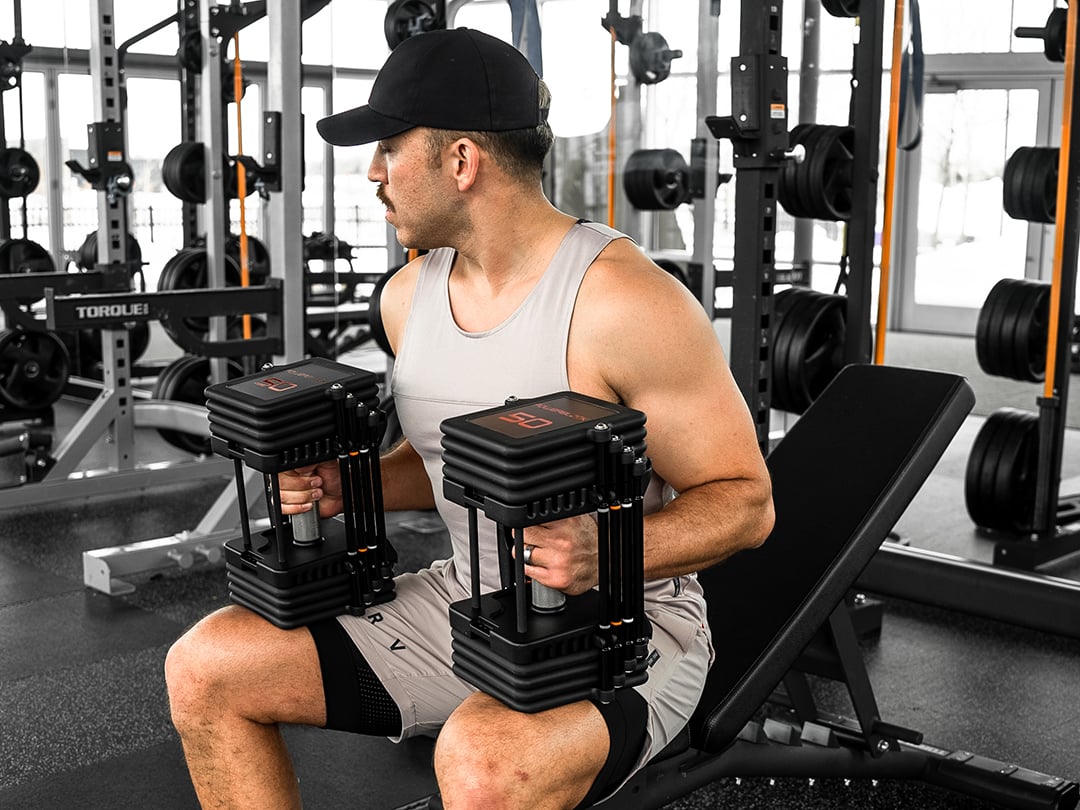
In practical testing, the biggest lesson is simple: do not judge a dumbbell only by the number on the dial. Hold it, check its balance, and see how close the plates sit to your hand.
How Heavy Should Adjustable Dumbbells Be?
The best weight depends on your current strength, training style, and available space. You do not need the heaviest set on the market to build muscle or improve fitness.
Use these general guidelines:
• Beginners often do well with 5 to 25 pounds per dumbbell.
• Regular fitness users may prefer 5 to 50 pounds per dumbbell.
• Intermediate lifters may need 10 to 70 pounds per dumbbell.
• Advanced lifters may benefit from 10 to 90 pounds per dumbbell.
These are broad estimates, not strict rules. A beginner may need more weight for goblet squats and less weight for shoulder raises. One person may press 30 pounds but use only 10 pounds for controlled lateral raises.
Choose a set that allows you to complete your main exercises with good form. You should usually have enough weight to make the last few repetitions challenging without twisting, swinging, or losing control.
A useful rule is to select a weight that lets you finish your target repetitions with about two good repetitions left in reserve. This approach supports steady progress and reduces the temptation to lift too heavy too soon.

How to Choose the Right Adjustable Dumbbell Weight Range
Buying the correct range can save money and prevent frustration. Think about your exercises, progress, and room before you choose.
Consider your main exercises
List the movements you plan to perform. A light set may work for arms and shoulders but fall short for rows and leg training.
For a balanced home routine, consider:
• Squats
• Lunges
• Rows
• Presses
• Deadlifts
• Curls
• Raises
• Triceps exercises
Your heaviest exercise often determines the upper limit you need.
Leave room for progress
Strength usually improves with regular training. A set that feels perfect today may feel too light after several months.
If your budget allows, choose a model with extra capacity. Moving from a 25-pound maximum to a 50-pound maximum can provide much more room for progress.
Check the adjustment speed
A fast adjustment system is useful when you perform circuits or supersets. A plate-loaded dumbbell may be less expensive, but changing plates takes more time.
Dial systems are convenient. Pin systems can also be fast. Digital systems may offer precise settings but can cost more and require batteries or electronic parts.
Measure your workout area
Heavy adjustable dumbbells can be bulky. Measure your rack, bench, floor space, and storage area before ordering.
You should have enough room to place each dumbbell down safely. Crowded equipment increases the risk of dropping a weight or damaging the floor.
Check the weight limit of your bench
If you plan to use adjustable dumbbells for presses, add your body weight to the dumbbell weight. Make sure your bench can support the combined load.
A bench rated for 600 pounds must support you, both dumbbells, and any extra movement force. Stay within the manufacturer’s stated limit.

Adjustable Dumbbells for Different Training Goals
The right weight range changes with your goal. Strength, muscle growth, endurance, and general fitness do not always require the same load.
Muscle building
Muscle growth can occur across a wide range of loads when the set is challenging and technique stays strong. Many people use moderate weights for 6 to 15 controlled repetitions.
A 50-pound pair is often enough for a broad home muscle-building program. Larger muscles, such as the legs and back, may eventually require heavier options.
Maximum strength
Strength training often uses heavier loads and fewer repetitions. You may need 70, 80, or 90 pounds per dumbbell for rows, presses, or lower-body work.
Adjustable dumbbells can support strength training, but they may not replace a barbell for every advanced lifter. Their balance and maximum load can become limiting factors.
Fat loss and conditioning
Fat loss depends mainly on energy balance, nutrition, and overall activity. Adjustable dumbbells can support a workout that builds strength and burns energy, but they are not a magic fat-loss tool.
Moderate weights work well for circuits, carries, squats, rows, and presses. Choose a load that lets you move safely while keeping your heart rate elevated.
General health
For general fitness, a set from 5 to 50 pounds per dumbbell can cover many needs. You can train major muscle groups, improve strength, and make daily tasks easier.
Consistency matters more than owning the heaviest equipment. A moderate set that you use three times each week is more valuable than a 100-pound set that stays in the corner.
Common Mistakes When Buying Adjustable Dumbbells
A few mistakes appear again and again when people compare weight ranges.
Confusing pair weight with individual weight
This is the most common problem. A “50-pound set” may mean 25 pounds per dumbbell or 50 pounds per dumbbell.
Read the product details carefully. Look for a clear statement about maximum weight per handle.
Focusing only on maximum weight
The highest setting is only one part of the product. A heavy dumbbell can still be a poor choice if it has awkward adjustments, weak locks, or a shape that limits movement.
Check the lowest setting, increments, length, grip, and safety system.
Ignoring the minimum weight
Some heavy adjustable dumbbells start at 10 or 15 pounds. That may be too much for raises, beginner exercises, or rehabilitation work.
A wide range is often more useful than a high maximum alone.
Using loose plates or damaged collars
Plate-loaded dumbbells need secure collars. Stop using the equipment if the plates slide, the handle is bent, or the locking thread is damaged.
A loose plate can shift during a press or fall during a movement. Inspect the set often and follow the manufacturer’s safety instructions.
Expecting one set to replace every tool
Adjustable dumbbells are versatile, but they have limits. You may still want a bench, resistance bands, a pull-up bar, or heavier equipment based on your goals.
Think of them as a strong foundation, not a complete commercial gym.
How to Progress With Adjustable Dumbbells
Progressive overload means gradually increasing the challenge placed on your muscles. Adding weight is one way to progress, but it is not the only way.
Try these methods:
-
Add one or two repetitions.
-
Increase the dumbbell weight by the smallest available step.
-
Slow the lowering phase.
-
Add another set.
-
Reduce rest time slightly.
-
Improve your range of motion.
-
Use stricter form.
If you can complete every set with ease, increase the weight when possible. If the next adjustment feels too large, keep the same weight and add repetitions first.
For example, you might use 20 pounds for three sets of eight. Over time, build to three sets of 12. Then move to 22.5 or 25 pounds and return to eight repetitions.
This approach prevents sudden jumps. It also helps you avoid the mistake of forcing a heavier weight before your joints and technique are ready.
Safety Tips for Using Adjustable Dumbbells
Adjustable dumbbells contain moving parts, so safe use matters.
• Lock every plate or selector before lifting.
• Check the handle and collars before each workout.
• Keep fingers away from moving plates.
• Do not drop adjustable dumbbells unless the manufacturer says they are designed for it.
• Place them on a solid, level surface.
• Use a spotter for very heavy presses.
• Keep children and pets away from stored equipment.
• Stop if the dumbbell shifts, rattles heavily, or feels uneven.
Start each new exercise with a lighter setting. Learn the movement first, then increase the load in small steps.
If you have an injury, heart condition, or medical concern, ask a qualified health professional before starting a new strength program. A certified fitness professional can also help you choose safe loads and proper technique.
How Much Do Adjustable Dumbbells Weigh Compared With Other Equipment?
Adjustable dumbbells often replace a large set of fixed weights. One pair may provide 10 or more weight settings while taking up the space of two or three dumbbells.
A traditional fixed dumbbell rack can include dozens of weights. That gives each dumbbell a stable shape, but it requires more space and costs more.
Adjustable dumbbells are usually:
• More compact than a full fixed-dumbbell rack
• Less expensive than buying many fixed pairs
• More flexible for home workouts
• Slower to adjust than fixed weights
• Sometimes less balanced than fixed dumbbells
• More dependent on locks and moving parts
The total weight of an adjustable set can also be substantial. A pair that reaches 50 pounds each may weigh more than 100 pounds with the handles, base, and plates included.
Frequently Asked Questions About How Much Do Adjustable Dumbbells Weigh
How much does one adjustable dumbbell weigh?
One adjustable dumbbell commonly weighs 5 to 50 pounds, depending on the model and setting. Heavy versions may reach 80, 90, or 100 pounds per dumbbell.
Do adjustable dumbbells weigh 50 pounds each or as a pair?
It depends on the product listing. Some brands mean 50 pounds per dumbbell, while others mean 50 pounds for the complete pair, so check the specifications before buying.
What is the lightest adjustable dumbbell weight?
Many adjustable dumbbells start at 5 pounds per handle. Small plate-loaded sets may begin at 2.5 pounds, while some heavy models start at 10 pounds or more.
Are adjustable dumbbells heavier than regular dumbbells?
They are not automatically heavier at the same listed weight. However, an adjustable dumbbell may feel different because its plates, handle, and adjustment parts can make it longer or less balanced.
Are 50-pound adjustable dumbbells enough for a home gym?
For many beginners and intermediate users, 50 pounds per dumbbell is enough for full-body training. Strong lifters may need more weight for heavy rows, presses, deadlifts, and leg exercises.
Does the dumbbell handle count toward the total weight?
It often does, but not every seller presents the information in the same way. Check whether the stated weight includes the handle, collars, plates, and adjustment mechanism.
Can adjustable dumbbells replace fixed dumbbells?
They can replace many fixed dumbbells in a home gym. Fixed dumbbells still offer faster changes, stable shapes, and smoother handling for some exercises.
Conclusion
Adjustable dumbbells most often weigh 5 to 50 pounds each, with lighter models near 2.5 pounds and heavy models reaching 80 to 100 pounds. Always confirm whether the advertised number applies to one dumbbell or the pair, and check if the handle weight is included.
The best set gives you a useful starting weight, small enough increases, secure adjustments, and enough room to progress. Choose a range that matches your main exercises rather than buying based only on the biggest number. Start with controlled reps, add weight gradually, and use your equipment consistently.
Compare the specifications of several models before you buy, then build a simple routine that fits your space, goals, and current strength.

Brandon Knoxley is a sport & fitness writer and training guide contributor at MySportFitHub. He focuses on practical workouts, performance-based training, and honest fitness gear insights designed for real people and real results. Brandon is passionate about helping beginners and active individuals train smarter, avoid common mistakes, and build sustainable fitness habits.