How Many Steps On Treadmill For 30 Minutes: Step Guide
Most people take about 3,000 to 4,500 steps on a treadmill during 30 minutes of walking.
The exact number depends on your speed, stride length, incline, and fitness level. After tracking treadmill sessions at different speeds, I find that pace gives a better answer than time alone. This guide explains how many steps on treadmill for 30 minutes you can expect, how to estimate your own number, and how to use step count safely for fitness and weight goals.
How many steps on treadmill for 30 minutes?
For most adults, 30 minutes on a treadmill equals about 3,000 to 4,500 steps. A slow walk may produce closer to 2,500 steps, while a fast walk or light jog may reach 5,000 steps or more.
Here is a simple guide:
| Treadmill pace | Approximate steps in 30 minutes |
|---|---|
| 2.0 mph, slow walk | 2,000 to 2,800 |
| 2.5 mph, easy walk | 2,500 to 3,300 |
| 3.0 mph, moderate walk | 3,000 to 4,000 |
| 3.5 mph, brisk walk | 3,500 to 4,500 |
| 4.0 mph, very brisk walk | 4,000 to 5,000 |
| 5.0 mph, light jog | 4,500 to 6,000 |
| 6.0 mph, steady run | 5,000 to 6,500 |
These numbers are estimates, not fixed rules. A shorter person may take more steps to cover the same distance because of a shorter stride. A taller person may take fewer steps at the same speed.
So, how many steps on treadmill for 30 minutes should you expect? For a normal walking workout, 3,000 to 4,500 steps is a realistic range.
What determines your treadmill step count?
Your treadmill step count is shaped by several factors. Speed is the main one, but it is not the only one.
Walking speed
The faster you move, the more steps you usually take in 30 minutes. At 2 mph, your steps are slow and measured. At 3.5 or 4 mph, your stride rate rises to match the faster pace.
A brisk walking pace often feels like purposeful movement. You can talk, but you may not want to sing. This pace tends to create a higher step count and a stronger heart workout.
Stride length
Stride length means the distance covered with each step. It changes with height, leg length, mobility, and walking style.
For example, two people may both walk at 3 mph. One may take 3,200 steps in 30 minutes, while the other takes 3,800 steps. The person with the shorter stride needs more steps to cover the same distance.
Incline
Incline makes the workout harder, but it does not always add many steps. If your treadmill stays at the same speed, your distance remains nearly the same.
However, a steep incline may shorten your stride. You may then take slightly more steps. Incline also raises your heart rate and energy use, so step count alone does not show the full value of the workout.
Holding the rails
Holding the treadmill rails can affect your posture and movement. It may also reduce the natural arm swing that helps your body walk well.
More importantly, rail support can make a steep incline feel easier than it truly is. Use the rails only when needed for balance or safety. Lower the speed if you feel unstable.

How to calculate steps on a treadmill
You can estimate your step count with a simple formula. First, find your average stride length. Then use the treadmill speed and workout time.
The basic formula is:
- Convert treadmill speed from miles per hour to feet per minute.
- Multiply feet per minute by 30 minutes.
- Divide the total distance by your stride length in feet.
For example, suppose you walk at 3 mph and your average stride is 2.5 feet:
• 3 mph equals about 264 feet per minute.
• 264 feet multiplied by 30 minutes equals 7,920 feet.
• 7,920 feet divided by 2.5 feet equals about 3,168 steps.
This means you may take around 3,200 steps on treadmill for 30 minutes at 3 mph.
The formula is useful, but a fitness tracker is often easier. Wear your watch snugly and keep your arms moving in a normal way. If you hold the treadmill rails, the watch may miss some steps.
 calculate steps on a treadmill”
style=”max-width: 100%; height: auto; border: 2px solid black; border-radius: 10px; display: block; margin: 0 auto;”
loading=”lazy”
/>
Average steps on treadmill for 30 minutes by goal
The right step target depends on your goal. You do not need to chase the highest number to get a useful workout.
For general health
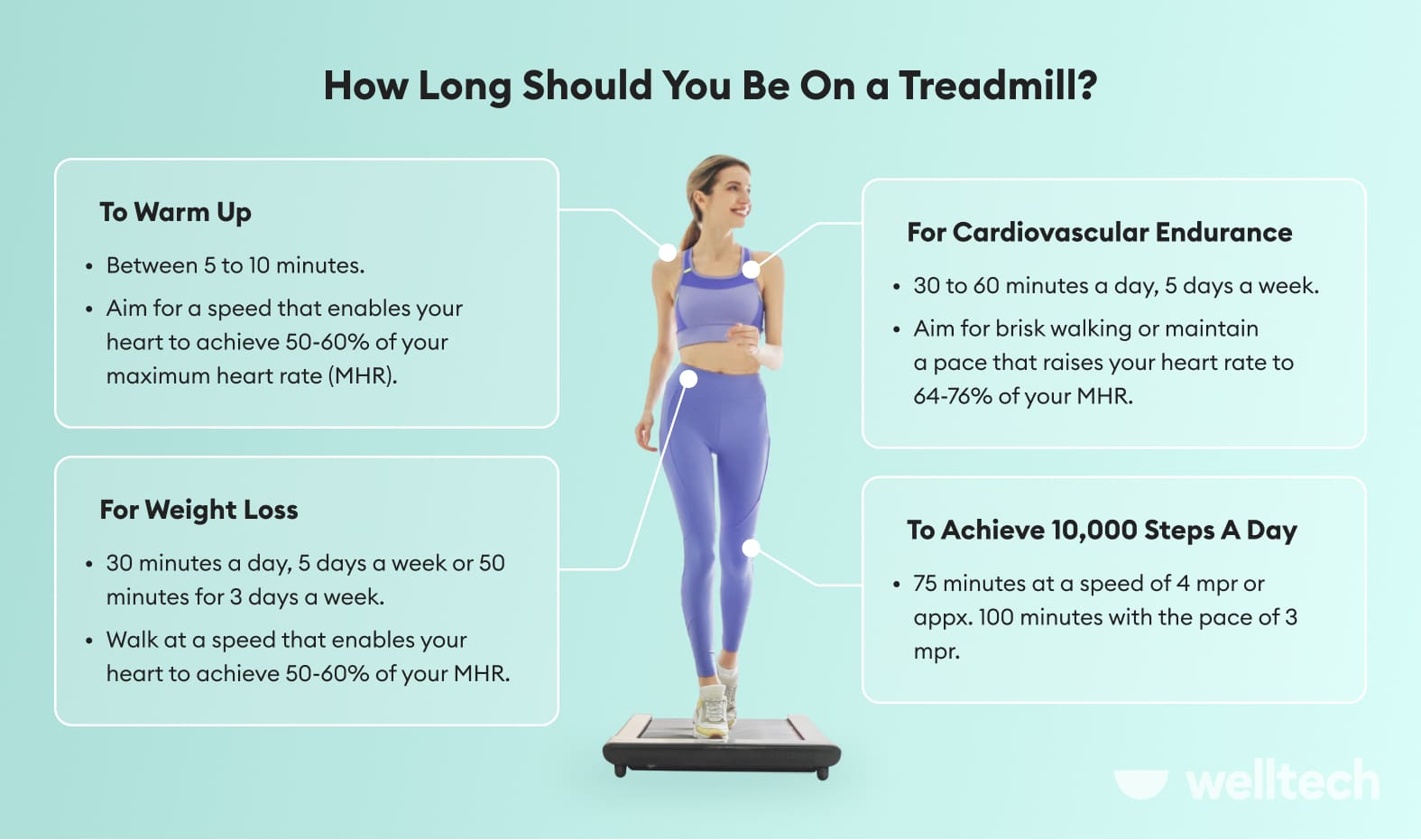
Aim for a comfortable 2.5 to 3.5 mph walk. This may give you 2,500 to 4,500 steps in 30 minutes.
Regular movement supports heart health, blood sugar control, mood, and daily energy. Health agencies commonly advise adults to get at least 150 minutes of moderate activity each week. A 30-minute treadmill walk on five days can help you reach that target.
For weight loss
Step count can support weight loss, but it is only one part of the plan. Your total calorie balance, food choices, sleep, and weekly activity also matter.
A brisk 30-minute treadmill session may produce 3,500 to 5,000 steps. To increase the challenge, add a gentle incline or use short speed intervals.
Try this simple pattern:
- Walk easily for five minutes.
- Walk briskly for two minutes.
- Walk at an easy pace for one minute.
- Repeat the brisk and easy intervals six times.
- Cool down for five minutes.
This approach can make 30 minutes feel more active without forcing you to run.
For reaching 10,000 steps
Thirty minutes on a treadmill rarely equals 10,000 steps for most people. You would usually need several hours of walking, a faster pace, or movement outside the treadmill session.
A better plan is to combine treadmill steps with normal daily activity. Walk during lunch, use stairs when practical, park farther away, or take short movement breaks during the workday.
For beginners
Start with a pace that feels safe and steady. For many beginners, 2.0 to 2.8 mph may lead to about 2,000 to 3,500 steps in 30 minutes.
Consistency matters more than speed. A comfortable session that you repeat is more useful than a hard workout that leaves you sore or discouraged.

Is 3,000 steps on a treadmill in 30 minutes good?
Yes, 3,000 steps in 30 minutes can be an excellent workout. It often means you are walking at a moderate pace, especially if your stride is longer.
The quality of the session matters too. Ask yourself:
• Did your breathing become faster?
• Could you still speak in short sentences?
• Did you maintain good posture?
• Did you finish feeling worked but not exhausted?
If the answer is yes, your 3,000 steps provided valuable movement. Step totals are helpful, but they do not measure effort, incline, heart rate, or fitness gains by themselves.
A person recovering from illness, managing joint pain, or returning to exercise may gain more from 2,000 comfortable steps than from pushing toward 5,000 painful ones.

How to increase your treadmill steps safely
If your current count feels low, increase it slowly. Your feet, knees, and hips need time to adjust to more repeated movement.
Use these practical methods:
• Add five minutes to your workout each week.
• Increase speed by 0.1 to 0.2 mph at a time.
• Keep your posture tall and your gaze forward.
• Let your arms swing naturally.
• Use a small incline instead of making a sudden speed jump.
• Wear supportive shoes that fit well.
• Take one easy day after a hard treadmill session.
Avoid increasing speed, incline, and workout length all at once. That common mistake can cause calf tightness, foot pain, or knee irritation.
One lesson I often share with treadmill users is to focus on control first. A smooth 3 mph walk with good posture is usually better than a rushed 4 mph walk while gripping the rails.

Treadmill steps compared with outdoor steps
Treadmill walking and outdoor walking both count as physical activity, but they feel different.
A treadmill provides a flat, steady surface. It also moves beneath your feet, which can make walking feel slightly easier than walking outdoors. Outside, you may face hills, wind, uneven ground, stops, and turns.
Your step count may also differ between the two settings. Outdoor walking often includes more changes in pace and direction. Treadmill walking may produce a more regular rhythm.
For accurate tracking, use the same device and walking style each time. Compare your own sessions rather than comparing your treadmill number with someone else’s outdoor number.
A treadmill is especially useful when weather, traffic, darkness, or safety makes outdoor walking difficult. It gives you a controlled way to build a steady routine.

Can you trust treadmill step counters?
Treadmill step counters can be useful, but they are not always exact. Some machines estimate steps from speed, time, and user settings. Others use sensors that may count movement imperfectly.
A watch or phone can also make errors. It may undercount when you hold the rails or overcount when your arm moves without a true step.
For better accuracy:
- Enter your height and weight if the machine allows it.
- Use the same tracker for most workouts.
- Wear the tracker in the same place each time.
- Keep your arms moving naturally.
- Compare the device with a manual count over one minute.
To perform a manual check, count your steps for one minute at your normal pace. Multiply that number by 30. This will not be perfect, but it can show whether your device is close.
Do not worry about small differences. A tracker reading of 3,400 instead of 3,500 does not change the health value of your walk.
A simple 30-minute treadmill walking plan
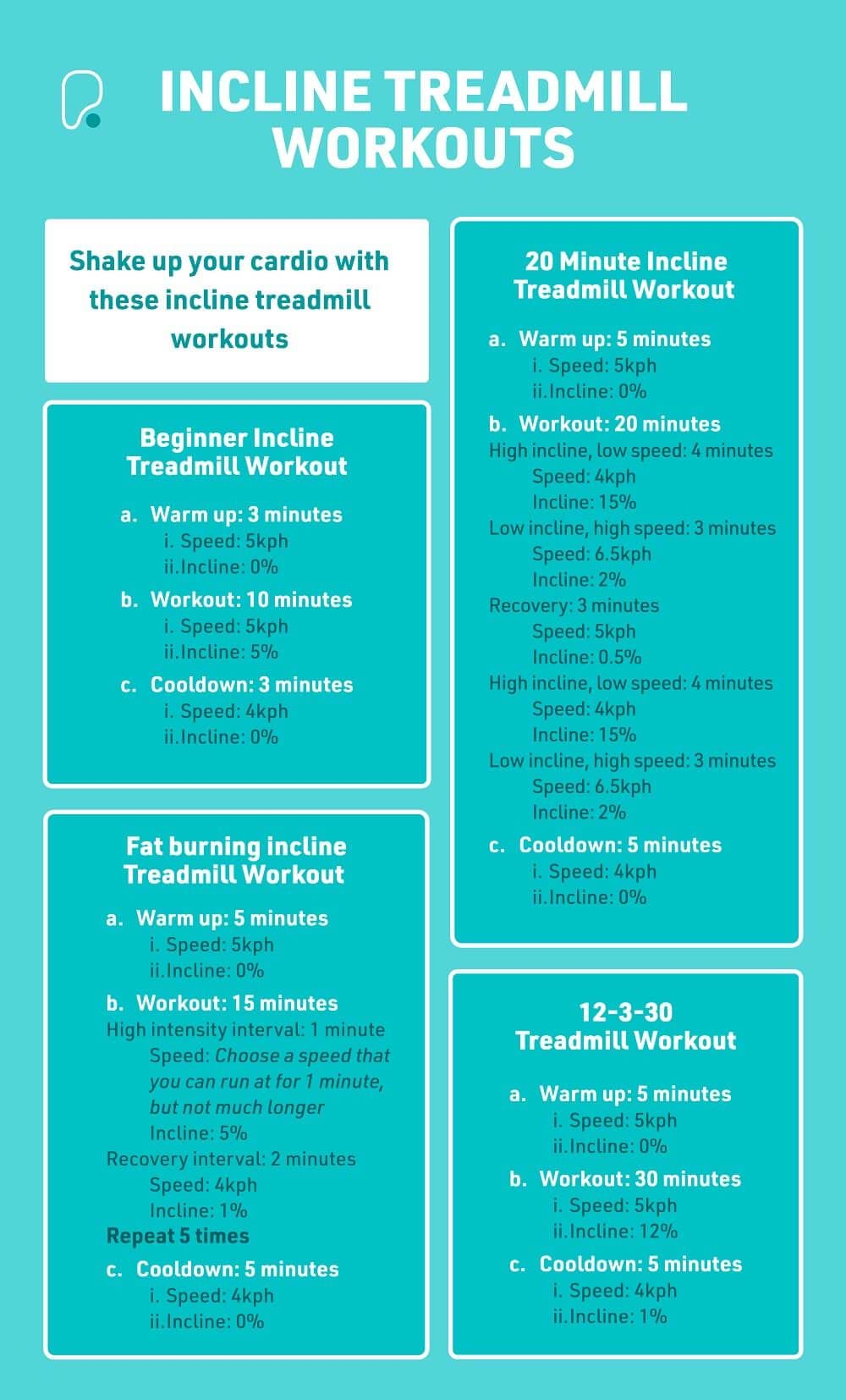
This plan works well for many healthy adults who already tolerate basic walking. Adjust the speed to your fitness level.
- Warm up for five minutes at an easy pace.
- Walk for 10 minutes at a comfortable pace.
- Increase the speed slightly for five minutes.
- Walk at an easy pace for two minutes.
- Repeat the faster and easier pace two more times.
- Cool down for five minutes.
Depending on your pace and stride, this workout may produce 3,000 to 4,500 steps. It also gives you changes in effort, which can make the session more engaging.
If you are new to exercise, skip the faster intervals at first. If you have chest pain, severe shortness of breath, dizziness, or unusual pain, stop and seek medical advice.
Common mistakes that reduce treadmill results
Small habits can change both your step count and workout quality.
Walking too slowly to feel challenged
An easy pace is useful for warm-ups and recovery. However, if every session feels effortless, you may need a small increase in speed or time.
Chasing a step number
A step goal can motivate you, but it should not control every workout. Fitness also includes strength, balance, mobility, and heart health.
Using the same pace every day
Your body benefits from variety. Mix easy walks, brisk walks, gentle incline work, and recovery sessions.
Ignoring pain
Muscle fatigue is common. Sharp pain, swelling, numbness, or pain that changes your walking pattern is not something to ignore.
Forgetting daily movement
A 30-minute treadmill workout is valuable, but long periods of sitting can still affect your daily activity. Stand up, stretch, and walk for a few minutes when possible.
Frequently Asked Questions About How Many Steps on Treadmill for 30 Minutes
How many steps on treadmill for 30 minutes at 3 mph?
At 3 mph, many adults take about 3,000 to 4,000 steps in 30 minutes. Your height, stride length, and walking style can move the number higher or lower.
Is 3,000 steps on a treadmill in 30 minutes enough?
Yes, 3,000 steps can provide a meaningful workout, especially at a moderate or brisk pace. The benefit also depends on your heart rate, effort, fitness level, and weekly routine.
How many steps on treadmill for 30 minutes at 4 mph?
At 4 mph, you may take about 4,000 to 5,000 steps in 30 minutes. This is a fast walking pace for many people and may feel close to jogging.
Does incline increase steps on a treadmill?
Incline can slightly increase steps if it shortens your stride, but its main effect is raising workout intensity. The treadmill speed and time still determine most of the distance covered.
Is walking on a treadmill better than walking outside?
Neither option is always better. A treadmill offers control, safety, and steady pacing, while outdoor walking adds changing terrain and fresh air.
Can 30 minutes on a treadmill help with weight loss?
Yes, it can support weight loss when combined with a suitable eating pattern and regular activity. Weight loss depends on your overall calorie balance, not step count alone.
Why does my watch show fewer steps than the treadmill?
Your watch may miss steps if you hold the rails or keep your arm still. Treadmills may also estimate steps rather than measure every foot strike directly.
Conclusion
Most people take about 3,000 to 4,500 steps on a treadmill for 30 minutes, with speed and stride length creating the biggest differences. A slow walk may produce fewer than 3,000 steps, while brisk walking or jogging may produce 5,000 or more.
Use step count as a helpful guide, not a strict score. Start at a safe pace, build your time gradually, and focus on steady movement with good posture. Track your progress for several weeks, and adjust your treadmill plan as your fitness improves. Share your usual treadmill pace and step count in the comments, or explore more walking and fitness guides to keep your routine moving forward.

Brandon Knoxley is a sport & fitness writer and training guide contributor at MySportFitHub. He focuses on practical workouts, performance-based training, and honest fitness gear insights designed for real people and real results. Brandon is passionate about helping beginners and active individuals train smarter, avoid common mistakes, and build sustainable fitness habits.