How To Move Treadmill Downstairs: Safe Moving Guide
Move the treadmill downstairs by securing it, using a strong team, and guiding it slowly down the stairs.
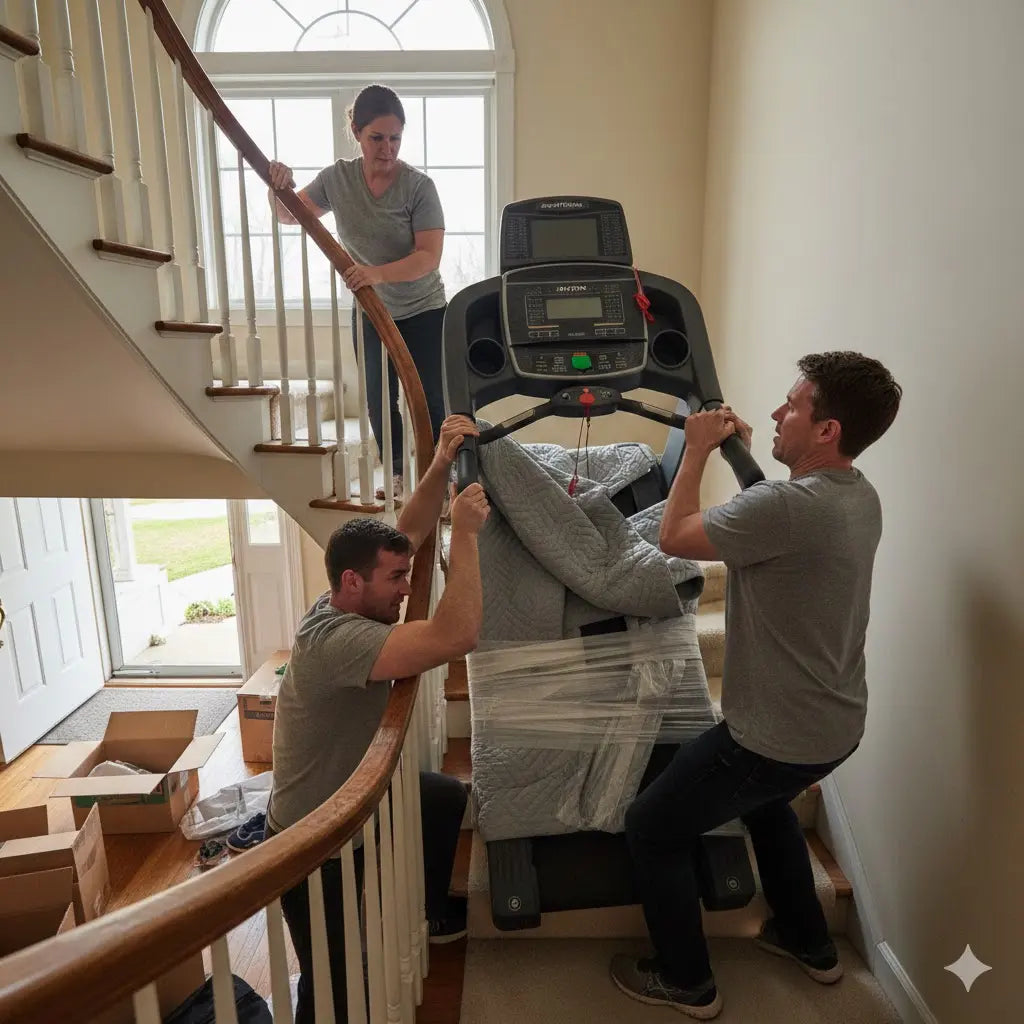
Moving a treadmill downstairs is not a one-person lifting task. The machine is heavy, wide, and hard to control on steps, so safe planning matters more than raw strength. This guide explains how to move treadmill downstairs with the right tools, team roles, stair technique, and safety checks.
The goal is to protect you, your home, and the treadmill. You will learn how to prepare the machine, decide when to disassemble it, carry it down narrow stairs, and avoid common mistakes that can lead to injury or damage.

Check the Treadmill Before Moving It
Before learning how to move treadmill downstairs, inspect the machine and the route. Most home treadmills weigh between 200 and 400 pounds, though commercial models can weigh much more. The weight is often uneven because the motor sits near the front.
Find the treadmill’s model number and read the moving instructions in the owner’s manual. Some models allow the walking deck to fold or separate. Others have delicate electronic parts that should not be laid on their side.
Measure these areas:
• The treadmill’s widest point
• Doorways and hallway corners
• The width and height of each stair
• Ceiling height above the stairs
• The distance from the treadmill to the exit
Compare the measurements before you start. A treadmill may fit through a doorway but fail at a sharp stair turn. This is one of the most common problems when people try to move treadmill downstairs without planning.
Also check the treadmill’s condition. Look for loose handrails, a damaged power cord, worn wheels, or a cracked frame. Repair loose parts before moving the unit, because a small failure can become dangerous on stairs.
Gather the Right Moving Equipment
The right equipment gives you control. It does not replace a trained moving team, but it reduces strain and helps prevent sudden shifts.
For most home treadmills, gather:
• Four or more strong helpers, depending on the machine’s weight
• An appliance dolly with a stair-climbing strap system
• Ratchet straps or heavy-duty tie-down straps
• Moving blankets
• Stretch wrap
• Work gloves with a strong grip
• Closed-toe, non-slip shoes
• Cardboard or floor runners
• Tape and a marker
• A flashlight for dark stair areas
Do not rely on small transport wheels built into the treadmill. Those wheels are made for short movement on flat floors. They are not designed to control a heavy machine on stairs.
Use an appliance dolly instead of a basic flat furniture dolly. An appliance dolly has a tall back, a wider base, and straps that hold the treadmill in place. For a straight staircase, a stair-climbing dolly may offer better control.
Avoid using ropes as the main support. Rope can slip, stretch, or cut into the frame. Ratchet straps are easier to tighten and inspect.

Prepare the Treadmill for the Move
Preparation is the most important part of how to move treadmill downstairs safely. Unplug the machine and remove the safety key. Coil the power cord and tape it to the frame so no one trips.
Remove every loose item, including:
• Water bottle holders
• Tablet stands
• Safety clips
• Reading racks
• Hand weights
• Fans or accessories
Fold the walking deck if the manufacturer permits it. Secure the deck with the factory locking pin. If the treadmill does not lock firmly, use straps around the frame. Never strap across the display panel or press tightly against sensitive controls.
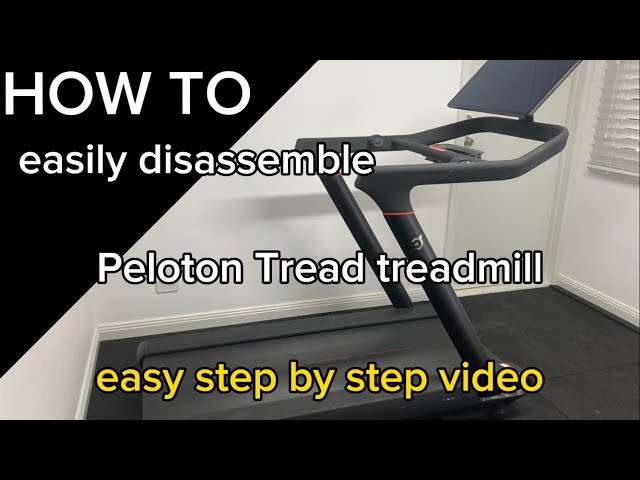
If the manual permits partial disassembly, remove the console and handrails. Mark each wire and bolt with tape. Place small parts in a labeled bag and keep the bag with the treadmill.
A useful rule is to make the treadmill as compact as the manufacturer allows, but never force it into a smaller shape. Removing a few parts can improve balance. Removing the wrong part can weaken the frame or damage wiring.
Wrap the display and plastic covers with moving blankets. Secure the blankets with stretch wrap, but do not wrap so tightly that you crack plastic panels.

Plan the Stair Route
Treat the staircase like a narrow work site. Clear the entire path before moving treadmill downstairs. Remove rugs, shoes, toys, wall decorations, and furniture from the landing.
Open doors and secure them so they cannot swing into the team. Protect sharp corners with blankets or cardboard. Place floor runners over hardwood, tile, or painted floors.
Choose one person as the move leader. The leader should stand where they can see the path and communicate with everyone. Use simple commands such as:
• “Stop”
• “Lift”
• “Lower”
• “Step”
• “Hold”
• “Set down”
Everyone should repeat the command before moving. Do not allow several people to shout different instructions. Confusion is dangerous when a heavy machine is on stairs.
Decide where the treadmill will rest if anyone needs a break. A landing is safer than stopping halfway across a step. Never place fingers beneath the frame when setting the treadmill down.
Check the weather if you are moving the treadmill through an outdoor stairway. Wet steps, cold hands, and poor lighting can sharply increase the chance of a slip.

How to Move Treadmill Downstairs Step by Step
Once the treadmill is prepared and the path is clear, use a slow and controlled method. Do not rush. Momentum is the enemy on stairs.
1. Position the appliance dolly
Place the dolly at the treadmill’s heavier end, usually the motor end. Slide the dolly plate under the frame as far as it can go without touching fragile parts.
Keep the treadmill centered on the dolly. If it leans to one side, stop and reposition it. An uneven load can twist during the descent.
2. Secure the frame
Wrap at least two strong straps around the treadmill frame and dolly. Tighten them until the machine cannot slide, but avoid crushing plastic covers or the walking belt.
Test the attachment on level ground. Tilt the dolly back slightly and check for movement. If the treadmill shifts, add protection and tighten the straps again.
3. Lift with your legs
The helpers should bend their knees and keep their backs as straight as possible. Hold the frame or approved lifting points, not the display, handrails, belt, or plastic covers.
Keep the load close to your body. Twisting while carrying a heavy treadmill places extra stress on the back and shoulders. Move your feet instead of turning your torso.
4. Start down the stairs
The person at the lower end should guide the dolly down one step at a time. The person at the upper end should control the weight with the dolly handles and straps.
Keep the dolly tilted back. Never let the treadmill free-fall onto a step. Lower the wheels or stair skids gently, then pause and check the balance.
The lower helper should not stand directly below the treadmill. Stand to the side when possible, with a clear escape path. If the machine slips, no one should be trapped beneath it.
5. Stop often
Pause after every few steps. Check the straps, hand position, and frame balance. If anyone loses grip or feels pain, call “Stop” and set the treadmill down at the nearest safe landing.
Do not continue just because you are close to the bottom. Fatigue causes many moving injuries. The last few steps still require full control.
6. Move it onto level ground
At the bottom, keep the treadmill secured until it is fully on a flat surface. Do not release the straps while the dolly is tilted.
Lower the machine slowly. Inspect the floor for damage, then roll the treadmill to its final position. Remove the straps only after the treadmill is stable.
This method explains how to move treadmill downstairs while reducing sudden shifts. If the staircase is narrow, curved, steep, or poorly lit, professional movers are the safer choice.

When to Disassemble the Treadmill
Disassembly can make a treadmill easier to carry, but it is not always necessary. A folded treadmill may be safer if the folding lock is strong and the machine remains balanced.
Consider partial disassembly when:
• The console blocks a doorway
• The handrails make the machine too wide
• The walking deck can be removed according to the manual
• The stairs have a tight turn
• The treadmill cannot stay balanced on a dolly
Take photos before disconnecting wires. Label both ends of each cable. Keep bolts in separate bags and write the part name on each bag.
Never cut wires, drill the frame, or remove motor parts just to reduce weight. These changes can create electrical and mechanical hazards. If the manual does not explain a step, contact the manufacturer or hire a technician.
After moving treadmill downstairs, reassemble the unit carefully. Check every bolt, cable, safety key, and locking pin. Do not use the treadmill until the walking belt runs correctly and all covers are secure.

Common Mistakes to Avoid
Many treadmill moving problems come from poor preparation rather than a lack of strength. Avoid these mistakes:
• Trying to move the treadmill alone
• Carrying it by the display or handrails
• Using only the treadmill’s small transport wheels
• Forgetting to remove the safety key and power cord
• Failing to measure stair turns
• Leaving loose parts attached
• Using weak rope instead of rated straps
• Standing directly below the load
• Moving too quickly
• Taking breaks while the treadmill is unstable
• Placing fingers under the frame
• Plugging in the treadmill before checking for damage
One mistake I often see in real moving jobs is starting before assigning a leader. Everyone grabs a different part and begins lifting at once. The machine then tilts, people step backward, and the stairs become crowded. A short planning talk prevents this chain of errors.
Another lesson is to protect the home before protecting the machine. A blanket on a sharp wall corner and a runner on the floor can prevent expensive damage. Moving slowly is not wasted time; it is a form of insurance.

Safety Limits and When to Hire Professionals
Some situations are not suitable for a DIY move. Hire professional movers or an appliance-moving service if the treadmill is unusually heavy, the stairs are curved, or the path includes more than one tight landing.
Professional help is also wise when:
• The treadmill weighs over 300 pounds
• The stairway is less than 36 inches wide
• There are no secure handholds
• The home has glass doors or fragile flooring
• Someone in the group has a back, knee, or heart condition
• The treadmill must be lifted over a railing
• The unit is a commercial model
A moving company should have experience with heavy exercise equipment and carry suitable insurance. Ask how many people will handle the job and what equipment they will use.
Health and safety guidance consistently recommends team lifting, neutral posture, clear communication, and mechanical assistance for heavy loads. Still, no general guideline can assess your exact stairs or treadmill. When the route looks risky, trust that warning.

Reassemble and Test the Treadmill
After you move treadmill downstairs, do not use it immediately. First inspect the frame, belt, power cord, console, handrails, and folding mechanism.
Look for:
• Cracks in plastic or metal
• Loose bolts
• Pinched wires
• A bent frame
• Belt movement to one side
• Unusual motor noise
• A damaged power plug
Place the treadmill on a level surface. Adjust the feet according to the manual. A treadmill that rocks can create extra stress on the frame and may affect your balance during exercise.
Plug it into the outlet recommended by the manufacturer. Avoid extension cords unless the manual specifically allows one. Many treadmills require a grounded circuit with the correct electrical rating.
Run the treadmill at low speed for one or two minutes. Stay beside it, not on it. Stop the machine if you hear grinding, smell burning, see sparks, or notice a sudden belt shift.
Test the emergency stop feature before normal use. If the treadmill suffered a hard impact, have it inspected by a qualified technician.
Frequently Asked Questions About How to Move Treadmill Downstairs
Can one person move a treadmill downstairs?
One person should not carry a full-size treadmill downstairs. The machine is heavy and difficult to control, so use a trained team with an appliance dolly or hire professional movers.
How many people are needed to move a treadmill downstairs?
Most home treadmills need at least three strong adults, with four providing better control on stairs. The number depends on the treadmill’s weight, shape, stair width, and whether it is partly disassembled.
Can I move a treadmill downstairs without a dolly?
It is possible in some cases, but it is much riskier. A properly rated appliance dolly and straps improve control and reduce the need to hold the full weight by hand.
Should I move the treadmill upright or on its side?
Follow the owner’s manual because the safe position varies by model. Avoid laying a treadmill on its side unless the manufacturer permits it and you have protected the display, motor, and frame.
How do I protect stairs while moving a treadmill?
Use floor runners, moving blankets, and cardboard on landings and sharp corners. Secure the protection so it cannot slide under the dolly or a helper’s shoes.
What should I do if the treadmill gets stuck on the stairs?
Stop immediately and keep the machine secured. Do not pull harder or twist it; move helpers to safer positions, reassess the angle, and call professional movers if the route cannot be cleared safely.
Can moving a treadmill damage the motor?
Rough handling, incorrect positioning, and impact can damage the motor or wiring. Keep the treadmill secured, avoid dropping it, and inspect the unit before plugging it in again.
Conclusion
Learning how to move treadmill downstairs starts with honest planning, not muscle. Measure the route, read the manual, remove loose parts, protect the home, use an appliance dolly, and assign one person to lead every command.
Move one step at a time and stop whenever the load feels unstable. If the treadmill is too heavy, the stairs are tight, or the team lacks proper equipment, hiring professionals is the safest and often the most affordable choice.
Use this guide before moving day, and share your own treadmill-moving lessons or questions in the comments.

Brandon Knoxley is a sport & fitness writer and training guide contributor at MySportFitHub. He focuses on practical workouts, performance-based training, and honest fitness gear insights designed for real people and real results. Brandon is passionate about helping beginners and active individuals train smarter, avoid common mistakes, and build sustainable fitness habits.