
Can I Buy A Treadmill With My Hsa: Eligibility & Tips
Yes — sometimes, but only if a medical provider says a treadmill is medically necessary and documents it.
I have worked with benefits users and tax rules for years. I know how health savings accounts work and what counts as a qualified medical expense. This article explains when can i buy a treadmill with my hsa, what the IRS looks for, how to document it, real examples, and safe steps to use HSA money without risking an audit. Read on to learn clear, practical steps to decide if your treadmill purchase can be paid with HSA funds.
Can I buy a treadmill with my HSA?
Health savings accounts pay for qualified medical expenses under IRS rules. The key rule is medical necessity. If your doctor writes a clear letter of medical necessity showing the treadmill treats a diagnosed condition, then can i buy a treadmill with my hsa may be allowed. If the treadmill is for general fitness or weight loss without a medical diagnosis, it usually is not eligible.
What counts as a qualified expense
- Expenses to prevent or treat illness or injury may qualify.
- Durable medical equipment (DME) often qualifies if prescribed.
- General wellness items do not qualify unless tied to a specific treatment.
How strict is the IRS
- The IRS reviews whether the expense is primarily medical.
- You should keep a doctor’s note, diagnosis, and receipts.
- Custodians or plan rules can differ, so confirm with your HSA administrator.
PAA-style questions (short answers)
What documentation do I need?
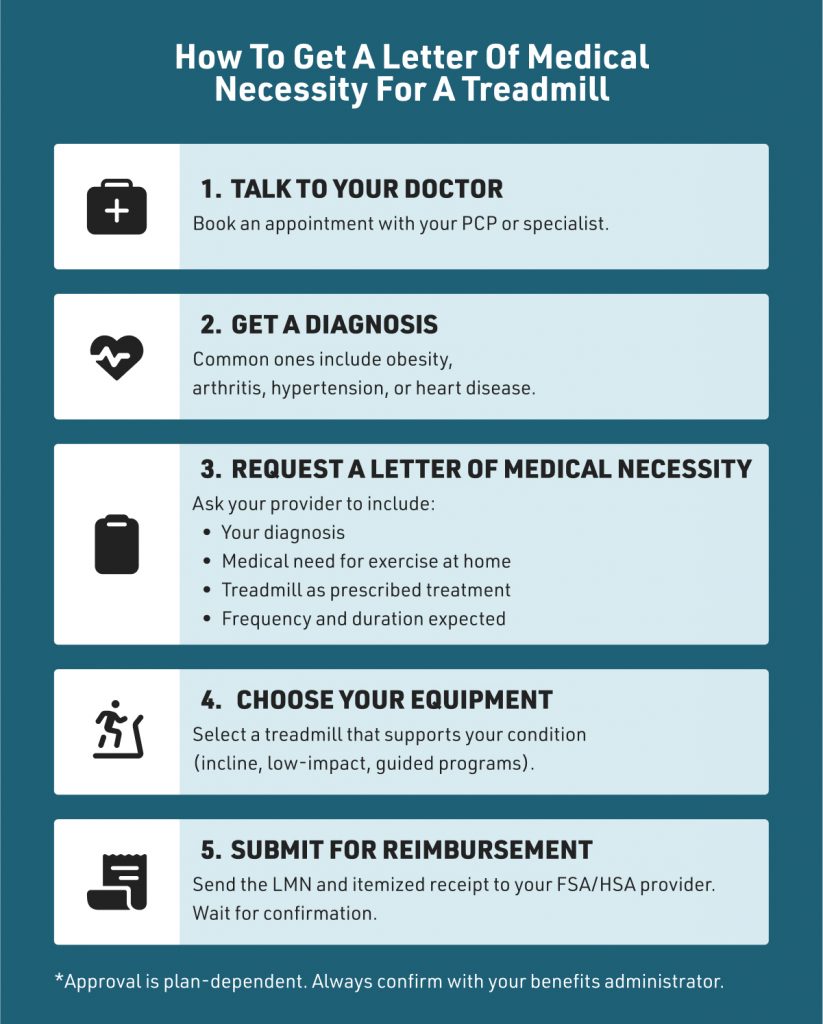
- A letter of medical necessity from your clinician that states the condition, why a treadmill helps, and how it will treat the condition.
Can an HSA card be used at a store?
- Sometimes. The HSA card works when the vendor codes the sale as medical equipment. If not, pay out of pocket and reimburse from your HSA with proper docs.
Is a home treadmill the same as DME?
- Not always. Treadmills can be DME when prescribed for therapy or rehab. For general fitness, they are not DME.

IRS rules and medical necessity explained
The IRS defines deductible medical expenses as those to diagnose, treat, prevent, or relieve an illness. A clear medical link must exist. For a treadmill, this often means a documented need for cardiac rehab, diabetes management, obesity with comorbidities, or physical therapy where walking or ambulation improvement is required.
What a letter of medical necessity should include
- Patient name and diagnosis code or clear condition description.
- Specific reason why a treadmill is needed for treatment.
- Duration and type of therapy or monitoring planned.
- Clinician signature, date, and contact information.
Common scenarios where the IRS accepts equipment
- Prescribed rehab for heart disease or recovery after surgery.
- Mobility and gait training for neurological conditions.
- Supervised exercise as part of a formal treatment plan for certain chronic diseases.
Limitations and gray areas
- Weight loss alone is rarely enough.
- General fitness claims are not persuasive.
- Insurance or HSA custodians may still deny a claim without strong documentation.
How to use your HSA to pay for a treadmill: step-by-step
- Talk to your clinician
- Explain your goals and ask if a treadmill is medically necessary.
- Request a detailed, dated letter of medical necessity.
- Check your HSA plan rules
- Call your HSA custodian and ask whether they accept treadmill purchases as DME with a letter.
- Ask if the HSA card will work at the retailer or if you must seek reimbursement.
- Buy wisely and keep records
- Save the receipt that shows vendor, date, price, and item description.
- Keep the clinician’s letter, diagnosis info, and any treatment plan notes.
- Pay and file
- Use your HSA card if allowed. If not, pay out of pocket.
- Submit reimbursement request to your HSA with docs or simply withdraw HSA funds later noting the expense.
- Keep documentation for audits
- Store all paperwork for at least seven years in case of IRS questions.

Practical examples and real-life scenarios
Scenario 1 — Approved
- A patient had heart surgery. The cardiologist prescribed a treadmill for cardiac rehab. The patient got a letter with the diagnosis. The HSA custodian approved reimbursement.
Scenario 2 — Borderline
- A person with type 2 diabetes wanted a treadmill to improve blood sugar control. The doctor supported it, but the HSA asked for a clear treatment plan. With a written plan showing regular monitored sessions, reimbursement was allowed.
Scenario 3 — Denied
- Someone bought a treadmill to lose weight, with no documented medical condition. The HSA denied the expense as nonmedical.
My experience
- I once helped a client who used HSA funds for a treadmill after submitting a physical therapy plan and a clinician’s letter. The custodian approved the reimbursement. The key was clear linkage to a treatable medical condition and documented oversight.
Lessons learned
- Ask for precise wording from your clinician.
- Talk to your HSA administrator before buying.
- Don’t assume fitness equals medical need.

Pros, cons, and alternatives
Benefits of using HSA funds
- Tax-free dollars if expense is qualified.
- Can reduce out-of-pocket cost for medically necessary equipment.
- HSAs roll over year to year, so funds grow tax-free.
Risks and downsides
- Possible denial and tax consequences if not qualified.
- Audit risk without good documentation.
- Vendors or merchants may not code purchases as medical.
Alternatives if treadmill is not HSA-eligible
- Use flexible spending accounts or health reimbursement arrangements if plan allows.
- Claim medical expense deduction on your tax return if you itemize and meet thresholds.
- Seek community programs, gym prescriptions, or discounts for supervised rehab.
Documentation and audit tips
What to save
- Letter of medical necessity with diagnosis and treatment plan.
- Original receipt and product description.
- Proof of purchase and payment method.
- Any clinician notes or therapy plans that reference treadmill use.
How to write an effective LON
- Ask the clinician to state the medical condition and exactly how the treadmill is therapeutic.
- Include frequency and length of recommended use.
- Use clinical language and include a signature and date.
How to respond if audited
- Provide the LON, receipts, and clinician notes promptly.
- Explain how the device is part of a formal treatment plan.
- Be honest and organized; audits often focus on documentation, not intent.
Frequently Asked Questions of can i buy a treadmill with my hsa
Can I use my HSA card at a big-box store to buy a treadmill?
Yes, but only if the store codes the purchase as medical equipment or the HSA custodian accepts the purchase with a letter of medical necessity. If the card is declined, pay out of pocket and request reimbursement with proper documentation.
Does a prescription count as a letter of medical necessity?
A prescription helps, but a detailed letter of medical necessity is stronger. The letter should explain the diagnosis, why a treadmill is needed, and how it fits the treatment plan.
Will insurance or Medicare cover a treadmill?
Medicare rarely covers home exercise equipment. Private insurance coverage varies. HSA eligibility depends on IRS rules and documentation, not on insurance coverage.
What if I already bought a treadmill for fitness?
You can still ask your clinician for a dated letter that ties the treadmill to a medical need. Reimbursement is possible if the clinician documents that ongoing use treats a diagnosed condition and you keep good records.
How long should I keep documents for HSA expenses?
Keep documents for at least seven years. That covers most audit windows and gives you a safe record if tax questions arise.
Conclusion
Using HSA funds to buy a treadmill is possible, but it hinges on medical necessity and strong documentation. Start with a clinician’s letter that links the treadmill to a diagnosed condition. Check with your HSA administrator before you buy, save every receipt, and keep a formal treatment plan. If you follow these steps, you can reduce risk and make an informed choice that may let you use tax-free dollars for the equipment you need. Ready to act? Talk with your clinician, call your HSA custodian, and gather the documentation—then decide with confidence.

Brandon Knoxley is a sport & fitness writer and training guide contributor at MySportFitHub. He focuses on practical workouts, performance-based training, and honest fitness gear insights designed for real people and real results. Brandon is passionate about helping beginners and active individuals train smarter, avoid common mistakes, and build sustainable fitness habits.