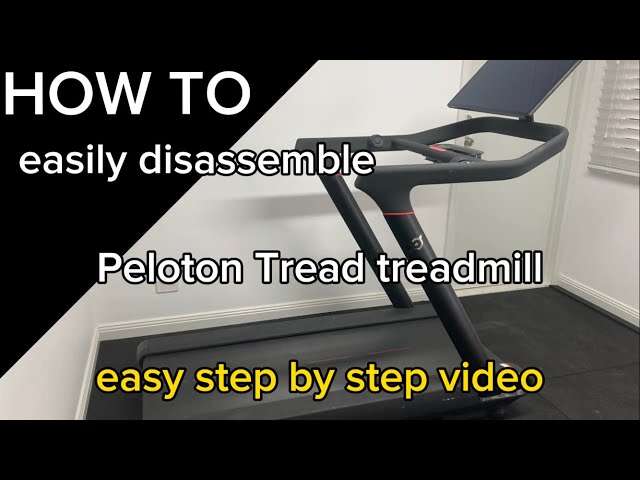
How To Move A Peloton Treadmill: Safe Moving Guide
Moving a Peloton Treadmill safely requires planning, at least two strong adults, and the right moving equipment.
Learning how to move a Peloton treadmill is more than pushing a heavy machine across the floor. The Tread and Tread+ are large, valuable, and difficult to control on turns, stairs, and doorways. This guide explains how to prepare, lift, roll, protect, and set up your treadmill with less risk of injury or damage.

Before You Move a Peloton Treadmill
The safest way to move a Peloton treadmill starts before anyone touches it. Measure the route, clear the room, and decide whether you are moving the machine across one floor or taking it to another level.
A Peloton Tread weighs about 290 pounds. The Tread+ is much heavier, at roughly 455 pounds. Exact weight can vary by model and packaging, so check your owner’s manual before planning the move.
Moving a Peloton treadmill is not a one-person task. Even strong people can lose control when the machine rolls, tilts, or meets a door frame.
Prepare these items:
• At least two strong adults for a short, level move
• Four or more trained movers for a heavier model or difficult route
• A furniture dolly rated above the treadmill’s weight
• Moving blankets
• Stretch wrap or strong straps
• Furniture sliders for short indoor moves
• Tape measure
• Work gloves with a firm grip
• Plywood or protective boards for delicate floors
• A phone for taking photos of cable connections
Never use a small household dolly that is not rated for the treadmill. The wheels, frame, and deck can place a large load on a small surface.
Check Your Peloton Model and Owner’s Manual
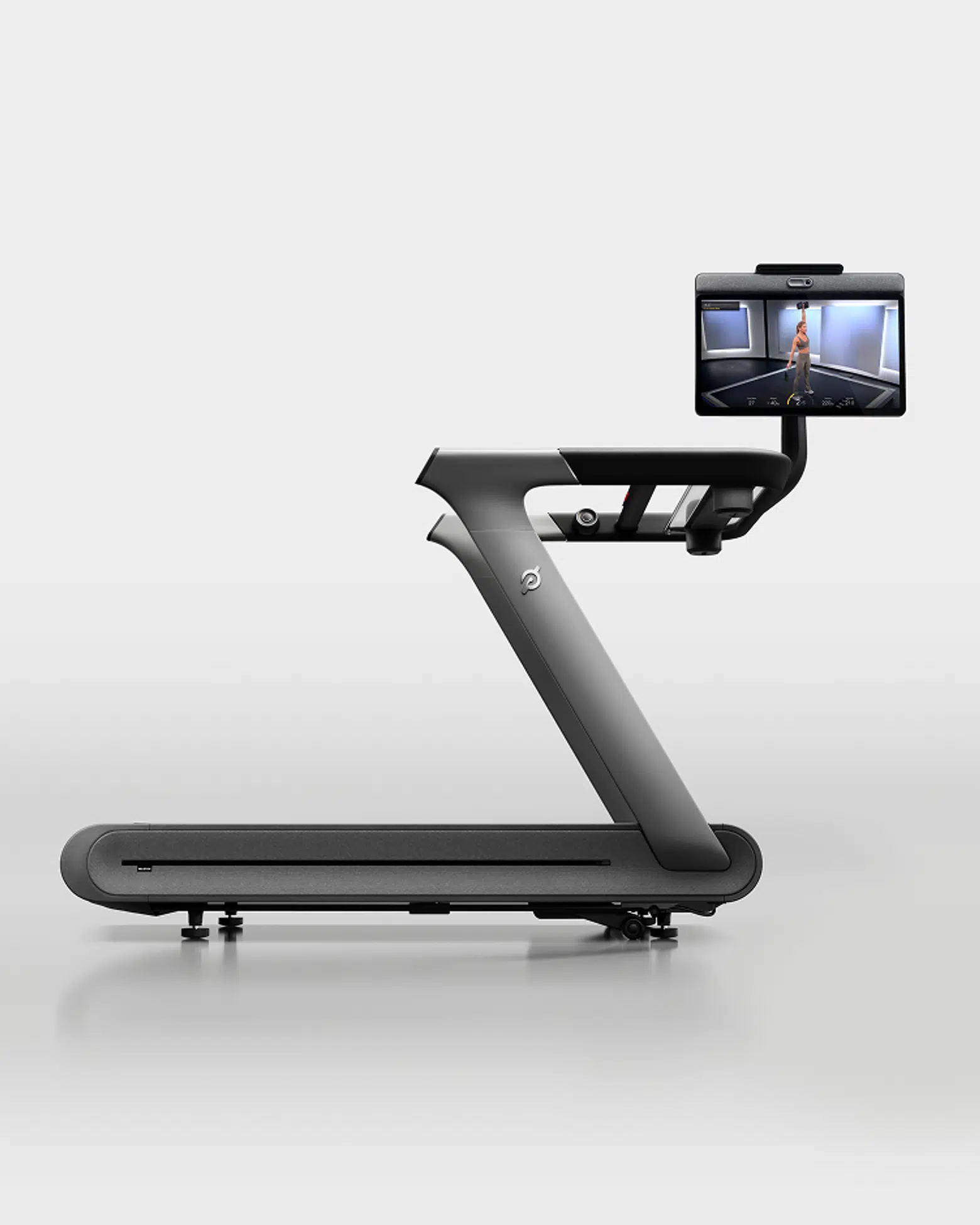
The Tread and Tread+ do not have identical designs. Their weight, frame shape, screen assembly, and moving instructions may differ. Before learning how to move a Peloton treadmill, confirm which model you own.
Look for the model name on the frame, original paperwork, or Peloton account details. Then review the manufacturer’s current moving and assembly guidance. This matters because product instructions can change after software, hardware, or safety updates.
Pay close attention to these points:
• Whether the touchscreen should be removed
• Where the transport wheels are located
• Which frame areas can safely hold weight
• Whether the handrails need to be detached
• How many people are recommended
• Whether Peloton requires professional service for your move
Do not lift the treadmill by the touchscreen, handrails, front cover, motor hood, or running belt. These parts are not safe handholds. A damaged screen or bent frame can cost far more than hiring movers.
If you cannot find clear instructions for your model, contact Peloton support before moving it. That small step can prevent a costly mistake.

Gather the Right Moving Equipment
Good equipment turns a dangerous lift into a controlled move. The goal is to support the treadmill’s frame while protecting both the floor and the machine.
A heavy-duty appliance dolly is often the best choice for a level move. Use one with a high weight rating and a wide base. Secure the treadmill with straps, but do not tighten them over the screen or delicate plastic parts.
Moving blankets help in two ways. They protect walls and furniture, and they reduce scratches on the treadmill frame. They also give your hands and straps a better surface to grip.
Use plywood when crossing soft wood, tile, thick carpet, or a threshold. A treadmill can leave marks when its wheels stop suddenly. Plywood spreads the force over a wider area, much like snowshoes spread a person’s weight on snow.
Before moving a Peloton treadmill, inspect every tool:
• Check that dolly wheels roll smoothly
• Confirm the straps have no cuts or weak spots
• Make sure the path is dry and free of clutter
• Test that doors can open fully
• Remove rugs that may catch on wheels
• Keep pets and children out of the area

Prepare the Treadmill
Preparation lowers the chance of damage. Start by ending your workout and letting the belt stop fully. Do not move the treadmill while it is powered on or connected to the Peloton network.
Follow these steps:
-
Turn off the treadmill using the normal power control.
-
Unplug the power cord from the wall.
-
Disconnect the safety key or safety feature if your model uses one.
-
Coil the power cord and secure it so it cannot drag.
-
Remove weights, water bottles, mats, and accessories.
-
Take photos of cable connections before disconnecting anything.
-
Remove the touchscreen or other parts only if the manual allows it.
-
Wrap fragile parts with moving blankets.
The touchscreen is one of the most vulnerable parts. If the instructions allow removal, place it in a padded box or wrap it securely. Keep it upright and never place heavy items on top of it.
Do not fold, force, or bend the running belt. The belt and deck are precision parts. Treat them like a large piano: stable, supported, and moved slowly.
Plan the Moving Route
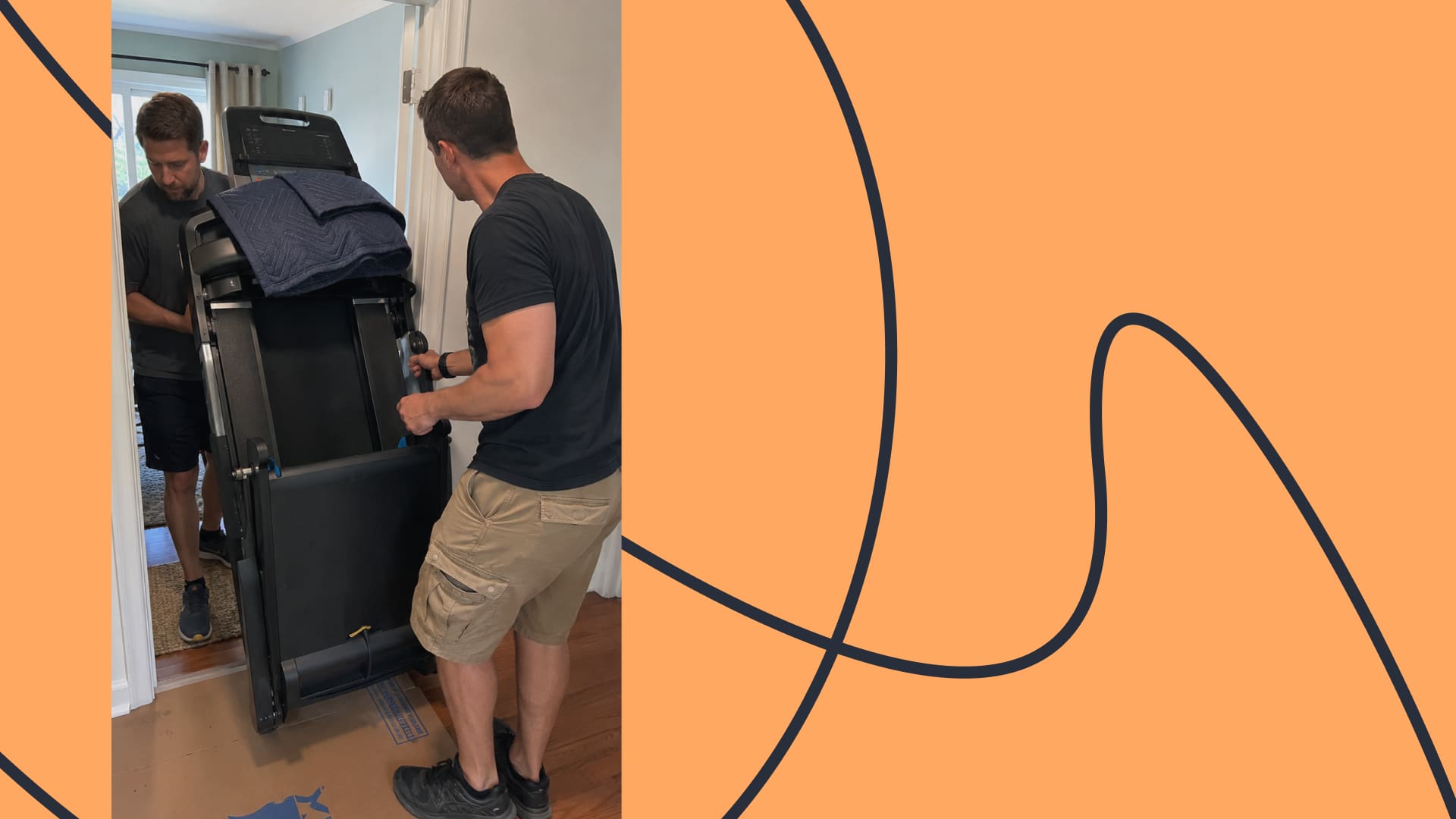
The route often causes more trouble than the treadmill itself. A machine that fits through a doorway in a straight line may not fit when you need to turn it.
Measure the treadmill at its widest and tallest points. Then measure:
• Door widths
• Hallway widths
• Ceiling height
• Stair width
• Elevator openings
• Tight corners
• Threshold height
Allow extra space for people, blankets, and the dolly. If the treadmill barely fits on paper, it may not fit safely in practice.
Remove doors from their hinges when needed. Protect door frames with blankets or thick cardboard. Plan where each person will stand and decide who will give commands.
Use simple commands such as “stop,” “lift,” “lower,” and “turn.” One person should lead. Conflicting instructions can cause a sudden shift, which is when most injuries happen.
How to Move a Peloton Treadmill on One Level
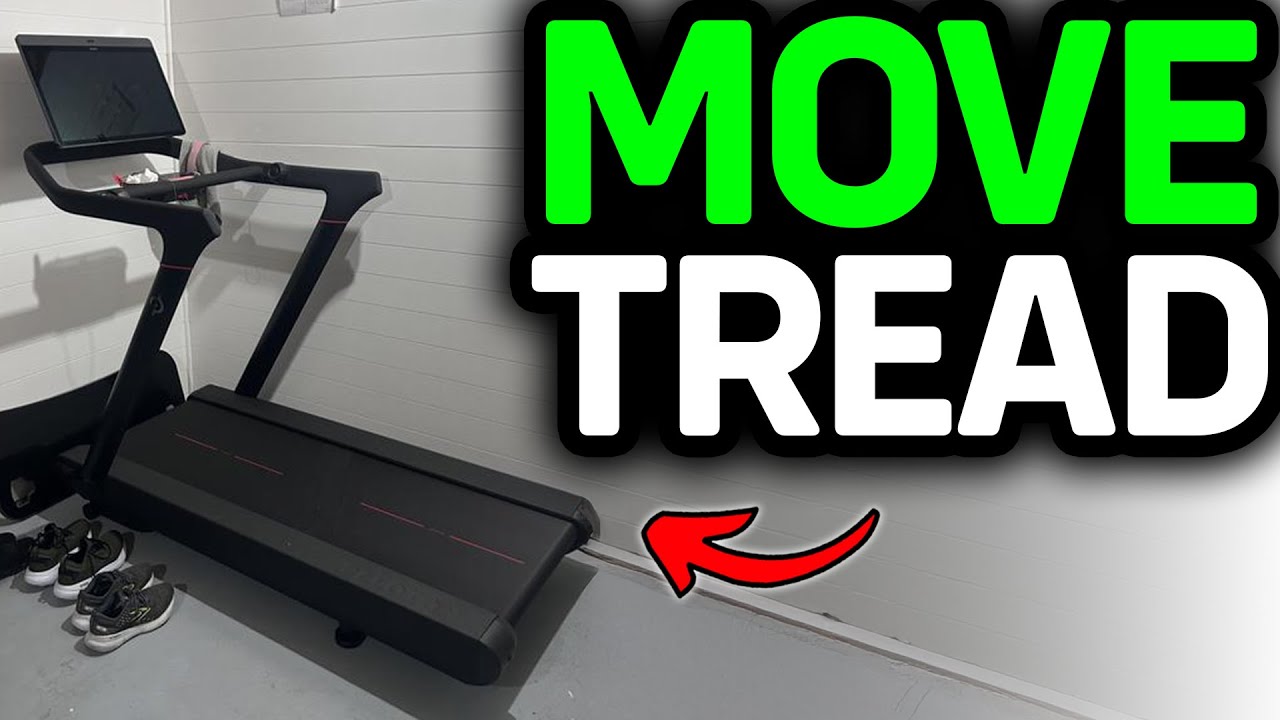
A level indoor move is the simplest option, but it still requires care. Keep the treadmill as upright and stable as the manufacturer’s instructions allow.
Here is a safe general process:
-
Position the dolly near the approved lifting point.
-
Have one person steady the front and another steady the rear.
-
Tilt the treadmill only as far as the manual permits.
-
Slide the dolly under a strong frame section.
-
Secure the frame with straps.
-
Check that no cable, belt, or plastic cover is trapped.
-
Roll slowly with one person guiding the front.
-
Keep hands away from wheels and pinch points.
-
Stop at every threshold and inspect the path.
-
Lower the treadmill gently into its final position.
Do not pull the treadmill by its handrails. Do not push from the touchscreen. Keep the load balanced and avoid sharp turns.
For a very short move on a smooth floor, furniture sliders may work if the treadmill is lifted correctly. Never drag the machine directly across the floor. That can damage flooring, wheels, and the treadmill base.
How to Move a Peloton Treadmill Upstairs or Downstairs
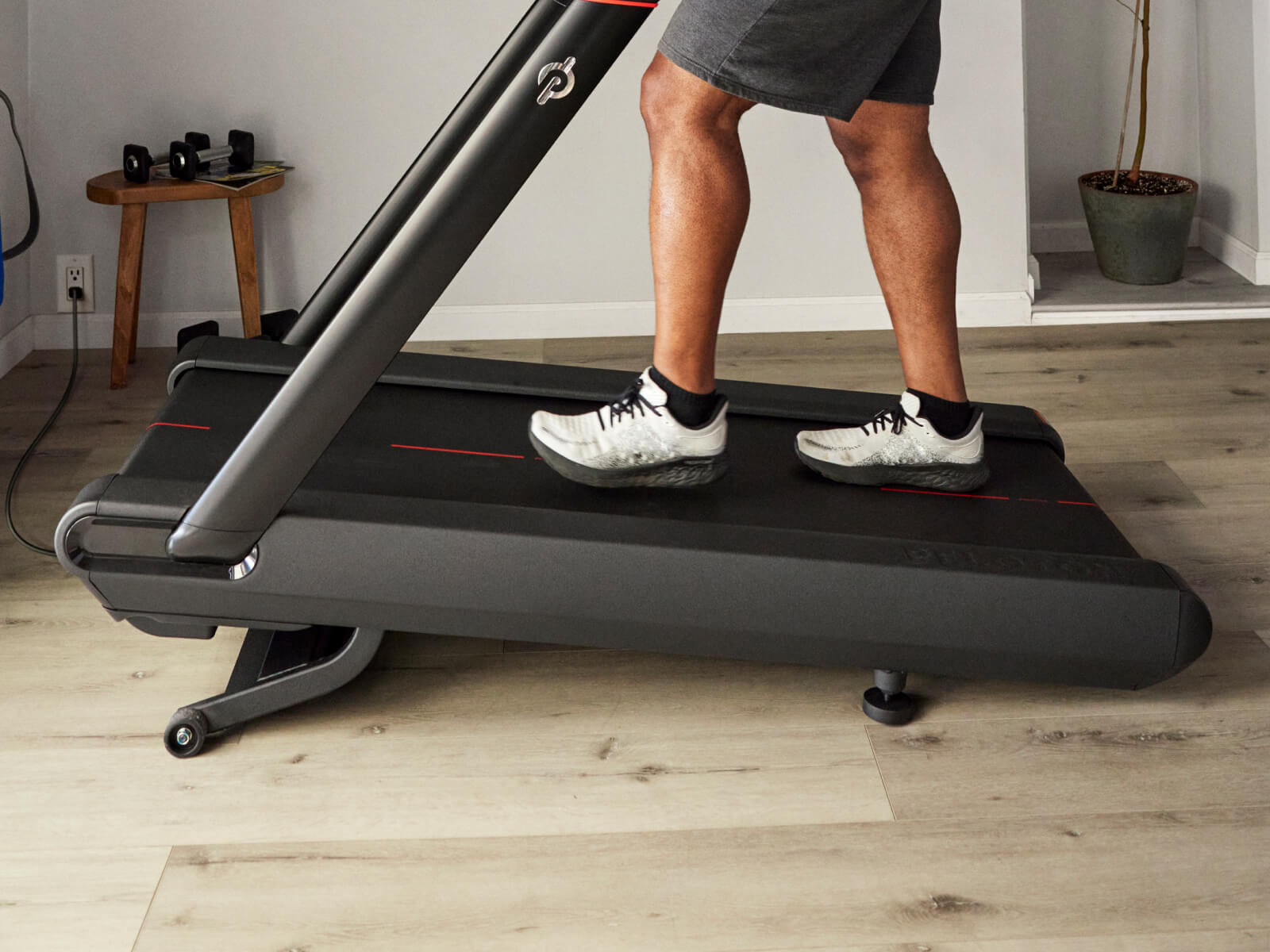
Stairs create the greatest risk. A treadmill can become too heavy to control, even for several strong adults. A fall can harm people, damage the machine, and destroy stair rails or walls.
The safest choice is professional fitness equipment moving service. Experienced movers have stair-climbing equipment, lifting straps, and enough people to control the load.
If a trained team must move it on stairs, follow the owner’s manual closely. Never improvise with rope, loose straps, or a standard two-wheel cart.
Important safety rules include:
• Use enough movers for the exact model and route
• Keep the treadmill secured at all times
• Move one step at a time
• Keep the lead person free to see the path
• Never stand directly below a heavy treadmill
• Keep hands away from stair edges and pinch points
• Stop if anyone loses grip or balance
• Do not rush to clear the stairs
In my experience helping people plan large equipment moves, stairs are where confidence causes problems. A treadmill may feel stable on a flat floor, then shift quickly on the first step. If the route includes narrow stairs, a landing, or a sharp turn, hire professionals.
How to Move a Peloton Treadmill Through a Doorway
Doorways require careful angle control. Do not force the treadmill through by pushing harder. If it does not fit, the frame or screen may strike the wall.
Remove the door if necessary and cover the frame. Keep the treadmill wrapped, but do not wrap it so tightly that you cannot see the wheels or handholds.
One person should watch the front. Another should watch the rear. Move in small steps and rotate only when the entire group agrees.
Protect these areas:
• Screen and screen arm
• Handrails
• Front motor cover
• Side rails
• Wall corners
• Door trim
• Flooring at the threshold
Never place fingers under the frame while crossing a threshold. Use a lifting strap or approved dolly position instead. A threshold can cause the treadmill to stop while the upper frame keeps moving.
Moving a Peloton Treadmill to Another Home
Transporting a Peloton treadmill in a vehicle is more complex than moving it across a room. A pickup truck or moving van must have enough floor space and tie-down points.
Do not place the treadmill loose in a truck. A sudden stop can turn it into a dangerous projectile. Use strong straps attached to suitable structural points, and add moving blankets between the machine and the vehicle wall.
Keep the touchscreen protected in a separate padded area if the manual permits removal. Avoid laying delicate parts under heavy boxes.
Before loading, confirm:
• The vehicle’s payload is high enough
• The ramp can support the treadmill’s weight
• The ramp is dry and secure
• The load will stay upright or in the approved position
• The treadmill cannot slide during travel
• The destination has a clear unloading route
Professional movers are often worth the cost for a Tread+ or a move involving stairs. The machine is expensive, heavy, and difficult to replace. Saving money on labor is not helpful if one damaged part costs hundreds of dollars.
Set Up the Peloton Treadmill After the Move
After moving a Peloton treadmill, do not plug it in at once. First inspect the frame, belt, power cord, screen, and safety parts.
Look for:
• Cracks or dents
• Loose screws
• Bent rails
• Frayed cables
• A shifted running belt
• Damage to the motor cover
• Uneven feet or base movement
Place the treadmill on a firm, level surface. Keep the required clearance around it, especially behind the deck. The belt needs room for safe use, and the user needs a clear area to step off.
Reconnect parts according to the manual. Make sure the power cord is not under the machine or near a moving wheel.
Before a full workout, run a short test at low speed. Watch and listen for unusual movement, rubbing, clicking, or vibration. Stop immediately if something seems wrong.
If you removed the touchscreen, do not use the treadmill until it is firmly secured and all cables are correctly connected. Contact Peloton support if the screen does not start, the belt shifts, or the machine reports an error.
Common Mistakes to Avoid
Most moving damage comes from rushing or using the wrong handhold. The following mistakes are easy to prevent.
• Moving the treadmill alone: Heavy equipment can shift without warning.
• Using the screen as a handle: The screen arm is not designed for lifting.
• Dragging it across the floor: Dragging can scratch floors and strain the frame.
• Skipping measurements: A tight turn can trap the treadmill.
• Using a weak dolly: The wheels may bend or fail.
• Forgetting the power cord: A loose cord can catch and pull.
• Moving it on stairs without a plan: Stairs need specialized control.
• Plugging it in without inspection: Hidden damage may create a safety issue.
• Over-tightening straps: Excess pressure can damage covers or cables.
• Ignoring an uneven floor: A moving treadmill can rock during use.
One lesson I often share is to slow down at every doorway. Most people want to finish the job quickly, but a careful pause is faster than repairing a wall, replacing a screen, or treating a back injury.
Should You Hire Professional Movers?
Professional help makes sense when the move includes stairs, tight turns, long distances, or a Tread+. It is also the better choice when no one in the household has experience moving heavy fitness equipment.
Look for movers who handle treadmills, commercial gym machines, or specialty fitness equipment. Ask whether they have insurance and whether their equipment is rated for your treadmill’s weight.
A good mover should explain:
• How many people will do the job
• What equipment they will bring
• How they protect floors and walls
• Whether they disconnect and reconnect parts
• What happens if the treadmill is damaged
Do not choose a company only because it offers the lowest price. Ask for a written estimate and confirm that the quote covers stairs, long carries, and difficult access.
The cost of professional service varies by location and difficulty. Still, it can be modest compared with a damaged motor, screen, deck, or floor.
Safety Checklist for Moving a Peloton Treadmill
Use this checklist before the move begins:
• Confirm the exact Peloton model
• Read the current owner’s manual
• Get enough adult helpers
• Choose a rated appliance dolly
• Measure the complete route
• Clear doors, halls, and stairs
• Unplug the treadmill
• Secure the power cord
• Protect the touchscreen
• Use moving blankets and straps
• Assign one person to lead
• Move slowly and stop at thresholds
• Hire professionals for stairs or very heavy models
• Inspect the treadmill before use
• Test it at low speed
This checklist is simple, but it covers the main risks. Preparation is the strongest form of protection when moving a Peloton treadmill.
Frequently Asked Questions About How to Move a Peloton Treadmill
Can one person move a Peloton treadmill?
No. A Peloton treadmill is too heavy and awkward for one person to move safely. Use multiple adults or hire professional movers, especially for a Tread+ or any route with stairs.
Can I move a Peloton treadmill without taking it apart?
Sometimes, yes. A short move on one level may not require disassembly, but follow the instructions for your exact model before removing or leaving any part attached.
Can I lay a Peloton treadmill on its side?
Do not lay it down unless the manufacturer’s instructions specifically allow that position. The belt, frame, motor, and screen can suffer damage if the treadmill is placed incorrectly.
How many people are needed to move a Peloton Tread+?
The number depends on the route, equipment, and experience of the movers. Because the Tread+ is very heavy, professional movers or a properly trained team of several adults is the safest option.
Can I use a regular furniture dolly?
Use only a heavy-duty dolly with a weight rating above the treadmill’s actual weight. The dolly must also provide stable support and allow the machine to be secured with straps.
Should I unplug the Peloton before moving it?
Yes. Turn the treadmill off, unplug it, and secure the power cord before moving it. Never move a powered treadmill or leave a loose cord where it can catch.
What should I do if the treadmill makes noise after the move?
Stop using it and inspect the belt, frame, cables, and fasteners. If the noise continues or you see damage, contact Peloton support before attempting repairs.
Conclusion
Moving a Peloton treadmill safely depends on three things: planning the route, using proper equipment, and getting enough help. Protect the touchscreen, avoid unsafe handholds, never rush stairs, and inspect the machine before your next workout.
For a simple level move, careful preparation may be enough. For a Tread+, stairs, or a tight route, professional movers are the smart choice. Take time to plan how to move a Peloton treadmill, protect your home and equipment, and share your moving experience or questions in the comments.

Brandon Knoxley is a sport & fitness writer and training guide contributor at MySportFitHub. He focuses on practical workouts, performance-based training, and honest fitness gear insights designed for real people and real results. Brandon is passionate about helping beginners and active individuals train smarter, avoid common mistakes, and build sustainable fitness habits.