How To Read Distance On A Treadmill: Simple Guide
The treadmill distance display shows how far the belt has moved, usually in miles or kilometers.
Learning how to read distance on a treadmill is simple once you understand the display, speed, time, and unit settings. This guide explains what the numbers mean, how accurate they are, and how to use them to track workouts with confidence.
What Treadmill Distance Means
Treadmill distance is the length of belt movement during your workout. The machine calculates it from belt speed and the amount of time you exercise.
For example, walking at 3 miles per hour for 30 minutes equals about 1.5 miles. Running at 6 miles per hour for 30 minutes equals about 3 miles.
Most treadmills show distance in one of two units:
• Miles, shown as mi or miles
• Kilometers, shown as km or kilometers
If your treadmill shows 2.00, that usually means 2 miles or 2 kilometers, depending on the unit setting. Check the console or settings menu before you record the result.
Understanding how to read distance on a treadmill helps you compare workouts, set goals, and measure progress over time. It also prevents a common mistake: recording kilometers as miles or miles as kilometers.

How to Read Distance on a Treadmill Display
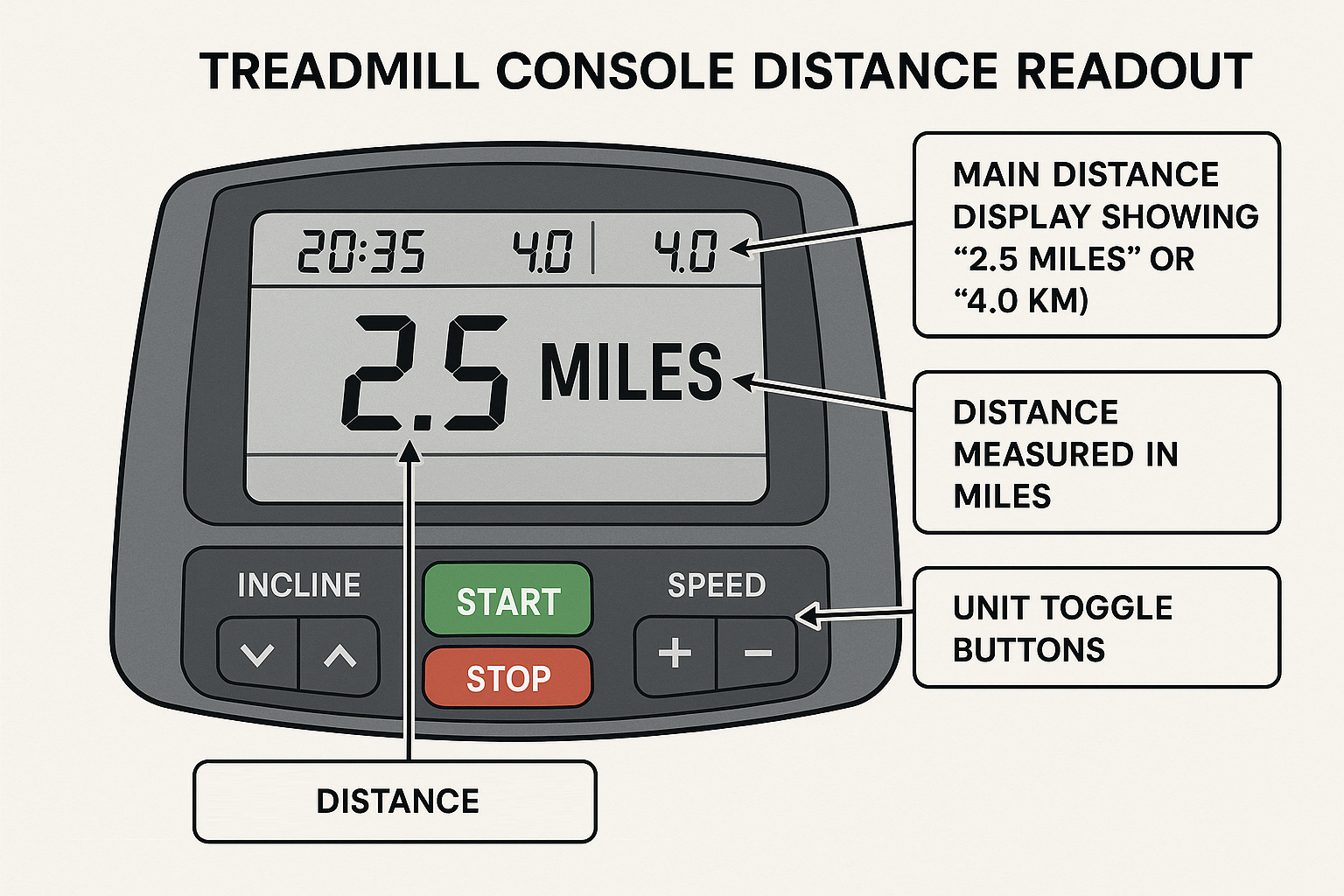
Most treadmill consoles show several workout details at once. Distance is often placed near time, speed, calories, and heart rate.
Look for labels such as:
• Distance
• Dist
• Mi
• Km
• Miles
• Kilometers
A number such as 0.75 means you have covered three quarters of a mile or kilometer. A number such as 1.50 means one and a half miles or kilometers.
Some treadmills show distance with two decimal places. Others show only one decimal place. A display reading of 2.3 may mean 2.3 miles, while a reading of 2.30 provides the same distance with extra display detail.
The console may cycle between different workout stats. Press the Display, Mode, or Select button if you cannot see distance. On some machines, you may need to pause the workout to view the complete summary.
When learning how to read distance on a treadmill, always check these three details:
-
Find the distance field on the display.
-
Identify whether the unit is miles or kilometers.
-
Check whether the number is current distance or a saved workout total.
Some gym treadmills reset distance when a new user starts. Others continue counting until someone presses Stop or Reset. Confirm the number at the end of your session.
Miles Versus Kilometers on a Treadmill
The largest source of confusion is the difference between miles and kilometers.
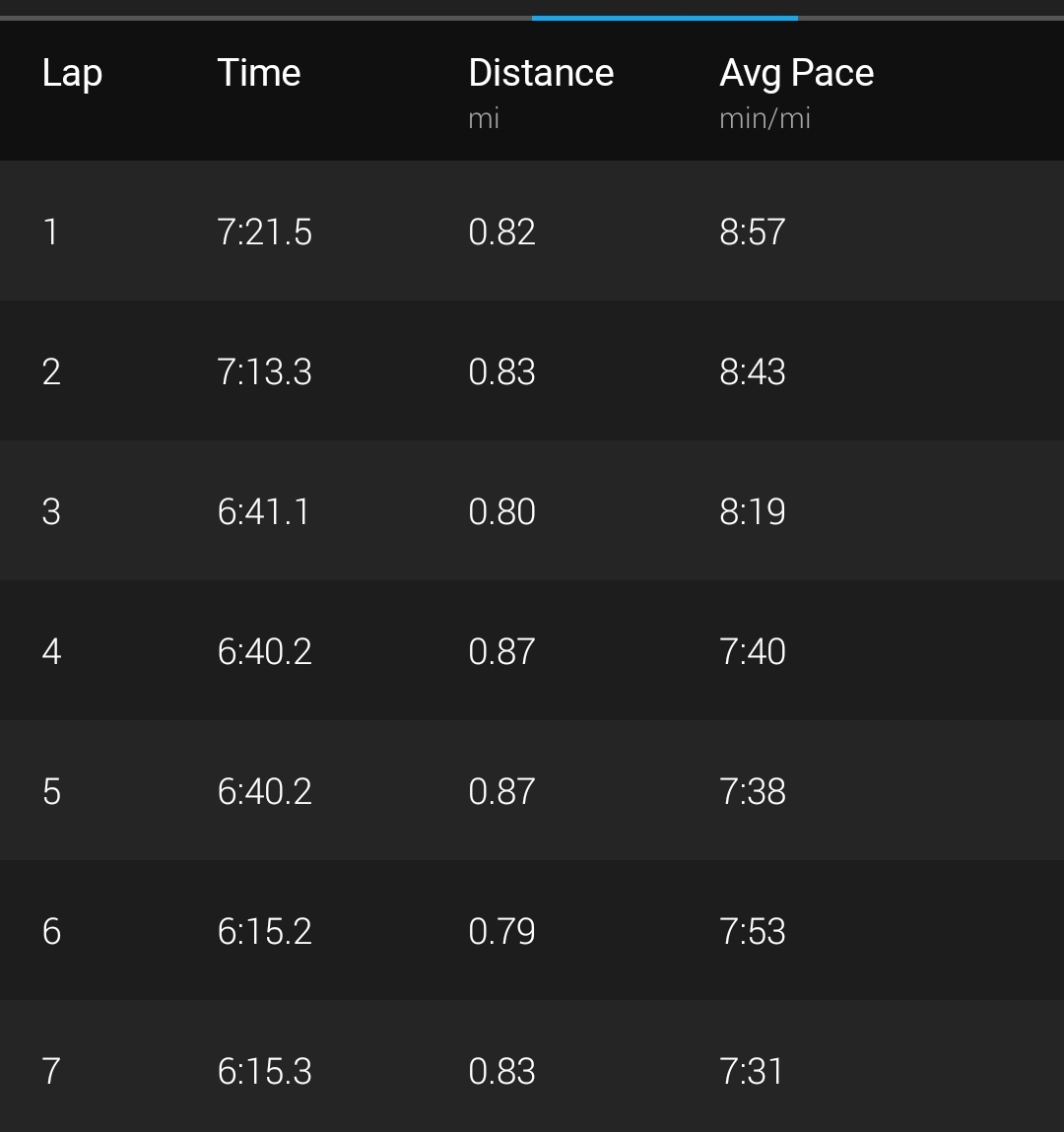
One mile equals about 1.609 kilometers. One kilometer equals about 0.621 miles. This means a treadmill showing 5.00 kilometers has recorded about 3.11 miles.
Use these basic conversions:
• Miles to kilometers: multiply miles by 1.609
• Kilometers to miles: multiply kilometers by 0.621
Here are a few useful examples:
| Treadmill reading | Approximate equivalent |
|---|---|
| 1 mile | 1.61 kilometers |
| 2 miles | 3.22 kilometers |
| 3 miles | 4.83 kilometers |
| 5 kilometers | 3.11 miles |
| 10 kilometers | 6.21 miles |
Many treadmills sold in the United States use miles as the default setting. However, a treadmill at a hotel, school, or international gym may use kilometers.
The speed can also reveal the unit. A walking speed of 3.0 is reasonable in miles per hour. A speed of 3.0 kilometers per hour is a slower walk. A running speed of 10.0 may be fast in miles per hour but moderate in kilometers per hour.
If the result seems strange, check the unit before changing your workout plan. This small step makes how to read distance on a treadmill much easier.
How Treadmill Distance Is Calculated
A treadmill calculates distance with a simple formula:
Distance equals speed multiplied by time.
If speed is measured in miles per hour, time must be measured in hours. For example:
• Speed: 4 miles per hour
• Time: 30 minutes, or 0.5 hours
• Distance: 4 × 0.5 = 2 miles
The same formula works for kilometers. A person walking at 6 kilometers per hour for 30 minutes covers about 3 kilometers.
The treadmill uses sensors to track belt movement. It combines that movement with the selected speed to estimate distance. On many home treadmills, the machine does not directly measure your body position or stride. It measures the belt.
This explains why distance can still count when you hold the handrails. The belt continues to move even if your body slows or shifts. Your personal effort may change, but the displayed belt distance may remain similar.
Incline affects effort, but it usually does not change the distance calculation. A treadmill moving at 4 miles per hour for 30 minutes still records about 2 miles whether the incline is 0% or 8%.
That distinction matters. Distance tells you how far the belt moved. It does not fully describe workout difficulty, energy use, or outdoor performance.

Is the Distance on a Treadmill Accurate?
Treadmill distance is often accurate enough for everyday training, but it is not perfect. Accuracy depends on the machine, belt condition, speed sensor, calibration, and maintenance.
A well-maintained commercial treadmill may provide a reliable estimate. A low-cost home treadmill may show a different result from a gym machine during the same workout.
Common reasons for distance differences include:
• The treadmill sensor may need calibration.
• The belt may slip or stretch.
• The machine may use an incorrect speed setting.
• The treadmill may not be level.
• The console may round the distance.
• The user may hold the handrails or pause often.
A small difference is normal. For example, a treadmill reading of 3.00 miles compared with a watch reading of 2.9 or 3.1 miles does not automatically mean one device is broken.
Fitness watches can also struggle indoors. Many estimate distance from arm movement, stride length, or foot sensors. If you hold the rails, change your stride, or walk slowly, the watch may become less accurate.
For consistent tracking, use the same treadmill when possible. Keep the speed, incline, and workout style similar. Consistency is often more useful than chasing perfect laboratory accuracy.
When explaining how to read distance on a treadmill, I emphasize this practical lesson: treat the number as a training estimate, not a scientific measurement of every step you take.

How to Check and Improve Treadmill Accuracy
You can perform a simple check by comparing the displayed distance with the time and speed.
Suppose the treadmill shows 5 miles per hour for 24 minutes. Convert 24 minutes to 0.4 hours. Then calculate:
5 × 0.4 = 2 miles
If the console shows a result close to 2 miles, the calculation appears consistent. A major difference may suggest a display, sensor, or settings issue.
Try these steps:
-
Confirm the treadmill uses miles or kilometers.
-
Set a steady speed.
-
Walk or run for a measured time, such as 20 or 30 minutes.
-
Calculate the expected distance.
-
Compare your result with the display.
Many treadmills have a calibration option in the settings menu. Calibration steps differ by brand, so follow the machine’s manual. Do not open the motor cover unless you are qualified to work on treadmill equipment.
Keep the belt clean and properly lubricated. A loose or damaged belt can affect performance and may create a safety risk. If the belt jerks, slips, or changes speed, stop using the machine and ask a technician to inspect it.
A useful lesson from real-world treadmill tracking is to avoid changing several variables at once. If you switch machines, units, incline, and speed in the same week, it becomes hard to know what caused a change in distance or pace.

How Incline, Speed, and Pauses Affect Distance
Speed and time directly control treadmill distance. Incline changes the effort but usually does not change the belt distance.
For example, these two workouts produce the same distance:
• 30 minutes at 4 miles per hour with 0% incline: 2 miles
• 30 minutes at 4 miles per hour with 5% incline: 2 miles
The second workout is harder because your muscles work against gravity. Research on treadmill exercise shows that incline can raise the physical demand of walking or running. Still, the distance field may remain exactly the same.
Pauses require more attention. Some treadmills stop the distance count during a pause. Others keep the workout timer or distance active for a short period. Read the summary screen after the session to confirm the final total.
Intervals can also make the display confusing. If you alternate between 3 miles per hour and 6 miles per hour, the distance reflects the average result of all belt movement. It does not show how far you traveled at each speed unless the treadmill saves lap data.
A simple workout example:
• 5 minutes at 3 miles per hour: 0.25 mile
• 20 minutes at 6 miles per hour: 2 miles
• Total distance: 2.25 miles
This is another reason how to read distance on a treadmill requires looking at the full workout, not just the final speed.

Treadmill Distance Compared With Outdoor Distance
A treadmill and an outdoor route measure movement in different ways.
A treadmill measures belt movement in a controlled setting. Outdoor distance may come from GPS, a measured path, a foot pod, or a fitness watch. Each method has limits.
Treadmill running has no wind resistance unless a fan creates airflow. Outdoor terrain may include hills, turns, uneven ground, and changes in surface. These factors can make the same displayed distance feel different.
A flat treadmill run may feel easier than an outdoor run at the same pace. Setting a small incline is sometimes used to make indoor running feel more similar to outdoor running, but there is no single incline that perfectly matches every route or weather condition.
For training, choose one main measurement system:
• Use treadmill distance for indoor workout records.
• Use GPS distance for outdoor route records.
• Compare pace and effort, not distance alone.
If you train for a road race, use time, pace, perceived effort, and outdoor sessions together. A treadmill is excellent for controlled intervals, heat avoidance, and steady pacing. It simply cannot copy every outdoor condition.
This balanced approach helps you understand how to read distance on a treadmill without assuming that indoor and outdoor numbers will always match exactly.

How to Track Treadmill Distance Correctly
A simple tracking method makes your records more useful.
Before the workout, write down:
• Treadmill unit: miles or kilometers
• Starting distance
• Planned speed or speed range
• Incline setting
• Workout time
After the workout, record:
• Final distance
• Average speed
• Average pace, if shown
• Total time
• Any pauses
• How hard the workout felt
Keep the same unit in your fitness app or training log. If you switch from miles to kilometers without noticing, your weekly totals may look much higher or lower than expected.
For runners, pace is also important. Pace means the time needed to cover one mile or one kilometer. If a treadmill shows 6 miles per hour, the pace is 10 minutes per mile.
You can use this formula:
Pace per mile = 60 ÷ speed in miles per hour
Examples:
• 3 miles per hour equals 20:00 per mile
• 4 miles per hour equals 15:00 per mile
• 6 miles per hour equals 10:00 per mile
• 8 miles per hour equals 7:30 per mile
Do not rely only on calorie numbers. Treadmill calorie estimates may use your weight, speed, incline, and sometimes heart rate, but they are still estimates. Distance, time, pace, and effort are usually better for tracking training progress.

Common Mistakes to Avoid
Many treadmill distance errors come from simple habits rather than faulty equipment.
Avoid these mistakes:
• Recording kilometers as miles
• Starting the workout log before checking the unit
• Comparing treadmill distance with GPS without considering device limits
• Holding the handrails during most of the workout
• Forgetting that pauses may affect the total
• Comparing different machines as if they were perfectly calibrated
• Assuming incline changes the distance number
• Using a phone app that is not designed for indoor distance
Holding the rails can reduce the physical challenge and change your natural walking pattern. If you need support, reduce the speed or incline instead. Use the handrails for balance when starting, stopping, or stepping off the belt.
Another common mistake is focusing on a single workout. Treadmill displays can vary slightly, but trends are more useful. If your distance rises gradually while your effort stays manageable, that is a positive sign.
The best way to apply how to read distance on a treadmill is to use the same process each time: check the unit, note the time and speed, record the distance, and compare similar sessions.
Frequently Asked Questions About How to Read Distance on a Treadmill
How do I know if my treadmill shows miles or kilometers?
Look for “mi,” “mile,” “km,” or “kilometer” near the distance or speed number. You can also check the settings menu or compare the speed with a familiar walking pace.
Is treadmill distance the same as outdoor distance?
Not always. A treadmill measures belt movement, while outdoor devices often use GPS or stride estimates, so small differences are normal.
How far is 30 minutes on a treadmill?
The distance depends on your speed. At 3 miles per hour, you cover about 1.5 miles; at 6 miles per hour, you cover about 3 miles.
Does incline change treadmill distance?
Usually, no. Incline increases workout difficulty, but the treadmill generally calculates distance from belt speed and time.
Why does my treadmill distance differ from my fitness watch?
Treadmills measure belt movement, while watches may estimate indoor distance from stride, arm motion, or foot sensors. Holding the rails or changing your stride can increase the difference.
Can I convert treadmill kilometers to miles?
Yes. Multiply kilometers by 0.621 to estimate miles. For example, 5 kilometers equals about 3.11 miles.
How can I make treadmill distance tracking more reliable?
Use the same treadmill, confirm the unit, keep the belt maintained, and record time, speed, incline, and distance together. Consistent conditions make your workout records easier to compare.
Conclusion
Reading treadmill distance comes down to three key checks: find the distance number, confirm miles or kilometers, and understand that the result measures belt movement. Speed and time determine the distance, while incline mainly changes effort. Small differences between treadmill, watch, and outdoor readings are normal.
Use one tracking method for several weeks, record your workout details, and focus on steady progress instead of perfect numbers. Now that you know how to read distance on a treadmill, apply the steps in your next workout and share your results or questions in the comments.

Brandon Knoxley is a sport & fitness writer and training guide contributor at MySportFitHub. He focuses on practical workouts, performance-based training, and honest fitness gear insights designed for real people and real results. Brandon is passionate about helping beginners and active individuals train smarter, avoid common mistakes, and build sustainable fitness habits.