Is Incline Treadmill Good For Fat Loss: The Real Answer
Yes, an incline treadmill can support fat loss by raising calorie burn and making walking more challenging.
If you are asking, “is incline treadmill good for fat loss,” the answer is yes, but the results depend on your food intake, workout plan, effort, and consistency. Incline walking can turn a simple treadmill session into a low-impact workout that trains your heart, legs, and core while helping you create the calorie deficit needed to lose body fat. This guide explains how it works, how much incline to use, common mistakes, and how to build a safe plan that fits real life.

Is incline treadmill good for fat loss?
Yes, incline treadmill walking can be very effective for fat loss. Raising the treadmill increases the work your muscles must do, especially in your calves, hamstrings, glutes, and hips. Your heart rate also tends to rise, which can increase energy use during the workout.
The key point is that no treadmill setting can directly “burn” fat on its own. Fat loss happens when you use more energy than you eat over time. An incline treadmill can make that goal easier by helping you burn more calories without needing to run.
For many people, incline walking is a smart middle ground. It feels harder than flat walking but is often easier on the joints than running. That makes it useful for beginners, people with extra body weight, and anyone who wants a steady workout they can repeat several times each week.
Research on exercise and weight control shows that regular aerobic activity can support fat loss, especially when combined with a balanced eating plan. Still, individual results vary. Fitness level, body size, workout intensity, sleep, stress, and diet all affect the final outcome.
When people ask me, “is incline treadmill good for fat loss,” I explain that the best workout is one they can perform often and recover from well. A 30-minute incline walk done four times a week can be more useful than one exhausting workout followed by several inactive days.

How incline walking helps burn fat
Incline walking increases the force needed to move your body upward. Even a small incline can make a major difference in effort because your muscles must push against gravity.
On a flat treadmill, your body mainly moves forward. On an incline, your glutes and hamstrings work harder to extend your hips, while your calves help push you upward. Your breathing may also become faster because your body needs more oxygen.
Incline walking may support fat loss in several ways:
• It increases calorie use compared with walking at the same speed on a flat surface.
• It raises your heart rate without requiring a fast running pace.
• It strengthens large lower-body muscles.
• It can improve cardiovascular fitness.
• It may reduce boredom by adding variety to your workout.
• It offers a lower-impact option than jogging for many people.
A higher calorie burn can help you create a calorie deficit. However, treadmill calorie displays are estimates, not exact measurements. They may overestimate energy use because they cannot fully account for your fitness level, movement pattern, body composition, or whether you hold the handrails.
This is why I suggest using the treadmill display as a rough guide. Track your progress through workout time, incline, speed, heart rate, waist measurements, strength, and how your clothes fit. These measures often tell a clearer story than calories alone.
If you are still wondering, “is incline treadmill good for fat loss,” think of it as a helpful tool rather than a magic solution. It can raise your daily energy use, but your overall habits determine whether body fat decreases.
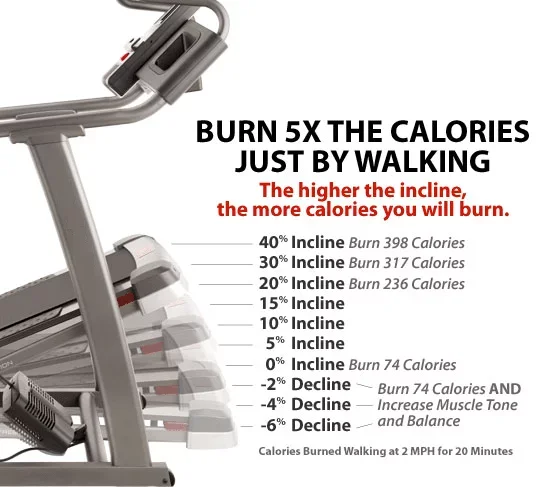
Incline treadmill versus flat walking
Flat walking is still valuable. It is simple, accessible, and easy to recover from. Incline walking simply adds more resistance and can produce a greater training effect in less time.
For example, walking at 3 miles per hour on a flat treadmill may feel comfortable for many people. Walking at the same speed with a 5% to 10% incline can feel much harder. Your heart rate may rise, and your lower-body muscles must work more.
The best choice depends on your goal and fitness level:
• Flat walking is useful for warmups, recovery days, and long steady sessions.
• Moderate incline walking is useful for increasing effort without running.
• Short hill intervals are useful for people who want a more challenging workout.
• A steep incline at a slow speed can build muscular endurance but may place more stress on the calves and Achilles tendons.
A common mistake is assuming that more incline always means faster fat loss. That is not true. A steep setting may force you to stop early or lean heavily on the rails. A moderate incline that allows steady movement may produce better results over several weeks.
For most beginners, the best plan is to start with a 2% to 5% incline. After your body adapts, you can slowly increase the incline, speed, or workout time. Change only one factor at a time so you know how your body responds.
Best incline and speed for fat loss
There is no single best incline or speed for everyone. The right setting should challenge you while allowing good posture and controlled breathing.
A useful starting range is:
• Incline: 3% to 6%
• Speed: 2.5 to 3.5 miles per hour
• Time: 20 to 35 minutes
• Frequency: 3 to 5 sessions per week
You should feel that you are working, but you should not feel completely exhausted after every session. On a simple effort scale from 1 to 10, aim for about 5 to 7 during most incline walks.
The talk test can also help. You should be able to speak in short sentences, but you may not be able to hold a long conversation. If you cannot speak at all, lower the speed or incline.
As your fitness improves, try one of these progressions:
-
Add five minutes to your workout.
-
Increase the incline by 1% to 2%.
-
Increase speed slightly while keeping the same incline.
-
Add short periods of higher incline.
-
Use a longer session once per week.
Do not increase every setting at once. For example, moving from 2.5 miles per hour at a 3% incline to 4 miles per hour at a 12% incline may overload your legs and cause soreness or injury.
So, is incline treadmill good for fat loss at a low incline? Yes. You do not need a steep hill to get useful results. Consistent moderate effort is often more sustainable than extreme effort.
Incline treadmill workout plan for beginners
A beginner plan should build fitness gradually. The goal is to finish feeling challenged but capable of doing the next session.
Try this 30-minute workout:
-
Warm up for 5 minutes at 0% to 2% incline.
-
Walk for 5 minutes at a 3% incline.
-
Walk for 5 minutes at a 5% incline.
-
Return to a 3% incline for 5 minutes.
-
Repeat the 5% incline for 5 minutes if you feel comfortable.
-
Cool down for 5 minutes at 0% to 2% incline.
Keep the speed at a level that supports good form. For some people, that may be 2 miles per hour. For others, it may be 3.5 miles per hour. Speed is less important than steady effort and control.
After two or three weeks, you can try simple intervals:
• Walk for 3 minutes at a 3% incline.
• Walk for 2 minutes at a 7% incline.
• Repeat the pattern five times.
• Cool down for 5 minutes.
If your knees, hips, calves, or lower back hurt, reduce the incline and check your posture. Muscle effort is normal. Sharp pain is not something to push through.
In my experience, beginners often progress too quickly because the treadmill makes it easy to change settings. A better approach is to leave the workout feeling that you could do a little more. That mindset builds consistency and reduces the risk of quitting after a painful session.
Incline treadmill workout for intermediate users
Once you can complete 30 to 40 minutes of incline walking without unusual pain or extreme fatigue, you can add structured intervals. These sessions improve fitness and may increase your total energy use.
Try this 35-minute workout:
-
Warm up for 5 minutes at a low incline.
-
Walk for 3 minutes at a 4% incline.
-
Walk for 2 minutes at an 8% incline.
-
Repeat the pattern six times.
-
Cool down for 5 minutes.
You can adjust the speed instead of the incline if your treadmill feels unstable at higher levels. Some people respond better to a faster pace at a mild incline, while others prefer a slower pace on a steeper hill.
Another option is a gradual hill workout:
• Minutes 1 to 5: 2% incline
• Minutes 6 to 10: 4% incline
• Minutes 11 to 15: 6% incline
• Minutes 16 to 20: 8% incline
• Minutes 21 to 25: 5% incline
• Minutes 26 to 30: 2% incline
This workout feels like climbing a long hill and then coming back down. It can be mentally easier than holding one hard setting for the entire session.
Avoid turning every workout into an interval workout. Two challenging sessions per week are enough for many people. Use easier walks between them to support recovery.
How long should you walk on an incline treadmill?
Many people can start with 20 to 30 minutes per session. As your fitness improves, you may increase the duration to 40 or 60 minutes, depending on your schedule and recovery.
Weekly exercise guidelines commonly recommend at least 150 minutes of moderate aerobic activity for general health. Some people may need more activity to support significant weight loss, especially if they do not change their food intake.
A practical weekly schedule may look like this:
• Monday: 30-minute incline walk
• Tuesday: Strength training or easy flat walking
• Wednesday: 25-minute incline intervals
• Thursday: Rest or gentle movement
• Friday: 35-minute incline walk
• Saturday: Strength training or a longer easy walk
• Sunday: Rest
You do not have to complete all activity on a treadmill. Outdoor walking, cycling, swimming, and sports can also support fat loss. Variety may help you stay interested and reduce repetitive strain.
If time is limited, break one workout into shorter blocks. Three 10-minute walks can still add useful movement to your day. A short walk after meals may also help increase daily activity and support blood sugar control.
The best answer to “is incline treadmill good for fat loss” is not based only on workout length. It depends on how often you train, how hard you work, and whether the plan fits your life.
Does incline walking burn belly fat?
Incline walking can help reduce overall body fat, but it cannot target fat from your stomach alone. The body decides where it stores and loses fat based on genetics, hormones, age, and other factors.
As your total body fat decreases, your waist may become smaller. However, doing more incline walking does not force the body to burn fat only from the abdomen. Claims about spot reduction are not supported by strong evidence.
You can support a leaner waist by combining:
• Regular aerobic exercise
• Strength training two or more times per week
• Adequate protein
• A moderate calorie deficit
• High-fiber foods
• Consistent sleep
• Stress management
Strength training is especially useful because it helps preserve muscle during weight loss. Muscle gives your body shape and supports daily movement. Incline walking and strength training work well together because one improves endurance while the other builds strength.
It is also normal for belly fat to be one of the slower areas to change. Take progress photos or waist measurements every few weeks rather than judging your results day by day.
Incline treadmill benefits beyond fat loss
The benefits of incline treadmill walking go beyond calorie burn. It can improve your fitness and make everyday movement easier.
Better cardiovascular fitness
Incline walking challenges your heart and lungs. Over time, you may notice that stairs, hills, and longer walks feel easier.
Stronger lower-body muscles
The glutes, hamstrings, calves, and quadriceps all contribute to uphill walking. The workout is not a replacement for strength training, but it can improve muscular endurance.
Lower joint impact than running
Walking usually creates less impact than running. That does not make it risk-free, but it may be a more comfortable option for people who do not enjoy jogging.
Improved exercise consistency
A treadmill is available in many gyms and homes. You can use it during bad weather, in the dark, or when outdoor routes are not safe.
Better control over training
You can set the exact speed and incline. This makes it easier to repeat workouts and track progress.
Support for mood and stress
Regular aerobic exercise can support mental well-being. Many people find that a steady walk helps clear the mind after work or reduces daily stress.
These benefits matter because fat loss is not only about a number on the scale. Better fitness, strength, energy, and confidence can help you maintain healthy habits for the long term.
Common incline treadmill mistakes
Incline walking is simple, but small mistakes can reduce its value or increase injury risk.
Holding the handrails
Holding the rails supports part of your body weight and reduces the challenge. It can also change your posture and place stress on your shoulders.
Use the rails only for balance when starting, stopping, or adjusting the machine. Lower the incline if you cannot walk safely without holding on.
Leaning too far forward
A slight forward lean from the ankles is normal on a hill. Bending at the waist is not. Keep your chest lifted, eyes forward, and shoulders relaxed.
Using an incline that is too steep
A steep incline can overload your calves, feet, and Achilles tendons. Build slowly and include warmups.
Ignoring strength training
Incline walking trains the legs, but it does not fully train the upper body or provide the same muscle-building stimulus as resistance exercise.
Chasing the calorie display
Machine calorie numbers are estimates. Do not use them as permission to eat back every calorie shown.
Training hard every day
Your body needs recovery. Too much high-intensity work can lead to sore joints, poor sleep, and reduced motivation.
Wearing poor shoes
Choose comfortable shoes with good support and enough room for your toes. Replace worn shoes when the cushioning and tread are no longer reliable.
Nutrition tips to support incline treadmill fat loss
Exercise helps, but food intake has a major effect on fat loss. You do not need a severe diet. A small, steady calorie deficit is often easier to maintain.
Build meals around:
• Protein such as eggs, poultry, fish, Greek yogurt, tofu, beans, or lean meat
• High-fiber foods such as vegetables, fruit, oats, potatoes, and whole grains
• Healthy fats such as nuts, seeds, olive oil, and avocado
• Water and other low-calorie drinks
Protein can help support muscle while you lose weight. Fiber may help you feel full for longer. Both can make it easier to manage portions without constant hunger.
Be careful with the “I exercised, so I can eat anything” mindset. A large coffee drink, restaurant meal, or snack can contain more calories than an incline walk burns. This does not mean you must avoid those foods. It means you should view them as part of your total intake.
A simple approach is to make most meals filling and nutrient-rich, then allow room for foods you enjoy. Extreme restriction often leads to overeating later.
Who should use caution with incline walking?
Most healthy adults can try moderate walking, but some people should speak with a health professional first. This includes people with heart disease, uncontrolled high blood pressure, severe joint pain, balance problems, or recent surgery.
Pregnant people should follow advice from their medical provider, especially if they are new to exercise. People with diabetes may also need to monitor blood sugar and plan meals or medication around activity.
Stop the workout and seek medical help for symptoms such as:
• Chest pain or pressure
• Severe shortness of breath
• Fainting or confusion
• Sudden weakness
• New severe joint pain
Mild muscle fatigue is common. Sharp pain, swelling, numbness, or pain that changes your walking pattern deserves attention.
Safety comes before calorie burn. A slower walk with good form is better than a difficult workout that causes an injury.
How to track progress
The scale can be useful, but it should not be your only measure. Body weight changes daily because of water, sodium, digestion, hormones, and exercise-related inflammation.
Track several signs of progress:
• Weekly average body weight
• Waist and hip measurements
• Treadmill speed and incline
• Workout duration
• Resting heart rate
• Energy levels
• Sleep quality
• How your clothes fit
Try to compare data under similar conditions. Weigh yourself at the same time of day, and measure your waist every two to four weeks.
A realistic rate of weight loss varies, but gradual progress is usually easier to maintain. If nothing changes after several weeks, review your food portions, daily activity, sleep, and workout consistency before making a major adjustment.
Remember that improved fitness can happen even when body weight stays the same for a while. You may be gaining strength, retaining muscle, or experiencing normal water changes.
Is incline treadmill good for fat loss every day?
You can walk on a treadmill every day if the sessions are easy enough and your body feels recovered. However, you do not need to use a steep incline every day to lose fat.
A balanced plan might include:
• Two moderate incline workouts
• One interval workout
• Two easy flat walks
• Two rest or active recovery days
You can also use short, easy walks on rest days. The important factor is managing total stress on your legs and feet.
If your calves stay sore, your sleep worsens, or your performance drops, reduce the incline or take an extra rest day. Progress comes from training and recovery together.
Frequently Asked Questions About Is Incline Treadmill Good for Fat Loss
Is incline treadmill good for fat loss if I only walk?
Yes, incline walking can support fat loss by increasing energy use and improving fitness. Your food intake still matters because fat loss requires a consistent calorie deficit over time.
What incline is best for fat loss?
A 3% to 8% incline works well for many people. Start lower, focus on good form, and increase the incline slowly as your fitness improves.
Is incline treadmill better than running for fat loss?
Neither is automatically better. Running may burn more calories per minute, but incline walking is often easier on the joints and may be more sustainable for people who dislike or cannot tolerate running.
Can I lose belly fat with an incline treadmill?
Incline walking can help reduce total body fat, which may eventually reduce belly fat. It cannot target fat loss from one specific body area.
How often should I use an incline treadmill?
Many people can use it three to five times per week. Mix moderate sessions with easy walking and rest so your muscles and joints can recover.
Should I hold the treadmill rails?
Try not to hold the rails while walking because this reduces the workload and can affect posture. Use them briefly for balance, then lower the speed or incline if you need support.
How long does it take to see results from incline walking?
Some people notice better energy and fitness within a few weeks. Visible fat loss often takes longer and depends on nutrition, starting weight, workout consistency, sleep, and genetics.
Conclusion
So, is incline treadmill good for fat loss? Yes. Incline walking can raise calorie use, strengthen your lower body, improve cardiovascular fitness, and provide a lower-impact alternative to running.
Start with a manageable incline, use a pace you can control, and build your workouts slowly. Pair treadmill sessions with strength training, filling foods, enough protein, and good recovery. The most effective plan is the one you can repeat week after week.
Choose one simple workout and try it this week. Track your time, incline, effort, and progress rather than chasing a perfect number on the treadmill screen. For more practical fitness guidance, explore related training resources or share your experience in the comments.

Brandon Knoxley is a sport & fitness writer and training guide contributor at MySportFitHub. He focuses on practical workouts, performance-based training, and honest fitness gear insights designed for real people and real results. Brandon is passionate about helping beginners and active individuals train smarter, avoid common mistakes, and build sustainable fitness habits.