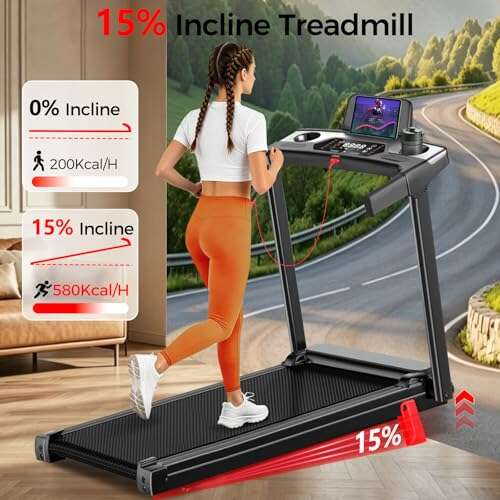
What’s The Benefit Of A Curved Treadmill: Key Benefits
A curved treadmill can improve running form, raise workout intensity, and support powerful, self-paced training.
If you are asking, “what’s the benefit of a curved treadmill,” the answer goes beyond its unusual shape. This nonmotorized machine changes how your feet, legs, and core work together. It can make walking, jogging, sprinting, and interval training feel more natural while giving you close control over speed. This guide explains the science, real-world benefits, limits, safety tips, and buying factors that matter.

What Is a Curved Treadmill?
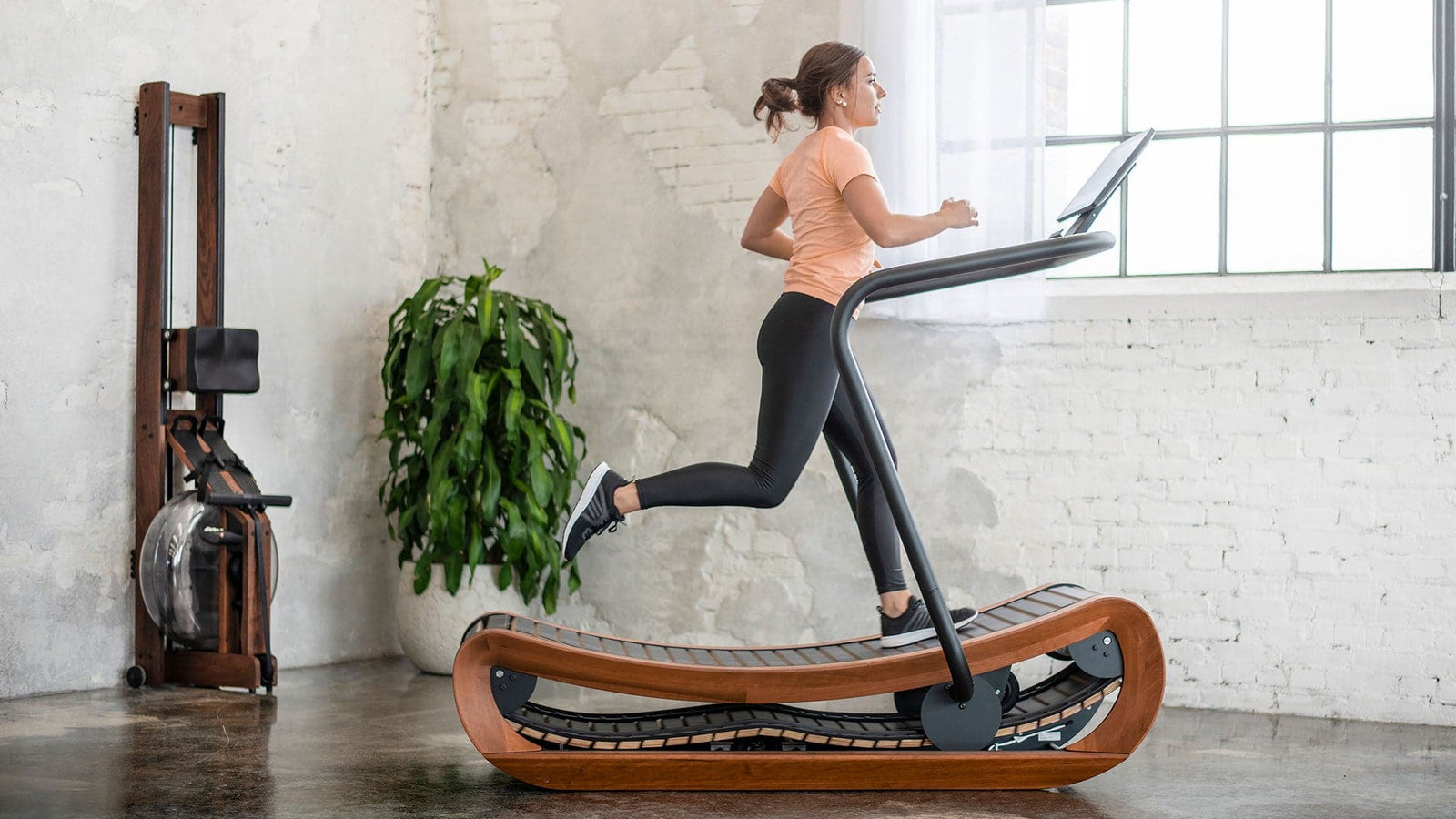
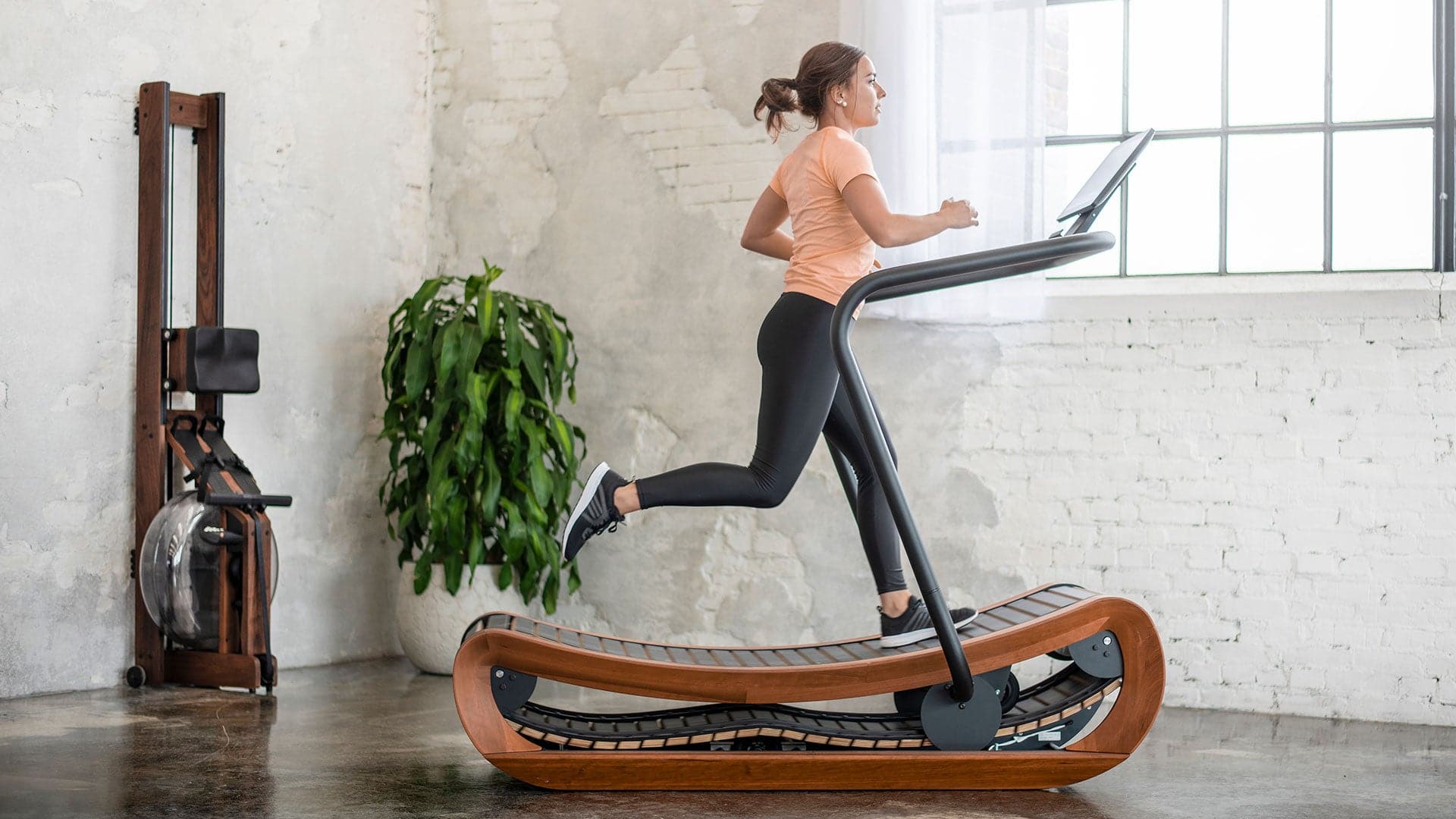
A curved treadmill has a slatted running belt that bends upward at the front and back. It does not use a motor to pull the belt under you. Instead, your foot strike pushes the belt backward, which moves the belt and keeps you going.
This design makes the treadmill self-powered. You control the pace by moving your body forward or backward on the deck.
• Move closer to the front to speed up.
• Move toward the center to hold a steady pace.
• Step slightly back to slow down.
The curved deck acts like a gentle hill. It encourages you to land under your body and push the belt back with each stride. In simple terms, the machine responds to you rather than forcing you to match a motor-driven speed.
That is the main reason the answer to “what’s the benefit of a curved treadmill” differs from the answer for a standard treadmill. A regular treadmill sets the belt speed. A curved treadmill asks your body to create and manage the speed.

What’s the Benefit of a Curved Treadmill?
The biggest benefit of a curved treadmill is that it combines self-paced movement with a demanding full-body workout. It can improve running mechanics, increase energy use, and support short, powerful training sessions.
Here are the main benefits.
1. It Uses More Muscles
A curved treadmill often requires more work from the glutes, hamstrings, calves, and core. Your legs must push the belt backward instead of simply following a moving belt.
The glutes help extend the hips. The hamstrings help control the leg. The calves help push through the foot. Your core helps keep your body stable as your pace changes.
This does not mean every curved treadmill workout builds large muscles. Strength growth still depends on training load, food, rest, and progressive overload. However, the machine can make each step more active.
2. It Can Increase Workout Intensity
Research on nonmotorized treadmills shows that users may experience higher heart rates, oxygen use, and perceived effort than they do at similar speeds on motorized treadmills. The exact difference depends on the machine, speed, body position, and fitness level.
This is one of the clearest answers to “what’s the benefit of a curved treadmill.” You may reach a strong training effect in less time because you must create the belt movement yourself.
A 15-minute interval workout may feel far harder on a curved treadmill than on a motorized treadmill. That can help busy people train with purpose, but it also means beginners should start slowly.
3. It Supports Natural Speed Control
A curved treadmill does not force you to keep up with a moving belt. You can speed up or slow down almost at once.
That feature works well for:
• Sprint intervals
• Shuttle-style efforts
• Fartlek workouts
• Speed changes
• Sports conditioning
• Warmups and cooldowns
This natural control can make the machine feel more like outdoor running. You can respond to fatigue without reaching for buttons or worrying about a sudden belt change.
4. It May Encourage Better Running Form
The curved shape tends to reward a shorter stride and a foot strike closer to your center of mass. Many runners also feel encouraged to keep their chest tall, lean slightly forward, and drive the legs back.
Good form is not one fixed pose. It changes with speed, body structure, and skill. Still, a curved treadmill can provide useful feedback. If you overstride or lose control, your pace may drop quickly.
That immediate response can teach body awareness. It is like learning to ride a bike on a gentle path: the machine gives you feedback through movement.
5. It Can Be Useful for Interval Training
Curved treadmills are popular in athletic training because they allow quick changes between hard and easy efforts. You can sprint without waiting for a motor to accelerate.
Try this beginner session:
-
Walk for 3 minutes.
-
Jog easily for 2 minutes.
-
Run hard for 15 seconds.
-
Walk or jog for 45 seconds.
-
Repeat the interval four to six times.
-
Cool down for 3 to 5 minutes.
The hard portion should feel challenging but controlled. You should not sprint at full effort during your first session.
6. It Uses No Electricity During Normal Operation
Because the runner powers the belt, a curved treadmill does not need a motor for standard use. This can reduce energy use and remove motor noise.
The machine may also work well in a gym, home, or training space where power access is limited. However, some models still use electricity for screens, heart-rate systems, resistance settings, or data displays.
Energy savings are useful, but they should not be the only reason to buy one. A curved treadmill often costs more than a basic motorized treadmill, and its workout feel is different.
7. It Can Improve Training Variety
A curved treadmill gives you more than one way to train. You can walk, jog, run, sprint, push the belt, or use added resistance if the model supports it.
This variety may help prevent stale workouts. You can also use it for short sessions when you do not want a long, steady run.
For example, a weekly plan might include:
• One easy walking session
• One short interval workout
• One strength session
• One steady outdoor run
A curved treadmill does not need to replace all other exercise. It can serve as a useful tool within a balanced plan.
8. It May Offer a Lower-Impact Alternative for Some Users
Some runners find a curved treadmill comfortable because the slatted belt feels firm and responsive. Others prefer the softer feel of a cushioned motorized treadmill.
Impact depends on body weight, speed, footwear, running form, and the machine itself. A curved treadmill is not automatically low impact. Faster running can still place high loads on the feet, ankles, knees, and hips.
If you have joint pain, begin with walking and short jogs. A physical therapist can help you choose a safe training level.

How Does a Curved Treadmill Compare With a Regular Treadmill?
The difference becomes clear when you compare how each machine creates movement.
A motorized treadmill pulls the belt at a chosen speed. Your job is to keep pace with the belt. A curved treadmill relies on your force to move the belt, so your body controls the pace.
| Feature | Curved treadmill | Motorized treadmill |
|---|---|---|
| Belt movement | Powered by the user | Powered by a motor |
| Speed control | Controlled by body position | Controlled by buttons or settings |
| Workout feel | More active and responsive | More steady and predictable |
| Sprint changes | Fast and natural | May require acceleration time |
| Energy use | Usually lower during use | Uses electricity |
| Learning curve | Often higher | Usually easier for beginners |
| Best use | Intervals, sprints, conditioning | Walking, distance runs, incline work |
Neither design is best for everyone. A regular treadmill may be better for long, steady runs, precise pace work, or rehabilitation. A curved treadmill may be better for athletes, interval fans, and people who enjoy active movement.
When people ask, “what’s the benefit of a curved treadmill compared with a regular treadmill,” the key point is user control. The curved model makes your body the engine and the speed control.

Does a Curved Treadmill Burn More Calories?
It can, but the result is not guaranteed. Studies of nonmotorized treadmills often find higher oxygen demand and energy use than motorized treadmill exercise at matched speeds. Yet the comparison can be difficult because speed on a curved treadmill is not always measured in the same way.
Your calorie burn depends on:
• Body weight
• Workout duration
• Running speed
• Effort level
• Incline or resistance
• Fitness level
• Rest periods
A short, hard workout may burn many calories per minute but fewer total calories than a longer easy walk. Do not use calorie numbers as exact facts. Treadmill screens estimate energy use, and those estimates can be off.
A better goal is to track effort, time, pace trends, and how you recover. If you finish a workout feeling strong enough to train again, you likely found a useful intensity.
What Muscles Does a Curved Treadmill Work?
A curved treadmill mainly challenges the lower body and core. The exact muscle demand changes with speed and technique.
Glutes and Hamstrings
These muscles help extend the hip and drive your body forward. They often work harder when you actively push the belt backward.
Calves
The calves help stabilize the ankle and assist with push-off. Sprinting and fast intervals can place extra demand on them.
Quadriceps
The quadriceps help absorb force and extend the knee. They remain active during walking, jogging, and running.
Core Muscles
Your abdominal and back muscles help control posture. A stable trunk makes it easier to transfer force from the legs into the belt.
Upper Body
Your arms help balance your stride. If you use the rails often, you may reduce the work done by your core and legs.
A common mistake is holding the front handles during the whole workout. Use the rails for balance when needed, but try to release them when you feel stable.

How to Use a Curved Treadmill Correctly
A good technique makes the workout safer and more effective. Start with control, not speed.
-
Stand near the center of the belt.
-
Place your feet under your hips.
-
Keep your eyes forward.
-
Let your arms swing naturally.
-
Lean slightly from the ankles, not from the waist.
-
Take short, quiet steps.
-
Push the belt back with each stride.
-
Slow down by moving toward the middle or rear of the deck.
Do not stare at your feet. Looking down can round your back and disturb your balance.
In my hands-on treadmill testing, one lesson stands out: new users often try to copy their outdoor sprint form too soon. They lean too far forward, take long steps, and grip the rails. A better approach is to walk first, find the belt’s rhythm, and add speed in small steps.
Wear stable athletic shoes. Check the belt before each session. Keep loose clothing away from the moving parts, and follow the manufacturer’s safety instructions.

A Beginner Curved Treadmill Workout
The answer to “what’s the benefit of a curved treadmill” becomes clearer when you use it in a controlled workout. This simple plan helps you learn the belt without exhausting yourself.
Week One Session
• Warm up with 5 minutes of easy walking.
• Jog lightly for 30 seconds.
• Walk for 90 seconds.
• Repeat five times.
• Cool down with 5 minutes of walking.
Keep the effort around 5 or 6 out of 10. You should be able to speak in short sentences.
After Two or Three Weeks
If your legs feel healthy and recovery is good, try:
• Warm up for 5 minutes.
• Run hard for 20 seconds.
• Walk or jog for 70 seconds.
• Repeat six to eight times.
• Cool down for 5 minutes.
Leave at least one day between hard sessions. Your calves and hamstrings may feel more tired than expected at first.
Mistakes to Avoid on a Curved Treadmill
A curved treadmill can be highly effective, but poor habits may reduce the benefit or increase injury risk.
Starting Too Fast
The machine feels simple, but it demands more active effort. Begin with walking and easy jogging.
Holding the Rails
Holding the rails changes your posture and reduces lower-body work. Use them only for balance or during a safe stop.
Overstriding
Long steps can increase braking forces. Focus on quick, light steps that land near your body.
Ignoring Calf Fatigue
The calves can tire quickly. Stop if you feel sharp pain, cramping, or unusual tightness.
Treating Every Workout as a Sprint
Hard training needs recovery. Use easy walking and steady sessions too.
Trusting the Display Without Question
Speed and calorie readings vary by model. Use the numbers as guides, not medical-grade measurements.
Skipping the Warmup
Cold muscles do not handle sudden sprinting well. Spend at least five minutes building heat before intense work.
Who Should Use a Curved Treadmill?
A curved treadmill may suit people who want short, active, and flexible workouts. It can be especially useful for:
• Athletes who need sprint training
• Runners who want form feedback
• Fitness users who enjoy intervals
• Coaches who train several athletes
• People who want a self-paced cardio option
It may not be the best first choice for someone who wants long, easy walks, exact pace control, or a soft running surface. It can also feel demanding for people with poor balance, recent injuries, or low fitness.
If you have heart disease, severe joint pain, dizziness, or another medical concern, ask a health professional before starting intense exercise. Stop if you feel chest pain, faintness, severe shortness of breath, or sudden pain.
Is a Curved Treadmill Worth the Cost?
The value depends on your goals. A curved treadmill may be worth the cost if you want sprint work, athletic conditioning, low-electricity operation, and a highly responsive training tool.
It may not be worth it if you mainly want a machine for long walks, gentle jogging, or precise pace control. Curved treadmills can also require more effort to maintain a steady speed, which some users find tiring.
Before buying, check:
• Maximum user weight
• Belt size
• Warranty terms
• Frame stability
• Slat quality
• Handle design
• Noise level
• Resistance settings
• Display features
• Availability of service and replacement parts
Try the exact model if possible. Curved treadmill designs vary a lot. One may feel smooth and balanced, while another may feel stiff or difficult to control.
What Does Research Say About Curved Treadmills?
Studies on nonmotorized treadmill exercise generally report greater physiological demand than motorized treadmill exercise at comparable speeds. Findings often include higher heart rate, oxygen consumption, and perceived exertion.
However, research has limits. Studies may use small groups, different treadmill brands, different running speeds, and different testing methods. A curved treadmill with a light belt may feel very different from one with heavy slats or adjustable resistance.
Sports medicine guidance also supports gradual increases in training load. The machine can improve fitness, but it does not remove the need for rest, strength work, mobility, and good technique.
The most accurate answer to “what’s the benefit of a curved treadmill” is therefore individual. It can offer a strong training stimulus, but the result depends on how you use it and how your body responds.
Frequently Asked Questions About What’s the Benefit of a Curved Treadmill
Is a curved treadmill better than a regular treadmill?
Neither treadmill is best for every person. A curved treadmill is often better for self-paced intervals and sprint work, while a motorized treadmill may be better for steady runs, walking, and exact pace control.
Are curved treadmills good for beginners?
They can be, but beginners should start with slow walking and short jogging intervals. The belt may require more effort and balance than a standard treadmill.
Does a curved treadmill help you run faster?
It may improve leg drive, body awareness, and sprint conditioning. However, faster running also requires strength, practice, recovery, and good running mechanics outside the treadmill.
Is running on a curved treadmill hard on the knees?
It is not automatically hard or easy on the knees. Joint stress depends on speed, form, body weight, footwear, and training volume, so start gradually and stop if pain develops.
Can you walk on a curved treadmill?
Yes. Walking is a good way to learn the belt and build comfort. Stay near the center, use the rails for balance when needed, and keep your steps short.
Conclusion
So, what’s the benefit of a curved treadmill? It gives you control over your speed, challenges more active muscle work, supports intense intervals, and can promote a natural running rhythm. It may also save electricity and fit well into sports or conditioning programs.
The machine is not a magic solution, and it is not ideal for every workout. Start with easy walking, learn the belt, protect your form, and increase intensity over time. Choose a curved treadmill only if its self-powered design matches your goals.
Try a short, controlled session before you buy one, and share your experience or questions in the comments.

Brandon Knoxley is a sport & fitness writer and training guide contributor at MySportFitHub. He focuses on practical workouts, performance-based training, and honest fitness gear insights designed for real people and real results. Brandon is passionate about helping beginners and active individuals train smarter, avoid common mistakes, and build sustainable fitness habits.