Can You Ruck On A Treadmill: Safe Tips And Benefits
Yes, you can ruck on a treadmill safely when you use a light load and controlled pace.
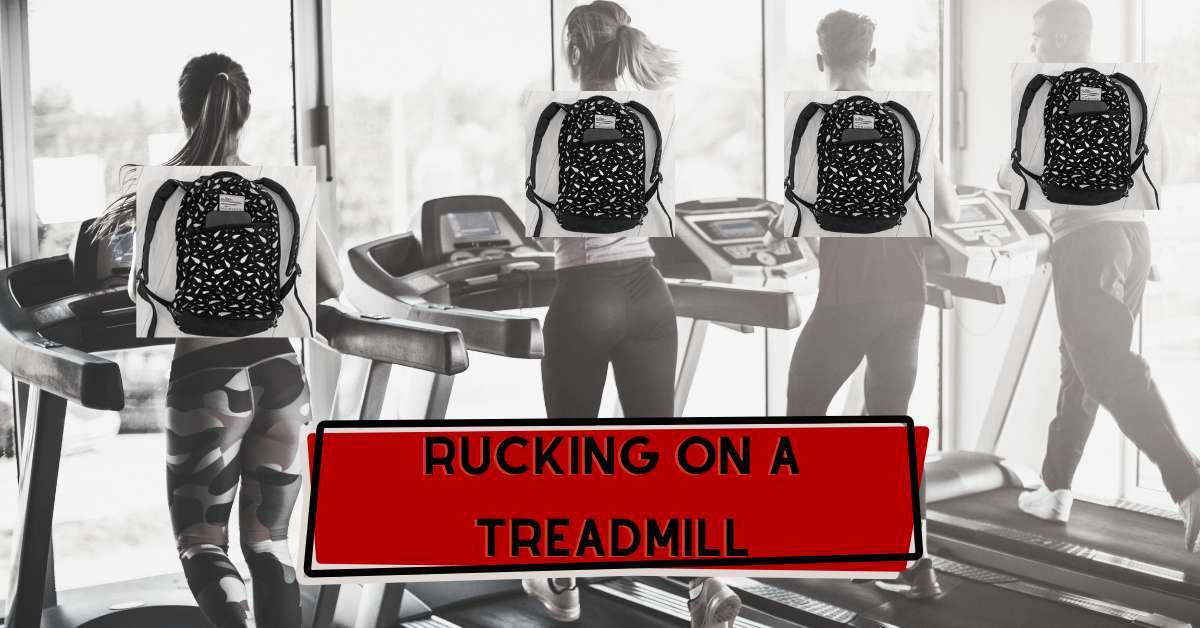
Rucking means walking with weight, usually in a backpack or rucksack. It builds lower-body strength, work capacity, and endurance while making a simple walk more challenging. If weather, safety, or time limits keep you indoors, this guide explains how to ruck on a treadmill without damaging the machine or putting your body at risk.
Can you ruck on a treadmill?
Yes, you can ruck on a treadmill, but it requires more care than normal treadmill walking. A weighted backpack changes your balance, increases joint stress, and may place extra strain on the treadmill motor and belt.
The safest approach is to use:
- A light to moderate pack
- A flat or low incline
- A steady walking pace
- A treadmill with a strong motor and wide belt
- Good posture and controlled steps
Rucking on a treadmill is not exactly the same as rucking outdoors. Outdoor routes include uneven ground, turns, hills, and changes in footing. A treadmill gives you a stable surface, but it can still provide a useful indoor rucking workout.
Think of it as a controlled practice ground. You can build fitness and test your pace, but you should not treat the treadmill as a perfect replacement for trail or road rucking.

What is treadmill rucking?
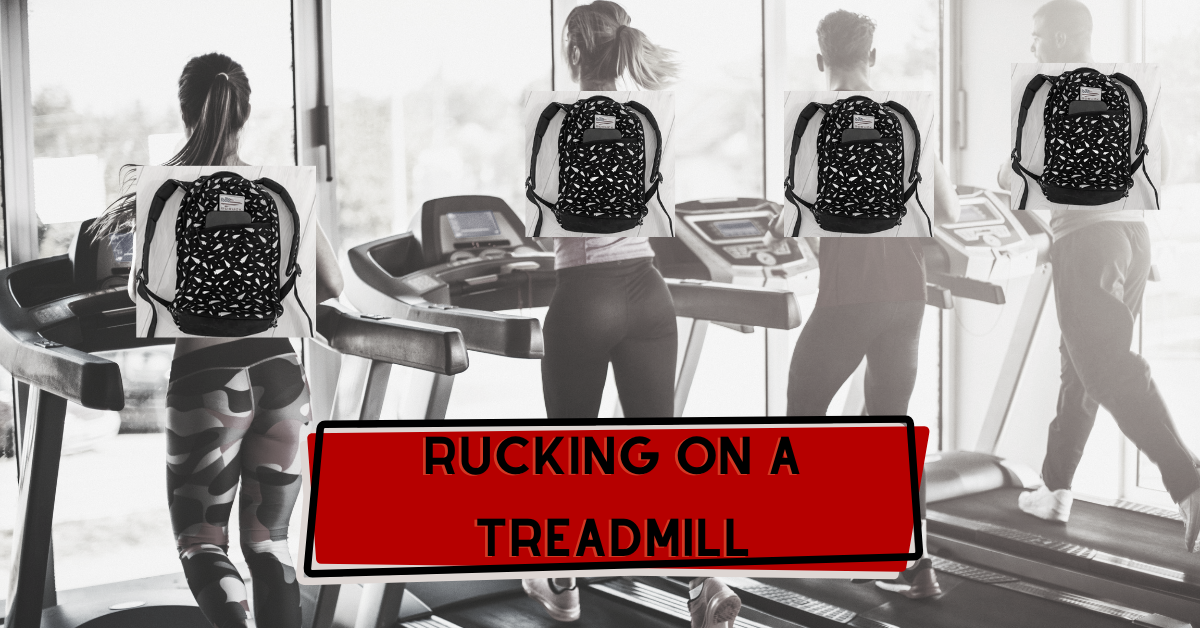
Treadmill rucking is walking on a treadmill while carrying weight in a backpack. Most people use a rucksack, hiking pack, or sturdy backpack filled with plates, sandbags, books, or water.
The load creates extra resistance. Your legs must work harder to move your body and the pack. Your core and upper back also work to keep the load stable.
A treadmill rucking session can include:
- Flat walking for steady endurance
- Low incline walking for added effort
- Short speed intervals
- Longer, easy walks
- Ruck training before an outdoor event
The goal is not to walk as fast as possible. Good treadmill rucking rewards control, posture, and steady effort. A smooth walk with a well-fitted pack is safer and more useful than a fast walk with a loose, heavy load.
Benefits of rucking on a treadmill
Rucking can offer more training value than regular walking. It may improve cardiovascular fitness, muscular endurance, and tolerance for carrying weight.
It supports cardiovascular fitness
Walking with a pack raises the demand on your heart and lungs. The American College of Sports Medicine recognizes weighted walking as a form of physical activity that can increase exercise intensity.
You do not need to run. A brisk walk can raise your heart rate while placing less impact on your joints than running. This makes treadmill rucking useful for people who want a challenging workout without jogging.
It strengthens the legs and hips
Your glutes, quadriceps, hamstrings, and calves help move you forward. A moderate load also makes your hips and trunk work harder to keep your body steady.
However, rucking is not a replacement for strength training. It can improve muscular endurance, but it does not provide the same controlled loading as squats, lunges, deadlifts, or step-ups.
It builds load-carrying ability
If you plan to hike, backpack, complete a military fitness test, or carry gear for work, treadmill rucking can help you prepare. Indoor practice lets you focus on posture and pace before adding hills or uneven terrain outdoors.
It offers a practical indoor option
Bad weather, poor lighting, unsafe roads, or a busy schedule can make outdoor rucking difficult. A treadmill gives you a predictable space and lets you stop quickly if something feels wrong.
It helps control training variables
You can set the speed, time, and incline with precision. This makes it easier to track progress than an outdoor walk where hills, traffic lights, and terrain change the effort.
Is rucking on a treadmill safe?
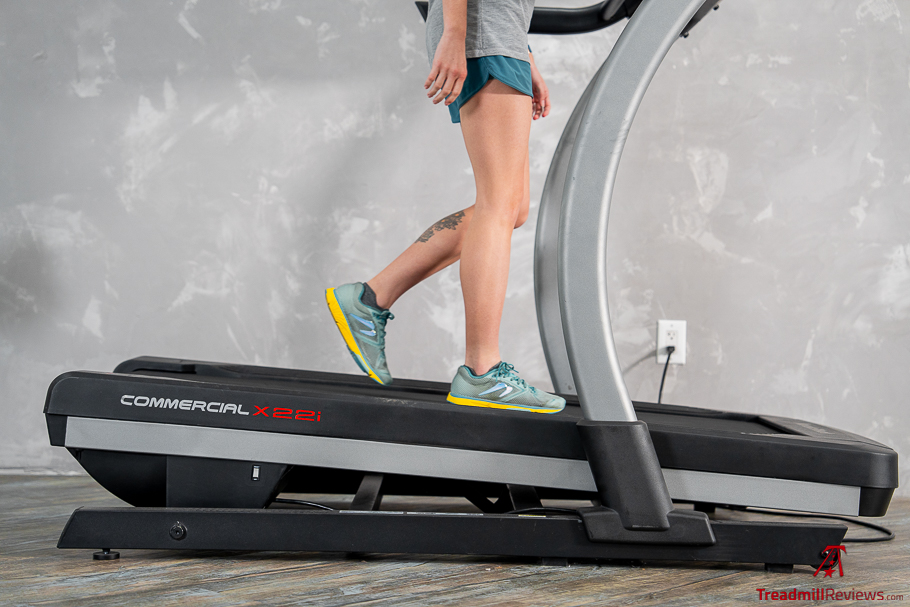
You can ruck on a treadmill safely if the equipment, load, and training plan match your experience. The greatest risks come from carrying too much weight, using too much incline, or losing balance.
The added load can increase stress on the feet, ankles, knees, hips, and lower back. A heavy pack may also pull your shoulders backward or cause you to lean forward.
Use these safety rules:
- Start with a load that feels easy to control.
- Keep both hands free when possible.
- Use the treadmill safety clip.
- Do not hold the front rails while walking.
- Stop if you feel sharp pain, numbness, dizziness, or unusual shortness of breath.
- Check the treadmill’s weight limit before adding a pack.
- Keep children, pets, and loose items away from the moving belt.
- Avoid running with a loaded pack unless you have specific training and a suitable treadmill.
Holding the rails can make the workout feel easier, but it changes your posture and reduces the training effect. If you need the rails for balance, lower the speed or remove some weight.
People with joint pain, balance problems, heart disease, or a recent injury should ask a qualified health professional before beginning loaded walking.

How much weight should you use?
A good starting load is often 5% to 10% of your body weight. Beginners may do better with less. For example, a 180-pound person might begin with 10 to 15 pounds rather than immediately carrying 30 or 40 pounds.
There is no universal perfect ruck weight. Your training history, body size, footwear, treadmill quality, and goal all matter.
Use this simple progression:
- Begin with a light pack for 15 to 20 minutes.
- Repeat the session two or three times before adding weight.
- Increase the time by five minutes when your joints feel good.
- Add small amounts of weight only after you can maintain good posture.
- Change either weight, speed, incline, or time in one session, not all four.
A common mistake is adding weight because the first few minutes feel easy. The real test often comes later, when your shoulders fatigue and your stride changes. Your load should allow you to walk smoothly from the first minute to the last.

What speed and incline should you use?
Most people should start treadmill rucking at a normal walking speed. For many adults, that may be around 2.5 to 3.5 miles per hour, but comfort and control matter more than a specific number.
Begin at 0% to 2% incline. A small incline can add challenge, but a steep grade increases the demand on your calves, Achilles tendons, hips, and lower back.
A simple starting session may look like this:
- Five minutes of easy walking without a pack
- Fifteen minutes at a comfortable pace with a light pack
- Five minutes of easy walking without the pack
As your fitness improves, you can try:
- 30 to 45 minutes at a steady pace
- Six rounds of two minutes brisk and three minutes easy
- A 3% to 5% incline for short blocks
- A longer walk at a lower speed
Avoid using a high incline simply to make the workout harder. Treadmill rucking already adds load. A steep incline can turn a manageable session into excessive stress on your lower legs.

How to set up your rucksack
A proper pack setup can make treadmill rucking feel much safer. The weight should stay close to your body and should not swing from side to side.
Follow these steps:
- Place dense items near your back.
- Keep the load centered.
- Tighten the shoulder straps until the pack feels secure.
- Use a hip belt if your pack has one.
- Use a chest strap to limit movement.
- Cover sharp edges with clothing or a towel.
- Do not let items shift as you walk.
A pack that hangs low can pull on your lower back. A pack that sits too far away from your body can make the load feel heavier than it is.
Wear supportive walking or hiking shoes. Shoes should fit well, have enough grip, and match your foot shape. Thick, soft shoes are not always better. Excessive cushioning may make balance less stable, especially when you carry a pack.

A beginner treadmill rucking workout
This 25-minute session is a useful starting point for healthy beginners.
Session plan
- Walk for five minutes without a pack at an easy pace.
- Add a light pack and walk for five minutes at a comfortable pace.
- Continue for 10 minutes at a brisk but controlled pace.
- Remove the pack and cool down for five minutes.
- Stretch gently if your muscles feel tight.
You should be able to speak in short sentences during most of the workout. The CDC uses the talk test as a simple way to judge moderate effort. If you cannot speak without gasping, reduce the speed, incline, or weight.
Train two times per week at first. Leave at least one day between sessions so your feet, calves, and joints can recover.
After two to four weeks, add five to ten minutes or a small amount of weight. Do not increase every part of the session at the same time.

Common treadmill rucking mistakes
Many problems come from treating a loaded walk like a normal treadmill workout. The pack changes how your body moves, so your habits must change too.
Starting too heavy
A heavy pack may feel manageable for five minutes but become painful later. Start lighter than your ego wants. Consistency builds capacity better than one exhausting workout.
Using too much incline
Incline walking with weight can quickly overload the calves and Achilles tendons. Keep the incline low until your body has adapted.
Walking too fast
Fast walking can shorten your recovery time and increase the chance of losing balance. Use a pace that lets you keep a natural stride.
Leaning forward
A forward lean may signal that the pack is too heavy or poorly fitted. Tighten the pack or reduce the load before your back begins to ache.
Holding the rails
The rails can hide poor balance and reduce the work done by your legs. Slow down instead of relying on them.
Ignoring the machine
Not every treadmill is designed for frequent heavy loading. Check the user manual, maximum user weight, motor strength, belt width, and warranty terms. Some manufacturers may not cover damage caused by added pack weight.
Treadmill rucking versus outdoor rucking
Indoor and outdoor rucking share the same basic idea, but they train different skills.
Treadmill rucking gives you:
- A smooth surface
- Stable speed
- Controlled incline
- Protection from weather
- Easy access to water and rest
Outdoor rucking gives you:
- Uneven ground
- Natural hills
- Turns and changes in direction
- Wind and weather
- More realistic pack movement
- Practice with real terrain
If your goal is a long hike or outdoor event, use treadmill rucking as one part of your plan. Add outdoor walks when possible. Your feet need time to adapt to rocks, slopes, descents, and changing surfaces.
A treadmill can help build the engine. Outdoor training teaches you how to steer that engine over real ground.
How to progress without getting hurt
Progress should be slow enough that your body can adapt. The muscles may feel ready before your tendons, feet, and joints are ready.
Track four basic factors:
- Pack weight
- Walking speed
- Incline
- Session time
Change only one factor at a time. For example, keep the pack at 15 pounds while adding five minutes. Later, return to the shorter session and add one or two pounds.
Watch for warning signs:
- Pain that changes your stride
- Swelling in the feet or ankles
- Back pain that worsens during the walk
- Persistent soreness lasting more than two days
- Tingling or numbness
- Blisters that keep returning
Mild muscle fatigue is normal. Sharp pain is not a badge of progress. Rest, reduce the load, and seek professional advice when symptoms do not improve.
Can treadmill rucking help with weight loss?
Rucking can increase energy use compared with ordinary walking because you are moving extra weight. It may support weight loss when combined with a suitable eating plan and regular training.
Still, no workout guarantees fat loss. Body weight changes depend on overall energy balance, food intake, sleep, stress, and activity outside the gym.
Rucking is useful because it can feel more engaging than a basic walk. Many people find it easier to stay consistent when a workout has a clear purpose, such as preparing for a hike or improving work capacity.
Treat it as a long-term habit. A moderate ruck completed three times each week is usually more valuable than one punishing session followed by a week of soreness.
When should you choose another workout?
Treadmill rucking is not ideal for everyone. You may need a different option if the pack causes pain or changes your walking pattern.
Try one of these alternatives:
- Incline walking without a pack
- Stair climbing
- Sled pushing
- Farmer carries
- Step-ups
- Cycling
- Elliptical training
- Outdoor walking with a very light load
Farmer carries can build grip and trunk strength. Step-ups can prepare your legs for hills. Incline walking can raise your heart rate without adding pressure from a backpack.
The best choice is the one you can perform with good form and repeat over time.
Frequently Asked Questions About Can You Ruck on a Treadmill
Can you ruck on a treadmill with a 30-pound pack?
You can, but 30 pounds may be too much for beginners and some home treadmills. Build up gradually, check the machine’s limits, and reduce the load if your posture or stride changes.
Is treadmill rucking better than walking?
Treadmill rucking is more demanding because the pack adds resistance. Regular walking may be a better choice for recovery days, beginners, or people with joint pain.
Can you run on a treadmill while rucking?
Running with a pack increases impact and balance demands. Most people should walk first and only consider short jogging intervals after building strong load tolerance with professional guidance.
What incline is best for treadmill rucking?
Start at 0% to 2% incline. Add more incline only after you can walk comfortably with your chosen load, and use short incline periods rather than a steep grade for the entire workout.
How often can you ruck on a treadmill?
Beginners can start with two sessions per week. Experienced walkers may train three or four times weekly, but they should vary the load and intensity and allow enough recovery.
Do you need a special rucking backpack?
A special rucksack is not required for light loads. A sturdy backpack with a chest strap, hip belt, padded straps, and a close fit is usually a better choice than a loose school bag.
Can treadmill rucking hurt your knees?
It can cause knee discomfort if the load, speed, incline, or training volume is too high. Use a gradual plan, maintain a natural stride, and stop if pain persists or affects movement.
Conclusion
You can ruck on a treadmill, and it can be a practical way to build endurance, leg strength, and load-carrying ability indoors. Start with a light pack, low incline, steady pace, and short sessions. Focus on posture, secure pack fit, and gradual progress rather than chasing a heavy load.
Use treadmill rucking to support your goals, then add outdoor walks when you need real-world terrain practice. Try one controlled session this week, record how your body feels, and adjust before adding more weight. Explore more training guides and share your own rucking experience in the comments.

Brandon Knoxley is a sport & fitness writer and training guide contributor at MySportFitHub. He focuses on practical workouts, performance-based training, and honest fitness gear insights designed for real people and real results. Brandon is passionate about helping beginners and active individuals train smarter, avoid common mistakes, and build sustainable fitness habits.