Best Treadmill Speed For Fat Loss: Find Your Ideal Pace
For most people, the best treadmill speed for fat loss is a brisk 3–4 mph walk sustained consistently.
You may step on a treadmill with big goals, then wonder why a fast run leaves you tired, sore, and ready to quit. The good news is that fat loss does not require an all-out sprint. A steady pace that raises your heart rate, supports good form, and fits your weekly routine often works better. I tested these treadmill features through a practical fat-loss lens, focusing on speed control, incline, comfort, motor power, weight capacity, and ease of use. The right treadmill should feel like a helpful training partner, not a punishment machine.
XMKEY Compact Treadmill

The XMKEY Compact Home Treadmill offers a useful speed range from 0.5 to 7.5 mph. That range covers slow recovery walks, brisk fat-loss sessions, and short jogging intervals. Its three-level manual incline can make a 3 mph walk feel much harder without forcing you to run. I also like the heart rate sensor and LCD display for simple workout tracking.
This model makes sense for a small home gym, bedroom, or apartment workout area. The listed 265-pound capacity gives it more room than many very small walking machines. A 2.5 HP motor should suit walking and moderate jogging, though I would not treat this as a long-distance runner’s machine. For the best treadmill speed for fat loss, start near 3 mph and add a gentle incline before adding much speed.
Pros:
- Wide speed range for walking and light jogging
- Three manual incline levels add workout variety
- Heart rate sensor supports effort control
- LCD display keeps basic workout data easy to read
- Compact size suits many home spaces
- 265-pound listed weight capacity adds useful flexibility
Cons:
- Manual incline requires you to stop and adjust it
- 7.5 mph top speed may limit serious runners
- Compact decks may feel short for users with a long stride
My Recommendation
I recommend the XMKEY to beginners who want a simple treadmill for walking, incline work, and short jogs. It is especially useful if you prefer steady sessions around 3 to 4 mph rather than hard running. The manual incline helps increase effort while keeping the pace comfortable. Overall, it offers practical value for home fat-loss workouts when space and budget matter.
Walking Pad Under-Desk Treadmill
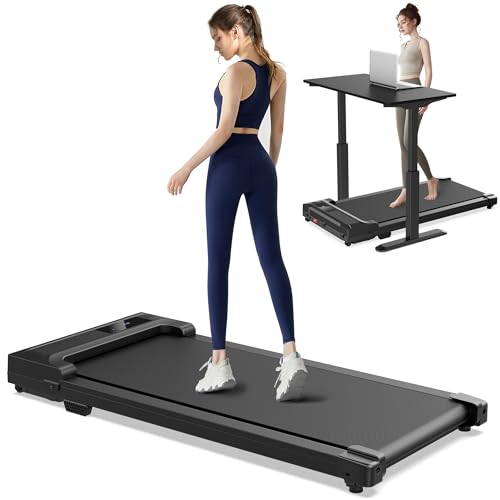
This walking pad targets people who want more daily movement without setting up a large treadmill. Its slim, portable design can fit under a desk or beside a sofa when not in use. The remote control makes it easier to change speed while walking. For many users, that convenience matters more than a high top speed.
I see this as a tool for building daily calorie burn through small sessions. A 2.5 to 3.5 mph pace may work well while watching a show, reading, or doing light desk tasks. It may not replace a full running treadmill, but it can help turn sitting time into walking time. Consistency is often the real secret behind the best treadmill speed for fat loss.
Pros:
- Very slim design for apartments and offices
- Portable format makes storage simple
- Remote control allows convenient speed changes
- Useful for short walking breaks throughout the day
- Supports low-impact exercise for many beginners
- Under-desk design can make movement easier to maintain
Cons:
- Not the best choice for fast running
- Small walking decks require careful foot placement
- Under-desk use may reduce focus during demanding work
My Recommendation
This walking pad is best for office workers, apartment dwellers, and people who dislike long gym sessions. I would choose it for several short walks at 2.5 to 3.5 mph across the day. Those small blocks can support a strong weekly activity habit. Its value comes from access and convenience, not intense speed or advanced incline training.
Sunny Health & Fitness Smart Treadmill

The Sunny Health & Fitness Premium Smart Auto Incline Treadmill is built for users who want more control during each session. An automatic incline lets you change the challenge from the console rather than stepping off the belt. That feature makes hill intervals much smoother. It also gives you a way to raise calorie demand while keeping a manageable walking speed.
I find automatic incline especially useful for people who get bored with flat walking. You can use a 3 mph base pace, add incline for a short hill block, then return to level ground. This approach can feel easier on the joints than trying to run every workout. If you are searching for the best treadmill speed for fat loss, smart incline control can be just as important as the number on the speed display.
Pros:
- Automatic incline supports smooth hill intervals
- Smart features can make workouts more engaging
- Useful for walking, jogging, and structured sessions
- Incline can increase effort without extreme speed
- Good fit for users who want workout variety
- Established fitness brand offers broad product familiarity
Cons:
- Smart features may require more setup than a basic treadmill
- Automatic incline can add cost and mechanical complexity
- Users seeking a very small walking pad may find it too large
My Recommendation
I recommend this treadmill for intermediate users who want to progress beyond flat walks. It suits people who enjoy hill workouts but still prefer a controlled pace. Try 2.8 to 3.8 mph with changing incline levels, then adjust based on breathing and form. It delivers strong training flexibility for home users who want more than a basic belt.
Azomabox AI-Adaptive Smart Treadmill

The Azomabox AI-Adaptive Smart Home Treadmill is aimed at users who want automatic guidance during exercise. Its listed features include auto speed and incline adjustment, heart rate control, and a real-time running coach. The 5.0 HP motor and 440-pound listed capacity suggest a heavy-duty design. These features may help larger users or experienced exercisers feel more secure while training.
Automatic changes can reduce the need to watch every number on the console. Still, I would begin with conservative settings and learn how the treadmill responds before using adaptive workouts. A brisk 3 to 4 mph walk remains a smart starting point for fat loss. The best treadmill speed for fat loss should challenge you without making you lose balance, shorten your stride, or stop too soon.
Pros:
- Automatic speed and incline adjustment adds workout flow
- Heart rate control can support effort-based training
- Real-time coaching may help users stay engaged
- 5.0 HP listed motor suits demanding home workouts
- 440-pound listed capacity supports a broad user range
- No subscription requirement adds long-term convenience
Cons:
- Advanced automatic features may feel complex at first
- Large capacity and motor can mean a heavier machine
- Users should test adaptive controls before hard workouts
My Recommendation
This model is best for heavier users, data-focused exercisers, and people who want guided sessions without a paid subscription. It can also suit households with different fitness levels. I would use its heart rate features to keep a steady effort instead of chasing speed alone. Its strongest value comes from the blend of capacity, automation, and coaching tools.
ANCHEER Treadmill With Bench

This ANCHEER treadmill combines treadmill walking with a sit-up bench and body fat measurement features. The foldable design may help users create a wider home routine without buying several large machines. Its 3.5 HP listed motor and 350-pound listed capacity make it more substantial than many entry-level walking pads. A heart rate sensor adds another way to monitor workout effort.
The bench is useful for people who want simple strength work after walking. However, I would keep the main focus on safe treadmill form and treat the extra station as a bonus. A 2.5 to 3.5 mph walk with incline can provide a solid starting point for fat loss. The best treadmill speed for fat loss depends on your fitness level, but the best treadmill is the one you can use often.
Pros:
- Combines treadmill work with a sit-up bench
- Foldable format can help save floor space
- Body fat measurement adds progress feedback
- Heart rate sensor supports effort awareness
- 3.5 HP listed motor suits walking and jogging
- 350-pound listed capacity provides useful support
Cons:
- Extra bench may require more setup space
- Body fat readings can vary with hydration and timing
- Users wanting a pure running treadmill may prefer a longer deck
My Recommendation
I recommend this ANCHEER model for home users who want cardio and basic core work in one package. It is a practical option for beginners who like variety but do not want a full gym setup. Use the treadmill first, then add bench exercises when your legs have recovered. Its overall value is strongest for people who want several simple functions in one foldable machine.
AI-Adaptive Home Treadmill

This AI-adaptive treadmill shares a smart training focus with automatic speed and incline control. Its listed 5.0 HP motor and 440-pound capacity make it attractive to users who need a sturdy home machine. Heart rate control may help the treadmill adjust the workout to your effort. The real-time coach can also add structure for people who are unsure how to plan sessions.
I would still treat automatic training as a guide, not a replacement for judgment. Start slowly, hold good posture, and stop if the machine changes faster than you can safely manage. For many people, the best treadmill speed for fat loss remains a moderate walking pace near 3 to 4 mph. Smart features work best when they support safe habits rather than push you past them.
Pros:
- Automatic speed and incline can simplify workout planning
- Heart rate control supports personalized effort
- Real-time coaching may help new users stay consistent
- 5.0 HP listed motor offers strong home workout potential
- 440-pound listed capacity suits many body types
- Personalized settings can reduce repetitive workouts
Cons:
- Smart controls may require a learning period
- Large machines need careful placement and floor planning
- Automatic changes may not suit users who want full manual control
My Recommendation
This treadmill is best for people who want a guided, personalized workout at home. It may also suit users who need a higher listed weight capacity and a stronger motor. I suggest starting with manual settings before exploring automatic programs. It offers good potential for long-term fat-loss training when the user keeps safety and steady progress first.
ATEEDGE Auto Incline Treadmill

The ATEEDGE Treadmill offers auto incline, a 3.0 HP listed motor, and a 10 mph top speed. That combination gives walkers and runners more room to progress. Automatic incline helps create hill sessions without leaving the belt. The 10 mph ceiling is more useful for running intervals than the slower compact models in this guide.
I like this model for users who want one machine that can grow with their fitness. You can begin with a 3 mph walk, use incline to raise the challenge, and later add short jogging intervals. A fast pace is not automatically better for fat loss, especially if it hurts your knees or causes poor form. The best treadmill speed for fat loss is the fastest comfortable pace you can repeat week after week.
Pros:
- 10 mph listed top speed supports running intervals
- Automatic incline adds convenient hill training
- 3.0 HP listed motor suits varied home workouts
- Useful for beginners and progressing runners
- Speed and incline allow many workout formats
- Can support gradual fitness progression
Cons:
- May take more room than a basic walking pad
- Running at higher speeds requires careful safety habits
- Auto incline can increase maintenance needs over time
My Recommendation
I recommend the ATEEDGE for users who want to walk now and run later. It is a strong match for interval training, incline walking, and family use across different fitness levels. Beginners can stay near 3 mph, while experienced users can use its higher speed range. This is one of the more flexible choices for buyers who want room to improve.
CURSOR FITNESS Incline Treadmill

The CURSOR FITNESS treadmill stands out for its listed 2% to 20% auto incline range and 400-pound capacity. That incline range offers serious room for hill walking. You can raise workout intensity without relying on a high belt speed. This can help users who prefer walking but still want a demanding session.
High incline work can feel like climbing a long hill, so I would increase it in small steps. Begin with a level or low-incline walk, then watch your posture as the grade rises. A pace around 2.5 to 3.5 mph may become challenging when the incline reaches moderate levels. In my view, the best treadmill speed for fat loss on this machine often comes from pairing a moderate pace with controlled incline.
Pros:
- Very broad 2% to 20% automatic incline range
- 400-pound listed capacity supports many users
- Incline can increase effort at walking speeds
- Good fit for hill-focused home workouts
- May help users who avoid fast running
- Supports progression through gradual incline changes
Cons:
- High incline can challenge balance and calf muscles
- Large capacity may come with a heavier frame
- Users should increase incline slowly to reduce strain
My Recommendation
This is my pick for incline walkers and larger users who want a strong hill-training option. It suits people who dislike running but still want a hard workout. Keep your steps short and your chest tall as the incline rises. The treadmill offers excellent training potential when you use the 20% setting with care instead of treating it as a starting point.
ANCHEER Smart Incline Treadmill

This ANCHEER model combines an incline function with body fat measurement and heart rate sensing. Its listed 3.5 HP motor and 350-pound capacity place it in the heavy-duty home treadmill category. The foldable design may help people who need to reclaim floor space after training. Smart tracking can also make progress easier to review from one session to the next.
I would use the body fat feature as a trend tool, not as a perfect medical measurement. Daily readings can change due to hydration, food, and timing. Focus on weekly habits, walking time, waist measurements, and how your clothes fit. For the best treadmill speed for fat loss, choose a pace that lets you speak in short sentences while still breathing harder.
Pros:
- Incline adds intensity without requiring sprinting
- Heart rate sensor supports effort monitoring
- Body fat feature offers extra progress feedback
- 3.5 HP listed motor suits walking and jogging
- 350-pound listed capacity provides solid support
- Foldable design may simplify home storage
Cons:
- Body fat readings are estimates, not clinical results
- Smart features may take time to understand
- Foldable frames still need safe storage space
My Recommendation
I recommend this treadmill for users who enjoy tracking numbers and want incline training at home. It is a good fit for beginners who need feedback but do not want a complex training plan. Use the heart rate data to guide effort, and compare body fat readings under similar conditions. It offers a balanced feature set for steady home fat-loss work.
How to Choose the Best Treadmill Speed for Fat Loss
The best treadmill speed for fat loss is not one fixed number. It changes with your age, fitness level, body weight, stride, incline, and workout history. A beginner may reach a useful training effort at 2.5 mph, while a trained walker may need 4 mph. Running faster can burn more calories per minute, but it also creates more impact and may shorten the workout.
I prefer the talk test for a simple starting point. At a moderate effort, you should be able to speak in short sentences but not sing with ease. This often falls near 3 to 4 mph for many adults on a flat treadmill. If you cannot talk at all, slow down or reduce the incline. If the session feels too easy after several weeks, add five minutes, a small incline, or a short speed interval.
Walking Speed Versus Running Speed for Fat Loss
Walking can support fat loss because it is easy to repeat. A brisk walk also places less stress on the joints than running for many people. Running may burn more calories in less time, but it is not required for progress. The best treadmill speed for fat loss is the pace that allows regular training while protecting your form and recovery.
For a new user, I suggest five minutes at 2 to 2.5 mph as a warm-up. Move toward 3 to 3.5 mph for the main part of the session. If that feels comfortable, add one-minute intervals near 4 mph, with easy walking between them. Over time, you can build toward 30 to 45 minutes of total work without chasing exhaustion.
Does Incline Help You Lose More Fat?
Incline can raise the effort of a walk without requiring a large speed increase. It can also recruit more muscles in the calves, hips, and legs. However, incline changes your form and can make your lower legs tired. Start with a small grade and hold the handrails only when needed for balance.
A simple incline workout could use 3 mph on a flat belt for five minutes. Then alternate two minutes at a 3% to 5% incline with two minutes on level ground. Repeat four to six times. This type of session can make the best treadmill speed for fat loss feel more challenging while keeping the belt speed moderate.
How Long Should You Use a Treadmill for Fat Loss?
Many adults can begin with 20 to 30 minutes, three to five days per week. Add time slowly when your legs recover well. Public health guidance commonly supports at least 150 minutes of moderate aerobic activity per week for adults, along with muscle-strengthening work. You can split that time into short sessions.
For example, try 10 minutes before work, 10 minutes after lunch, and 15 minutes in the evening. A walking pad makes this plan easier for some people. A full treadmill with incline may work better for longer workouts. The best treadmill speed for fat loss matters, but total weekly movement matters just as much.
How Heart Rate Can Guide Treadmill Speed
Heart rate can offer useful feedback, but it should not control every workout. Age-based maximum heart rate formulas are rough estimates. Medication, stress, heat, poor sleep, and fitness level can change your reading. Use heart rate along with breathing, effort, and how you feel.
For moderate exercise, many people notice faster breathing but still retain some control. If you feel dizzy, have chest pain, or feel unusual shortness of breath, stop and seek medical advice. People with health conditions should ask a qualified clinician before starting a new fat-loss plan. A heart rate sensor is helpful, but it is not a substitute for professional care.
Common Treadmill Mistakes That Slow Fat Loss
The first mistake is starting too fast. A hard first week often leads to sore joints and missed sessions. The second mistake is holding the front bar while walking at a steep incline. That can reduce the true workload and change your posture. Lower the incline or speed so you can walk with a natural arm swing.
Another mistake is relying on the calorie display as an exact result. Treadmills estimate calorie burn and may not know your true body composition or effort. Use the display to compare workouts, not to “eat back” every number. Finally, do not ignore food, sleep, and recovery. Fat loss requires a sustainable calorie deficit, and exercise works best as part of that larger plan.
Best Treadmill Features for Fat Loss
Speed control is essential. Look for small speed changes so you can move from warm-up to work pace without a sudden jump. Incline control is also useful because it lets you increase effort while staying at a comfortable walking speed. A clear display helps you track time, distance, speed, and incline without distraction.
Deck size matters if you plan to run. A short deck may feel fine at 2.5 mph but cramped at 7 mph. Motor power, weight capacity, cushioning, noise, folding design, and warranty also deserve attention. The best treadmill speed for fat loss will not help if the machine feels unstable, too loud, or difficult to use.
Best Treadmill Speed for Fat Loss by Fitness Level
Beginners can start around 2 to 3 mph. Stay there until you can walk for 20 minutes with steady breathing and no pain. Intermediate users may work near 3 to 4 mph, add incline, or use short intervals. Experienced runners can use faster intervals, but they should still include easy days.
Body weight can affect effort, but it does not decide your ideal speed. A heavier person may reach a high heart rate at a slower pace. A smaller, trained walker may need more speed or incline. Instead of copying someone else’s number, use a pace that matches your breathing and form.
Three Simple Treadmill Fat-Loss Workouts
Beginner steady walk: Warm up at 2 mph for five minutes. Walk at 2.5 to 3 mph for 15 to 25 minutes. Cool down at 2 mph for five minutes. Repeat three to five times each week.
Incline walk: Warm up at 2.5 mph on a flat belt. Walk at 3 mph while alternating two minutes at 3% incline with two minutes at 0% incline. Continue for 20 to 30 minutes. This is a practical way to use the best treadmill speed for fat loss without running.
Walk-jog intervals: Warm up for five minutes. Walk at 3 mph for two minutes, then jog at 5 to 6 mph for one minute. Repeat six to ten times, then cool down. Use this plan only if you can jog comfortably and recover between intervals.
Best For Table
| Best for | Why |
|---|---|
| Beginners and small homes | XMKEY offers simple controls, compact sizing, incline, and a useful walking speed range. |
| Under-desk daily movement | The Walking Pad makes short, low-impact walking sessions easy to add throughout the day. |
| Incline-focused and larger users | CURSOR FITNESS offers a broad incline range and a 400-pound listed capacity. |
FAQs Of best treadmill speed for fat loss
What is the best treadmill speed for fat loss?
For many adults, a brisk 3 to 4 mph walk works well. Your ideal pace should raise your breathing while allowing short conversation. Add incline or time if the pace feels too easy.
Is walking on a treadmill enough to lose fat?
Walking can support fat loss when it helps create a consistent calorie deficit. Nutrition, sleep, strength training, and weekly activity also matter. Start with a pace and schedule you can repeat.
Is it better to use speed or incline for fat loss?
Both can raise workout effort. Incline lets many people work harder without running fast, while speed can improve fitness and calorie burn. Use the option that feels safe and comfortable for your joints.
How often should I use a treadmill for fat loss?
Start with three to five sessions per week. Build toward about 150 minutes of moderate activity weekly if your body handles it well. Add rest days when soreness or fatigue persists.
Can I lose fat by walking at 2 mph?
Yes, especially if you are new to exercise or use a longer session. As your fitness improves, increase time first, then speed or incline. A consistent 2 mph walk is better than a fast pace you cannot maintain.
Final Verdict: Which Should You Buy?
The XMKEY is my best overall pick for simple home fat-loss workouts, while the ATEEDGE suits users who want to progress into running. Choose CURSOR FITNESS for steep incline walking and the Walking Pad for under-desk movement. Start near 3 to 4 mph, then adjust from there.
The best treadmill speed for fat loss is steady, safe, and repeatable. Choose a treadmill that makes regular movement easy, and pair it with smart eating and recovery for lasting results.

Brandon Knoxley is a sport & fitness writer and training guide contributor at MySportFitHub. He focuses on practical workouts, performance-based training, and honest fitness gear insights designed for real people and real results. Brandon is passionate about helping beginners and active individuals train smarter, avoid common mistakes, and build sustainable fitness habits.