Do All Treadmills Need Lubricant: Essential Guide
No, not all treadmills need lubricant; some use waxed belts, sealed parts, or low-maintenance designs.
The answer to “do all treadmills need lubricant” depends on the belt, deck, motor system, and instructions from the manufacturer. Using the wrong product can cause slipping, belt damage, or costly repairs. This guide explains how treadmill lubrication works, how to tell whether your machine needs it, and how to apply it safely.
Do All Treadmills Need Lubricant?
No, do all treadmills need lubricant? They do not. Many home treadmills need occasional lubrication under the walking belt, but some models are designed to run without added oil.
The treadmill’s running belt moves across a smooth platform called the deck. Lubricant reduces friction between these two surfaces. Less friction can help the motor work more easily and may reduce heat, noise, and wear.
However, treadmill designs vary. Some belts contain wax, while others use special low-friction materials. Some walking decks are pre-lubricated at the factory and need service only after a set number of miles or months.
Always check these sources before adding anything:
• The owner’s manual
• The maintenance label near the motor or belt
• The manufacturer’s support page
• The model’s service instructions
If the manual says the belt is maintenance-free, do not add silicone oil unless the manufacturer approves it. Extra lubricant can collect dust, weaken belt grip, and create a slipping hazard.

Why Treadmill Lubrication Matters
A treadmill belt creates friction every time it moves over the deck. A small amount of friction is normal, but too much can strain the motor and control board.
Think of the belt and deck like two sheets of paper rubbing together. They may move at first, but repeated friction creates heat and resistance. A suitable lubricant acts like a thin shield between them.
Proper lubrication may help:
• Lower friction between the belt and deck
• Reduce motor strain
• Limit heat buildup
• Decrease squeaking and rubbing sounds
• Improve belt movement
• Extend the life of the belt and deck
• Support smoother walking and running
Lubrication is not a cure for every treadmill problem. A worn belt, damaged deck, weak motor, loose drive belt, or faulty roller can create symptoms that look like poor lubrication.
For example, a belt that slows when you step on it may need lubricant. It may also have too much tension, a worn motor belt, or an electrical fault. Good maintenance starts with finding the real cause.
Which Treadmills Need Lubricant?
Most treadmills fall into one of three maintenance groups. Knowing your treadmill’s group can prevent both under-maintenance and over-maintenance.
Treadmills that need regular silicone lubrication
Many standard home treadmills use a belt and deck that need silicone lubricant. These machines often require service every 40 to 150 hours of use, but the correct interval varies.
A frequent runner may need to lubricate the machine every few months. A person who walks for 20 minutes twice a week may need it less often. Heat, dust, body weight, speed, and belt material also affect the interval.
Treadmills with waxed or pre-waxed decks
Some treadmills use a wax-based system. The wax may be built into the belt or deck. These machines often require a special wax stick, wax powder, or a replacement waxed belt.
Do not use ordinary silicone oil on a wax system unless the manual clearly allows it. Silicone and wax work in different ways. Mixing them may reduce traction or interfere with the belt’s intended surface.
Treadmills with maintenance-free systems
Some newer treadmills use low-friction decks or sealed systems. These models may not need routine belt lubrication.
“Maintenance-free” does not mean the treadmill needs no care. You may still need to clean the belt, inspect the rollers, check alignment, and keep the motor area free of dust.
When people ask, “do all treadmills need lubricant,” the safest answer is simple: follow the instructions for that exact model, not advice for a different treadmill.

How to Tell if Your Treadmill Needs Lubrication
Your owner’s manual is the best guide, but your treadmill may also show signs of excess friction. Look for a pattern rather than relying on one symptom.
Possible signs include:
• A dry or rough feeling under the belt
• Squeaking, rubbing, or scraping sounds
• A belt that hesitates when you step on it
• A motor that sounds louder than usual
• A burning smell after short use
• An error caused by motor overload
• A belt that feels less smooth than before
You can also perform a simple inspection. Turn off and unplug the treadmill. Carefully lift the edge of the walking belt and touch the deck with one finger.
The deck should not feel completely dry if the model requires lubrication. It should also not feel wet, sticky, or covered in thick oil. A slight, even film is usually enough.
Do not place your fingers near the rollers or motor while the machine is connected to power. Never inspect a moving belt by reaching under it.
Remember that belt tension affects feel, too. A belt that is too tight can create high friction even when it has enough lubricant. A belt that is too loose may slip or drift to one side.
What Lubricant Should You Use?
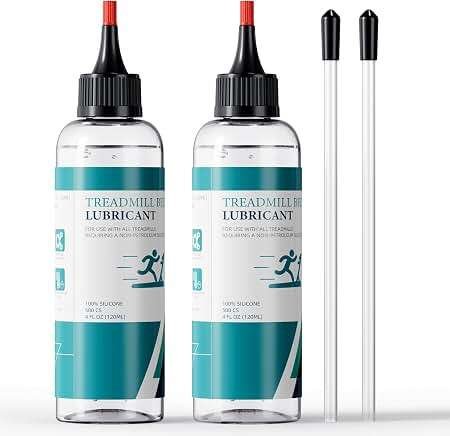
For many compatible treadmills, 100% silicone treadmill lubricant is the usual choice. It is made to reduce friction between the belt and deck without damaging common belt materials.
Use only the lubricant listed by the manufacturer. Avoid household oils and sprays, including:
• Motor oil
• WD-40-style penetrating sprays
• Vegetable oil
• Mineral oil
• Grease
• Furniture polish
• Automotive belt dressing
These products may damage the belt, leave residue, attract dust, or make the running surface unsafe. Some may also affect plastic parts and adhesives.
A treadmill lubricant may come as a small bottle, squeeze tube, or applicator. The package may state whether it is silicone oil, silicone gel, or a wax product. The label should clearly indicate treadmill use or compatibility with your machine.
The amount matters. More lubricant is not better. Too much can spread onto the top of the belt, where it can reduce traction and create a fall risk.

How to Lubricate a Treadmill Safely
If your treadmill requires silicone lubrication, use a careful process. The steps below apply to many belt-and-deck systems, but your manual takes priority.
-
Turn off the treadmill and unplug it from the wall.
-
Clean dust and loose dirt from the belt and deck area.
-
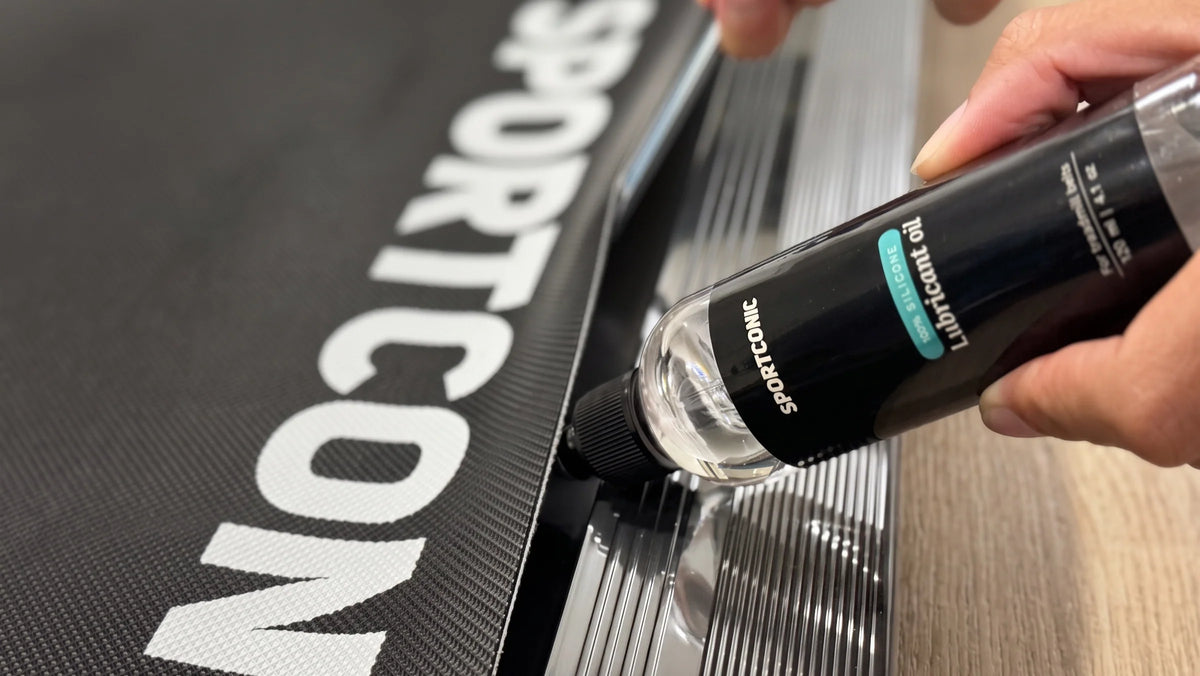
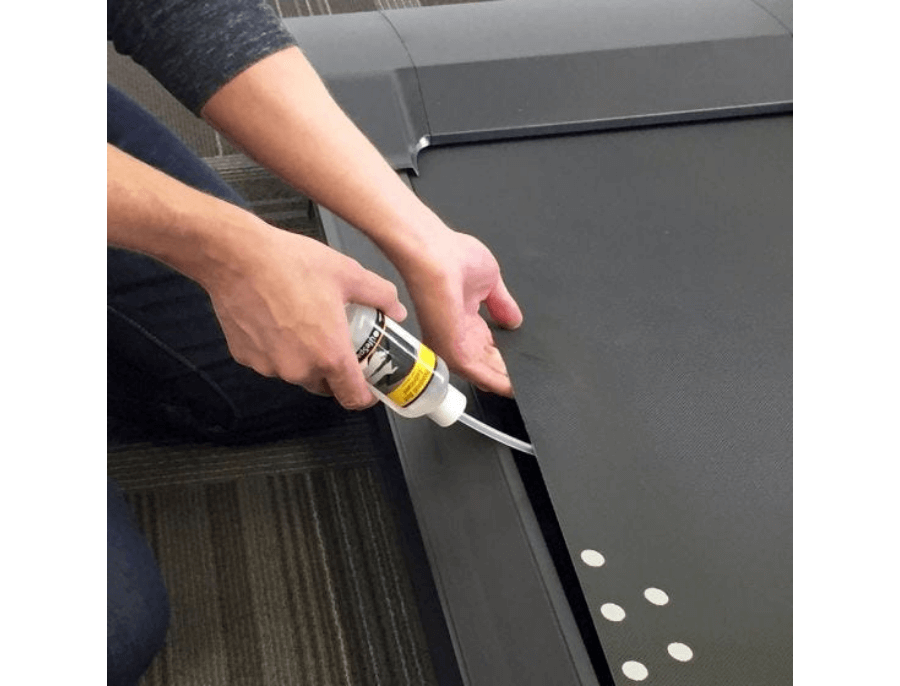
Lift one side of the belt gently. Do not force it or bend the belt sharply.
-
Apply the recommended amount of lubricant to the deck, not the top walking surface.
-
Repeat on the other side if the manual recommends full-width coverage.
-
Plug in the treadmill and run it at a slow speed for several minutes.
-
Walk slowly on the belt to help spread the lubricant.
-
Wipe away any lubricant that reaches the top of the belt or side rails.
-
Check that the belt remains centered and does not slip.
Many treadmills need lubricant in two narrow lines along the deck. Others need a specific amount spread across the surface. Some systems use an applicator that slides under the belt. Follow the method in the manual instead of guessing.
After service, test the treadmill at a slow speed first. Do not begin with a fast run. If the belt slips, feels greasy, or makes a new sound, stop and clean the excess.

How Often Should You Lubricate a Treadmill?
There is no single schedule for every treadmill. The right interval depends on the model and how often you use it.
A general maintenance plan may look like this:
• Light use: Inspect every three months and lubricate only when the manual calls for it.
• Moderate use: Check the belt and deck every one to two months.
• Heavy use: Inspect more often, especially if several people use the treadmill.
• Commercial use: Follow the facility’s service schedule and record each maintenance visit.
Some manufacturers use operating hours rather than calendar months. For example, a manual may call for lubrication after a certain number of hours or miles. That method is more useful than a simple monthly rule because it reflects actual use.
Your body weight, running speed, room temperature, and dust level can also affect wear. A treadmill used by a heavy runner every day may need more attention than one used for light walking.
One mistake I often see during treadmill maintenance is adding lubricant on a fixed schedule without checking the machine. This can create a greasy belt. The better habit is to track use, inspect the deck, and follow the model’s service guidance.

What Happens If You Over-Lubricate a Treadmill?
Too much lubricant can be as troublesome as too little. Excess oil may move from under the belt to the walking surface, side rails, rollers, or motor area.
Over-lubrication may cause:
• Belt slipping
• Poor foot traction
• Uneven belt movement
• Dust and dirt buildup
• Stains on the belt
• Damage to nearby electrical parts
• A stronger odor during use
If the belt feels slick, unplug the treadmill and wipe the top surface with a clean, dry cloth. Do not add more lubricant to “balance it out.” If the problem continues, consult the manufacturer or a qualified technician.
A wet-looking deck is not proof of good maintenance. Treadmill lubricant should form a thin film, not a puddle.

What Happens If You Do Not Lubricate a Compatible Treadmill?
If a treadmill requires lubrication and you ignore it, friction may slowly increase. The belt can become harder to move, and the motor may draw more power to maintain speed.
Over time, this may lead to:
• Motor overheating
• Belt or deck wear
• A noisy treadmill
• Higher electrical stress
• Belt hesitation
• Control board problems
• Expensive repairs
The damage may happen slowly, which makes it easy to miss. A treadmill can appear normal while the motor works harder each week.
Still, do not assume every noisy treadmill needs oil. A dry roller bearing, loose belt, worn deck, or damaged drive belt can cause similar sounds. Lubricating the wrong part may hide the problem and delay a proper repair.
Common Treadmill Maintenance Mistakes
Good intentions can still cause trouble. These are some of the most common errors.
Using the wrong oil
Household and automotive oils are not suitable substitutes for treadmill lubricant. They can attack materials, collect dirt, or change belt traction.
Lubricating the top of the belt
The lubricant belongs between the belt and deck when the machine requires it. The top surface needs grip, not oil.
Ignoring the manual
Advice for one treadmill may be wrong for another. Belt materials and deck coatings differ widely.
Applying too much product
A thin coating is usually enough. Excess product can spread and make the treadmill unsafe.
Tightening the belt too much
A belt that is too tight increases friction and places stress on the motor. Adjust it in small steps and use the tension method in the manual.
Failing to clean first
Dust and grit can act like sandpaper under the belt. Clean the area before lubrication when the manufacturer permits it.
Using the treadmill right away at high speed
Start slowly after maintenance. This gives you time to notice slipping, noise, or alignment problems.
Other Treadmill Care Tasks
Lubrication is only one part of treadmill care. A clean and correctly adjusted machine usually performs better.
Add these tasks to your routine:
• Wipe sweat from the rails and console after use.
• Vacuum dust near the motor cover when the manual allows it.
• Keep the treadmill on a stable, level surface.
• Check that the belt remains centered.
• Inspect the power cord for damage.
• Keep children and pets away from moving parts.
• Use a treadmill mat on suitable flooring.
• Check bolts, rails, and covers for looseness.
• Stop using the treadmill if you smell burning or see smoke.
A treadmill mat can reduce dust and vibration, but it does not replace lubrication or inspection. Likewise, cleaning the top of the belt does not clean the deck below it.
If the belt repeatedly moves to one side, adjust it only as instructed. Repeated drifting can point to an alignment, roller, or frame problem.
When to Call a Professional
Some maintenance is simple, but not every treadmill issue is a do-it-yourself task. Contact the manufacturer or a qualified repair technician if:
• The treadmill trips a circuit breaker.
• The motor smells burned.
• The belt stops suddenly.
• The speed changes without input.
• The control panel shows a repeated error.
• The belt or deck is visibly damaged.
• The treadmill makes grinding or metallic sounds.
• Lubrication does not solve a clear friction problem.
Unplug the treadmill before inspecting any internal area. Capacitors and electrical parts can hold a charge even after the machine is turned off.
A professional can measure belt tension, inspect the motor and rollers, test electrical components, and identify whether the deck needs replacement. Replacing a worn deck may be more effective than repeatedly adding lubricant.
Frequently Asked Questions About Do All Treadmills Need Lubricant
Do all treadmills need lubricant?
No. Some treadmills need silicone lubricant, some use wax systems, and others have low-maintenance decks that do not need added lubricant. Check the manual for your exact model before applying any product.
How do I know if my treadmill needs silicone oil?
Look for instructions that mention silicone oil, treadmill lubricant, or belt-and-deck lubrication. A dry deck, belt hesitation, or increased rubbing noise may also suggest the need for service, but these symptoms can have other causes.
Can I use WD-40 on a treadmill belt?
Most treadmill manufacturers do not recommend penetrating sprays such as WD-40 for belt lubrication. These products can damage materials, leave residue, and create an unsafe walking surface.
How often should I lubricate my treadmill?
The interval varies by model and use. Many treadmills use an operating-hour or mileage schedule, while others need lubrication only after inspection; follow the manufacturer’s instructions rather than using a universal calendar rule.
Can too much treadmill lubricant damage the machine?
Yes. Excess lubricant can cause belt slipping, attract dust, reach electrical parts, and reduce traction. Apply only the amount listed in the manual and wipe away any product that reaches the top of the belt.
Should I lubricate a waxed treadmill?
Usually, waxed treadmills need the specific wax product approved for that system, not ordinary silicone oil. Using the wrong lubricant may interfere with the belt and deck surface.
Why does my treadmill slow down when I walk on it?
A slowing belt may result from excess friction, incorrect belt tension, a worn deck, a damaged drive belt, or a motor problem. Lubrication may help only if the treadmill requires it and friction is the real cause.
Conclusion
Do all treadmills need lubricant? No, but many treadmill models do need occasional care between the walking belt and deck. The safest approach is to identify your belt system, read the owner’s manual, use the approved product, and apply only the recommended amount.
Avoid household oils, do not lubricate the walking surface, and treat unusual noise or belt movement as a possible mechanical issue. Take a few minutes to inspect your treadmill today, then record its maintenance schedule so the machine stays smooth, safe, and ready for your next walk or run.

Brandon Knoxley is a sport & fitness writer and training guide contributor at MySportFitHub. He focuses on practical workouts, performance-based training, and honest fitness gear insights designed for real people and real results. Brandon is passionate about helping beginners and active individuals train smarter, avoid common mistakes, and build sustainable fitness habits.