Best Curved Treadmill For Home: Top Buying Guide
The best curved treadmill for home combines self-powered control, a strong frame, safe belt movement, and useful space-saving design.
You may want to run at home, but a loud motor, high power bill, or bulky frame can stop you before your first mile. A curved treadmill solves much of that trouble by moving with your stride instead of forcing a fixed pace. It can also make walking, sprint work, and interval training feel more natural. I reviewed the most promising options for 2026, focusing on belt feel, resistance, storage, user weight, display features, and real home-gym value.
Rongle Curved Treadmill

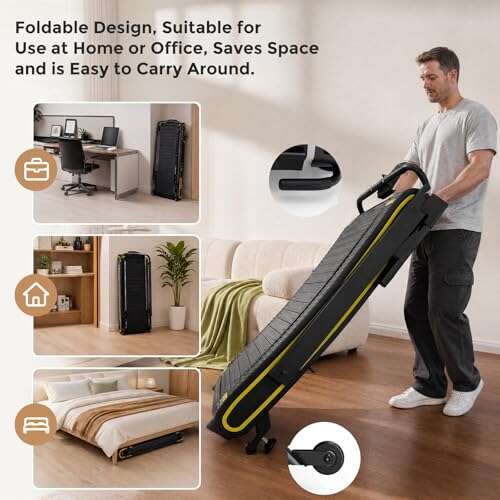
The Rongle curved treadmill is a strong first pick for home users who want a non-electric running machine with a high stated weight capacity. Its curved belt lets you control speed with your stride, so you do not need a motor, power cord, or preset speed. The foldable design also helps if your workout room serves as an office, bedroom, or living area. Its 350-pound listed capacity gives larger users more confidence when choosing a home cardio machine.
I like the simple training style here because it keeps the focus on movement. You can walk near the front of the deck, jog through the center, or push toward the front for faster work. The lack of a motor may also reduce noise and maintenance points. Still, check the assembled size and folding method before purchase, since a curved deck needs more usable room than a slim walking pad.
Pros:
- Self-powered design needs no outlet
- Foldable frame helps with home storage
- High stated 350-pound user capacity
- Curved deck supports natural pace control
- Useful for walking, jogging, and intervals
Cons:
- Manual belts can feel harder than motorized belts
- Limited onboard features compared with app treadmills
- Users should confirm folded dimensions before buying
My Recommendation
I recommend the Rongle to shoppers who want the best curved treadmill for home with a focus on strength, simple operation, and storage. It suits heavier users, interval trainees, and people who do not want another powered device in the house. It is also a practical match for a garage gym or spare room. Its value looks strongest when you prefer training feel over entertainment features.
| Best for | Why |
|---|---|
| Larger users | The listed 350-pound capacity offers extra support. |
| Small home gyms | The foldable frame can free floor space after training. |
| Simple cardio | No motor or outlet keeps the setup straightforward. |
6-Level Curved Manual Treadmill

This curved manual treadmill adds six resistance levels to a self-powered running platform. That matters because resistance gives you more control over effort than a basic free-moving belt. The five-layer shock-absorbing belt is designed to make repeated steps feel less harsh on the floor and joints. A digital monitor gives you basic workout feedback without adding a large screen or complex subscription.
In use, this type of treadmill works well for short intervals and steady walking. Lower resistance can suit warmups, while higher settings can make a brisk session feel demanding. The manual action also encourages active foot placement and good posture. I would still start slowly, since curved treadmills often ask more from the calves and hamstrings than a flat motorized deck.
Pros:
- Six resistance levels support varied workouts
- Self-powered operation saves electricity
- Five-layer belt construction may improve comfort
- Digital monitor tracks basic session data
- Suitable for home and light commercial use
Cons:
- Manual resistance may challenge beginners
- Basic monitor may not replace a fitness app
- Heavy interval use can require regular belt checks
My Recommendation
This model is a good choice for anyone seeking the best curved treadmill for home with adjustable resistance and simple tracking. It fits users who want to alternate walking, jogging, and harder anaerobic bursts. The belt cushioning is a useful feature for people who dislike a harsh deck. I see it as a balanced option for a home gym that needs more training range than a basic manual treadmill.
| Best for | Why |
|---|---|
| Interval training | Six resistance levels let you change effort during a session. |
| Basic workout tracking | The digital monitor provides useful core data. |
| Light commercial use | The design is positioned for more than occasional home walking. |
8-Level Curved Manual Treadmill

This eight-level curved manual treadmill is aimed at users who want more fine control over resistance. The self-powered belt responds to your foot speed, while the resistance range helps you shape the workout around your fitness level. That setup can support easy walks, steady runs, and demanding push sessions. It is a useful format for people who enjoy training by feel rather than following a motor speed.
The extra resistance settings are the main reason to consider this machine. You can make small changes instead of jumping from an easy setting to a very hard one. A curved belt may also promote a shorter, quicker stride, which can help during sprint drills. As with any non-electric treadmill, I suggest checking assembly instructions and belt alignment before your first serious workout.
Pros:
- Eight resistance levels offer broad workout control
- No motor means no electrical power is needed
- Curved belt supports user-led speed changes
- Works for cardio and higher-effort intervals
- Simple design can be easier to maintain
Cons:
- May feel demanding for new treadmill users
- Manual design offers fewer entertainment features
- Exact footprint should be checked for tight rooms
My Recommendation
I would choose this machine for a fit user who wants the best curved treadmill for home with a wide resistance range. It is especially appealing to runners who like to control pace with body position and foot pressure. It can also serve a shared home gym because different users can select different effort levels. Its best value comes from training variety, not from smart-screen features.
| Best for | Why |
|---|---|
| Advanced home users | Eight resistance levels create room for progression. |
| Sprint practice | The curved belt responds quickly to changes in stride. |
| Power-free workouts | The self-powered design works without a wall outlet. |
Sunny Health & Fitness Smart Curved Treadmill

Sunny Health & Fitness brings a more connected feel to the curved manual treadmill category. This model uses eight levels of magnetic resistance, giving you a smooth way to adjust effort without relying on a motor. The smart positioning is useful for users who want more guidance and workout structure at home. It combines the active feel of a manual belt with features aimed at modern home training.
Magnetic resistance is a key advantage because it can feel more controlled than a simple friction adjustment. The curved deck still lets you set your own pace, but the resistance knob gives you another training tool. This makes the treadmill a good fit for users who enjoy intervals, conditioning, and measured progress. Before buying, confirm which smart functions require a compatible app or separate account.
Pros:
- Eight magnetic resistance levels
- Smart design adds modern workout support
- Self-powered belt reduces energy use
- Curved deck supports natural speed control
- Strong choice for interval and conditioning work
Cons:
- Some smart functions may depend on app access
- Manual running can tire new users quickly
- Connected features may add setup steps
My Recommendation
Sunny Health & Fitness is a strong candidate for the best curved treadmill for home if you want smart support without giving up manual training. It suits people who need workout structure, adjustable resistance, and a recognized fitness brand. It is also a good bridge for users moving from a motorized treadmill to a more active running style. I would place it high on the list for connected home cardio.
| Best for | Why |
|---|---|
| Smart home workouts | The design adds connected training potential. |
| Controlled resistance | Magnetic levels allow measured effort changes. |
| Conditioning sessions | The curved belt and resistance work well for intervals. |
Sole Fitness C80 Curved Manual Treadmill

The Sole Fitness C80 is built for shoppers who want a home gym treadmill from a well-known fitness equipment name. Its curved manual format removes the need for a drive motor while keeping the focus on running mechanics. The deck encourages you to create speed with your own stride. That can make the workout feel more like outdoor running than walking on a powered belt.
I see this model as a serious option for runners who care about training feel and equipment presence. A curved treadmill can support acceleration drills, short sprints, and steady cardio in one machine. It may also suit a dedicated garage or basement gym better than a temporary living-room setup. As always, review the current product page for the exact dimensions, capacity, warranty, and included features before ordering.
Pros:
- Established fitness brand adds buying confidence
- Manual belt supports natural pace control
- Useful for home gym cardio and running
- No motor noise from a powered drive system
- Suitable for users who want a serious training platform
Cons:
- May cost more than lesser-known manual models
- Curved running requires an adjustment period
- Large equipment may need a dedicated workout area
My Recommendation
I recommend the C80 to runners who want the best curved treadmill for home from a brand with a strong fitness focus. It is a sensible match for a dedicated home gym and users who plan to train often. The natural stride feel is the main attraction, while the manual format keeps operation direct. Consider it when build confidence matters more than the lowest price.
| Best for | Why |
|---|---|
| Dedicated runners | The curved deck supports active pace control. |
| Garage gyms | It fits a serious training space better than a portable pad. |
| Brand-conscious buyers | Sole Fitness offers useful name recognition in home cardio. |
RUNOW Curved Treadmill
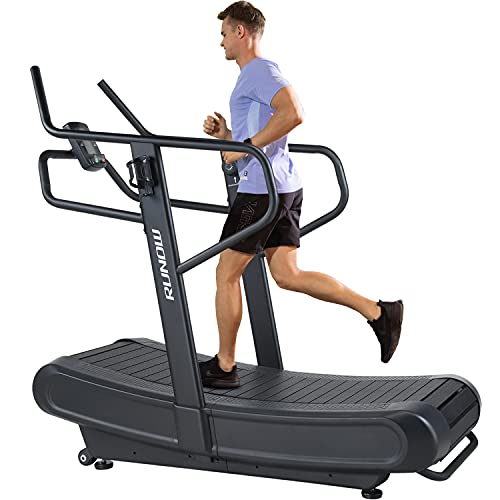
The RUNOW curved treadmill is designed for both home and commercial-style running use. That positioning makes it interesting for households where several people train, including stronger runners who may put more stress on the frame. Its curved belt lets each user choose a pace through foot pressure and body position. The design is better suited to active workouts than casual, slow walking alone.
A machine like this can become the center of a home conditioning routine. You can use it for warmups, tempo work, sprint intervals, and short calorie-focused sessions. Because the belt is manual, your legs do more of the work, which may make a brief workout feel surprisingly intense. I would reserve enough clearance around the frame and use proper shoes with a stable sole.
Pros:
- Designed for home and commercial-style training
- Curved belt supports fast pace changes
- Works well for intervals and conditioning
- No electrical motor is required
- Good fit for active multi-user households
Cons:
- May be too intense for casual beginners
- Commercial-style construction can take more room
- Buyers should verify current specifications and warranty
My Recommendation
RUNOW is a strong pick for the best curved treadmill for home when several users want hard workouts. It suits athletes, runners, and families with a shared training room. The machine makes more sense for people who will use sprint drills and conditioning rather than only slow walks. If your priority is serious training capacity, it deserves close attention.
| Best for | Why |
|---|---|
| Athletes | The belt format supports hard intervals and fast pace shifts. |
| Shared home gyms | Its home and commercial positioning suits frequent use. |
| Conditioning work | Manual running can make short sessions highly demanding. |
MERACH Incline Treadmill

The MERACH incline treadmill is different from the manual curved models in this guide. It uses a powered belt and focuses on automatic incline, app support, and a foldable home-friendly build. The listed design includes 15 or 18 percent automatic incline options, depending on the version or setting shown on the product page. It also lists a 350-pound capacity and a brushless motor, which can appeal to users who want a more traditional treadmill experience.
This machine deserves a place here as an alternative for shoppers who like the idea of home training but do not want a curved manual belt. The wider belt choices and screen support can make steady runs, walks, and hill sessions easier to plan. A powered treadmill also feels more forgiving for beginners and people returning after a break. In exchange, you need an outlet, and the motor adds noise and moving parts.
Pros:
- Automatic incline supports hill-style workouts
- Foldable design suits many home spaces
- Listed 350-pound user capacity
- Screen, app, and heart-rate features add guidance
- Powered belt may feel easier for beginners
Cons:
- It is not a true curved manual treadmill
- Requires electricity and creates motor noise
- App features may depend on compatibility or access
My Recommendation
Choose this MERACH if you want the best curved treadmill for home search to include a powered alternative. It is best for walkers, beginners, and users who value incline, screens, and guided workouts over self-powered running. The foldable frame may also work well in a multipurpose room. Pick it instead of a curved model if easy pace control is your top need.
| Best for | Why |
|---|---|
| Incline training | Automatic incline creates hill-focused sessions. |
| Beginners | A powered belt offers a familiar and steady pace. |
| Connected workouts | The screen and app features add training guidance. |
2026 8-Level Manual Curved Treadmill

This 2026 manual curved treadmill pairs a curved running belt with eight resistance levels and a digital display. It is made for users who want a current, no-electricity approach to cardio and anaerobic training. The belt lets you create speed naturally, while the resistance settings help add challenge. The digital display keeps the console simple and focused on workout information.
I like this format for people who prefer short, sharp sessions. You can use a low setting for a warmup, raise the resistance for a strong effort, and finish with a slow recovery. That makes the machine useful even when you have only 15 or 20 minutes. New users should build up gradually because a manual curve can place more demand on the lower legs than a powered treadmill.
Pros:
- Eight resistance levels support progression
- Digital display gives basic session feedback
- Non-electric design lowers operating costs
- Supports both cardio and anaerobic training
- Current 2026 listing suits shoppers seeking updated equipment
Cons:
- Not ideal for users who want automatic speed control
- Short sessions may still feel intense
- Buyers should inspect the exact warranty terms
My Recommendation
This model suits shoppers seeking the best curved treadmill for home for fast, focused training. It is a good match for busy adults, fitness users, and athletes who want adjustable resistance without a motor. The digital display adds just enough feedback for most basic sessions. It offers especially good value if you care more about training effect than entertainment.
| Best for | Why |
|---|---|
| Busy adults | Manual resistance supports effective short workouts. |
| Anaerobic training | Higher settings can add a strong challenge. |
| Low-power home gyms | No outlet is needed for the treadmill itself. |
MERACH T12 Foldable Treadmill

The MERACH T12 is another powered alternative for home users who want a foldable treadmill with a wide running belt. Its listed 300-pound capacity makes it relevant to a broad range of walkers and runners. A powered belt provides a steady pace, which can be easier for long sessions, recovery workouts, and new treadmill users. The foldable format helps when the machine must share space with furniture.
This model is not curved, but it fills a different need in the same buying decision. Some people want a smooth, predictable ride and do not want to learn the active stride used on a curved manual deck. A wide belt may also help users feel less boxed in while they walk or run. I would choose it for comfort and convenience, not for the intense self-powered effect of a curved treadmill.
Pros:
- Foldable frame helps save room
- Listed 300-pound weight capacity
- Wide belt can improve running comfort
- Powered pace suits steady workouts
- Good option for walking and everyday cardio
Cons:
- It is not a curved treadmill
- Needs electricity for every workout
- May offer less sprint training feel than a manual curve
My Recommendation
The T12 is for shoppers who compare the best curved treadmill for home but decide that a standard powered belt fits better. It suits walkers, casual runners, and households that want simple, steady cardio. The foldable design is helpful in an apartment or shared room. Choose it when comfort and predictable pacing matter more than manual resistance.
| Best for | Why |
|---|---|
| Everyday walking | The powered belt provides a steady, familiar pace. |
| Small rooms | The foldable frame can simplify storage. |
| New treadmill users | A standard belt may require less adjustment than a curved deck. |
SB Fitness CT550 Curved Treadmill

The SB Fitness CT550 is a self-generated curved treadmill with an LCD display and a water bottle holder. Those small details can make a big difference during home training because they keep essentials close and reduce the need to stop mid-session. Its manual operation means your stride powers the belt. The product is listed for home or light commercial use, giving it a wider role than a basic walking machine.
I find this style appealing for users who want a clean, independent workout station. The LCD can provide useful information while the bottle holder supports longer sessions. The curved belt works well for interval training because it responds when you change your foot position. Place the machine on a stable, level surface, and leave clear space around it before starting faster work.
Pros:
- Self-generated belt needs no motor power
- LCD display supports simple workout tracking
- Water bottle holder improves workout convenience
- Suitable for home and light commercial use
- Curved deck responds quickly to stride changes
Cons:
- Light commercial use may still require regular care
- Manual running can be demanding for beginners
- LCD features may be less advanced than app consoles
My Recommendation
The CT550 is a practical choice for the best curved treadmill for home when convenience and self-generated training both matter. It suits users who want a dedicated machine for regular cardio, intervals, or light shared use. The bottle holder and LCD make the workout feel more complete without adding a large entertainment system. It offers solid appeal for a garage gym or active household.
| Best for | Why |
|---|---|
| Regular home cardio | The self-powered belt supports frequent sessions. |
| Longer workouts | The bottle holder keeps water within reach. |
| Light shared use | Its listed use includes home and light commercial settings. |
How to Choose the Best Curved Treadmill for Home
Choosing the best curved treadmill for home starts with your training goal. A manual curve works best when you want to control speed with your body, perform intervals, and avoid a motor. A powered treadmill may be better for long walks, easy pacing, or a first treadmill purchase. Neither design wins for every user.
Understand the curved belt
A curved treadmill has a deck that rises at the front and rear. When you step forward, your foot helps move the belt backward. Your body position affects speed, so you control the workout in a more direct way. This design can feel natural, but it often requires more effort than a powered belt moving at a set speed.
That extra effort is useful for training, but it can surprise a new user. I suggest starting with five to ten minutes of easy walking. Keep your hands relaxed, look ahead, and avoid pulling on the rails. Build time and speed slowly as your calves and hamstrings adapt.
Check resistance options
Resistance gives you control over how hard the belt feels. Six or eight levels can help you progress over time. Magnetic resistance often feels smoother, while basic friction systems may offer a more direct mechanical feel. More levels do not always mean a better machine, but they can make a treadmill more useful for a shared household.
Measure your workout space
Curved treadmills can look compact in photos but still need a large safety area. Measure the full length, width, and height before delivery. Check the ceiling height if you plan to run on a raised platform or in a low basement. Also measure the path from your front door to the final workout location.
Review capacity and frame stability
Never choose only by the number in a product title. Compare the listed user capacity with your body weight and workout style. A runner creates more impact than a slow walker. A strong frame, stable handrails, and a firm deck can improve confidence during fast intervals.
Think about noise
A manual treadmill usually avoids motor noise, but it is not silent. Your foot strikes, belt movement, and frame vibration can still travel through a hard floor. A dense exercise mat may help protect flooring and reduce vibration. If you live above another unit, ask whether the building has quiet-hour rules.
Look at maintenance
Manual treadmills have fewer motor parts, but they still need care. Keep dust and sweat away from the frame and display. Inspect the belt for unusual rubbing or drift. Follow the maker’s instructions for cleaning, lubrication, and tension checks.
Do not ignore the console
A basic display may show time, speed, distance, and calories. That is enough for many users. A smart treadmill may add workouts, app links, heart-rate data, and progress records. Decide whether you need those tools or whether they would become an unused feature that raises the price.
Curved Treadmill Safety Tips
Use the side rails when you first step onto the belt. Start with a slow walk and learn how the belt responds. Keep your eyes forward instead of watching your feet. Stop if you feel sharp pain, dizziness, or unusual shortness of breath.
Wear supportive athletic shoes with good grip. Avoid loose clothing that can catch on the belt. Keep children and pets away from the moving deck. If you have a heart, joint, balance, or medical concern, ask a qualified health professional before starting hard interval work.
Good form matters more on a curved treadmill. Stand tall, keep your chest open, and let your arms move naturally. Do not lean heavily on the handrails because that can change your stride and reduce the training effect. Think of the belt as a quiet stream: guide it with smooth steps instead of fighting it.
Manual Versus Powered Treadmills
A manual curved treadmill gives you direct pace control and does not need a motor. It often works well for sprint intervals, short conditioning sessions, and users who want a more active stride. It can also reduce energy use and remove motor maintenance. The tradeoff is a steeper learning curve and a workout that may feel harder.
A powered treadmill offers predictable speed and often includes automatic incline. It can be easier for long walks and steady runs. Many powered models also offer screens, apps, and heart-rate tools. The tradeoffs include electricity, motor noise, and more mechanical parts.
For most shoppers, the right choice depends on the workout they will actually do. A high-end manual machine that sits unused is not a better purchase than a basic powered model used five days a week. Choose the treadmill that makes exercise feel easy to begin and simple to repeat.
FAQs Of best curved treadmill for home
Is a curved treadmill good for home use?
Yes. A curved treadmill can work very well at home for walking, running, sprint drills, and interval training. It does need enough floor space and a short adjustment period. Start slowly so your legs can adapt.
Are curved treadmills harder to use?
They can feel harder because your stride moves the belt. The effort depends on the curve, belt design, resistance setting, and your pace. Most users can adapt by beginning with short, easy sessions.
Does a curved treadmill need electricity?
A manual curved treadmill usually does not need electricity to move. Its display may use batteries or another power source. Powered alternatives, such as incline treadmills, do need an outlet.
Can beginners use a curved treadmill?
Yes, but beginners should begin with walking and use the rails for balance during the first few sessions. Keep the resistance low if the model allows adjustment. Increase time and effort only after the movement feels stable.
What is the best curved treadmill for home?
The best choice depends on your needs. The Rongle stands out for capacity and folding value, while Sunny Health & Fitness suits users who want smart magnetic resistance. Serious runners may prefer Sole or RUNOW, and powered MERACH models suit users who want a standard treadmill feel.
Final Verdict: Which Should You Buy?
For most home users, the Rongle is my top pick for the best curved treadmill for home because it combines self-powered control, folding storage, and a 350-pound listed capacity. Sunny is the better smart choice, while Sole and RUNOW suit serious runners.
Choose a curved treadmill that matches your room, fitness level, and workout plan. The best curved treadmill for home is the one you can use safely, often, and with confidence.

Brandon Knoxley is a sport & fitness writer and training guide contributor at MySportFitHub. He focuses on practical workouts, performance-based training, and honest fitness gear insights designed for real people and real results. Brandon is passionate about helping beginners and active individuals train smarter, avoid common mistakes, and build sustainable fitness habits.