How To Burn The Most Calories On A Treadmill: Fast Tips
Use incline intervals, brisk speed, good form, and enough effort to raise your heart rate safely.
Learning how to burn the most calories on a treadmill is not just about running as fast as possible. The best results come from combining speed, incline, interval training, smart pacing, and steady effort. This guide explains the science, the safest methods, common mistakes, and practical treadmill workouts you can use today.
What Burns the Most Calories on a Treadmill?
The treadmill burns the most calories when it makes your body work hard for a sustained period. Speed matters, but it is only one part of the answer. Incline, workout length, body weight, fitness level, and exercise intensity all affect calorie use.
A fast walk uphill can burn more calories than a slow jog on a flat belt. Running may burn more calories per minute, but many people cannot maintain it for long. A challenging incline walk may offer a better total calorie burn because you can keep going without stopping.
The most effective approach usually combines:
- Incline walking or running
- Speed intervals
- Longer steady sessions
- Short recovery periods
- Good posture and natural arm movement
- A pace that feels hard but controlled
Calorie displays are useful for tracking trends, but they are not exact. Treadmills often estimate calorie burn from speed, incline, and weight. They may not fully account for your age, fitness level, body composition, or whether you hold the handrails.

How Incline Helps You Burn More Calories
Incline changes the treadmill from a flat road into a hill. Your glutes, hamstrings, calves, and heart must work harder to move your body upward. This increases the energy cost of walking or running.
A small incline can make a clear difference. For example, walking at 3.5 miles per hour on a 5% incline may feel much harder than walking at the same speed on a flat surface. A steeper incline can raise the challenge even more, but it also places greater stress on your calves and Achilles tendons.
Use these incline guidelines:
- Beginners can start with 2% to 4%.
- Intermediate users can try 5% to 8%.
- Experienced users may use 8% to 15% for short periods.
- Very steep inclines should be used for brief intervals, not the entire workout.
Do not lean heavily on the console. This reduces the load on your legs and can make the calorie reading less useful. Instead, slow the belt if needed and keep your body tall.
A simple incline workout looks like this:
- Warm up for five minutes at 0% to 2% incline.
- Walk for two minutes at a 5% incline.
- Walk for two minutes at a 2% incline.
- Repeat six to eight times.
- Cool down for five minutes.
This method is one of the safest answers to how to burn the most calories on a treadmill because it raises effort without forcing you to sprint.

Use Treadmill Intervals for a Higher Calorie Burn
Interval training alternates between hard work and easier recovery. The hard sections raise your heart rate, while the recovery sections help you repeat the effort. This creates a workout that is intense but manageable.
You do not need to sprint at full speed. A fast walk, jog, or moderate run can work well. The right speed is one that makes talking difficult but still allows you to maintain good form.
Try this beginner interval workout:
- Warm up for five minutes.
- Walk or jog hard for 30 seconds.
- Recover for 90 seconds.
- Repeat eight times.
- Cool down for five minutes.
For a stronger workout, use a 1:1 work-to-rest ratio:
- Warm up for eight minutes.
- Run hard for one minute.
- Jog or walk for one minute.
- Repeat 10 times.
- Cool down for five minutes.
You can also combine speed and incline. For example, run at a moderate speed with a 3% incline for one minute, then recover at a 1% incline. This adds resistance without requiring an all-out sprint.
In my experience, many people make the mistake of starting intervals too fast. They feel strong during the first two rounds, then lose form and quit early. A controlled effort repeated many times will usually beat one extreme burst.

The Best Treadmill Speeds for Calorie Burn
There is no single best treadmill speed for everyone. Your ideal pace depends on your fitness, body size, stride, and training history. The goal is to find a speed that challenges you without causing unsafe movement.
Use the talk test as a simple guide:
- Easy pace: You can speak in full sentences.
- Moderate pace: You can speak in short sentences.
- Hard pace: You can say only a few words.
- Very hard pace: You can barely talk.
For many adults, these ranges may be useful:
- Easy walk: 2.5 to 3.2 miles per hour
- Brisk walk: 3.3 to 4.2 miles per hour
- Fast walk: 4.3 to 4.8 miles per hour
- Easy jog: 4.5 to 5.5 miles per hour
- Moderate run: 5.5 to 7.5 miles per hour
- Fast run: More than 7.5 miles per hour
These are general examples, not strict rules. A 3.5-mile-per-hour pace may feel easy for one person and very hard for another.
One key lesson from treadmill training is that speed should never replace form. If you are bouncing, gripping the rails, or landing heavily, reduce the speed. Good movement helps you train longer and lowers your risk of injury.
How Long Should You Exercise on a Treadmill?
Workout length affects total calorie burn. A hard 15-minute workout can burn many calories per minute, but a steady 45-minute workout may burn more calories overall.
A practical weekly plan includes a mix of session lengths:
- 20 to 25 minutes for interval training
- 30 to 45 minutes for steady walking or jogging
- 45 to 60 minutes for a longer, moderate session
Start with the amount you can recover from. If you are new to exercise, three 20-minute sessions may be better than one exhausting 60-minute workout.
The Centers for Disease Control and Prevention recommends at least 150 minutes of moderate aerobic activity or 75 minutes of vigorous activity each week for most adults. More activity may provide extra health benefits, but rest and recovery still matter.
Your total daily movement also counts. A treadmill workout cannot fully offset sitting all day, poor sleep, or a high-calorie diet. Think of exercise as one part of a wider health plan.

A Treadmill Workout Plan to Burn More Calories
This four-week plan can help you learn how to burn the most calories on a treadmill without making every workout exhausting. Adjust the speed and incline to match your fitness level.
Week 1: Build a base
Complete three workouts:
- Five-minute warm-up
- Twenty minutes of brisk walking
- Five-minute cool-down
Use a 1% to 3% incline if your legs feel comfortable.
Week 2: Add short intervals
Complete three or four workouts:
- Five-minute warm-up
- One minute of fast walking or jogging
- Two minutes of easy walking
- Repeat six to eight times
- Five-minute cool-down
Week 3: Add more incline
Complete one incline workout, two steady workouts, and one optional recovery walk:
- Warm up for five minutes.
- Walk for three minutes at a 5% incline.
- Recover for two minutes at a 1% incline.
- Repeat six times.
- Cool down for five minutes.
Week 4: Combine speed and incline
Complete three challenging workouts:
- Warm up for eight minutes.
- Run or fast-walk for one minute at a 3% to 5% incline.
- Recover for two minutes at a 1% incline.
- Repeat eight times.
- Cool down for five minutes.
Do not increase speed, incline, and workout length at the same time. Change one factor first. This makes it easier to understand how your body responds.
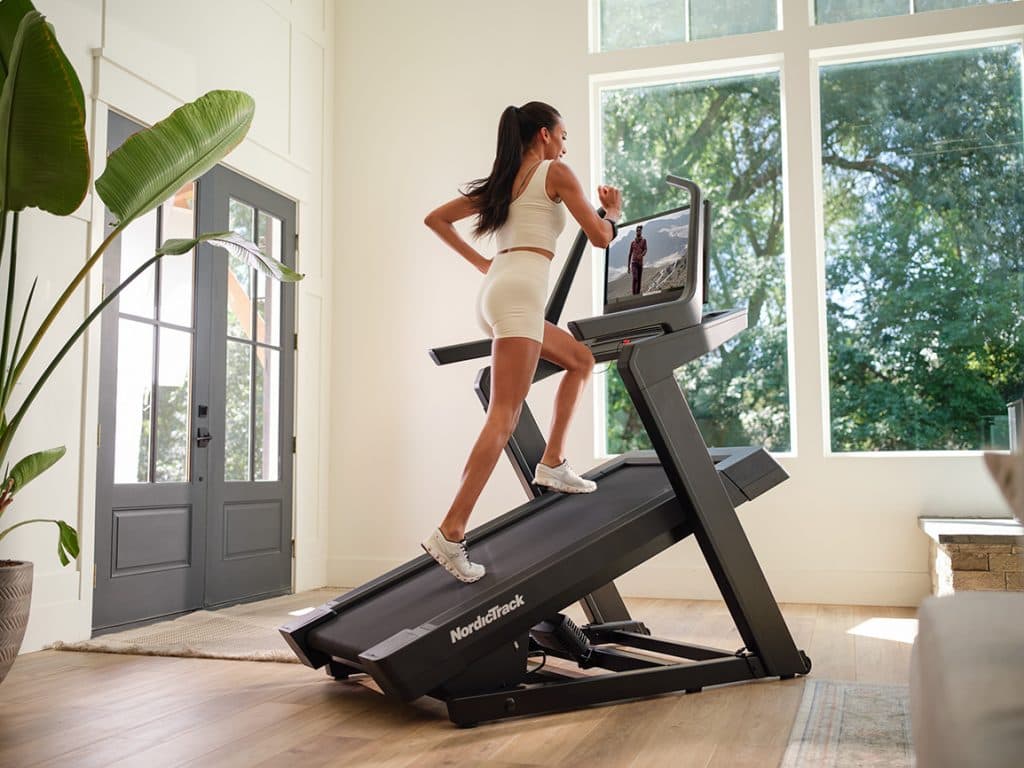
How to Burn the Most Calories on a Treadmill Without Running
Running is not required for a high-calorie treadmill workout. Incline walking can raise your heart rate while placing less impact on your joints than running.
Try this incline walking workout:
- Warm up at 0% incline for five minutes.
- Walk at 3.5 to 4.0 miles per hour with a 5% incline for three minutes.
- Increase the incline to 8% for two minutes.
- Lower the incline to 2% for two minutes.
- Repeat five to seven times.
- Cool down at 0% to 1% incline.
You can also use power walking. Keep your arms moving naturally, take quick steps, and maintain a tall posture. Avoid taking very long steps, which can increase strain and reduce control.
Incline walking works well for people who are not ready to run, are returning after a break, or want to reduce impact. It can still be demanding, so watch for calf pain, foot pain, or unusual soreness.

Use Proper Treadmill Form
Good form helps you use your muscles well and train longer. It also makes the workout feel smoother.
Follow these basic form tips:
- Keep your head level and look ahead.
- Relax your shoulders.
- Keep your chest open.
- Let your arms swing naturally.
- Land softly under your body.
- Keep your steps quick and controlled.
- Avoid holding the handrails.
- Keep your core gently engaged.
Holding the rails is one of the most common treadmill mistakes. It supports part of your body weight and can reduce the work done by your legs. It may also cause you to lean backward or twist your body.
If you feel unstable, lower the speed or incline. Safety is more important than the number on the screen.

Track Intensity Instead of Trusting Calories Alone
Treadmill calorie counters can be helpful, but they should not be treated as laboratory measurements. Research has found that exercise machines may overestimate or underestimate calorie burn. The error can vary by machine, speed, incline, and user.
Use several signals to judge effort:
- Heart rate
- Breathing rate
- Perceived effort
- Speed
- Incline
- Workout duration
The rating of perceived exertion scale is simple. A score of 1 feels very easy, while 10 feels like maximum effort. Most steady workouts should feel like a 5 or 6. Hard intervals may reach 7 or 8, but they should not feel like an all-out effort every time.
A heart-rate monitor can offer more useful data than a treadmill estimate. Still, heart rate is affected by heat, stress, caffeine, medication, and sleep. Use it as a guide rather than a perfect score.

How Nutrition Affects Treadmill Calorie Burn
Exercise burns energy, but food intake affects whether you lose body fat. A treadmill workout may burn 300 calories, but a large snack can replace those calories quickly. This does not make the workout pointless, but it shows why weight loss requires a wider plan.
Focus on simple habits:
- Eat enough protein.
- Include vegetables and fruit.
- Choose high-fiber carbohydrates.
- Drink water.
- Limit liquid calories.
- Avoid treating exercise as permission to overeat.
Do not train hard while severely restricting food. Low energy can harm performance, recovery, mood, and consistency. A moderate calorie deficit is usually easier to maintain than an extreme diet.
If you have diabetes, a history of eating disorders, heart disease, or another medical condition, speak with a qualified health professional before making major changes.
Common Mistakes That Reduce Results
Knowing how to burn the most calories on a treadmill also means knowing what not to do. Small mistakes can reduce your effort or raise your injury risk.
Avoid these common problems:
- Starting without a warm-up
- Using a speed that is too fast
- Holding the handrails
- Leaning far forward on an incline
- Doing hard intervals every day
- Ignoring pain
- Chasing the calorie display
- Skipping recovery
- Changing every workout at once
One mistake I have seen often is turning every session into a test. People push hard daily, feel worn out, and then stop training for a week. Consistency is the real multiplier. A good workout that you repeat is more valuable than a perfect workout that leaves you injured.
Treadmill Safety and Recovery Tips
Treadmill workouts are generally safe, but high speed and incline increase the demands on your body. Use the safety clip when available. Keep the area around the treadmill clear, and do not step off the moving belt without slowing it first.
Warm up for at least five minutes. Start with an easy walk, then gradually raise the speed or incline. After training, cool down until your breathing returns closer to normal.
Rest when you need it. Muscle soreness can be normal, but sharp pain, chest pressure, faintness, severe shortness of breath, or unusual heart symptoms require immediate attention. Stop exercising and seek medical care when appropriate.
A simple recovery routine includes:
- Light walking after hard sessions
- Gentle mobility work
- Adequate sleep
- Enough fluids
- Regular meals
- At least one easier day after intense training
How Often Should You Use a Treadmill?
Most people can use a treadmill three to five days per week, depending on workout intensity and experience. Not every session should be hard.
A balanced week might look like this:
- Monday: Incline intervals
- Tuesday: Easy walk or rest
- Wednesday: Steady jog
- Thursday: Rest or light movement
- Friday: Speed intervals
- Saturday: Longer easy walk
- Sunday: Rest
Beginners may need more recovery. Experienced runners may train more often, but they still benefit from easy days. The best treadmill schedule is one that fits your life and allows you to return feeling ready.
Frequently Asked Questions About How to Burn the Most Calories on a Treadmill
Is incline or speed better for burning calories?
Both can increase calorie burn, but they work in different ways. Speed often raises calorie use quickly, while incline lets many people work hard without running.
How can I burn 500 calories on a treadmill?
The time needed depends on your body weight, speed, incline, and fitness level. A longer incline walk or a mix of running and intervals may help, but treadmill calorie estimates are not exact.
Does walking on an incline burn more calories than running flat?
It can, especially when the incline is challenging and the walk lasts longer. The exact result depends on the person and the speeds being compared.
Should I use the treadmill every day to lose weight?
You can walk easily most days, but hard running or incline sessions need recovery. A mix of easy, moderate, and challenging workouts is usually more sustainable.
What is the best treadmill workout for beginners?
Start with a brisk walk and short, controlled intervals. Try one minute of faster walking followed by two minutes of easy walking for six to eight rounds.
Does holding the treadmill handles reduce calorie burn?
Yes, holding the rails can support part of your body weight and reduce the work required from your legs. It may also affect posture and make the calorie estimate less reliable.
Is a 1% incline necessary when running indoors?
A 1% incline is sometimes used to make indoor running feel closer to outdoor running, but it is not required. Use the incline that matches your goal, comfort, and fitness level.
Conclusion
The best way to burn more calories on a treadmill is to combine incline, speed intervals, steady effort, and proper form. You do not need to sprint every day. A brisk incline walk can be highly effective, especially when you repeat it consistently and recover well.
Start with one or two changes, such as adding a 5% incline or using short intervals. Track your effort, not just the calorie display, and increase your training gradually. Try one of the workouts above this week, then share your progress or explore more evidence-based fitness guides for your next step.

Brandon Knoxley is a sport & fitness writer and training guide contributor at MySportFitHub. He focuses on practical workouts, performance-based training, and honest fitness gear insights designed for real people and real results. Brandon is passionate about helping beginners and active individuals train smarter, avoid common mistakes, and build sustainable fitness habits.