Is Treadmill Good For You: Benefits, Risks, And Expert Tips
Yes, a treadmill can improve heart health, fitness, mood, and weight control when used safely and regularly.
If you are asking, “is treadmill good for you,” the answer depends on how you use it, your health needs, and your exercise goals. A treadmill offers steady, controlled walking or running indoors, but it is not a magic machine. This guide explains its proven benefits, limits, safety tips, workout plans, and the common mistakes that can hold you back.

Is treadmill good for you?
For most healthy adults, treadmill exercise is a good way to build aerobic fitness and stay active. Walking on a treadmill can raise your heart rate, strengthen your legs, and help you meet weekly activity targets. Running can provide a harder workout in less time.
Federal physical activity guidelines recommend at least 150 minutes of moderate aerobic activity each week, or 75 minutes of vigorous activity. Brisk treadmill walking often counts as moderate activity, while steady running usually counts as vigorous activity.
The treadmill is also useful because it removes many outdoor barriers. You can exercise when it is raining, very hot, very cold, or dark outside. You can also control the speed, incline, and workout time with great accuracy.
Still, is treadmill good for you in every situation? Not always. Poor form, excessive speed, bad shoes, or too much training can lead to pain. People with heart disease, serious joint problems, balance issues, or other medical concerns should ask a health professional before starting.
Health benefits of treadmill walking and running
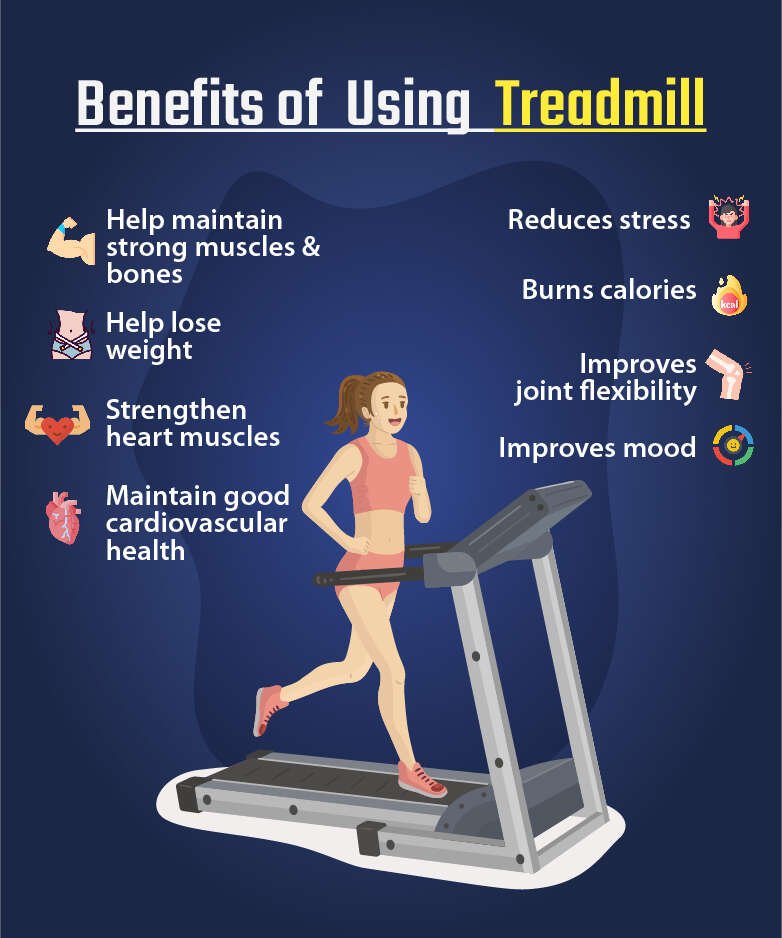
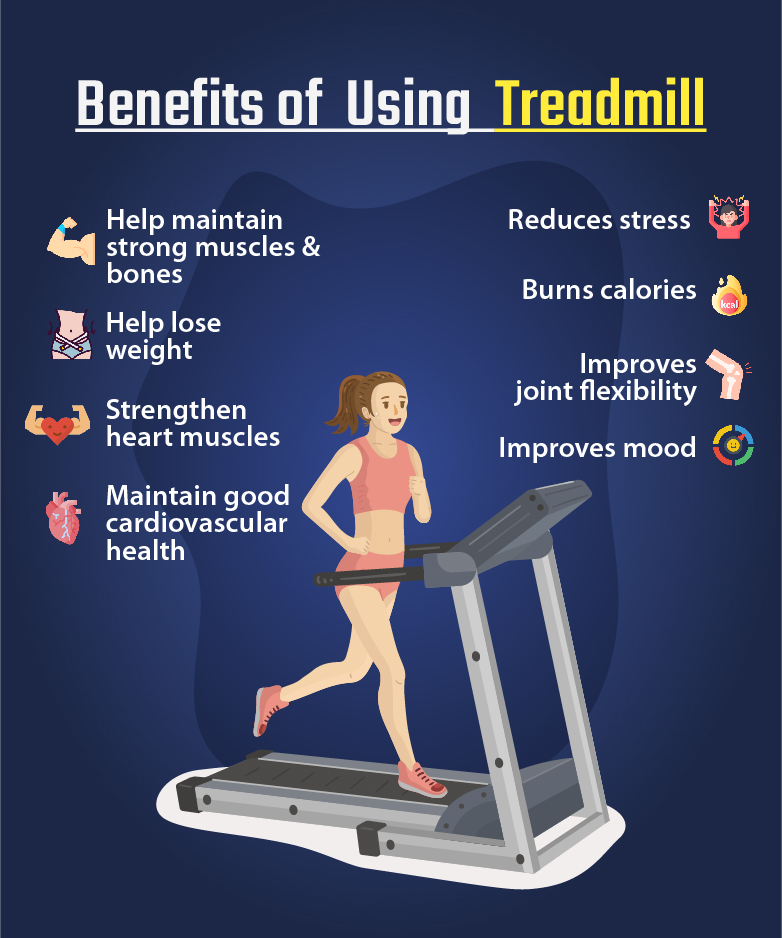
A treadmill can support several parts of your health. The benefits depend on your speed, incline, workout length, fitness level, and consistency.
1. It supports heart health
Walking and running make your heart pump more blood. Over time, regular aerobic exercise can improve cardiovascular fitness and help lower the risk of heart disease.
A treadmill lets you keep your heart rate in a target range. This makes it useful for beginners and for people who want a measured training plan. You can start with an easy pace, then slowly add time or incline.
2. It helps manage body weight
Treadmill workouts burn calories and can support fat loss when combined with a balanced eating pattern. However, calorie burn varies from person to person.
Your body weight, pace, incline, workout length, and fitness level all matter. A 30-minute brisk walk may burn fewer calories than a 30-minute run, but the walk may be easier to repeat several times each week.
The best treadmill workout for weight control is one you can do often. A simple routine that fits your life usually works better than a very hard routine that leaves you exhausted.
3. It strengthens the lower body
Walking and running use the calves, hamstrings, quadriceps, glutes, and hip muscles. Adding a gentle incline can increase the demand on your glutes and calves.
The treadmill does not replace strength training, though. For balanced fitness, add exercises such as squats, step-ups, lunges, calf raises, pushups, and rows.
4. It can improve mood and reduce stress
Aerobic exercise may help reduce stress and improve mood. Physical activity can also support better sleep and give your day a clear mental break.
Many people use a treadmill while listening to music, a podcast, or a show. This can make exercise feel less like a chore. Even a 10-minute walk can be a useful reset after a long workday.
5. It improves stamina
Regular treadmill use trains your body to use oxygen more efficiently. You may notice that stairs, errands, or long walks feel easier after several weeks.
Improved stamina also helps daily function. You do not need to become a runner to gain this benefit. A steady walking routine can make a real difference.
6. It offers a safe, controlled setting
A treadmill gives you a stable surface and clear controls. You can stop the belt quickly with the safety clip if you feel unwell or lose balance.
It also allows precise progress. For example, you can walk at 3 miles per hour for 20 minutes one week and increase to 3.2 miles per hour for 22 minutes later.
Treadmill walking versus outdoor walking
Both treadmill walking and outdoor walking can improve fitness. The better choice is the one you enjoy and can maintain.
Outdoor walking gives you changing scenery, fresh air, and natural variations in terrain. It may also challenge your balance more because sidewalks and paths are not perfectly even.
Treadmill walking gives you more control. You can set a precise speed, use an incline, avoid traffic, and exercise in any weather. It can also feel easier to track because the machine records time, pace, distance, and sometimes heart rate.
One difference is that the treadmill belt moves under you. Outdoor walking requires you to push against the ground and deal with wind, turns, and small changes in surface. A 1% incline may make treadmill running feel more similar to outdoor running, but this is not a perfect rule for every person or speed.
If you enjoy both options, use both. Indoor workouts can keep your routine alive during bad weather, while outdoor walks can add variety and fresh motivation.

Is treadmill good for weight loss?
Yes, a treadmill can help with weight loss, but the machine itself does not cause fat loss. Weight loss occurs when your body uses more energy than you consume over time.
Treadmill exercise can increase daily energy use. It may also help protect muscle during weight loss when paired with strength training and enough protein.
For many adults, brisk walking is a smart starting point. It creates less impact than running and may be easier to recover from. A practical weekly plan could include:
- Walk for 20 to 30 minutes on three days.
- Add one or two short sessions of gentle incline walking.
- Increase total weekly time by about 5 to 10 minutes when the current plan feels easy.
- Add two strength workouts each week.
- Keep meals balanced instead of trying to “eat back” every calorie shown on the treadmill.
Treadmill calorie displays are estimates. They may not account for your exact body composition, fitness level, or whether you hold the handrails. Use the numbers as rough feedback, not as a precise measure.

Is treadmill good for your knees and joints?
Treadmill walking can be joint-friendly for many people, especially when compared with high-impact activities. The belt is often more forgiving than concrete, and you can control the pace.
However, treadmill exercise is not automatically safe for every knee. Repeated impact, poor shoes, weak muscles, excess training, or an old injury may cause pain.
Use these steps to reduce joint stress:
• Begin with five minutes of easy walking.
• Choose supportive shoes that fit well.
• Keep your steps light and avoid reaching far in front of your body.
• Use a small incline instead of a steep incline if flat walking feels uncomfortable.
• Avoid holding the front bar while walking at a fast pace.
• Stop if you feel sharp pain, swelling, numbness, or a feeling of instability.
Mild muscle tiredness can be normal. Pain that changes your walking pattern is not something to ignore. A physical therapist can help identify movement problems and suggest exercises for your hips, knees, ankles, and feet.

Treadmill disadvantages and limitations
A balanced answer to “is treadmill good for you” must include its drawbacks. Treadmill exercise is helpful, but it has limits.
Repetitive movement
The belt gives you a steady path, which can make workouts repetitive. Repeating the same pace and incline may place stress on the same tissues.
You can reduce this risk by changing your pace, incline, workout length, and exercise type. Add cycling, swimming, outdoor walking, or strength work when possible.
Less skill and terrain variety
Outdoor movement may challenge balance, turning, and uneven-surface control more than treadmill walking. If you only use a treadmill, you may miss these skills.
This matters for athletes and for older adults who want strong balance. Simple balance exercises and outdoor walks can fill the gap.
Risk of falls
A moving belt can cause serious injury if you step off while it is still moving. Do not jump from the treadmill at high speed.
Keep the safety clip attached to your clothing. Place the treadmill away from walls, clutter, and furniture. Learn how to stop the belt before you begin a hard workout.
Cost and space
A quality treadmill can be expensive and takes up room. Some models also need regular care, such as belt cleaning, lubrication, and alignment.
A gym membership, walking trail, or basic home exercise plan may be a better fit for some people.
It may become a source of overtraining
Some users believe more time and more speed always mean better results. That can lead to sore joints, poor sleep, low energy, and stalled progress.
Fitness improves during recovery as well as training. Rest days are part of a smart plan.

How to use a treadmill safely
Good treadmill habits make the workout safer and more effective. Follow a gradual approach, especially if you are new to exercise.
Use the right setup
Place the treadmill on a stable, level surface. Keep enough space behind and beside it to step away safely. Remove loose objects from the area.
Wear comfortable clothing and shoes with a secure fit. Avoid loose cords near the belt.
Warm up first
Walk slowly for five minutes before raising the speed. A warm-up increases blood flow and prepares your muscles for harder work.
At the end, slow down for several minutes. You do not need long static stretches before walking, but gentle stretching after exercise may feel useful.
Keep good form
Look ahead instead of staring at your feet. Keep your shoulders relaxed and your arms moving naturally. Try to land with your foot under your body rather than far ahead.
Do not lean heavily on the handrails. Holding the rails changes your posture and may reduce the training effect. If you need the rails for balance, lower the speed and consider asking a professional for guidance.
Progress slowly
Change only one main factor at a time. You might increase time first, then speed, then incline.
A useful rule is to finish most workouts feeling that you could do a little more. This approach may seem slow, but it helps you build a routine without frequent setbacks.
Beginner treadmill workout plan
If you are new to treadmill exercise, start with walking. You can adjust the plan based on your health, age, and current fitness.
Week 1
• Warm up for five minutes at an easy pace.
• Walk at a comfortable pace for 10 minutes.
• Cool down for five minutes.
Repeat three times during the week.
Week 2
• Warm up for five minutes.
• Walk at a brisk pace for 15 minutes.
• Cool down for five minutes.
Repeat three or four times.
Week 3
• Warm up for five minutes.
• Alternate one minute of brisk walking with two minutes of easy walking for 20 minutes.
• Cool down for five minutes.
Repeat three times.
Week 4
• Warm up for five minutes.
• Walk briskly for 20 to 25 minutes.
• Add short incline periods if you feel comfortable.
• Cool down for five minutes.
During moderate exercise, you should be able to talk but not sing easily. If you cannot speak more than a few words, reduce the pace.
Treadmill workouts for different goals
The best treadmill routine depends on what you want to improve.
For general health
Walk briskly for 25 to 40 minutes at least three days per week. Add strength training on two days.
For endurance
Use one longer, easy workout and one session with short pace changes. For example, walk or jog easily for 30 minutes, then add six one-minute faster periods.
For running performance
Include easy runs, one faster workout, and one longer run each week. Avoid making every workout hard. Most recreational runners benefit from spending much of their training at an easy effort.
For low-impact fitness
Walk at a steady pace with little or no incline. If walking hurts, try a shorter session and speak with a health professional before progressing.
Common treadmill mistakes to avoid
Small mistakes can reduce comfort and increase injury risk.
• Starting too fast: Begin at a pace that feels easy, then build gradually.
• Skipping the warm-up: Cold muscles may not handle sudden speed well.
• Using the handrails: This can reduce effort and create poor posture.
• Setting an incline too high: Steep walking can strain the calves, Achilles tendon, and lower back.
• Ignoring pain: Pain is useful information, not a challenge to defeat.
• Trusting calorie numbers too much: Machine estimates are not exact.
• Doing the same workout every day: Variety can reduce overuse stress and boredom.
• Forgetting strength training: Walking alone does not train every major muscle group.
• Exercising without recovery: Rest supports adaptation and long-term consistency.
One lesson worth keeping is simple: consistency beats intensity. A moderate routine that you repeat for months is more valuable than a difficult routine that lasts one week.
Who should be careful with treadmill exercise?
Many people can use a treadmill safely, but some need medical advice first. Speak with a doctor or qualified health professional if you have:
• Chest pain or unexplained shortness of breath
• Dizziness or fainting during exercise
• Known heart or lung disease
• Poor balance or a recent fall
• Severe arthritis or joint swelling
• A recent surgery or serious injury
• Diabetes with concerns about blood sugar or foot health
Stop exercising and seek urgent medical care if you develop chest pressure, severe breathing trouble, faintness, or sudden weakness.
Pregnant people, older adults, and those returning to exercise after illness may still benefit from treadmill walking. Their plan should match their health status and receive professional guidance when needed.
Frequently Asked Questions About Is Treadmill Good for You
Is walking on a treadmill every day good for you?
Daily treadmill walking can be healthy if the pace and duration match your fitness level. Include easier days, watch for pain, and vary your activity when possible.
Is a treadmill better than running outside?
Neither is always better. A treadmill offers control and weather protection, while outdoor running provides varied terrain and changing scenery.
Can 30 minutes on a treadmill help me lose weight?
Thirty minutes can support weight loss by increasing daily energy use. Results also depend on food intake, sleep, activity outside the workout, and consistency.
Is treadmill walking good for belly fat?
Treadmill exercise can help reduce total body fat, but it cannot target fat from one area. A steady calorie deficit, strength training, and regular aerobic activity work together.
What is the best treadmill speed for beginners?
Start at a pace that feels stable and allows normal breathing. For many beginners, this may be a slow walk, while others may tolerate a brisk pace from the start.
Should I use an incline on the treadmill?
A small incline can increase workout difficulty without requiring a much faster pace. Start with a low setting and reduce it if you feel pain in your calves, knees, or lower back.
How long should I walk on a treadmill?
Start with 10 to 20 minutes if you are new, then build toward 30 minutes or more. Weekly consistency matters more than completing one very long session.
Conclusion
So, is treadmill good for you? For most people, yes. Treadmill walking and running can improve heart fitness, stamina, mood, body-weight control, and lower-body strength.
The safest approach is to begin at a manageable pace, use good form, wear supportive shoes, and increase your workout slowly. Combine treadmill exercise with strength training, recovery, and enjoyable outdoor activity for a more complete fitness plan.
Choose a routine you can repeat, listen to your body, and adjust the plan as your fitness improves. Try a simple treadmill workout this week, track how you feel, and share your experience or questions in the comments.

Brandon Knoxley is a sport & fitness writer and training guide contributor at MySportFitHub. He focuses on practical workouts, performance-based training, and honest fitness gear insights designed for real people and real results. Brandon is passionate about helping beginners and active individuals train smarter, avoid common mistakes, and build sustainable fitness habits.