Does Treadmill Incline Burn More Calories: The Truth
Yes, treadmill incline usually burns more calories because it makes your muscles work harder against gravity.
Does treadmill incline burn more calories than walking or running on a flat belt? In most cases, yes. A steeper incline raises the demand on your legs, heart, and lungs, so your body uses more energy at the same speed. Still, the exact calorie burn depends on your incline, pace, body weight, fitness level, and workout time.
This guide explains how incline changes calorie use, how much more you may burn, and how to use a treadmill incline safely. It also covers common mistakes, practical workouts, and what research-based exercise guidelines suggest.
Does treadmill incline burn more calories?
Yes, treadmill incline can burn more calories than a flat treadmill workout. The reason is simple: your body must lift itself upward with every step. That extra work uses more energy from your muscles.
Walking at 3 mph on a flat belt is much easier than walking at 3 mph on a 10% incline. Your pace stays the same, but the effort does not. The hill acts like added resistance.
Incline walking mainly challenges the:
• Glutes
• Hamstrings
• Calves
• Quadriceps
• Core muscles
• Cardiovascular system
A treadmill incline can also raise your heart rate. This does not mean every steep workout is better. A moderate incline that you can sustain may burn more total calories than a very steep incline that forces you to stop after five minutes.
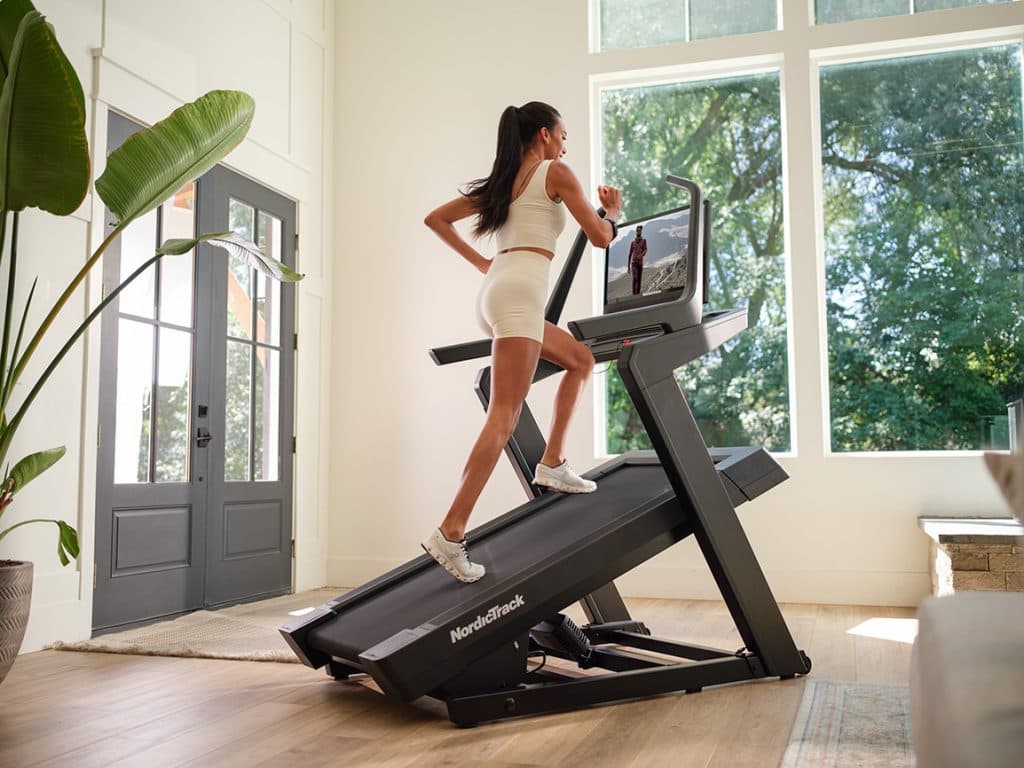
How incline affects calorie burn
The main factors that affect treadmill calorie burn are speed, incline, body weight, workout length, and movement efficiency. Incline changes the amount of work needed for each step.
For example, a 160-pound person may burn roughly:
• 120 to 150 calories during 30 minutes of easy flat walking
• 170 to 230 calories during 30 minutes of brisk walking at a moderate incline
• 250 or more calories during 30 minutes of fast uphill walking or jogging
These numbers are estimates, not promises. Treadmill calorie displays can be off because they may not know your exact body composition, stride, fitness level, or whether you hold the rails.
Why uphill movement uses more energy
Walking uphill is similar to carrying your body up a long flight of gentle stairs. Your muscles must push harder to move you forward and upward.
On a flat surface, much of your energy helps move your body ahead. On an incline, some of that energy must also overcome gravity. This is why does treadmill incline burn more calories has a clear answer for most users: uphill movement requires more mechanical work.
A simple calorie comparison
Consider two 30-minute workouts:
• Workout one: Walk at 3 mph with no incline
• Workout two: Walk at 3 mph with a 6% incline
The second workout may burn noticeably more calories because the speed is the same, but the resistance is higher. If the incline causes you to slow down or take long breaks, however, the total difference may become smaller.
This is an important lesson. The hardest setting is not always the most useful setting. The best treadmill incline is one that increases effort while allowing steady, safe movement.

How many calories does incline walking burn?
There is no single calorie number for incline walking. A 120-pound person and a 220-pound person will not burn the same amount during the same workout. Larger bodies usually use more energy to move the same distance.
Here is a general estimate for 30 minutes of treadmill walking:
| Body weight | Flat walking at 3 mph | Walking at 3 mph with a 5% incline |
|---|---|---|
| 130 pounds | About 115 to 135 calories | About 170 to 210 calories |
| 160 pounds | About 140 to 165 calories | About 210 to 260 calories |
| 200 pounds | About 175 to 210 calories | About 260 to 325 calories |
These figures are broad estimates. They should help you compare workouts, not serve as an exact measurement.
A commonly used exercise formula shows that oxygen demand rises as speed and incline rise. This supports the answer to does treadmill incline burn more calories: increasing the grade usually increases energy use, especially when your speed stays steady.
Does a higher incline always burn more?
Not always. A higher incline may burn more calories per minute, but only if you can maintain good form and keep moving. Holding the rails, leaning far back, or reducing your speed can lower the real challenge.
For example, walking at a 15% incline while holding the front bar may be less demanding than walking freely at a 7% incline. Your body may also shift weight away from the legs when you lean heavily on the machine.
The goal is not to chase the highest number on the display. The goal is to create useful work that you can repeat.

Incline walking versus running
Running usually burns more calories per minute than walking because it requires more force and a higher movement speed. However, incline walking can narrow the gap while placing less impact on the joints.
For some people, a brisk uphill walk feels safer and more comfortable than running. This can be useful if you are new to exercise, returning after a break, or managing mild joint discomfort with medical guidance.
Incline walking may also help you stay in a moderate heart rate zone. Running can quickly push some people into a very hard zone, which may make the workout short and exhausting.
When incline walking may be the better choice
Incline walking can work well when you:
• Want to increase calorie burn without running
• Prefer low-impact cardio
• Need a simple workout for a busy day
• Are building fitness from a low starting point
• Want to train your glutes and legs
• Need a walking workout with more variety
A good workout should fit your body and your schedule. An exercise plan you enjoy is often more effective than a perfect plan you avoid.
Incline walking and fat loss
Incline walking can support fat loss, but no treadmill setting directly melts fat from one body area. Fat loss happens when you use more energy than you consume over time.
Incline training helps by increasing energy use and improving fitness. Nutrition, sleep, daily movement, and consistency still matter. Think of the treadmill as one tool in a larger system.

Benefits of using a treadmill incline
The answer to does treadmill incline burn more calories is only one reason to use an incline. Incline training can also improve strength, endurance, and workout variety.
It increases cardiovascular demand
An incline raises your heart rate without requiring a faster pace. This can make a simple walk feel more like a serious cardio session.
The American College of Sports Medicine generally recommends regular moderate or vigorous aerobic activity for adults. Incline walking can help you reach that goal, especially when you walk at an effort that makes conversation possible but not effortless.
It strengthens the posterior chain
Uphill walking places more work on the glutes, hamstrings, and calves. These muscles help extend your hips and push your body forward.
Do not expect incline walking to replace strength training. It is still a form of cardio. For stronger muscles, combine it with exercises such as squats, step-ups, lunges, and resistance training.
It reduces boredom
Flat walking can become repetitive. Changing the incline every few minutes gives your mind and body a new task.
A simple hill pattern can make a 25-minute workout pass quickly:
-
Walk for five minutes at 0% to 2% incline.
-
Walk for five minutes at 4% incline.
-
Walk for five minutes at 6% incline.
-
Walk for five minutes at 3% incline.
-
Cool down for five minutes at 0% to 2% incline.
It can improve pacing skills
Incline work teaches you to manage effort. You learn that a slower pace can still feel challenging when the grade rises.
This is helpful for hiking, outdoor walking, and sports that include hills. It also teaches patience, since trying to rush uphill often causes early fatigue.

How to use treadmill incline safely
Start with a small increase. If you usually walk at 0%, try 2% or 3% for short periods. Give your calves and Achilles tendons time to adapt.
Use these safety tips:
• Warm up for five to ten minutes.
• Keep your chest tall and your eyes forward.
• Take short, natural steps.
• Keep your hands off the rails when safe.
• Lower the incline if your form breaks down.
• Drink water during longer sessions.
• Cool down at a low incline.
• Stop if you feel chest pain, severe dizziness, or unusual shortness of breath.
If you have heart disease, uncontrolled blood pressure, diabetes, a recent injury, or another health concern, ask a qualified health professional before starting hard incline training.
Avoid holding the rails
Holding the rails is one of the most common treadmill mistakes. It supports part of your body weight and changes your posture. This can make the displayed calorie burn look higher than the work your body is truly doing.
If you need the rails for balance, lower the speed or incline. Safety comes first. You can build balance and strength over time.
Avoid leaning too far forward
A slight forward lean from the ankles is natural on a hill. Bending sharply at the waist is not. Excessive leaning can strain your lower back and reduce normal hip movement.
Imagine your body as one straight line from your head to your ankles. Keep your shoulders relaxed and let your arms move naturally.
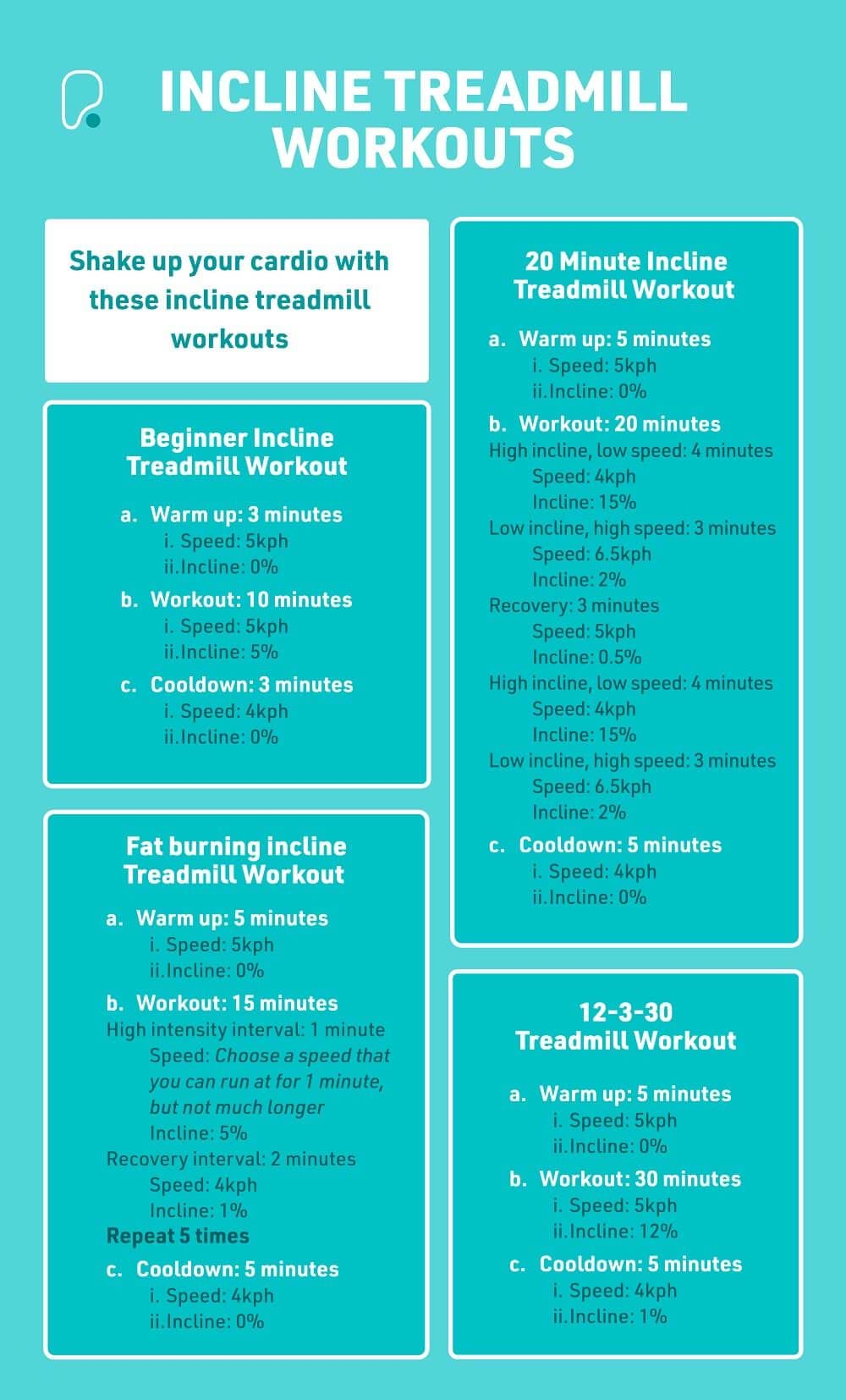
Effective incline treadmill workouts
The best incline workout depends on your fitness level. Start with a plan that feels manageable, then increase one factor at a time.
Beginner incline workout
Try this 20-minute session:
• Five minutes at 0% to 2% incline
• Two minutes at 3% incline
• Two minutes at 1% incline
• Repeat the incline pair three times
• Three minutes at 0% incline
Keep the speed comfortable. You should feel warmer and work harder, but you should not feel out of control.
Moderate hill workout
Try this 30-minute session:
• Five-minute warm-up at 1% incline
• Five minutes at 4% incline
• Five minutes at 6% incline
• Five minutes at 8% incline
• Five minutes at 4% incline
• Five-minute cool-down at 0% to 1% incline
Adjust the speed as needed. A moderate incline at a slower pace can be more useful than a fast pace that causes poor form.
Incline interval workout
Intervals can make treadmill training more engaging:
-
Walk for two minutes at 2% incline.
-
Increase to 6% to 8% incline for one minute.
-
Return to 2% incline for two minutes.
-
Repeat four to six times.
-
Cool down for five minutes.
Beginners can use shorter hill periods. Experienced users may increase the incline, speed, or number of rounds, but not all three at once.
Common mistakes that reduce results
Even when does treadmill incline burn more calories, poor technique can reduce the benefit or increase injury risk.
Setting the incline too high
A very steep grade may look impressive, but it can cause short steps, poor posture, and early fatigue. Progress slowly. Your muscles and connective tissues need time to adapt.
Ignoring total workout time
A ten-minute workout at a very steep incline may burn fewer total calories than a 35-minute workout at a moderate incline. Both can have value, but the total session matters.
Trusting the calorie display completely
Treat the treadmill number as an estimate. It can help you compare one workout with another, but it cannot measure your exact calorie use.
Use other signs too:
• How hard you feel you are working
• Your heart rate
• The time you can sustain the pace
• How well you recover
• Changes in your walking fitness
Doing incline workouts every day
Your calves, feet, knees, and hips may need recovery after uphill training. If you are new to incline walking, start with two or three sessions per week.
On other days, use flat walking, cycling, light strength training, or rest. A balanced plan helps reduce overuse problems.
How to make incline walking more effective
To get more from your treadmill workout, focus on steady progress rather than extreme settings.
Use the following approach:
-
Choose a comfortable speed.
-
Add a small incline.
-
Maintain good posture.
-
Track how long you can sustain the effort.
-
Increase only one variable each week.
-
Take easy days between harder sessions.
You can also use the talk test. If you can speak in full sentences but feel clearly challenged, you are likely working at a moderate level. If you can say only a few words, reduce the speed or incline unless you are intentionally doing a short hard interval.
A heart rate monitor can add useful information, but it is not perfect. Medications, stress, heat, caffeine, and fitness level can all affect heart rate.
Frequently asked questions about does treadmill incline burn more calories
Does treadmill incline burn more calories than speed?
Usually, an incline increases calorie burn more than a small speed increase because your body must work against gravity. However, a faster pace may burn more if the incline forces you to slow down too much.
What is the best treadmill incline for burning calories?
There is no single best incline for everyone. A grade between 3% and 8% can provide a strong challenge for many walkers, but the best setting is one you can maintain with safe form.
Does walking on an incline burn belly fat?
Incline walking can support overall fat loss by increasing energy use, but it cannot target belly fat alone. Fat loss occurs across the body based on genetics, nutrition, activity, and long-term energy balance.
Is incline walking better than running?
Neither is always better. Running often burns more calories per minute, while incline walking can offer a lower-impact option that is easier for some people to sustain.
How long should I walk on an incline?
Many people can begin with 15 to 30 minutes, including a warm-up and cool-down. Start with short incline periods, then build toward longer sessions as your fitness and comfort improve.
Can I use a treadmill incline every day?
You may use a mild incline often if your body tolerates it, but hard incline sessions need recovery. Watch for lasting calf pain, foot pain, knee pain, or unusual fatigue.
Conclusion
So, does treadmill incline burn more calories? Yes, incline walking usually uses more energy than walking at the same speed on a flat treadmill. It also challenges your glutes, legs, heart, and lungs while adding variety to your routine.
The best results come from steady progress. Start with a modest incline, avoid holding the rails, keep good posture, and choose a workout you can repeat. Try one of the sample sessions this week, then track how your body responds. Share your favorite incline workout or explore more evidence-based fitness guides for your next step.

Brandon Knoxley is a sport & fitness writer and training guide contributor at MySportFitHub. He focuses on practical workouts, performance-based training, and honest fitness gear insights designed for real people and real results. Brandon is passionate about helping beginners and active individuals train smarter, avoid common mistakes, and build sustainable fitness habits.