How Long Does 10K Steps Take On Treadmill: Time Guide
Most people complete 10,000 treadmill steps in about 90 minutes to 2 hours, depending on walking speed and stride length.
Knowing how long does 10k steps take on treadmill can make your daily movement goal feel much easier to plan. The exact time depends on your pace, height, stride, treadmill incline, and whether you take breaks. This guide explains the timing clearly, with simple estimates, practical treadmill tips, and safe ways to reach 10,000 steps.
How Long Does 10K Steps Take on Treadmill?
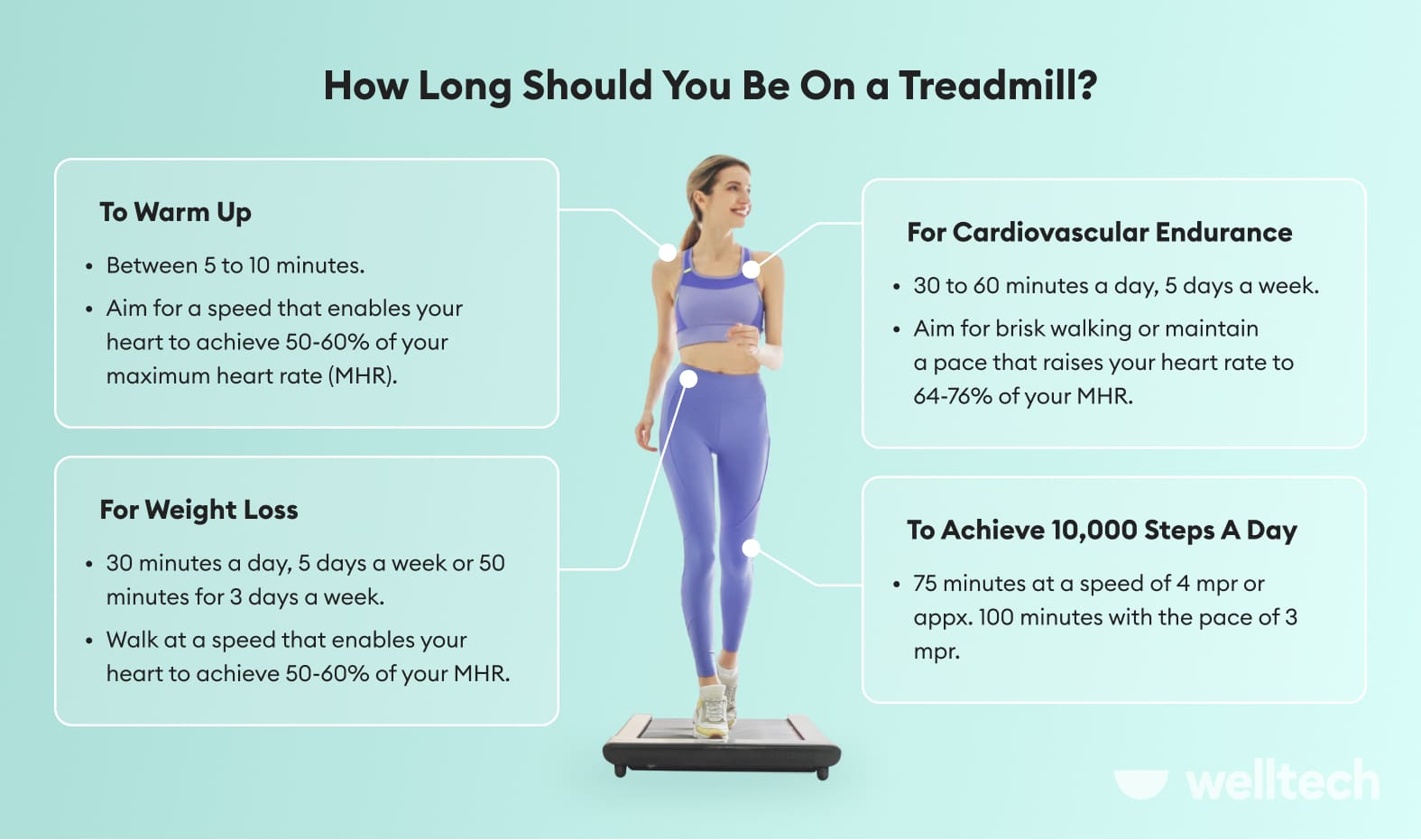
For most adults, 10,000 steps equals about 4 to 5 miles. On a treadmill, the time needed usually falls between 75 minutes and 2 hours.
Your walking speed makes the biggest difference:
| Treadmill speed | Approximate time for 10,000 steps |
|---|---|
| 2.0 mph | 2 hours 15 minutes to 2 hours 30 minutes |
| 2.5 mph | 1 hour 50 minutes to 2 hours |
| 3.0 mph | 1 hour 30 minutes to 1 hour 45 minutes |
| 3.5 mph | 1 hour 15 minutes to 1 hour 30 minutes |
| 4.0 mph | 1 hour 5 minutes to 1 hour 20 minutes |
| 4.5 mph | 55 to 70 minutes |
| 5.0 mph | 50 to 60 minutes |
These numbers are estimates, not fixed rules. A shorter person may take more steps to cover the same distance, while a taller person may reach 10,000 steps sooner.
When considering how long does 10k steps take on treadmill, think of 3 miles per hour as a useful middle point. At that pace, many people need roughly 90 to 105 minutes.

What Determines the Time for 10,000 Treadmill Steps?
Several factors affect how long does 10k steps take on treadmill. Your treadmill display may show distance and speed, but your fitness tracker counts steps based on arm movement, stride, and personal settings.
Walking speed
Speed has the clearest effect on your total time.
A relaxed pace of 2 to 2.5 mph may feel comfortable, but it takes longer. A brisk pace of 3 to 4 mph shortens the workout and may raise your heart rate more.
A good rule is simple:
• Easy walking: You can speak in full sentences without effort.
• Moderate walking: You can talk, but you take short breaths between phrases.
• Brisk walking: You can speak only a few words at a time.
Stride length
Step count does not equal the same distance for everyone. A person with a 2.5-foot stride may cover 25,000 feet in 10,000 steps. Someone with a 2.2-foot stride covers less ground in the same number of steps.
Height, leg length, walking style, and speed all affect stride length. This is why a treadmill distance estimate may not match your fitness tracker perfectly.
Treadmill incline
An incline does not always change your step count much, but it can make the workout feel harder. Walking uphill increases muscle demand and may raise your heart rate at the same speed.
A 1% incline is often used to make indoor walking feel more like outdoor walking. However, there is no need to use an incline if it causes pain, poor form, or early fatigue.
Breaks and interruptions
if you stop to drink water, adjust the treadmill, or rest, your total clock time increases. The walking time may still be 90 minutes, but the full session could last closer to 2 hours.
Short breaks are not a failure. They can make a long workout more manageable and may help you keep good posture.

How Many Miles Is 10,000 Steps on a Treadmill?
For many people, 10,000 steps equals about 4 to 5 miles. A common estimate is 5 miles, but that number does not apply to everyone.
Your approximate distance may look like this:
• Shorter stride: About 4 to 4.5 miles
• Average stride: About 4.5 to 5 miles
• Longer stride: About 5 to 5.5 miles
The best way to find your personal distance is to check your step count and treadmill distance together. Walk at your normal pace for 1 mile, then record how many steps your tracker shows.
For example, if you take 2,200 steps per mile, 10,000 steps would equal about 4.5 miles. If you take 2,000 steps per mile, the same goal would equal about 5 miles.
This personal test gives you a better answer to how long does 10k steps take on treadmill than a general chart.
How Long Does 10K Steps Take at Different Walking Speeds?
At 2 miles per hour
At 2 mph, walking 10,000 steps may take about 2 hours 15 minutes to 2 hours 30 minutes. This pace works well for beginners, people recovering from inactivity, or anyone who prefers a gentle walk.
You may also use this speed while watching a show or listening to a podcast. Keep your hands free when possible so your tracker can record steps more accurately.
At 3 miles per hour
At 3 mph, 10,000 steps often take about 90 to 105 minutes. This is a steady pace for many adults and offers a good mix of comfort and exercise.
At this speed, you may feel warm and breathe faster, but you should still be able to hold a basic conversation.
At 4 miles per hour
At 4 mph, you may reach 10,000 steps in roughly 65 to 80 minutes. This is a brisk pace and may feel like a light power walk for some people.
If 4 mph feels too hard for a full session, alternate it with slower walking. For example, walk at 3 mph for five minutes, then 4 mph for two minutes.
At 5 miles per hour
At 5 mph, the workout may take about 50 to 60 minutes. For many people, this speed becomes a jog rather than a walk.
Do not chase speed simply to finish faster. Good form, steady breathing, and pain-free movement matter more than reaching a certain treadmill number.
Can You Complete 10,000 Steps in Less Time?
Yes, you can reduce the time by walking faster, but speed is not the only option. Breaking the workout into smaller sessions can make 10,000 steps feel less tiring.
Try one of these plans:
-
Walk for 30 minutes in the morning, at lunch, and in the evening.
-
Walk at 3 mph for 10 minutes, then increase to 3.5 or 4 mph.
-
Use short speed intervals, such as two minutes easy and one minute brisk.
-
Add steps outside the treadmill session through errands, housework, or short walks.
-
Keep the treadmill near a safe speed that allows strong posture and natural arm movement.
A three-session plan may be easier on your joints than one long session. It can also fit better around work, family duties, and daily life.
If you want to know how long does 10k steps take on treadmill for your schedule, start with a 10-minute test. Record your speed, steps, and distance. Then use that information to plan the full goal.
How to Reach 10,000 Steps on a Treadmill Safely
A long treadmill session can be safe for most healthy adults, but it is still smart to build up slowly. Going from very little activity to 10,000 steps in one day may cause sore feet, calf tightness, or knee pain.
Use these habits:
• Warm up for 5 minutes at an easy pace.
• Wear supportive walking shoes that fit well.
• Keep your head up and look ahead.
• Let your arms swing naturally.
• Avoid holding the front rails unless you need support.
• Drink water during longer sessions.
• Reduce speed if your walking form changes.
• Stop for chest pain, faintness, severe shortness of breath, or unusual weakness.
If you have heart disease, diabetes, a major joint problem, or a recent injury, ask a health professional how to begin. A step goal should support your health, not compete with it.
In my own treadmill planning, one common mistake is starting too fast because the first 10 minutes feel easy. The better approach is to save some energy for the middle and final part of the session. A steady pace usually beats an ambitious start followed by a long stop.

Is 10,000 Steps a Good Daily Goal?
10,000 steps can be a useful target, but it is not a magic number. Research suggests that health benefits can begin below 10,000 steps, especially for people who currently take very few steps.
The ideal goal depends on your age, health, fitness level, and daily routine. Someone moving from 3,000 to 6,000 steps may gain meaningful benefits without reaching 10,000.
Walking regularly may support:
• Better cardiovascular fitness
• Improved blood sugar control
• Stronger leg muscles
• Better mood and stress control
• Increased daily energy use
• Improved sleep for some people
The quality of movement matters too. A slow, comfortable walk still counts. A brisk walk may provide a stronger cardiovascular challenge, but the best plan is the one you can repeat.
Do not feel discouraged if your tracker shows 8,000 steps instead of 10,000. Consistency is more valuable than one perfect number.
How to Track 10,000 Steps on a Treadmill
Most treadmills track distance, speed, time, and calories. Many do not count steps directly. Your watch or phone may provide the step number, but each device uses different sensors and algorithms.
For better tracking:
-
Enter your height and weight correctly in the fitness app.
-
Wear your tracker in the same place each day.
-
Let your arms move naturally while walking.
-
Compare your step count with treadmill distance.
-
Calibrate the device after walking outdoors, if the app allows it.
Holding the treadmill rails can reduce recorded steps because your arms do not move normally. It can also reduce the accuracy of calorie estimates and change your posture.
Calories shown on a treadmill are also estimates. They may not account for fitness level, body composition, handrail use, or exact walking mechanics. Use calorie numbers as rough information, not as a precise measurement.

A Simple 10,000-Step Treadmill Workout Plan
If you are new to treadmill walking, use a gradual plan instead of forcing one long session.
Beginner plan
• Walk 10 minutes at an easy pace.
• Rest or move through your normal day.
• Repeat the walk two or three more times.
• Add 5 minutes to one session each week if you feel well.
Intermediate plan
• Warm up for 5 minutes.
• Walk at a steady pace for 20 minutes.
• Increase speed for 5 minutes.
• Return to an easy pace for 5 minutes.
• Repeat the middle block two or three times.
Brisk walking plan
• Warm up for 5 minutes.
• Walk briskly for 3 minutes.
• Walk easily for 2 minutes.
• Repeat the pattern for 30 to 45 minutes.
• Finish with a 5-minute cool-down.
These workouts may not produce 10,000 steps by themselves. Add normal movement throughout the day, then check your tracker. The goal is to create a routine that feels repeatable rather than punishing.
Common Mistakes to Avoid
Understanding how long does 10k steps take on treadmill is helpful, but poor habits can make the workout harder than it needs to be.
Avoid these mistakes:
• Starting at a speed that feels too hard.
• Leaning heavily on the handrails.
• Using a steep incline before building strength.
• Ignoring foot, knee, or hip pain.
• Wearing loose shoes or worn-out soles.
• Treating treadmill calorie numbers as exact.
• Trying to reach 10,000 steps every day without rest.
A treadmill is a useful tool, but it should not force your body into a pace it cannot handle. Reduce the speed, take a break, or finish later when needed.
Frequently Asked Questions About How Long Does 10K Steps Take on Treadmill
How long does 10k steps take on treadmill at 3 mph?
At 3 mph, 10,000 steps usually take about 90 to 105 minutes. Your exact time depends on your stride length, step count per mile, and breaks.
Is 10,000 steps equal to 5 miles?
Not always. For many people, 10,000 steps equal about 4 to 5 miles, but taller people with longer strides may cover more distance.
Can I split 10,000 treadmill steps into several walks?
Yes. You can divide the goal into two, three, or more sessions. Short walks can be easier to fit into your day and may feel less tiring than one long workout.
How fast should I walk to complete 10,000 steps in one hour?
You may need to walk close to 5 mph, depending on your stride length. For many people, that speed is a jog, so do not force it if you are not ready.
Does treadmill incline increase the number of steps?
Incline usually increases effort more than step count. It may raise your heart rate and work your muscles harder, even if you walk at the same speed.
Is walking 10,000 steps every day necessary?
No. Ten thousand steps is a popular goal, not a requirement for good health. Any safe increase from your normal activity level can be valuable.
Conclusion
How long does 10k steps take on treadmill? For most people, the answer is about 75 minutes to 2 hours, with roughly 90 to 105 minutes at a 3 mph pace. Your stride length, speed, incline, fitness level, and breaks will shape the final time.
Start at a pace you can maintain with good form. Track your personal steps per mile, split the goal into smaller walks, and increase your activity gradually. Try a comfortable treadmill plan this week, then share your results or explore more walking guides for your next goal.

Brandon Knoxley is a sport & fitness writer and training guide contributor at MySportFitHub. He focuses on practical workouts, performance-based training, and honest fitness gear insights designed for real people and real results. Brandon is passionate about helping beginners and active individuals train smarter, avoid common mistakes, and build sustainable fitness habits.