What Is 15 Incline On Treadmill: Benefits & Tips
A 15 incline on a treadmill usually means a steep 15% grade, not a 15-degree hill.
Understanding what is 15 incline on treadmill can change how you plan your workout. It affects your muscles, heart rate, balance, speed, calorie use, and safety. A 15% incline is one of the steepest settings on many home treadmills, so it should be used with care and a clear goal.
What Does 15 Incline Mean on a Treadmill?
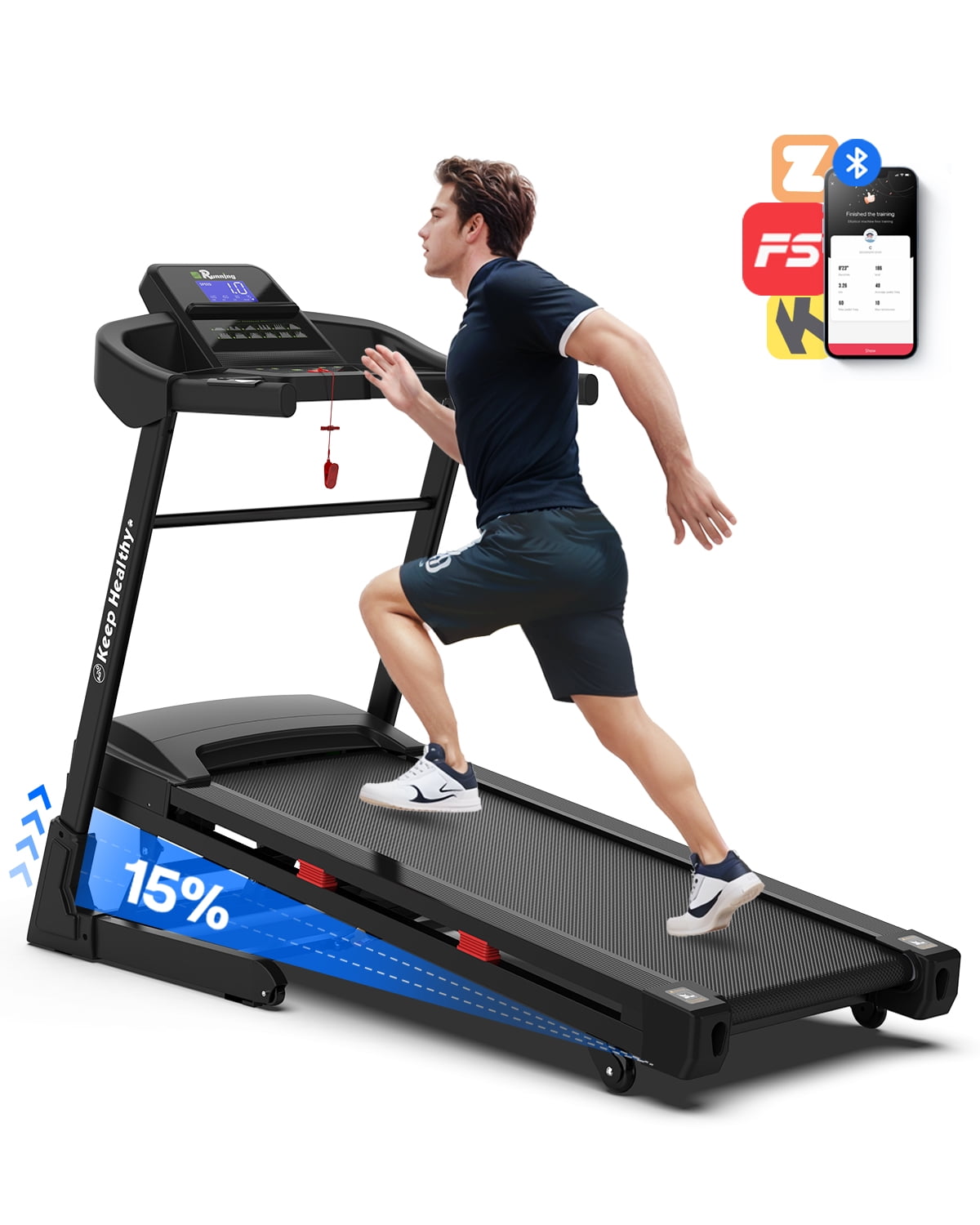
A 15 incline on a treadmill means the walking surface rises 15 feet for every 100 feet of forward travel. Treadmills show this as a percentage grade. It does not usually mean that the belt is tilted to a 15-degree angle.
Think of it like walking up a short, steady hill. The steeper the incline, the more force your body needs to move forward and upward. At 15%, even a slow walk can feel like a hard workout.
For example:
• At 0% incline, the treadmill is flat.
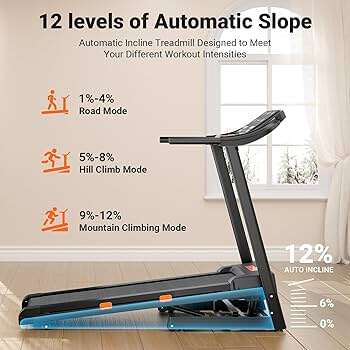
• At 5% incline, the belt rises 5 feet for every 100 feet forward.
• At 10% incline, the belt rises 10 feet for every 100 feet forward.
• At 15% incline, the belt rises 15 feet for every 100 feet forward.
The exact feel depends on your speed, fitness level, body weight, stride, and whether you hold the handrails. A 15 incline on a treadmill may feel manageable at 1.5 miles per hour but very hard at 3.5 miles per hour.

Is a 15% Treadmill Incline the Same as 15 Degrees?
No. A 15% treadmill incline and a 15-degree incline are different measurements.
A 15% grade equals an angle of about 8.5 degrees. A true 15-degree slope is much steeper, with a grade of about 26.8%. Most home treadmills do not reach a 15-degree angle.
This difference matters because people often search for what is 15 incline on treadmill and picture a very steep mountain path. In most cases, the treadmill is showing grade percentage, not degrees.
Percentage grade versus angle
Percentage grade is calculated with this simple formula:
Grade percentage = vertical rise ÷ horizontal distance × 100
So, a 15% grade means:
15 ÷ 100 × 100 = 15%
The angle uses a different mathematical calculation. That is why 15% does not equal 15 degrees.
When setting your treadmill, look for the word “incline,” “grade,” or the percent symbol. If the machine shows 15, it almost always means a 15% grade.
How Hard Is a 15 Incline on a Treadmill?
A 15 incline on a treadmill is hard for most people. It can raise your heart rate quickly and place a strong demand on your calves, hamstrings, glutes, and lungs.
At a slow pace, it may feel like a steep uphill walk. At a faster pace, it can become a short hill workout rather than a normal walking session. Running at 15% is even more demanding and is usually best for experienced runners.
Here is a general example:
• 1.5 to 2.0 mph at 15%: slow, steep walking
• 2.5 to 3.0 mph at 15%: challenging uphill walking
• 3.5 mph or higher at 15%: very demanding for many people
These are only estimates. Fitness level makes a major difference. A trained hiker may walk comfortably at 15%, while a new exerciser may need a lower incline and slower speed.
A common mistake is to compare speed alone. Walking at 2.5 mph on a 15 incline on a treadmill can be harder than walking at 4 mph on a flat belt. Incline changes the total workload even when the speed stays low.
Muscles Worked at a 15% Treadmill Incline
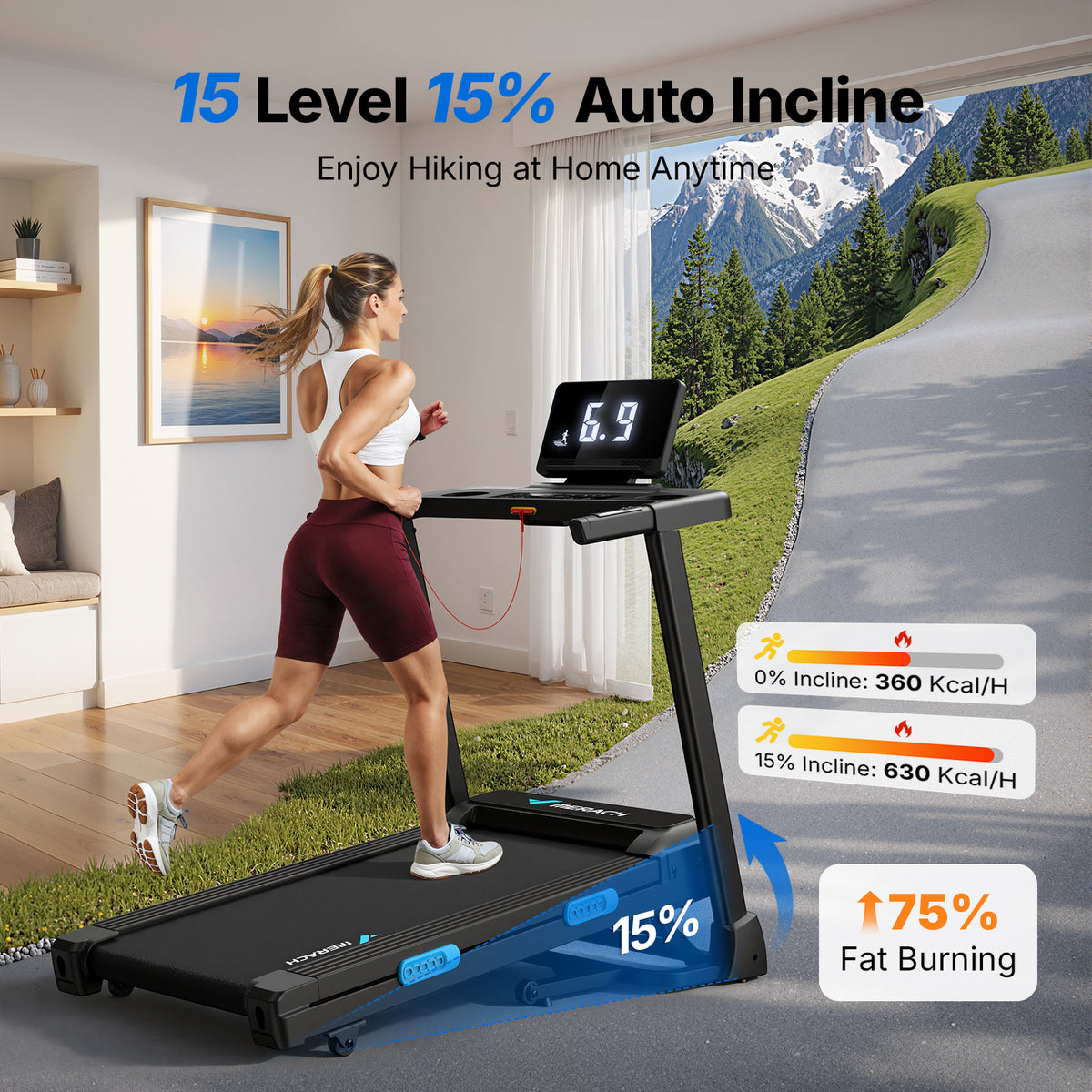
Walking uphill changes how your body produces force. Instead of moving mostly forward, you must also push your body upward.
A 15 incline on a treadmill mainly works these muscle groups:
• Gluteus maximus: Your main buttock muscle helps extend the hip and drive you uphill.
• Hamstrings: These muscles at the back of your thighs help with hip movement and knee control.
• Calves: Your calf muscles work harder as you push off the belt.
• Quadriceps: The front thigh muscles help straighten the knee and support each step.
• Hip flexors: These muscles help lift your legs during the uphill stride.
• Core muscles: Your abdominal and back muscles help keep your body steady.
The glutes often receive more work during uphill walking because the hip must extend against the slope. However, the exact muscle demand changes with speed, stride length, posture, and handrail use.
If you hold the handrails, you reduce the amount of body weight your legs must support. This can make the workout feel easier, but it also reduces the training effect and may place your body in an awkward position.

Benefits of Using a 15 Incline on a Treadmill
A 15 incline on a treadmill can provide a strong workout in a short amount of time. It is useful when you want to increase effort without running fast.
It raises workout intensity
Incline walking increases the energy cost of exercise. Research using treadmill walking has shown that grade and speed both affect oxygen use. In simple terms, your body works harder when it must move upward.
This can help you reach a challenging heart rate while keeping your speed moderate. That may be helpful if you do not want to run or cannot run comfortably.
It strengthens the lower body
Uphill walking places more demand on your glutes, calves, hamstrings, and thighs. Over time, this may help improve muscular endurance and climbing ability.
It can also prepare you for hills, trails, stairs, and long walks outdoors. The treadmill is like a hill that never ends, so you can control the challenge without waiting for the right outdoor route.
It supports cardiovascular fitness
A steep incline can make the heart and lungs work harder. A short incline interval may improve your ability to handle bursts of effort.
The American College of Sports Medicine recommends adjusting exercise intensity to your fitness level. You should not judge success by using the highest setting. A safe, consistent workout is more useful than a difficult workout that causes pain or forces you to stop.
It may increase calorie use
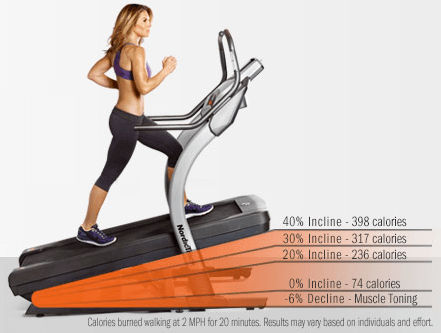
A higher incline usually increases calorie burn compared with the same speed at 0%. The exact number depends on body weight, speed, workout length, fitness, and whether you hold the rails.
Treadmill calorie displays are estimates. They may not account for body composition, walking style, or rail support. Use the number as a rough guide, not a precise measurement.
How Many Calories Does a 15 Incline on a Treadmill Burn?
A 15 incline on a treadmill can burn a significant number of calories, but there is no single answer for everyone.
For example, a 160-pound person walking at about 2.5 miles per hour on a 15% grade may burn roughly 180 to 250 calories in 30 minutes. A heavier person may burn more, while a lighter person may burn less. Faster walking also increases energy use.
These figures are estimates based on standard exercise equations. They are not medical measurements. The treadmill display may show a different number because machines use different formulas.
Your best reason to use a 15 incline on a treadmill should not be calorie chasing. Focus on effort, time, heart rate, and how your body feels. Fitness progress can include walking longer, recovering faster, or using less support from the handrails.

How to Use a 15 Incline on a Treadmill Safely
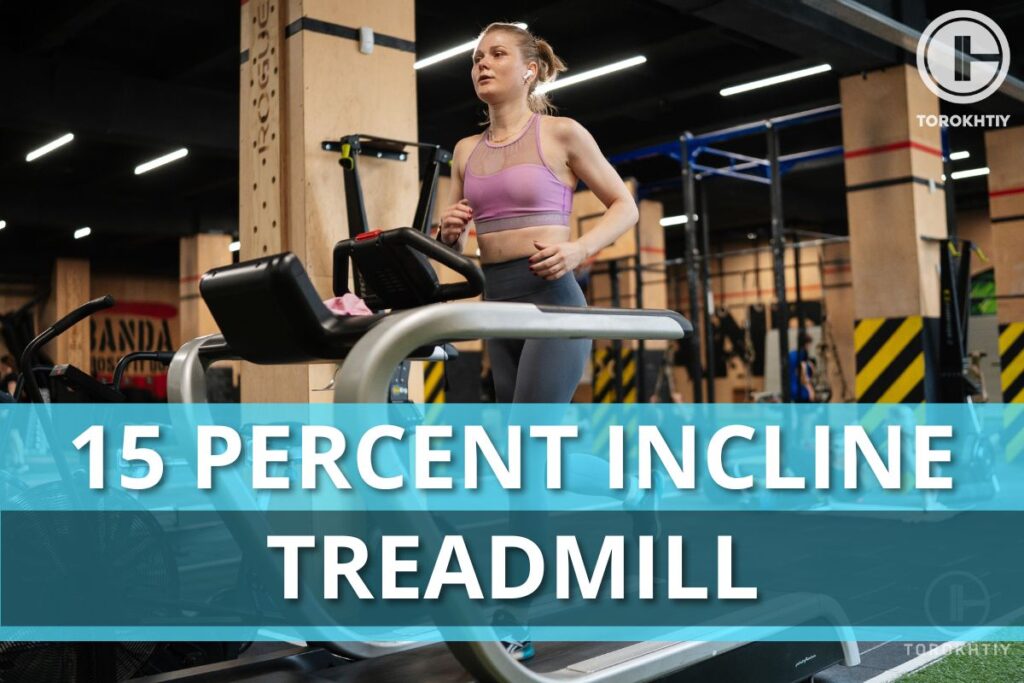
A 15 incline on a treadmill is not the best starting point for every person. Begin with a level that lets you maintain control and good form.
Use these steps:
-
Warm up for five to ten minutes at 0% to 3% incline.
-
Increase the incline slowly instead of jumping straight to 15%.
-
Start with 30 to 60 seconds at 15% if you are new to steep walking.
-
Lower the incline or stop if you feel sharp pain, dizziness, chest pressure, or unusual shortness of breath.
-
Cool down at a low incline for five minutes.
Keep your eyes forward and take short, controlled steps. Avoid leaning far back or gripping the rails tightly. Your posture should look like a natural uphill walk, with a slight forward lean from the ankles rather than a bend at the waist.
If you have heart disease, uncontrolled high blood pressure, severe joint pain, balance problems, or another medical condition, speak with a qualified health professional before using a steep incline.

Sample 15% Incline Treadmill Workouts
The best workout depends on your current fitness. These examples show how to use a 15 incline on a treadmill without staying at the hardest setting for the entire session.
Beginner workout
• Warm up: 5 minutes at 0% to 2%
• Easy incline: 3 minutes at 5%
• Main interval: 30 seconds at 10% to 15%
• Recovery: 2 minutes at 2% to 3%
• Repeat the interval 3 times
• Cool down: 5 minutes at 0%
This workout gives you brief exposure to a steep grade while allowing time to recover.
Intermediate workout
• Warm up: 7 minutes at 2% to 4%
• Uphill effort: 2 minutes at 10% to 15%
• Recovery: 2 minutes at 3% to 5%
• Repeat 5 times
• Cool down: 5 minutes at 0% to 2%
Use a walking speed that allows you to keep good posture. Do not increase speed and incline at the same time unless you have experience with hill training.
Advanced workout
• Warm up: 10 minutes at 2% to 5%
• Hard effort: 3 minutes at 12% to 15%
• Recovery: 2 minutes at 3% to 5%
• Repeat 5 to 6 times
• Cool down: 8 minutes at 0% to 2%
Advanced users may use short jogging intervals, but running at 15% creates much greater impact and muscle stress. It is not needed for most people.
Common Mistakes to Avoid at a 15 Incline
Many people make the workout harder than necessary by using poor form or rushing the progression.
Avoid these mistakes:
• Holding the handrails for the whole workout: This reduces the load on your legs and may strain your shoulders.
• Leaning heavily over the console: This changes your walking pattern and can reduce balance.
• Starting at 15% without warming up: Cold muscles and tendons are less ready for steep work.
• Using too much speed: A slower pace with good form is often safer and more effective.
• Ignoring pain: Muscle fatigue is common, but sharp pain is a warning sign.
• Training steep hills every day: Your calves, feet, and Achilles tendons need time to recover.
• Chasing the treadmill calorie number: The display is only an estimate.
In my experience, the biggest lesson with steep treadmill walking is that control matters more than speed. A steady 2.2 mph walk with no rail support can be more useful than a fast workout where you hang on for balance.

How Often Should You Use a 15 Incline on a Treadmill?
Many people can include steep incline walking one to three times per week, depending on their training history and recovery. You do not need to use a 15 incline on a treadmill every day to gain benefits.
Leave at least one day between hard incline sessions when you are new to hill training. On other days, use flat walking, light strength training, cycling, or an easier incline.
Watch for signs that you need more recovery:
• Calf soreness that lasts several days
• New pain in the Achilles tendon or feet
• Knee pain during or after walking
• Unusual tiredness
• Declining performance across several workouts
Progress by increasing one factor at a time. You can add a few minutes, a small amount of speed, or another interval. Avoid increasing speed, incline, and workout length all at once.
15 Incline Versus Walking Outdoors Uphill
A 15 incline on a treadmill is useful, but it does not perfectly copy outdoor hiking.
The treadmill belt moves beneath you, which may slightly reduce the work needed to propel your body forward. Outdoor hills also include changes in surface, wind, turns, and uneven ground. These factors require more balance and coordination.
Still, treadmill incline walking has clear advantages:
• You can train in any weather.
• You can control speed and grade precisely.
• You can stop quickly if you feel unwell.
• You can repeat the same workout and track progress.
• You do not need access to a hill.
Use the treadmill as a controlled training tool. If you plan to hike outdoors, add outdoor walks when possible so your feet and balance can adapt to natural surfaces.
Frequently Asked Questions About What Is 15 Incline on Treadmill
Is 15 incline on a treadmill steep?
Yes. A 15% treadmill incline is steep for most people, especially when paired with a moderate or fast walking speed. It is best treated as a challenging hill setting rather than a normal daily incline.
What speed should I use at a 15 incline on a treadmill?
Many people begin between 1.5 and 2.5 miles per hour. Choose a speed that lets you walk without holding the rails, losing balance, or leaning heavily over the console.
Can beginners use a 15 incline on a treadmill?
Beginners can use it for short intervals if they have no health restrictions and can maintain safe form. Start with a lower incline, warm up first, and use brief periods at 15% rather than staying there for a long session.
Does a 15 incline on a treadmill build glutes?
It can place more demand on the glutes than flat walking because your hips must help drive your body upward. Results depend on speed, duration, posture, handrail use, and your overall strength program.
Is walking at a 15% incline better than running flat?
Neither is always better. Incline walking can raise intensity with less running impact, while flat running may improve speed and running fitness more directly. The better choice depends on your goals, joints, experience, and ability to recover.
Should I hold the handrails at a 15 incline?
Try not to hold the rails unless you need them for balance or safety. Rail support reduces the load on your legs and may change your posture, so lower the speed or incline if you cannot walk safely without gripping them.
Conclusion
A 15 incline on a treadmill means a 15% grade, or about an 8.5-degree angle. It creates a steep uphill workout that can challenge your heart, lungs, glutes, calves, hamstrings, and core.
Start slowly, use good posture, avoid leaning on the rails, and progress in small steps. The goal is not to survive the highest setting. The goal is to build strength and fitness while staying in control.
Try a short 15% interval during your next treadmill session, then note your speed, time, effort, and recovery. Keep adjusting the plan as your fitness improves, and explore more evidence-based training guidance to make each workout count.

Brandon Knoxley is a sport & fitness writer and training guide contributor at MySportFitHub. He focuses on practical workouts, performance-based training, and honest fitness gear insights designed for real people and real results. Brandon is passionate about helping beginners and active individuals train smarter, avoid common mistakes, and build sustainable fitness habits.