Can You Plug A Treadmill Into An Extension Cord: Safe Tips
You can plug a treadmill into an extension cord, but only when the manufacturer allows it.
The safer choice is a properly grounded wall outlet on a dedicated circuit. Whether you can plug a treadmill into an extension cord depends on the treadmill’s motor, power rating, cord length, outlet condition, and the instructions in the owner’s manual. This guide explains the risks, the rare cases when an extension cord may work, and the safest way to power your machine.
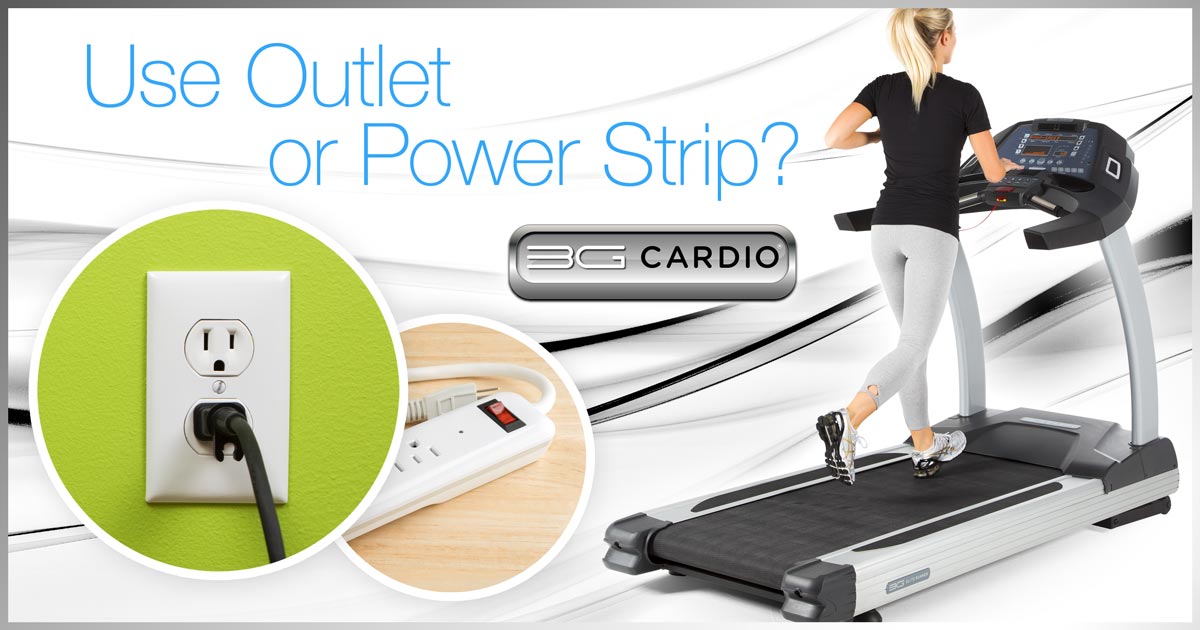
Can you plug a treadmill into an extension cord?
In most cases, you should not plug a treadmill into an extension cord unless the manufacturer clearly approves it. Many treadmill brands require a grounded wall outlet because the motor can draw more power when starting, speeding up, or carrying a heavier user.
An extension cord adds resistance between the treadmill and the outlet. That resistance can cause voltage drop. When the treadmill receives less voltage, its motor may work harder and pull more current. The cord, plug, or motor can then become hot.
The best setup is a treadmill connected directly to a properly grounded outlet. Ideally, that outlet should be on a dedicated circuit that does not also power a heater, vacuum, refrigerator, or other high-power device.
If you can plug a treadmill into an extension cord, it should be only as a temporary solution and only when all of these conditions are met:
• The treadmill manual permits an extension cord.
• The cord has a ground prong and matches the treadmill’s plug.
• The cord supports the treadmill’s required amperage.
• The cord is short, heavy-duty, and fully uncoiled.
• The outlet and circuit are in good condition.
• The cord does not run under rugs, furniture, or exercise equipment.

Why treadmill manufacturers warn against extension cords
A treadmill is not like a phone charger or desk lamp. Its motor may use modest power while the belt moves slowly, but power demand can rise during startup, incline changes, and high-speed running.
The motor also creates a brief surge when it starts. A weak extension cord may handle normal use but heat up during repeated starts. That is why many manuals say to connect the treadmill directly to a grounded outlet.
Voltage drop
Voltage drop happens when electricity loses strength while traveling through a wire. Long cords, thin wires, loose connections, and high current all increase voltage drop.
A treadmill may show signs of voltage drop, such as:
• A belt that slows during use
• Motor hesitation
• Flickering lights near the outlet
• A tripped circuit breaker
• A warm plug or extension cord
• A burning smell
• A treadmill that shuts down under load
Voltage drop can also shorten motor life. The treadmill may still run, but the motor and control board may operate under extra stress.
Heat and fire risk
An overloaded or damaged extension cord can become hot. If the cord is covered by a rug or tightly coiled, heat cannot escape well. In serious cases, the insulation can melt or ignite nearby materials.
Electrical safety guidance consistently warns against using damaged cords, overloaded circuits, and cords hidden beneath rugs. Those warnings matter even more with equipment that runs for long periods and draws motor power.
Grounding and shock protection
Most treadmills use a three-prong plug. The third prong connects the frame and electrical system to ground. If a fault occurs, grounding gives unwanted electricity a safer path and helps protective devices trip.
Never remove the ground prong. Never use a two-prong adapter. Never connect a treadmill to an outlet that feels loose, lacks grounding, or shows burn marks.

What type of extension cord is safe for a treadmill?
If your treadmill manual allows an extension cord, choose one based on electrical rating rather than price or appearance. A thick, outdoor-rated cord is not automatically the correct cord, but wire size and current rating are important.
For many full-size treadmills, a 12-gauge, three-prong extension cord is a safer starting point than a light 16-gauge cord. However, the treadmill manual and the cord’s listed rating always come first.
Look for these features:
• A three-prong grounded plug
• A 12-gauge wire for higher-power treadmills, when approved by the manual
• The shortest practical length
• A rating equal to or higher than the treadmill’s required load
• A cord listed by a recognized testing laboratory
• Flexible insulation in good condition
• A plug that fits firmly into the wall outlet
Avoid thin household cords made for lamps, fans, or small electronics. Avoid cords with cracked insulation, bent prongs, loose ends, or heat damage.
How to read the treadmill’s power needs
Check the label near the power cord, motor, or frame. You may see voltage, amperage, wattage, or a phrase such as “120 V, 15 A.”
Use this simple formula when wattage is listed:
Power in watts ÷ voltage = current in amps
For example, a device rated at 1,500 watts on a 120-volt circuit uses about 12.5 amps. That figure does not include every startup condition, so do not select a cord that barely meets the number.
A qualified electrician can check the circuit and outlet if you are unsure. Do not guess based only on the treadmill’s belt speed or motor horsepower.

Can you plug a treadmill into a surge protector or power strip?
You generally should not plug a treadmill into a power strip, multi-outlet adapter, or ordinary surge protector. These products may not be designed for a treadmill’s motor load or startup surge.
Some treadmill manuals specifically prohibit surge protectors. Others recommend a particular type. Follow the manual rather than assuming every surge protector adds safety.
A power strip can also create another failure point. Its contacts may loosen, heat up, or become overloaded. A strip placed on the floor can collect dust and may be stepped on during exercise.
If surge protection is a concern, ask the treadmill manufacturer or a licensed electrician about a properly installed solution. Do not place several adapters together to reach the outlet.
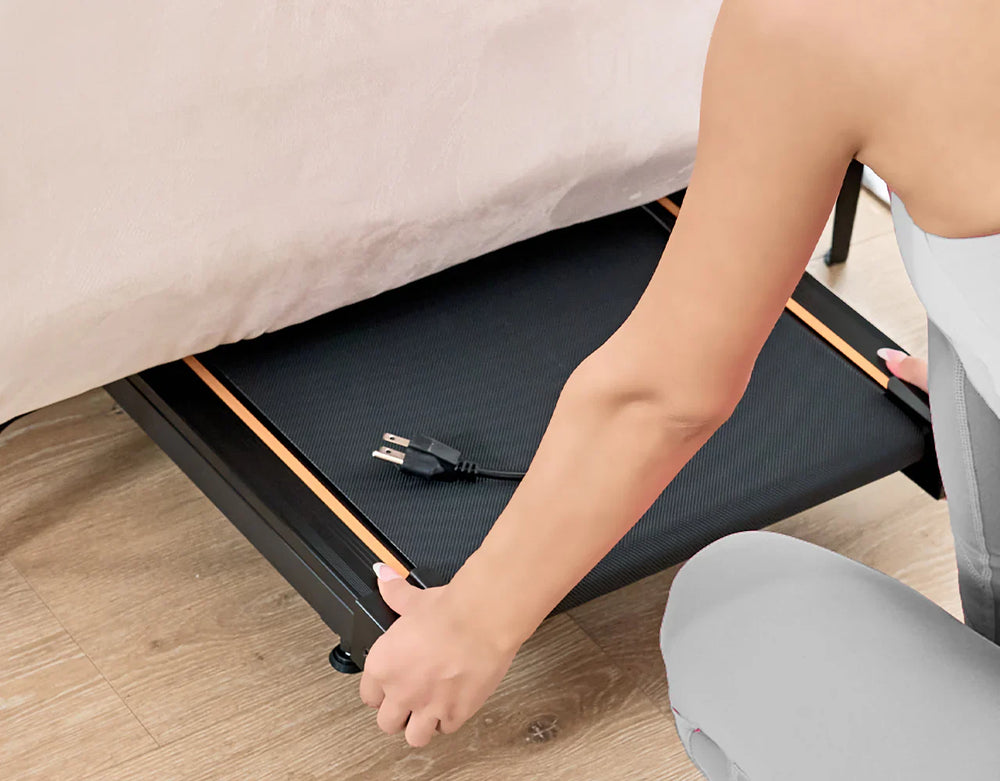
When can you plug a treadmill into an extension cord?
There are limited situations where an extension cord may be acceptable. The key is written approval from the manufacturer and a cord that matches the electrical demand.
A small walking pad may use less power than a full-size incline treadmill. Even then, its manual may require direct connection to a wall outlet. Low power does not remove the risk of a poor outlet, damaged cord, or hidden overheating.
You may consider an extension cord only when:
• The manufacturer permits it.
• The cord is rated for the full electrical load.
• The cord is as short as practical.
• The cord remains visible and uncovered.
• The outlet is grounded and secure.
• No other high-power appliance shares the circuit.
• The cord and plug stay cool during operation.
Test the setup carefully at first. Stop the treadmill and unplug it if you notice heat, odor, buzzing, discoloration, belt hesitation, or repeated breaker trips.
In my experience helping people arrange home exercise equipment, the most common mistake is choosing convenience over cord capacity. A person sees a treadmill working for five minutes and assumes the setup is safe. Problems often appear later, after the motor heats up or the user increases speed and incline.

How to plug a treadmill into an extension cord safely
If the manual allows an extension cord, use this checklist before exercising:
-
Read the owner’s manual and warranty terms. Look for rules about extension cords, dedicated circuits, grounding, and surge protection.
-
Check the treadmill plug. Confirm that it has the correct number of prongs and that none are bent or damaged.
-
Inspect the outlet. Do not use an outlet that is loose, cracked, warm, discolored, or missing its ground connection.
-
Choose the right cord. Use a grounded cord with a current rating that meets or exceeds the treadmill’s requirements.
-
Keep the cord short. Do not connect two extension cords together.
-
Fully unwind the cord. A coiled cord can trap heat and raise fire risk.
-
Protect the cord from traffic. Keep it away from the belt, wheels, pets, children, and damp areas.
-
Plug the cord directly into the wall. Do not add a power strip or adapter unless the manufacturer specifically approves it.
-
Run the treadmill at low speed first. Watch and feel for unusual heat at the plug and cord.
-
Stop if anything seems wrong. A hot cord, burning smell, crackling sound, or repeated breaker trip requires immediate attention.
Never use a wet extension cord or operate a treadmill in a damp garage, porch, or basement unless the area and electrical system are suitable for that environment.
How to know whether your treadmill needs a dedicated outlet
A dedicated outlet serves one appliance or piece of equipment. It reduces the chance that another device will overload the circuit while the treadmill runs.
Your treadmill may need a dedicated circuit if:
• The manual says so.
• The breaker trips when the treadmill starts.
• The outlet also powers a heater, freezer, shop vacuum, or air conditioner.
• The treadmill slows when another device turns on.
• The treadmill is used at high speed or incline.
• The treadmill has a large commercial motor.
A standard household circuit may be rated at 15 or 20 amps. The breaker rating alone does not tell you how much safe capacity remains. Other outlets and devices may share the same circuit.
Do not replace a breaker with a larger one to stop nuisance trips. The wire inside the wall may not support the higher rating. A licensed electrician can identify the circuit, check grounding, and install a dedicated outlet if needed.

Common mistakes to avoid
The question “can you plug a treadmill into an extension cord” often comes from a room layout problem. The treadmill may be far from the outlet, or the only nearby outlet may sit behind furniture. Still, a quick fix can create a serious electrical risk.
Avoid these mistakes:
• Using a thin lamp cord
• Using a cord with no ground prong
• Connecting multiple extension cords
• Running the cord under a rug
• Leaving the cord tightly coiled
• Plugging a power strip into an extension cord
• Sharing the outlet with a space heater
• Ignoring a warm plug
• Using an outlet with loose connections
• Removing the grounding pin
• Operating the treadmill near water
• Continuing to use the machine after repeated breaker trips
One lesson I have seen repeatedly is that breaker trips are warnings, not annoyances. The breaker may be protecting the wiring from excess current. Resetting it again and again without finding the cause is unsafe.

Extension cord alternatives for a treadmill
The safest alternative is often to move the treadmill closer to a suitable wall outlet. It may be less convenient, but it removes the added resistance and connection points of an extension cord.
Other options include:
• Having an electrician install a grounded outlet near the treadmill
• Installing a dedicated circuit if the manual requires one
• Rearranging the exercise room
• Choosing a treadmill location with proper airflow and safe cord access
• Using a treadmill model designed for a lower electrical load
Do not place the treadmill so close to the wall that its power cord bends sharply. Leave enough space around the machine for ventilation, cleaning, and safe movement.
If you rent your home, ask the property manager before changing an outlet or circuit. If you own the home and the outlet needs repair, use a licensed electrician rather than attempting unfamiliar electrical work.
What to do if your treadmill keeps tripping the breaker
First, stop using the treadmill and unplug it. Do not keep resetting the breaker while the machine is connected.
Check for simple problems:
• Remove other devices from the same circuit.
• Inspect the treadmill plug and cord.
• Check for visible damage or moisture.
• Confirm that the treadmill sits on a stable, dry surface.
• Review the manual for circuit requirements.
If the breaker still trips when the treadmill is connected directly to the correct outlet, the problem may involve the treadmill motor, control board, outlet, wiring, or circuit. Contact the manufacturer or a qualified electrician.
A breaker trip does not prove that the treadmill is defective. It may show that the circuit is overloaded or that the outlet has an electrical fault. Professional testing is the safest way to identify the cause.
Frequently Asked Questions About Can You Plug a Treadmill Into an Extension Cord
Can you plug a treadmill into an extension cord temporarily?
You may be able to do so temporarily if the treadmill manual permits it and the cord has the correct rating. Use the shortest heavy-duty grounded cord, keep it fully uncoiled, and stop immediately if it becomes warm or the treadmill behaves oddly.
What gauge extension cord do I need for a treadmill?
Many higher-power treadmills require a heavy 12-gauge cord when an extension cord is allowed. The exact choice depends on the treadmill’s amperage, cord length, and manufacturer instructions, so never rely on wire gauge alone.
Can you plug a treadmill into a regular wall outlet?
Many home treadmills use a standard grounded household outlet. The outlet must match the voltage and circuit requirements in the manual, and it should be in good condition.
Can you plug a treadmill into a surge protector?
Usually, no. Many treadmill manufacturers prohibit ordinary surge protectors and power strips because they may not handle motor startup current, but you should follow the instructions for your specific model.
Why does my treadmill slow down when I use an extension cord?
A long or undersized extension cord can cause voltage drop. The motor may receive less power, which can lead to belt slowing, overheating, breaker trips, or premature component wear.
Is it safe to use a treadmill with a two-prong adapter?
No. A two-prong adapter can remove the grounding path that helps protect you from electrical faults. Use a properly grounded outlet and matching three-prong plug instead.
Can a treadmill share a circuit with other appliances?
It may work on some circuits, but it is not always recommended. High-power devices such as heaters, refrigerators, and vacuums can overload the circuit or cause voltage changes while the treadmill runs.
Conclusion
Can you plug a treadmill into an extension cord? Sometimes, but only when the manufacturer approves it and the cord matches the treadmill’s electrical needs. A direct connection to a properly grounded wall outlet remains the safest choice.
Avoid thin cords, power strips, damaged plugs, hidden cables, and overloaded circuits. When in doubt, move the treadmill, install a suitable outlet, or ask a qualified electrician to inspect the setup. Check your manual today, inspect your outlet and cord, and share your experience or questions in the comments.

Brandon Knoxley is a sport & fitness writer and training guide contributor at MySportFitHub. He focuses on practical workouts, performance-based training, and honest fitness gear insights designed for real people and real results. Brandon is passionate about helping beginners and active individuals train smarter, avoid common mistakes, and build sustainable fitness habits.