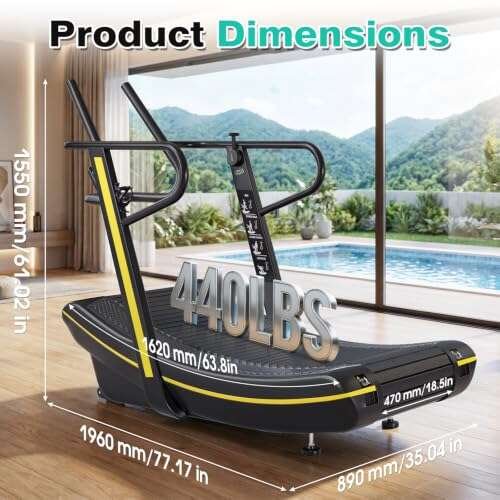
How Many Miles Is 10000 Steps On A Treadmill: Quick Answer
For most people, 10,000 treadmill steps equal about 4 to 5 miles.
The exact answer depends on your height, stride length, walking speed, and how accurately your tracker counts steps. In this guide, you will learn how many miles is 10000 steps on a treadmill, how to calculate your personal distance, how long it takes, and why treadmill displays and fitness watches may show different results.

How Many Miles Is 10000 Steps on a Treadmill?
For the average adult, 10,000 steps on a treadmill equal about 5 miles. This estimate uses the common rule that 2,000 steps equal roughly 1 mile.
However, this is only an estimate. A person with a short stride may walk 4 to 4.5 miles in 10,000 steps, while someone with a long stride may cover 5 to 5.5 miles.
Your result can change because of:
• Height and leg length
• Natural walking stride
• Walking speed
• Treadmill incline
• Fitness tracker accuracy
• Whether you hold the treadmill rails
The treadmill belt measures belt movement. Your step counter measures body movement. These two systems can disagree, especially when you walk slowly or hold the handrails.
A practical range is:
| Steps | Approximate treadmill distance |
|---|---|
| 2,000 steps | 0.8 to 1 mile |
| 5,000 steps | 2 to 2.75 miles |
| 7,500 steps | 3 to 4 miles |
| 10,000 steps | 4 to 5.5 miles |
| 12,000 steps | 4.8 to 6.5 miles |
For most adults, 10,000 treadmill steps will land near 4.5 to 5 miles.
Why 10,000 Steps Do Not Equal the Same Distance for Everyone
Step count measures how many times your feet move. Miles measure how far those steps carry you. Since people have different stride lengths, the same number of steps can produce different distances.
Think of each step as a small ruler. A person with a longer stride uses a longer ruler for every step. A shorter person needs more steps to cover the same distance.
Stride length is influenced by:
• Height
• Leg length
• Walking speed
• Age and mobility
• Fitness level
• Joint comfort
• Treadmill incline
Walking speed also matters. Most people take shorter steps when walking slowly. As speed rises, steps may become longer. At a fast pace, some people move into a light jog, which changes the calculation again.
This is why the answer to how many miles is 10000 steps on a treadmill should be treated as a range, not a fixed number.

How to Calculate Your Personal Distance
You can get a more accurate answer by measuring your own stride length. The basic formula is:
Distance in miles = total steps × stride length in inches ÷ 63,360
There are 63,360 inches in one mile.
For example, if your average stride is 28 inches:
10,000 × 28 ÷ 63,360 = 4.42 miles
If your stride is 30 inches:
10,000 × 30 ÷ 63,360 = 4.73 miles
If your stride is 32 inches:
10,000 × 32 ÷ 63,360 = 5.05 miles
How to measure your stride
Use this simple method:
- Mark a starting point on a flat surface.
- Walk naturally for 10 steps.
- Mark where your tenth step ends.
- Measure the distance in inches.
- Divide that distance by 10.
- Use the result as your average stride length.
For better accuracy, walk 20 or 30 steps instead of 10. This reduces the effect of one unusually short or long step.
Do not stretch your stride during the test. Walk as you normally do on a treadmill. A natural stride gives a more useful result than an exaggerated one.
Estimated Distance by Height
Height is not a perfect way to predict distance, but it can give you a helpful starting point. Many walking formulas estimate stride length as a percentage of height.
A common estimate is:
• Female walking stride: height × 0.413
• Male walking stride: height × 0.415
These formulas are general estimates. They do not account for every body type, walking style, or mobility level.
| Height | Estimated 10,000-step distance |
|---|---|
| 5 feet | About 4.1 to 4.3 miles |
| 5 feet 4 inches | About 4.4 to 4.6 miles |
| 5 feet 8 inches | About 4.7 to 4.9 miles |
| 6 feet | About 5.1 to 5.3 miles |
| 6 feet 4 inches | About 5.4 to 5.6 miles |
These numbers are useful for planning, but your treadmill display may still show a different distance. Your actual stride can be shorter or longer than the height-based estimate.

How Long Does 10,000 Steps Take on a Treadmill?
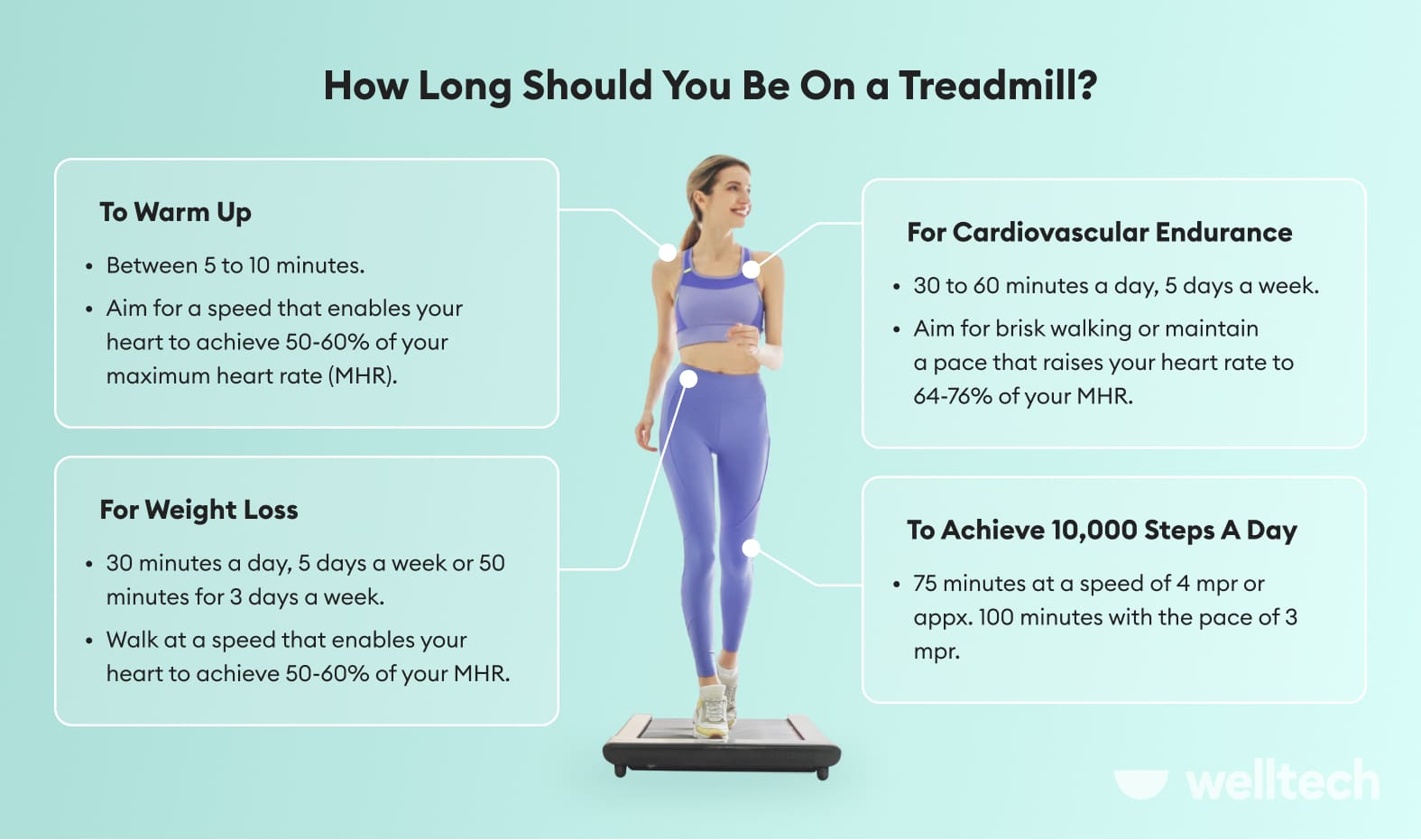
The time needed for 10,000 treadmill steps depends on your walking speed and stride. If you cover about 5 miles, these are common time estimates:
• At 2 miles per hour: about 2 hours 30 minutes
• At 2.5 miles per hour: about 2 hours
• At 3 miles per hour: about 1 hour 40 minutes
• At 3.5 miles per hour: about 1 hour 25 minutes
• At 4 miles per hour: about 1 hour 15 minutes
• At 5 miles per hour: about 1 hour
A slow pace may take longer because your steps are often shorter. A fast pace may cover the distance sooner, but you may not take exactly 10,000 steps if your stride length increases.
For many people, splitting the goal into smaller sessions works well. You could walk for 25 minutes in the morning, 25 minutes at lunch, and 25 minutes in the evening.
This approach can feel easier than completing one long treadmill session. It also helps reduce stiffness and makes daily movement more realistic.

Does Treadmill Speed Change How Many Miles 10,000 Steps Covers?
Speed can change your stride length, but it does not always change the answer in a simple way. A faster walking pace often leads to longer steps. As a result, you may cover more miles with 10,000 steps.
At a slow pace, you may take small steps to stay balanced. At a brisk pace, your legs usually extend farther. If you begin jogging, your stride may lengthen even more.
For example:
• Slow walking may produce about 4 miles in 10,000 steps.
• Brisk walking may produce about 4.5 to 5 miles.
• Light jogging may produce 5 miles or more.
Your step count may also become less reliable during jogging. Some watches count arm movement rather than foot contact. If your arms stay still, your device may undercount your steps.
The best way to track distance is to use the treadmill distance for belt travel and your fitness tracker for step totals. Then compare the two over several sessions.
Does Incline Change the Distance?
Incline changes the effort of treadmill walking, but it does not directly change the belt distance. If the treadmill moves at 3 miles per hour for 30 minutes, it covers 1.5 belt miles whether the incline is 0% or 10%.
Incline does change:
• Heart rate
• Muscle demand
• Calorie use
• Balance needs
• Pressure on the calves and glutes
A 5% incline can make a moderate walk feel much harder than a flat walk. Still, 10,000 steps at that incline may cover the same treadmill distance as 10,000 steps on a flat setting if your speed stays the same.
There is one important detail. Many people shorten their stride on an incline. If that happens, they may need more steps to cover the same distance. This explains why a step counter and treadmill display may not match.
Use incline for training and variety, not as a way to change the basic mile conversion.
Treadmill Distance Versus Fitness Tracker Distance
A treadmill and a fitness tracker use different methods to estimate distance.
The treadmill calculates distance from belt speed and time. A fitness watch or phone may estimate distance from steps, arm movement, GPS data, or a combination of these signals.
Indoor tracking can be less accurate because GPS does not work well inside. A watch may need calibration before it can estimate your stride correctly.
Your tracker may also count steps when:
• You move your arms while standing
• You walk around the house
• You push a cart
• You hold the treadmill rails
• You adjust clothing or equipment
To improve accuracy:
- Enter your correct height and weight.
- Wear the device in the same position each time.
- Avoid holding the handrails while walking.
- Walk at a steady pace.
- Calibrate the device outdoors when possible.
- Compare results over several workouts.
One workout can produce a strange result. A weekly pattern is more useful than a single reading.

Is Walking 10,000 Steps on a Treadmill Good Exercise?
Yes. Walking 10,000 steps on a treadmill can support cardiovascular fitness, daily activity, weight management, and mood. The health benefit depends on your pace, total activity, fitness level, and consistency.
Ten thousand steps is a popular goal, but it is not a medical requirement for everyone. Research has found that health benefits can appear below 10,000 steps, especially when a person moves from very little activity to regular walking.
The most important change is often the first increase. Going from 2,000 steps to 5,000 steps may be a major improvement. Someone with joint pain, fatigue, or a health condition may need a smaller goal.
A good treadmill walking plan may include:
• Five minutes of easy warm-up walking
• Twenty to 40 minutes at a comfortable pace
• Short faster intervals if appropriate
• Five minutes of easy cool-down walking
You should be able to speak in short sentences during moderate walking. If you cannot talk without stopping for breath, lower the speed and consider speaking with a health professional.
Calories Burned During 10,000 Treadmill Steps
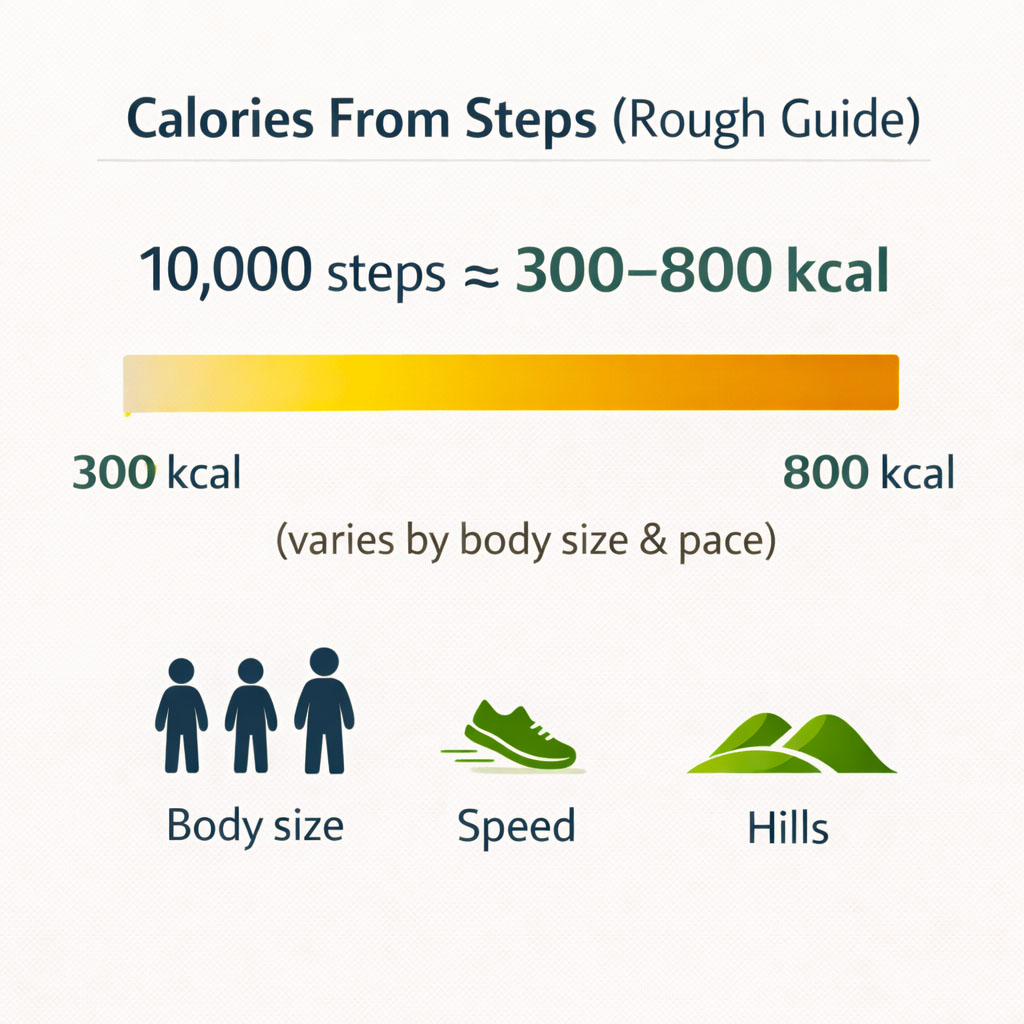
Calories burned depend on body weight, speed, incline, age, fitness, and walking form. A heavier person usually burns more calories covering the same distance because the body moves more mass.
For a 5-mile walk, a general estimate may look like this:
• A 130-pound person may burn about 350 to 450 calories.
• A 160-pound person may burn about 430 to 550 calories.
• A 200-pound person may burn about 540 to 700 calories.
These are broad estimates, not guarantees. Treadmill calorie displays can overestimate energy use because they may not know your exact body composition or exercise efficiency.
Incline usually raises calorie use. Holding the rails, however, can reduce the effort and make the calorie estimate less reliable.
Use calorie numbers as rough guidance. Do not treat them as permission to replace a balanced meal with extra snacks. Regular movement, sound nutrition, sleep, and recovery work together.
Common Mistakes When Counting 10,000 Treadmill Steps
Small habits can make your step count or distance less accurate. The most common mistake is holding the front or side rails. This reduces natural arm movement, so a wrist tracker may miss steps.
Other mistakes include:
• Entering the wrong height into your watch
• Using an uncalibrated fitness tracker
• Walking while leaning forward
• Taking very short steps to keep up with the belt
• Comparing treadmill miles with outdoor GPS miles
• Assuming every person takes 2,000 steps per mile
• Increasing speed or incline too quickly
• Ignoring pain because of a daily step goal
Good walking form is simple. Keep your shoulders relaxed, look ahead, let your arms swing naturally, and land softly. Keep your steps comfortable rather than forcing a long stride.
If you feel chest pain, severe shortness of breath, dizziness, or unusual weakness, stop exercising and seek medical help. Exercise should challenge you, not frighten you.
A Practical Way to Reach 10,000 Steps
You do not need to complete all 10,000 steps in one treadmill session. Breaking the goal into smaller parts can make it easier to fit into a busy day.
Try this plan:
- Walk for 10 minutes after breakfast.
- Take a 10-minute walk during lunch.
- Walk for 20 to 30 minutes after work.
- Add short movement breaks during the day.
- Check your step total in the evening.
- Complete only the remaining steps if you feel comfortable.
If you are new to exercise, begin with your current average and add 500 to 1,000 steps every week. This gradual approach gives your feet, calves, knees, and hips time to adjust.
A common lesson from treadmill training is that consistency beats intensity. A comfortable 30-minute walk repeated five days a week is often more useful than one exhausting workout followed by several inactive days.
How to Make Your 10,000-Step Treadmill Walk More Comfortable
Comfort can make the difference between a goal you keep and one you abandon. Wear walking shoes that fit well and leave enough room for your toes. Replace worn shoes when the cushioning and support begin to fade.
You can also:
• Drink water before and after your walk.
• Use a fan to prevent overheating.
• Listen to music, podcasts, or an audiobook.
• Watch a show only when it is safe to do so.
• Change speed every few minutes.
• Use a small incline for variety.
• Keep your posture tall and relaxed.
• Stop if pain changes your walking pattern.
Do not chase a number at the cost of good form. If your knees, feet, or lower back hurt, reduce the speed or incline. Persistent pain deserves advice from a qualified health professional.
Frequently Asked Questions About How Many Miles Is 10000 Steps on a Treadmill
Is 10,000 steps on a treadmill equal to 5 miles?
Not always. For many adults, 10,000 steps equal about 4 to 5 miles, with 5 miles being a useful average estimate.
How many miles is 10000 steps on a treadmill for a short person?
A shorter person may cover about 4 to 4.5 miles in 10,000 steps. Your personal stride measurement will give a better answer than height alone.
How many miles is 10000 steps on a treadmill for a tall person?
A tall person may cover about 5 to 5.5 miles in 10,000 steps. A longer stride usually allows each step to cover more ground.
How long does it take to walk 10,000 steps on a treadmill?
If 10,000 steps equal about 5 miles, the walk may take around 75 minutes at 4 miles per hour. At 3 miles per hour, it may take about 100 minutes.
Does treadmill incline change how many miles 10,000 steps covers?
Incline increases effort and calorie use, but it does not directly change belt distance. However, people often shorten their stride uphill, so they may take more steps to cover the same miles.
Is walking 10,000 steps every day necessary?
No. Ten thousand steps is a popular target, not a universal requirement. Any safe increase from your normal activity can support better health, and your ideal goal should match your fitness and medical needs.
Why does my watch show a different distance than my treadmill?
The treadmill uses belt speed and time, while your watch estimates distance from steps and movement. Differences are common, especially indoors, at slow speeds, on an incline, or when you hold the rails.
Conclusion
For most people, 10,000 treadmill steps equal about 4 to 5 miles, with 5 miles serving as a simple average. Your exact distance depends on stride length, height, pace, incline, and tracker accuracy.
Measure your own stride if you want a more personal result, and compare your watch with the treadmill over several workouts. Start at a comfortable level, build gradually, and focus on regular movement rather than chasing a perfect number. Use this guide to plan your next walk, then share your results or explore more practical fitness resources.

Brandon Knoxley is a sport & fitness writer and training guide contributor at MySportFitHub. He focuses on practical workouts, performance-based training, and honest fitness gear insights designed for real people and real results. Brandon is passionate about helping beginners and active individuals train smarter, avoid common mistakes, and build sustainable fitness habits.